Loading...
Done
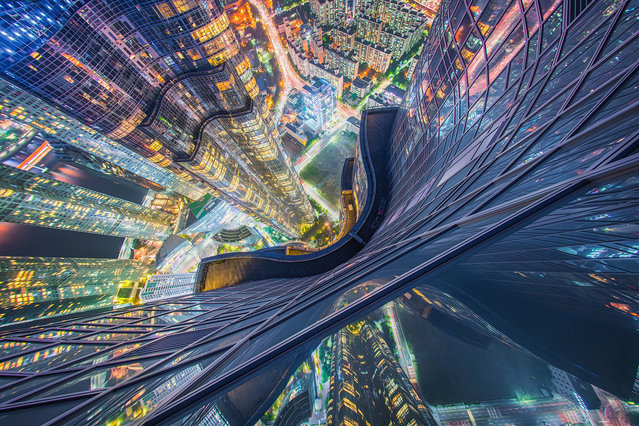
Scared of Heights. “Taken from the highest residential building in Asia: the Zenith in Busan. This was taken with official permission (which took me months to get) and safety measures were taken. I had to hang myself over the edge to get this shot. Not for the faint of heart! But when you’re at a height like this, the world below you just seems different. It takes away the fear one would normally have, and gives a sense of peace instead”. (Photo by Albert Dros/NatGeo Cities Travel Photographer of the Year 2017)

Scared of Heights. “Taken from the highest residential building in Asia: the Zenith in Busan. This was taken with official permission (which took me months to get) and safety measures were taken. I had to hang myself over the edge to get this shot. Not for the faint of heart! But when you’re at a height like this, the world below you just seems different. It takes away the fear one would normally have, and gives a sense of peace instead”. (Photo by Albert Dros/NatGeo Cities Travel Photographer of the Year 2017)
Details
03 Jul 2017 08:55:00
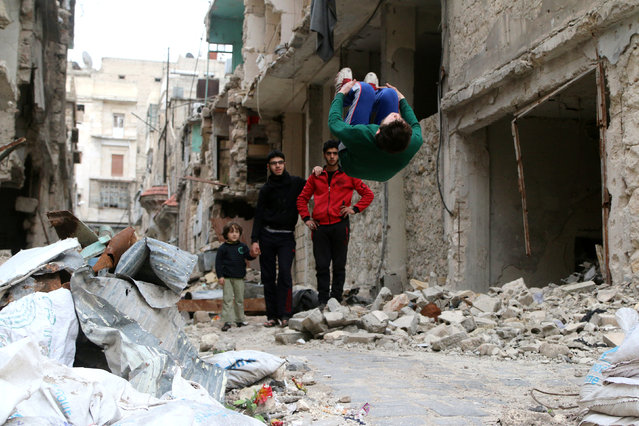
Gymnast Ahmad al-Sawas performs gymnastic moves near damaged buildings in the rebel-held Bustan al-Qasr neighbourhood of Aleppo, Syria March 26, 2016. As Syrian gymnast Ahmad al-Sawas watched his country fall apart, his Olympic dream collapsed too. The last national champion before the fighting began, he knew that supporting the anti-government side in the five-year-old civil war would prevent him from being selected for the Rio Games. “I chose to be an athlete who participates in the revolution”, said Ahmad, who trains where he can for two hours a day – be it on a mattress on a soccer field, in a local hall or somersaulting off a wall. (Photo by Abdalrhman Ismail/Reuters)

Gymnast Ahmad al-Sawas performs gymnastic moves near damaged buildings in the rebel-held Bustan al-Qasr neighbourhood of Aleppo, Syria March 26, 2016. As Syrian gymnast Ahmad al-Sawas watched his country fall apart, his Olympic dream collapsed too. The last national champion before the fighting began, he knew that supporting the anti-government side in the five-year-old civil war would prevent him from being selected for the Rio Games. (Photo by Abdalrhman Ismail/Reuters)
Details
05 Aug 2016 13:25:00
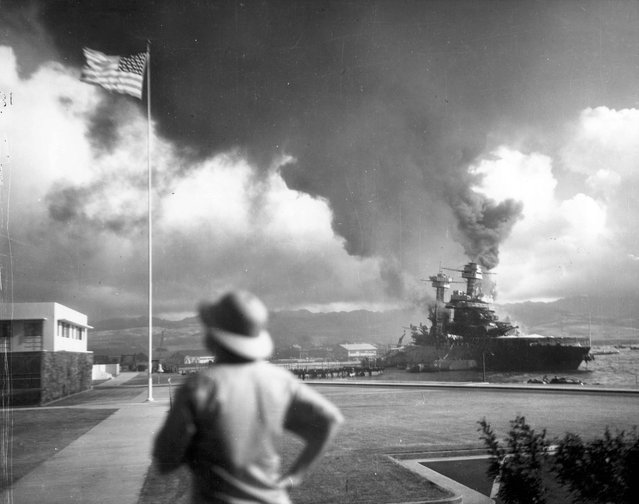
The damaged battleship USS California, listing to port after being hit by Japanese aerial torpedoes and bombs, is seen off Ford Island during the attack on Pearl Harbor, Hawaii, U.S. December 7, 1941. (Photo by Reuters/U.S. Navy/National Archives)

The damaged battleship USS California, listing to port after being hit by Japanese aerial torpedoes and bombs, is seen off Ford Island during the attack on Pearl Harbor, Hawaii, U.S. December 7, 1941. The 75th anniversary of the attack, which brought the United States into World War Two, is marked on December 7, 2016. (Photo by Reuters/U.S. Navy/National Archives)
Details
03 Dec 2016 11:07:00


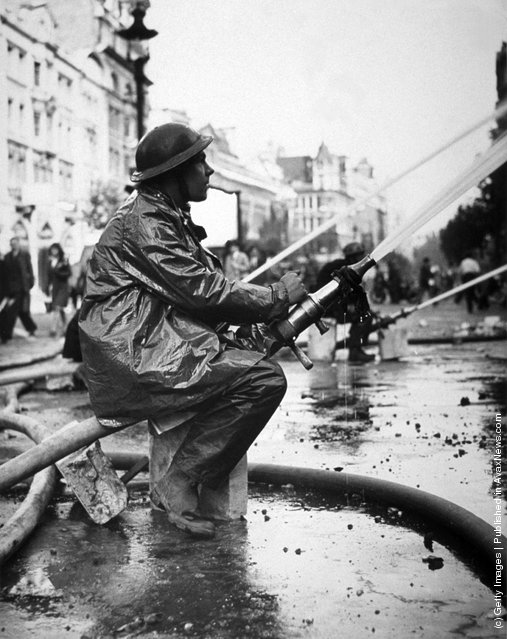
“The Blitz (from German, “Lightning”) was the sustained strategic bombing of Britain by Nazi Germany between 7 September 1940 and 10 May 1941, during the Second World War. The city of London was bombed by the Luftwaffe for 76 consecutive nights and many towns and cities across the country followed. More than one million London houses were destroyed or damaged, and more than 40,000 civilians were killed, half of them in London”. – Wikipedia

Photo: A fireman attempts to check the flames from a gas explosion, after an air raid in Central London the previous night. (Photo by Central Press/Getty Images). 1940
Details
21 Jun 2011 12:08:00
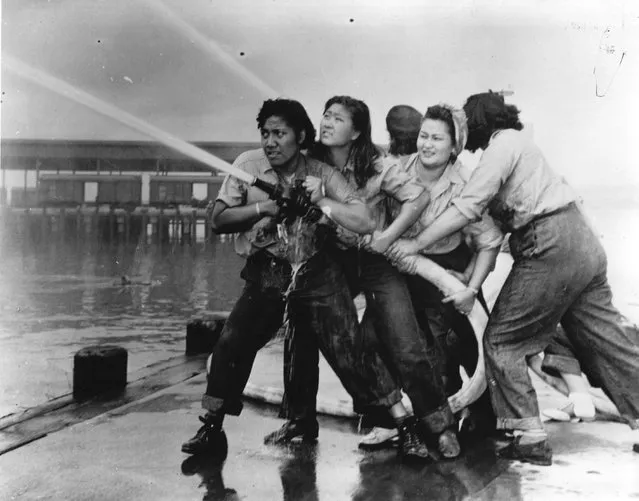
Women fire fighters directing a hose after the Japanese attack on the US naval base at Pearl Harbour (Pearl Harbor). (Photo by Three Lions/Getty Images)

“Pearl Harbor, known to Hawaiians as Puʻuloa, is a lagoon harbor on the island of Oʻahu, Hawaiʻi, west of Honolulu. Much of the harbor and surrounding lands is a United States Navy deep-water naval base. It is also the headquarters of the U.S. Pacific Fleet. The attack on Pearl Harbor by the Empire of Japan on December 7, 1941, brought the United States into World War II”. – Wikipedia

Photo: Women fire fighters directing a hose after the Japanese attack on the US naval base at Pearl Harbour (Pearl Harbor). (Photo by Three Lions)


Details
07 Dec 2012 09:01:00
Ever wondered what life is like in miniature? An Italian photographer has perfected his own brand of macro photography with stunning pictures of miniscule drops of dew on flowers. Alberto Ghizzi Panizza, 40, has been a photographer for 18 years and specializes in macro images. All of these pictures were taken on the riverbanks of the Po River, in northern Italy, as Panizza pursued his passion for nature. “I'm deeply fond of nature and animals and always look for the beauty in the world around us”, Panizza said. (Photo by Alberto Ghizzi Panizza/Caters News)

Ever wondered what life is like in miniature? An Italian photographer has perfected his own brand of macro photography with stunning pictures of miniscule drops of dew on flowers. Alberto Ghizzi Panizza, 40, has been a photographer for 18 years and specializes in macro images. All of these pictures were taken on the riverbanks of the Po River, in northern Italy, as Panizza pursued his passion for nature. “I'm deeply fond of nature and animals and always look for the beauty in the world around us”, Panizza said. (Photo by Alberto Ghizzi Panizza/Caters News)
Details
01 May 2015 12:30:00


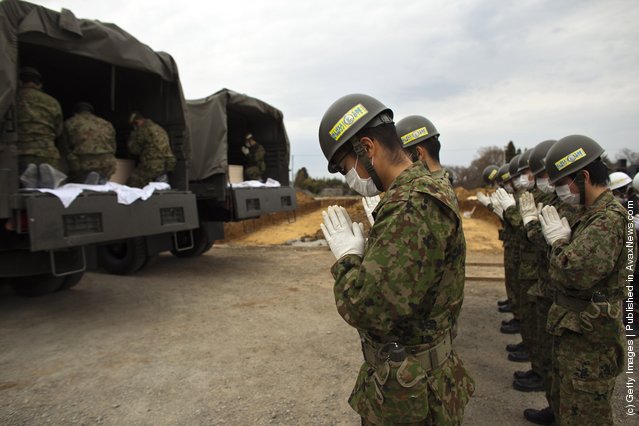
Japan Self-Defense Force members pay their respect to unidentified earthquake victims in vehicles during a mess funeral on April 8, 2011 in Yamamoto, Miyagi Prefecture, Japan. The 9.0 magnitude strong earthquake struck offshore on March 11 at 2:46pm local time, triggering a tsunami wave of up to ten metres which engulfed large parts of north-eastern Japan, and also damaging the Fukushima nuclear plant and threatening a nuclear catastrophe. The death toll continues to rise with numbers of dead and missing exceeding 20,000 in a tragedy not seen since World War II in Japan. (Photo by Athit Perawongmetha/Getty Images)
Details
10 Apr 2011 07:41:00
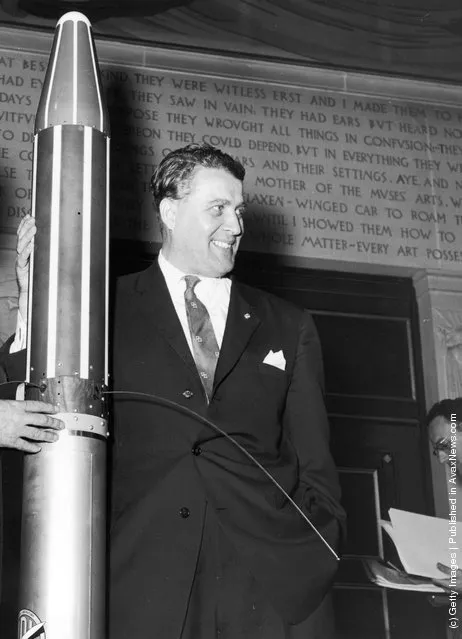
German-born American engineer Dr Wernher von Braun (1912 - 1977) with a model of the Explorer orbiting space satellite which he designed, 1958

“Wernher Magnus Maximilian Freiherr von Braun (March 23, 1912 – June 16, 1977) was a German-born rocket scientist, aerospace engineer, space architect, and one of the leading figures in the development of rocket technology in Nazi Germany during World War II and, subsequently, the United States”. – Wikipedia

Photo: German-born American engineer Dr. Wernher von Braun with a model of the Explorer orbiting space satellite which he designed. (Photo by Keystone/Getty Images). 1958
Details
22 Mar 2012 11:18:00