Loading...
Done
Shooting star by Tony Wu, US/Japan. Winner, underwater. The electrifying reproductive dance of a giant sea star. As the surrounding water filled with sperm and eggs from spawning sea stars, Wu faced several challenges. Stuck in a small, enclosed bay with only a macro lens for photographing small subjects, he backed up to squeeze the undulating sea star into his field of view. The dancing posture of spawning sea stars rising and swaying may help release eggs and sperm, or may help sweep the eggs and sperm into the currents where they fertilise together in the water. Kinko Bay, Japan. (Photo by Tony Wu/Wildlife Photographer of the Year)

Shooting star by Tony Wu, US/Japan. Winner, underwater. The electrifying reproductive dance of a giant sea star. As the surrounding water filled with sperm and eggs from spawning sea stars, Wu faced several challenges. Stuck in a small, enclosed bay with only a macro lens for photographing small subjects, he backed up to squeeze the undulating sea star into his field of view. The dancing posture of spawning sea stars rising and swaying may help release eggs and sperm, or may help sweep the eggs and sperm into the currents where they fertilise together in the water. Kinko Bay, Japan. (Photo by Tony Wu/Wildlife Photographer of the Year)
Details
15 Oct 2022 03:50:00
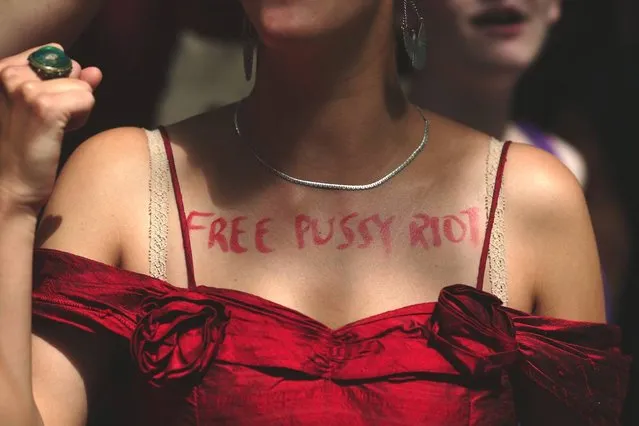
A woman wears on her chest the text 'free p*ssy riot' as a demonstration by supporters of the jailed feminist punk band 'p*ssy Riot' takes place outside the Russian Embassy on August 17, 2012 in London, England. The three women who staged an anti-Kremlin protest in a church in February, were found guilty today of hooliganism motivated by religious hatred, and could face a three-year jail sentence. Supporters are gathering in several cities around the world today as a mark of solidarity. (Photo by Dan Kitwood)

“On Friday, after something of a show trial, three young women in a Russian punk band were found guilty and sentenced to two years in prison for an anti-Vladimir Putin protest in a Moscow cathedral earlier this year”. – Daniel Schwartz via CBC News

Photo: A woman wears on her chest the text “free p*ssy riot” as a demonstration by supporters of the jailed feminist punk band p*ssy Riot takes place outside the Russian Embassy on August 17, 2012 in London, England. The three women who staged an anti-Kremlin protest in a church in February, were found guilty today of hooliganism motivated by religious hatred, and could face a three-year jail sentence. Supporters are gathering in several cities around the world today as a mark of solidarity. (Photo by Dan Kitwood)
Details
18 Aug 2012 11:26:00
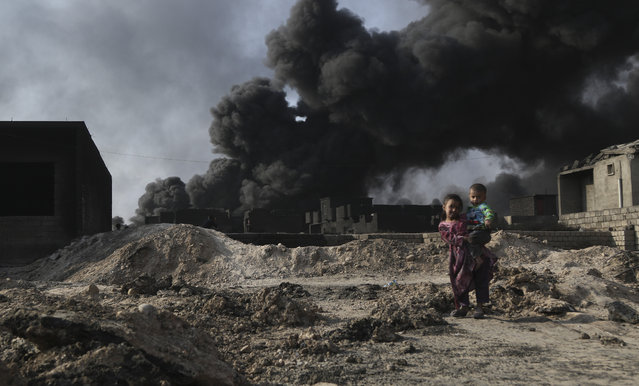
A girl holds her brother in her arm as black smoke rises after an oil well set on fire in the center of al-Kayyara town to the south of Daesh terror organization-held Mosul in Iraq on October 25, 2016. The oil well in the center of al-Kayyara town, which was set alight by retreating Daesh militants in advance of the Iraqi army's takeover of the town on August 24, 2016 has still not entirely been put out. The raw petrol which is still alight is creating black clouds above the city. The residents and wildlife beneath this polluting smoke cloud may find their health at risk. The effects of the fire in the town center on unprotected civilians' health can easily be seen on the hands and faces of children playing on the street. (Photo by dris Okuducu/Anadolu Agency/Getty Images)

A girl holds her brother in her arm as black smoke rises after an oil well set on fire in the center of al-Kayyara town to the south of Daesh terror organization-held Mosul in Iraq on October 25, 2016. The oil well in the center of al-Kayyara town, which was set alight by retreating Daesh militants in advance of the Iraqi army's takeover of the town on August 24, 2016 has still not entirely been put out. The raw petrol which is still alight is creating black clouds above the city. The residents and wildlife beneath this polluting smoke cloud may find their health at risk. The effects of the fire in the town center on unprotected civilians' health can easily be seen on the hands and faces of children playing on the street. (Photo by dris Okuducu/Anadolu Agency/Getty Images)
Details
27 Oct 2016 11:54:00
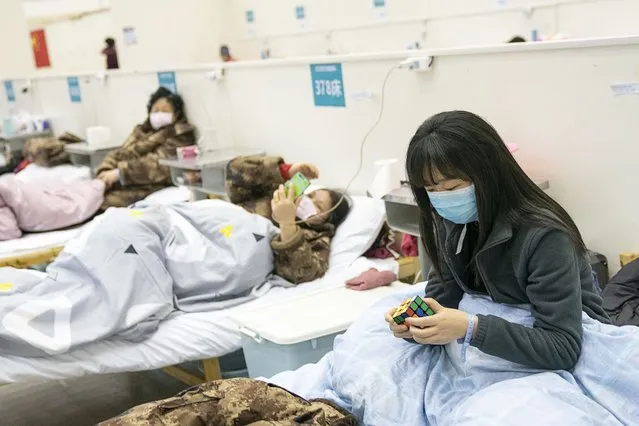
A patient solves a rubik's cube at a temporary hospital converted from “Wuhan Livingroom” in central China's Hubei Province on February 10, 2020. In face of the outbreak of the novel coronavirus pneumonia epidemic, Wuhan authorities have transformed public venues such as exhibition centers and gymnasiums into temporary hospitals. The hospitals have a large capacity of treating patients with mild symptoms and play an important role in isolating the source of infection and cutting off the routes of infection during epidemic prevention. The first batch of patients was hospitalized on Feb. 5. (Photo by Chine Nouvelle/SIPA Press/Rex Features/Shutterstock)

A patient solves a rubik's cube at a temporary hospital converted from “Wuhan Livingroom” in central China's Hubei Province on February 10, 2020. In face of the outbreak of the novel coronavirus pneumonia epidemic, Wuhan authorities have transformed public venues such as exhibition centers and gymnasiums into temporary hospitals. The hospitals have a large capacity of treating patients with mild symptoms and play an important role in isolating the source of infection and cutting off the routes of infection during epidemic prevention. The first batch of patients was hospitalized on Feb. 5. (Photo by Chine Nouvelle/SIPA Press/Rex Features/Shutterstock)
Details
17 Feb 2020 00:07:00
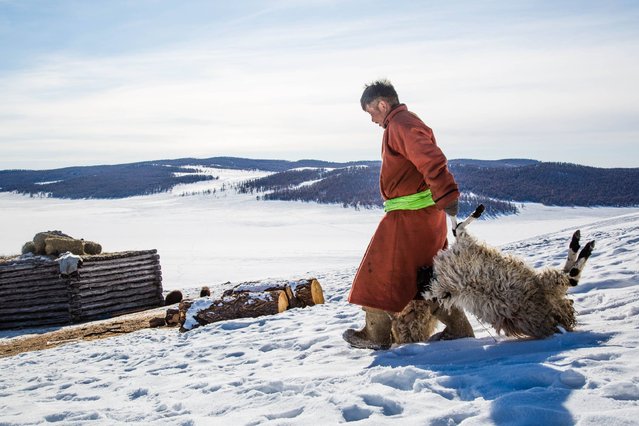
This handout photo taken on February 12, 2017 and released on February 16 by the International Federation of Red Cross and Red Crescent Societies (IFRC) shows Mongolian herder Munkhbat Bazarragchaa (C) dragging two sheep – which recently died due to the weather - to a pile of dead animals behind his “ger” in Khuvsgul province, northern Mongolia. Thousands of Mongolian herders face disastrous livestock losses from dreaded severe weather  known as the “dzud”, the Red Cross said on February 16, 2017 in launching an international emergency aid appeal. (Photo by Mirva Helenius/AFP Photo/IFRC)

This handout photo taken on February 12, 2017 and released on February 16 by the International Federation of Red Cross and Red Crescent Societies (IFRC) shows Mongolian herder Munkhbat Bazarragchaa (C) dragging two sheep – which recently died due to the weather - to a pile of dead animals behind his “ger” in Khuvsgul province, northern Mongolia. Thousands of Mongolian herders face disastrous livestock losses from dreaded severe weather known as the “dzud”, the Red Cross said on February 16, 2017 in launching an international emergency aid appeal. (Photo by Mirva Helenius/AFP Photo/IFRC)
Details
17 Feb 2017 11:40:00
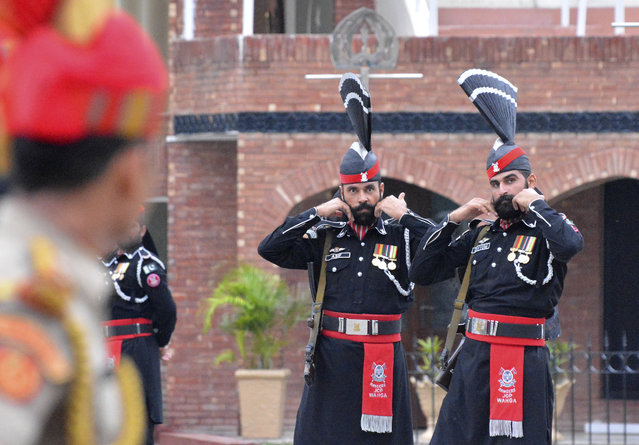
In this Friday, August 9, 2019, file photo, Pakistan Rangers soldiers face Indian Border Security Force soldiers at a daily closing ceremony on the Indian side of the Attari-Wagah border. India's recent clampdown has a long history in Kashmir and the conflict has existed since the late 1940s, when India and Pakistan won independence from the British empire and began fighting over rival claims to the Muslim-majority territory. India and Pakistan have fought two of their three subsequent wars over Kashmir, and each administers a portion of the region. India has long seen the Kashmiri struggle for self-determination as Islamabad's proxy war against New Delhi. (Photo by Prabhjot Gill/AP Photo/File)

In this Friday, August 9, 2019, file photo, Pakistan Rangers soldiers face Indian Border Security Force soldiers at a daily closing ceremony on the Indian side of the Attari-Wagah border. India's recent clampdown has a long history in Kashmir and the conflict has existed since the late 1940s, when India and Pakistan won independence from the British empire and began fighting over rival claims to the Muslim-majority territory. India and Pakistan have fought two of their three subsequent wars over Kashmir, and each administers a portion of the region. India has long seen the Kashmiri struggle for self-determination as Islamabad's proxy war against New Delhi. (Photo by Prabhjot Gill/AP Photo/File)
Details
02 Oct 2019 00:01:00
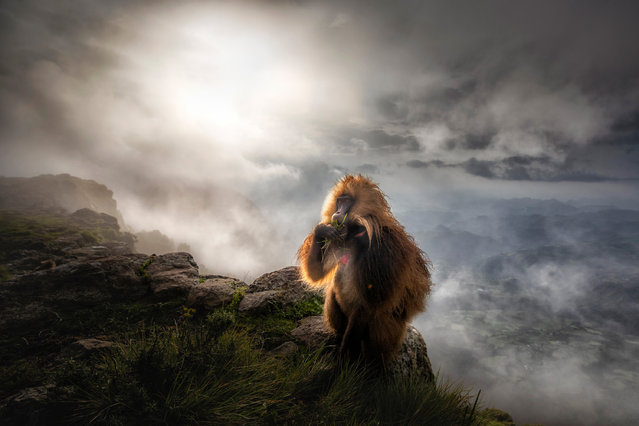
Highly commended, mammals: Gelada after the storm – Marco Gaiotti (Italy). “Gelada baboons are the only monkey species in the world that feed on grasses. They are native to the tableland of Ethiopia. Every morning large family groups wander from their sleeping places in the steep rock face, up to 1,000 metres high, to the feeding grounds at the tablelands. This image clearly depicts their feeding strategy: they pull out bunches of grass, sort the stalks and then lift them to their mouth. This shot was taken towards the end of the rainy season after a heavy storm”. (Photo by Marco Gaiotti/2019 GDT European Wildlife Photographer of the Year)

Highly commended, mammals: Gelada after the storm – Marco Gaiotti (Italy). “Gelada baboons are the only monkey species in the world that feed on grasses. They are native to the tableland of Ethiopia. Every morning large family groups wander from their sleeping places in the steep rock face, up to 1,000 metres high, to the feeding grounds at the tablelands. This image clearly depicts their feeding strategy: they pull out bunches of grass, sort the stalks and then lift them to their mouth. This shot was taken towards the end of the rainy season after a heavy storm”. (Photo by Marco Gaiotti/2019 GDT European Wildlife Photographer of the Year)
Details
31 Oct 2019 00:03:00
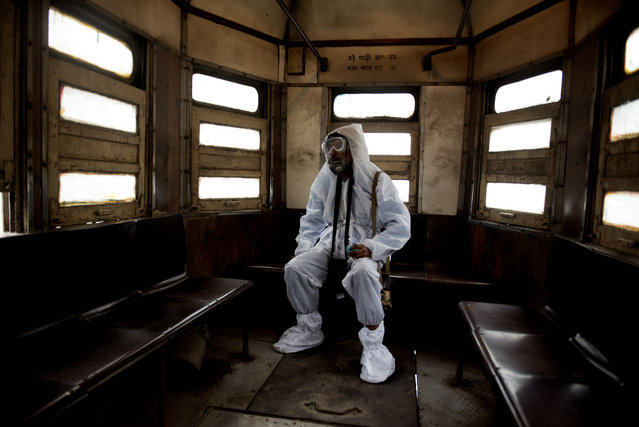
Fighting Infections (single image) | Fighting Pandemic by Sudipto Das. “It’s exhausting. A tram conductor in Kolkata, India, wears protective clothing from head to toe even in the heat of a summer afternoon. This was when restrictions were easing after India’s first Covid-19 lockdown – public transport was running, but staff were advised to suit up like this. We’ve all grown used to saluting the efforts of healthcare workers, but plenty of other people in public-facing jobs have performed gruelling duties too to keep people safe”. (Photo by Sudipto Das/Wellcome Photography Prize 2021)

Fighting Infections (single image) | Fighting Pandemic by Sudipto Das. “It’s exhausting. A tram conductor in Kolkata, India, wears protective clothing from head to toe even in the heat of a summer afternoon. This was when restrictions were easing after India’s first Covid-19 lockdown – public transport was running, but staff were advised to suit up like this. We’ve all grown used to saluting the efforts of healthcare workers, but plenty of other people in public-facing jobs have performed gruelling duties too to keep people safe”. (Photo by Sudipto Das/Wellcome Photography Prize 2021)
Details
29 Jun 2021 09:49:00