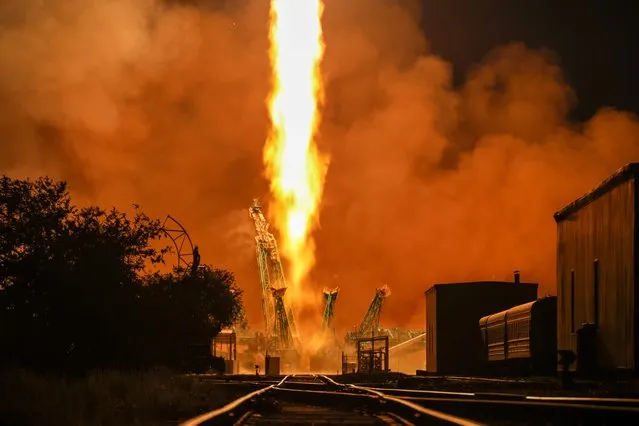
A Soyuz rocket booster carrying the Progress MS-17 cargo freighter blasts off the Baikonur Cosmodrome in Kyzylorda Region, Kazakhstan on June 30, 2021. (Photo by Roscosmos Press Office/TASS)
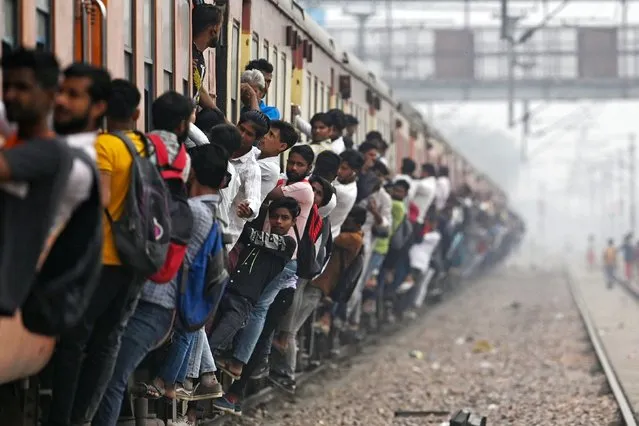
Commuters travel in an overcrowded train near a railway station at Loni town in India's state of Uttar Pradesh on April 24, 2023. India is set to overtake China as the world's most populous country by the end of June, UN estimates showed on April 19, posing huge challenges to a nation with creaking infrastructure and insufficient jobs for millions of young people. (Photo by Arun Sankar/AFP Photo)
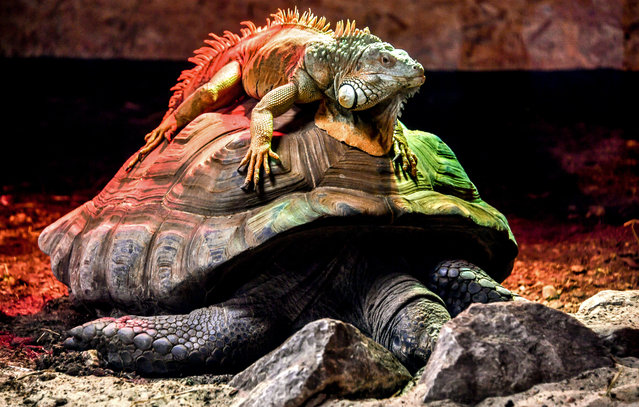
A green iguana, or American iguana sits on an Aldabra giant tortoise, the largest tortoise of the world, in their enclosure at the zoo park of Lille, northern France, on February 11, 2019. (Photo by Philippe Huguen/AFP Photo)
A reveler in costume laughs during the “Cordao do Boitata” street party in Rio de Janeiro, Brazil, Sunday, February 24, 2019, one of the many parades before the official start of Carnival on March 1. (Photo by Leo Correa/AP Photo)
I know, this answer was a little too short, so let me explain in a little more detail.
Imagine tossing a coin. Normally, any normal coin toss has two possible outcomes - heads or tails - with each one having a 50% chance of happening. Ideally, that is, because factors like the force of your finger tossing the coin, gravity, the wind, the moon phase and a passing TARDIS can all influence the outcome of the toss - but I have deviated from the subject.
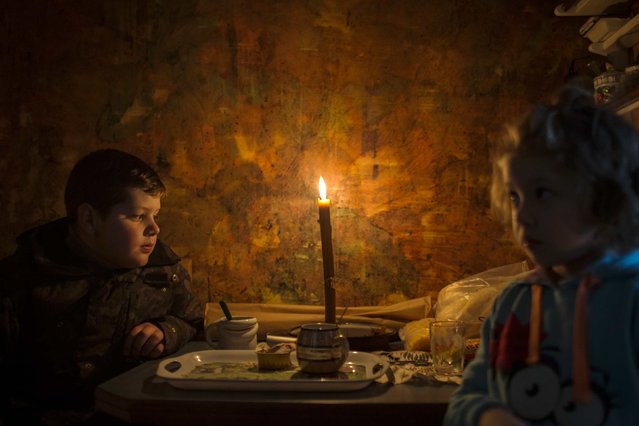
Lazar and his sister Andjelka sit by a candle in their home in the eastern Serbian town of Majdanpek, December 4, 2014. Electricity workers in Serbia struggled through snow, ice and treacherous terrain on Thursday to restore electricity to an eastern town left shivering without power, heating or running water for a fourth day. (Photo by Marko Djurica/Reuters)