Racegoers attend the opening day of the Grand National Festival horse race meeting at Aintree Racecourse in Liverpool, north west England on April 7, 2022. (Photo by John Mather/Image View)
Performers ride atop a car leading to the the National Circus Day celebration in Santiago, Chile, Saturday, September 4, 2021, amid the new coronavirus pandemic. Chile's Culture Minister set the stage for the first circus performances with a ringside public since the beginning of the pandemic quarantine measures as the South American country looks to fully roll back almost all COVID-19 related restrictions. (Photo by Esteban Felix/AP Photo)
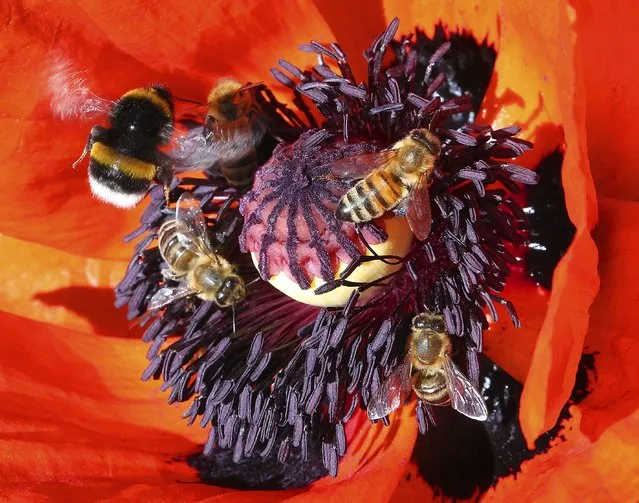
Honey bees and ground bumblebees fly with thick purple pollen pouches to the flower of a corn poppy, also called poppy or corn rose, to obtain nectar in Berlin, Germany, Tuesday, June 7, 2022. Bumblebees, which like bees belong to the stinging bee family, form so-called summer colonies that exist for only a few months. (Photo by Wolfgang Kumm/dpa via AP Photo)
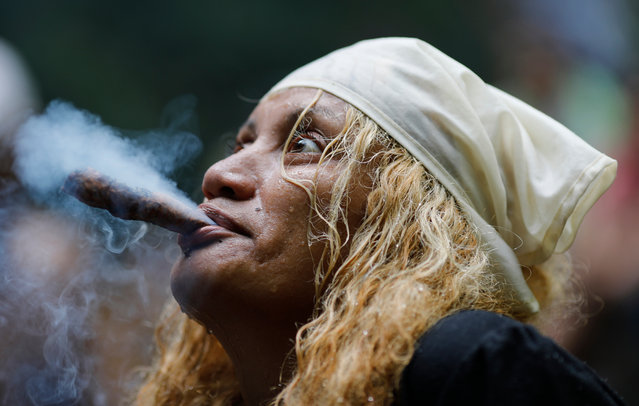
In this photo taken October 12, 2019, a spiritual healer known as a “madrina” starts a ritual on Sorte Mountain where followers of indigenous goddess Maria Lionza gather annually in Venezuela's Yaracuy state. While her followers gather on the mountain for weeks at this time of the year, October 12 marks the biggest gathering, coinciding with Indigenous People's Day, known in Latin America as “Dia de la Raza”. (Photo by Ariana Cubillos/AP Photo)
William Gibson is not one of the authors that spits out novels like a machine – in his long and fruitful career he has only published 11 novels andof short stories and articles in the tens each. Still his impact on modern literature was huge – the “noir prophet” of the cyberpunk subgenre (that he was one of the pioneers of) has predicted the rise of reality television, virtual reality, video games and the internet. He is a Hugo and Nebula award winning science fiction writer, with a special eye for what the future might bring.
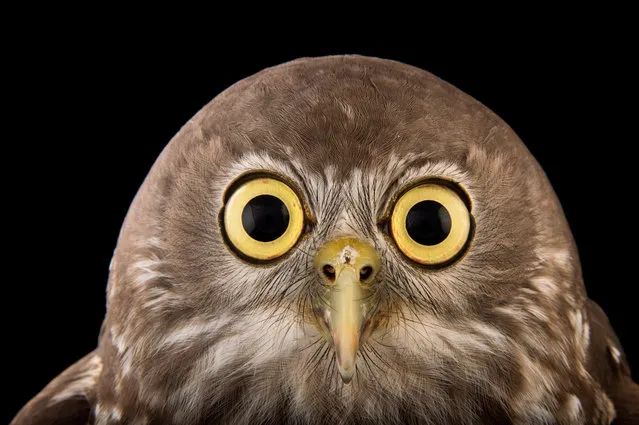
The National Geographic Photo Ark is a travelling exhibition of photographer Joel Sartore’s quest to create a photo archive of biodiversity around the world. So far, Sartore has captured studio portraits of more than 6,000 species – a number that he hopes to double. On 1 July, the ark will open at Melbourne zoo – the first time it has been exhibited in the southern hemisphere. More than 50 portraits will be on display, including many of Australian endangered animals being protected by programs at the zoo itself. These captions have been edited from text supplied by Melbourne zoo. Here: Barking owl. (Photo by Joel Sartore/National Geographic Photo Ark/The Guardian)
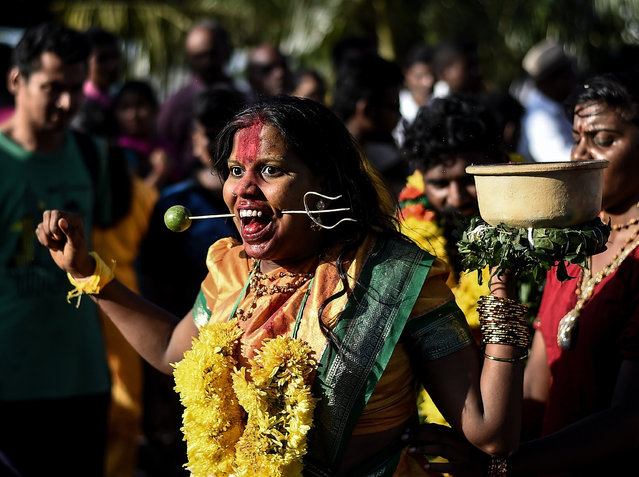
A Malaysian Hindu devotee (C) reacts in a state of trance as she walks towards the Batu caves temple during the Thaipusam festival celebrations in Kuala Lumpur on January 24, 2016. More than a million Hindus celebrate the festival of “Thaipusam” at temples across the country. (Photo by Manan Vatsyayana/AFP Photo)
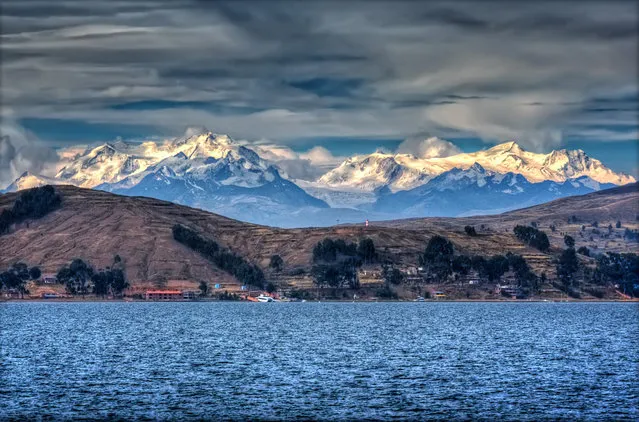
Titicaca or Titiqaqa is a large, deep lake in the Andes on the border of Peru and Bolivia. By volume of water, it is the largest lake in South America. Lake Maracaibo has a larger surface area, though some consider it to be a large brackish bay due to its direct connection with the sea.