Loading...
Done
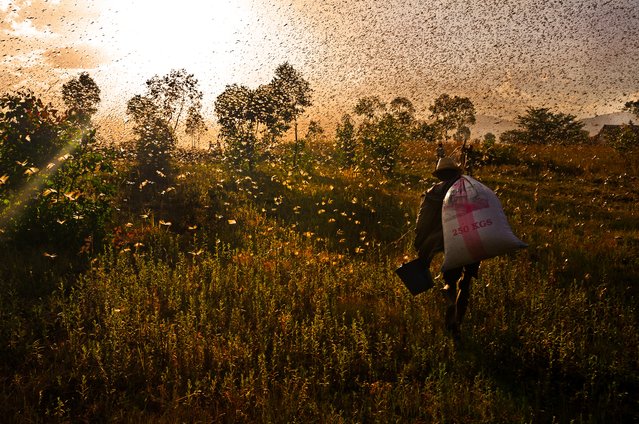
“Locusts & Men”. Oppression, interaction, collaboration. In the life cycle of nature nothing is lost, but the coexistence of different species is sometimes difficult. In Madagascar periodically returns the archaic antagonism between man and the migratory locust, in a circle of life where the two species are looking for space and food for their survival. Photo location: Madagascar, 2013. (Photo and caption by Michele Martinelli/National Geographic Photo Contest)

“Locusts & Men”. Oppression, interaction, collaboration. In the life cycle of nature nothing is lost, but the coexistence of different species is sometimes difficult. In Madagascar periodically returns the archaic antagonism between man and the migratory locust, in a circle of life where the two species are looking for space and food for their survival. At the end of the day a man walks home carrying on his shoulders the heavy bag which contains the locusts captured during the day. The insects provide nutritious meals for the man and his family. Photo location: Madagascar, 2013. (Photo and caption by Michele Martinelli/National Geographic Photo Contest)

ATTENTION! All pictures are presented in high resolution. To see Hi-Res images – just TWICE click on any picture. In other words, click small picture – opens the BIG picture. Click BIG picture – opens VERY BIG picture.
Details
03 Dec 2013 10:59:00
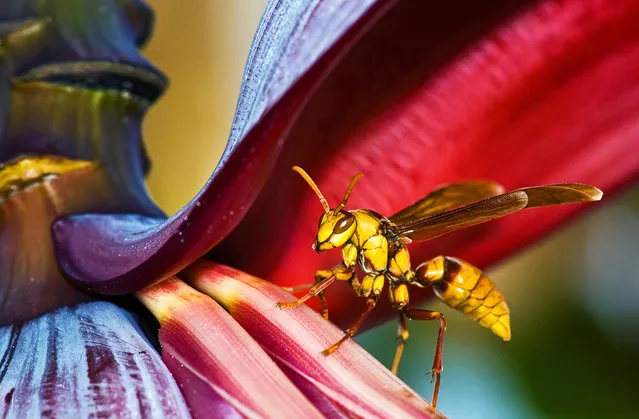
“A huge wasp measuring 2.5 inches in length, visiting the banana tree in my front yard”. (Photo and comment by John Matzick, USA/2013 Sony World Photography Awards

“A huge wasp measuring 2.5 inches in length, visiting the banana tree in my front yard”. (Photo and comment by John Matzick, USA/2013 Sony World Photography Awards via The Atlantic)


Details
07 Feb 2013 14:23:00
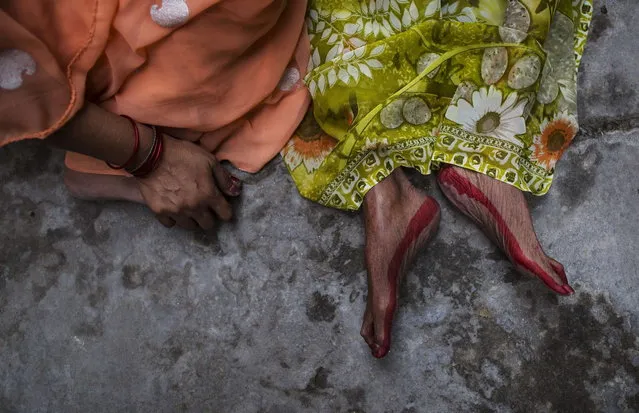
A relative (L) of Champa Devi, 88, sits next to her body, minutes after her death at Mukti Bhavan (Salvation House) at Varanasi, in the northern Indian state of Uttar Pradesh, June 21, 2014. (Photo by Danish Siddiqui/Reuters)

A relative (L) of Champa Devi, 88, sits next to her body, minutes after her death at Mukti Bhavan (Salvation House) at Varanasi, in the northern Indian state of Uttar Pradesh, June 21, 2014. The city of Varanasi, on the banks of the River Ganges, is widely considered Hinduism's holiest city and many Hindus believe that dying there and having their remains scattered in the Ganges allows their soul to escape a cycle of death and rebirth, attaining “moksha” or salvation. “Mukti Bhavan” or “Salvation House”, is a charity-run hostel that caters for people who wish to come to Varanasi to die. Guests can normally stay up to two weeks after which, if they haven't yet passed away, they are gently asked to leave. (Photo by Danish Siddiqui/Reuters)
Details
24 Jul 2014 12:32:00
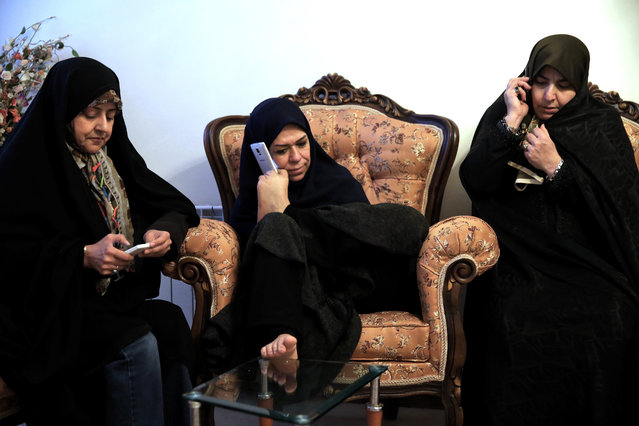
In this picture taken on Saturday, January 31, 2015, Zohreh Etezadossaltaneh, center, talks on her mobile phone, held with her foot, during a meeting at her friend's home in Tehran, Iran. Now 52 years old, the retired Iranian teacher who was born without arms has dedicated herself to helping others with similar disabilities live full and satisfying lives. (Photo by Ebrahim Noroozi/AP Photo)

In this picture taken on Saturday, January 31, 2015, Zohreh Etezadossaltaneh, center, talks on her mobile phone, held with her foot, during a meeting at her friend's home in Tehran, Iran. Now 52 years old, the retired Iranian teacher who was born without arms has dedicated herself to helping others with similar disabilities live full and satisfying lives. (Photo by Ebrahim Noroozi/AP Photo)
Details
03 May 2015 11:52:00
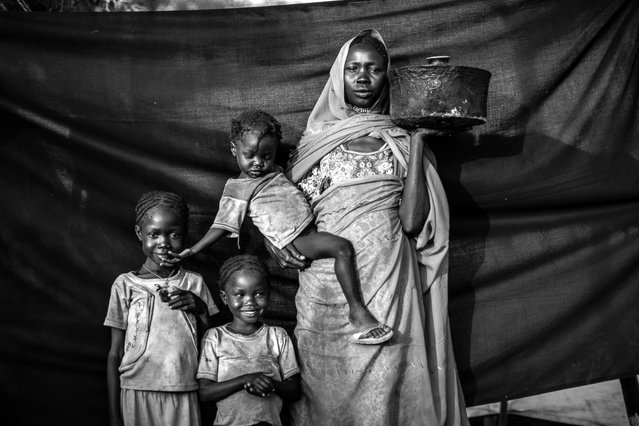
Magbola Alhadi, 20, and her three children pose for a portrait in Jamam refugee camp in Maban County, South Sudan on August 11th, 2012. Magboola and her family weathered aerial bombing raids for several months, but decided it was time to leave their village of Bofe the night that soldiers arrived and opened fire. (Photo by Brian Sokol/Panos Pictures)

Magbola Alhadi, 20, and her three children pose for a portrait in Jamam refugee camp in Maban County, South Sudan on August 11th, 2012. Magboola and her family weathered aerial bombing raids for several months, but decided it was time to leave their village of Bofe the night that soldiers arrived and opened fire. With her three children, she travelled for 12 days from Bofe to the town of El Fudj, on the South Sudanese border. The most important thing that Magboola was able to bring with her is the saucepan she holds in this photograph. It wasn't the largest pot that she had in Bofe, but it was small enough she could travel with it, yet big enough to cook sorghum for herself and her three daughters (from left: Aduna Omar, 6, Halima Omar, 4, and Arfa Omar, 2) during their journey. (Photo by Brian Sokol/Panos Pictures)
Details
18 Sep 2015 15:04:00
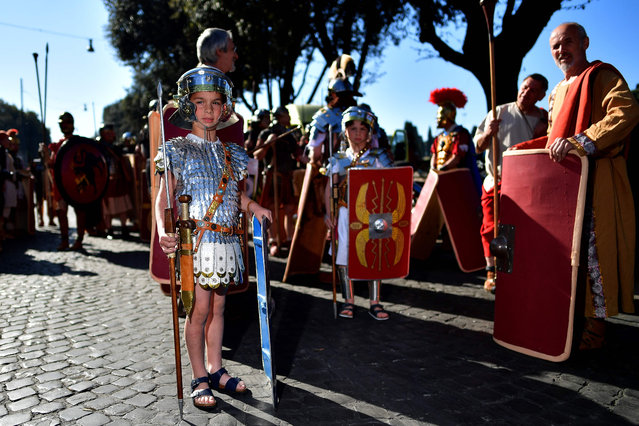
A child dressed as a Roman centurion poses during a parade to mark the anniversary of the foundation of Rome in 753 BC, on April 23, 2017 in Rome. (Photo by Alberto Pizzoli/AFP Photo)

A child dressed as a Roman centurion poses during a parade to mark the anniversary of the foundation of Rome in 753 BC, on April 23, 2017 in Rome. (Photo by Alberto Pizzoli/AFP Photo)
Details
24 Apr 2017 09:19:00
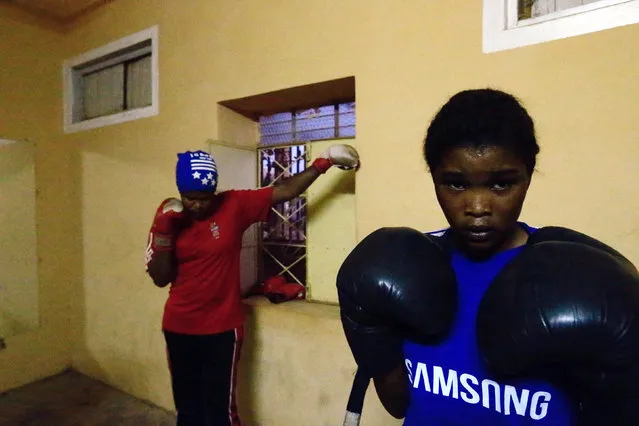
Saraa Mutawkil (R), 18, practises boxing at Al Rabie club in Omdurman May 10, 2016. (Photo by Mohamed Nureldin Abdallah/Reuters)

Saraa Mutawkil (R), 18, practises boxing at Al Rabie club in Omdurman May 10, 2016. (Photo by Mohamed Nureldin Abdallah/Reuters)
Details
14 May 2016 11:16:00
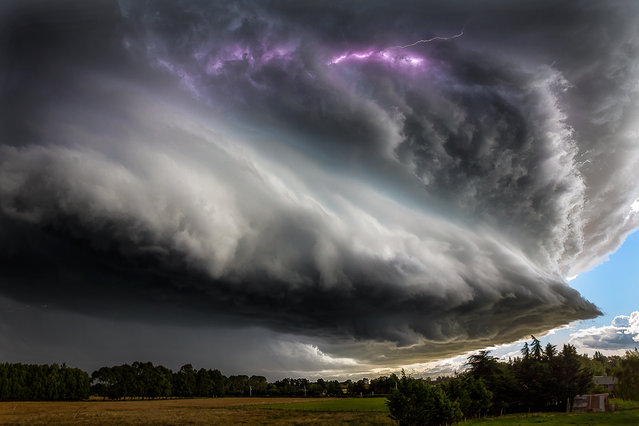
“Thunderstruck”. Summer stom. A super cell formed off the coast of New Zealand, intensified and swept across Christchurch and North Canterbury, February 23, 2014. Photo location: Christchurch, New Zealand. (Photo and caption by David Hardy/National Geographic Photo Contest)

“Thunderstruck”. Summer stom. A super cell formed off the coast of New Zealand, intensified and swept across Christchurch and North Canterbury, February 23, 2014. Photo location: Christchurch, New Zealand. (Photo and caption by David Hardy/National Geographic Photo Contest)
Details
15 Apr 2014 11:46:00