Loading...
Done
Tim Laman - Wildlife Photojournalist

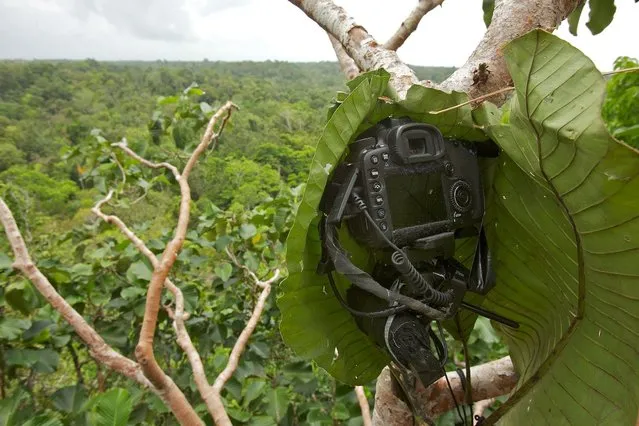
Tim Laman is a field biologist and wildlife photojournalist. His pioneering research in the rain forest canopy in Borneo led to a PhD from Harvard and his first National Geographic article in 1997. Since then, he has pursued his passion for exploring wild places and documenting little-known and endangered wildlife by becoming a regular contributor to National Geographic. He has eighteen articles to his credit to date, all of which have had a conservation message. Some have focused on endangered species such as Orangutans or Hornbills, while others, such as a series of articles on Conservation International’s Biodiversity Hotspots, have highlighted regions under intense pressure.
Details
14 Sep 2013 10:13:00
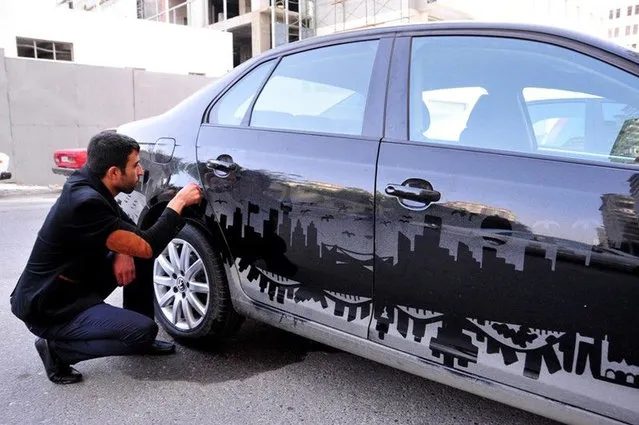
Dirty Art Car By Rafael Veyisov

During work hours on one of the busiest streets of Baku, Azerbaijan’s capital, parking attendant Rafael Veyisov wipes off the dust on cars with his fingers, slowly contouring the shapes of tall buildings and flying birds. In his artwork, he generally illustrates real towns to educate people about other countries, but sometimes he also lets his imagination run wild and produces impressive original works. Surprised by his talent, the car owners who regularly leave their vehicles in Rafael’s care, often leave them dirty just to give him an excuse to play around, and take photos of his beautiful artworks.
Details
13 Oct 2013 17:31:00
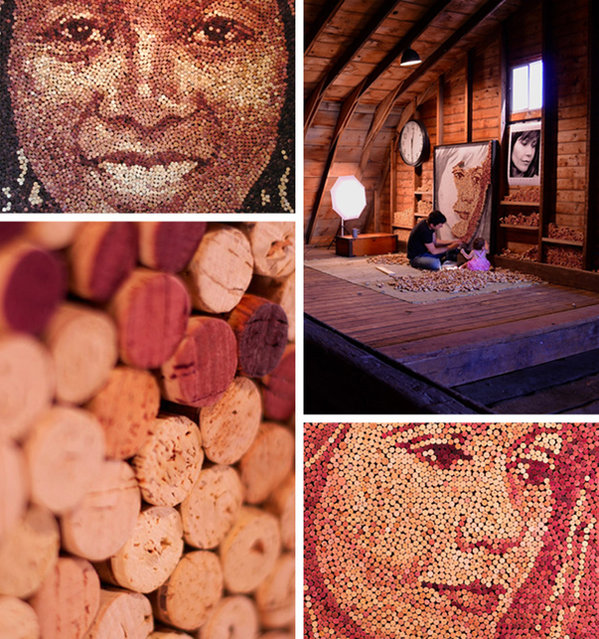
Wine Cork Portraits By Scott Gundersen

Grand Rapids (Michigan) based illustrator and artist Scott Gundersen creates his portraits from thousands of used and recycled corks. Starting with a large photograph that’s transferred to a drawing, Gundersen pins each cork to the canvas, creating a correlation between the hues of the wine-stained corks and the value of light or shadow in the portrait. Scott Gundersen has made these incredible portraits, one using 3,621, 3,842 and the other using 9,217 natural wine corks.
Details
22 Nov 2013 11:42:00
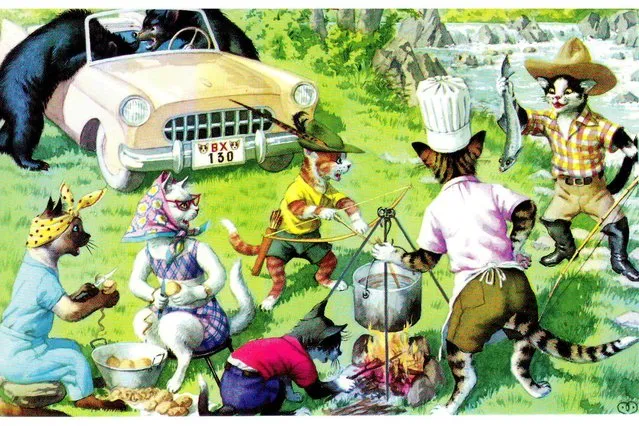
Dressed Cats By  Alfred Mainzer

From the 1940s through the 1960s, the Alfred Mainzer Company of Long Island City, NY published a series of linen and photochrome humorous cat postcards illustrated by Eugen Hartung (or Hurtong) (1897–1973), sometimes referred to as “Mainzer Cats”. These postcards normally illustrate settings that are filled with action, often with a minor disaster just about to occur. While the dressed cats were by far the most popular and most plentiful cards, Hartung also painted other dressed animals – primarily mice, dogs, and hedgehogs.
Details
31 Jan 2014 13:57:00
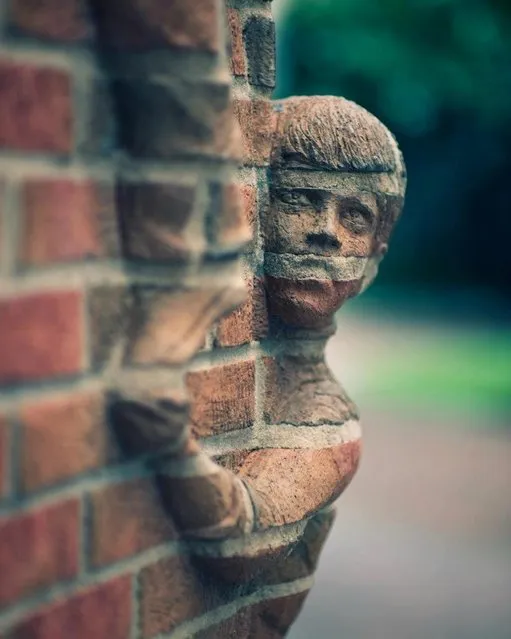
Brick Sculptures By Brad Spencer

Brad Says “Brick sculpture can be dated back to ancient Babylon but remains a fresh and interesting enhancement to any building, wall or environment. The brick medium has all the same characteristics of durability and low maintenance as a brick building, blends well in settings where other brick construction is present, looks good with landscaping and has a familiarity which is comforting to people. Brick sculpture adds intrigue and interest to a commonly understood material as viewers try to figure out the techniques by which it was created.”
Details
20 Feb 2014 13:32:00
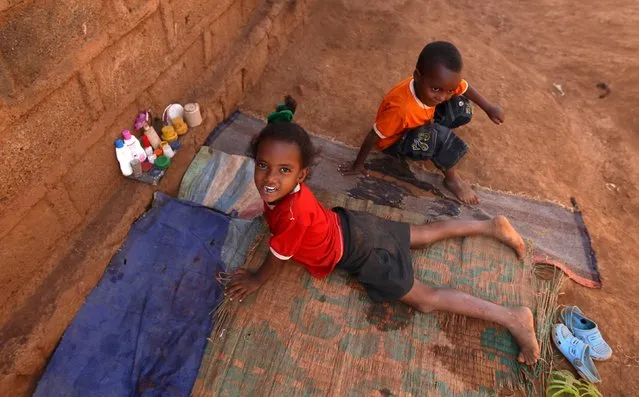
Eritrean refugee children play at Mai-Aini refugee camp near the Eritrean boarder in the Tigrai region in Ethiopia February 10, 2016. (Photo by Tiksa Negeri/Reuters)

Eritrean refugee children play at Mai-Aini refugee camp near the Eritrean boarder in the Tigrai region in Ethiopia February 10, 2016. Each month as many as 5,000 people flee Eritrea according to U.N. figures, estimates the Eritrean government disputes. The government puts the population at about 3.6 million, while other estimates suggest it could be almost double that. (Photo by Tiksa Negeri/Reuters)
Details
26 Feb 2016 09:40:00
People take part in the annual Easter Parade and Bonnet Festival along 5th Avenue in New York City March 27, 2016. (Photo by Brendan McDermid/Reuters)

People take part in the annual Easter Parade and Bonnet Festival along 5th Avenue in New York City March 27, 2016. The parade, which is more of a stroll than a parade, is more informal than the city's other parades. There are no bands, no floats, and no formations, and anyone can participate. (Photo by Brendan McDermid/Reuters)
Details
28 Mar 2016 10:52:00
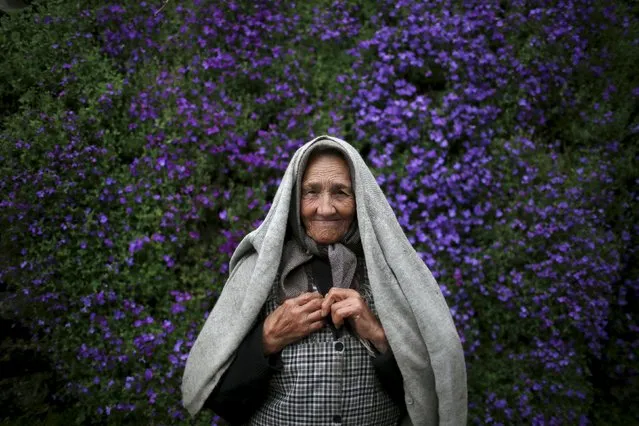
Zulmira Jesus poses for a portrait at a street in Povoa de Agracoes, near Chaves, Portugal April 19, 2016. (Photo by Rafael Marchante/Reuters)

Zulmira Jesus poses for a portrait at a street in Povoa de Agracoes, near Chaves, Portugal April 19, 2016. In the villages of Agracoes and Povoa de Agracoe, the steady drip-drip of emigration has brought down population numbers from more than 50 residents to fewer than a dozen each. These remaining villagers share the same glum acceptance that, after they have gone, their villages will die out too. It is the same desolate picture in scores of other backwater settlements in Portugal's interior, north to south. (Photo by Rafael Marchante/Reuters)
Details
29 Apr 2016 12:05:00