Loading...
Done
A mobile phone cover with a picture of Russian President Vladimir Putin and which reads “Mr President” is seen in this photo illustration taken a in hotel room in Kazan, Russia, July 30, 2015. (Photo by Stefan Wermuth/Reuters)

A mobile phone cover with a picture of Russian President Vladimir Putin and which reads “Mr President” is seen in this photo illustration taken a in hotel room in Kazan, Russia, July 30, 2015. He may be in charge of an economy in crisis, but if mobile phone covers and souvenir mugs are a barometer of popularity, Russian President Vladimir Putin need not fear for his political future. In fact, Moscow's annexation of Crimea from Ukraine last year has given the memorabilia makers even more material to glorify, sometimes wryly, a president whose image as a champion of Russian national interests in a hostile world is barely challenged in his own country. (Photo by Stefan Wermuth/Reuters)
Details
22 Aug 2015 12:02:00
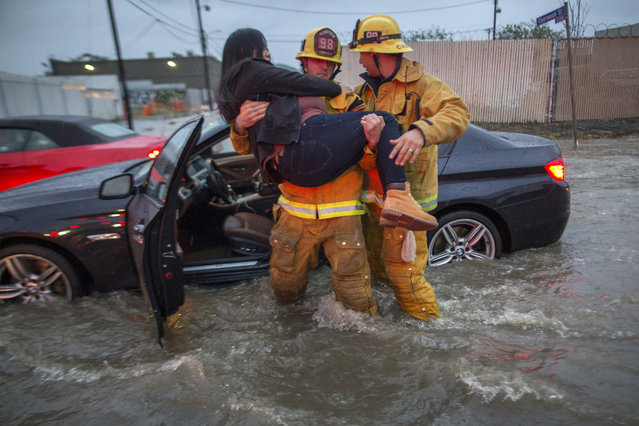
A firefighter carries a woman from her car after it was caught in street flooding as a powerful storm moves across Southern California on February 17, 2017 in Sun Valley, California. (Photo by David McNew/Getty Images)

A firefighter carries a woman from her car after it was caught in street flooding as a powerful storm moves across Southern California on February 17, 2017 in Sun Valley, California. After years of severe drought, heavy winter rains have come to the state, and with them, the issuance of flash flood watches in Santa Barbara, Ventura and Los Angeles counties, and the evacuation of hundreds of residents from Duarte, California for fear of flash flooding from areas denuded by a wildfire last year. (Photo by David McNew/Getty Images)
Details
21 Feb 2017 00:00:00
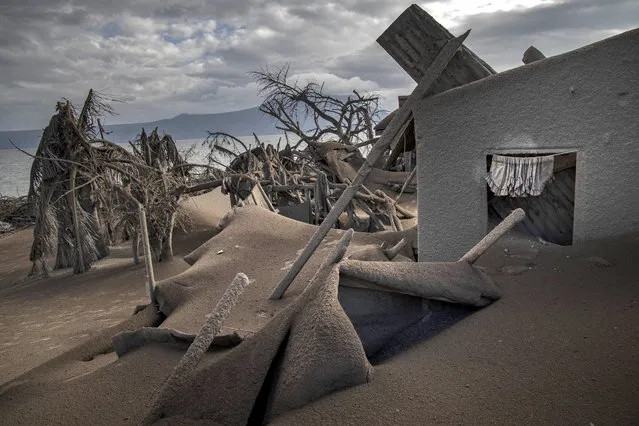
Houses near Taal Volcano's crater are seen buried in volcanic ash from the volcano's eruption on January 14, 2020 in Taal Volcano Island, Batangas province, Philippines. The Philippine Institute of Volcanology and Seismology raised the alert level to four out of five, warning that a hazardous eruption could take place anytime, as authorities have evacuated tens of thousands of people from the area. An estimated $10 million worth of crops and livestock have been damaged by the on-going eruption, according to the country's agriculture department. (Photo by Ezra Acayan/Getty Images)

Houses near Taal Volcano's crater are seen buried in volcanic ash from the volcano's eruption on January 14, 2020 in Taal Volcano Island, Batangas province, Philippines. The Philippine Institute of Volcanology and Seismology raised the alert level to four out of five, warning that a hazardous eruption could take place anytime, as authorities have evacuated tens of thousands of people from the area. An estimated $10 million worth of crops and livestock have been damaged by the on-going eruption, according to the country's agriculture department. (Photo by Ezra Acayan/Getty Images)
Details
18 Jan 2020 00:03:00
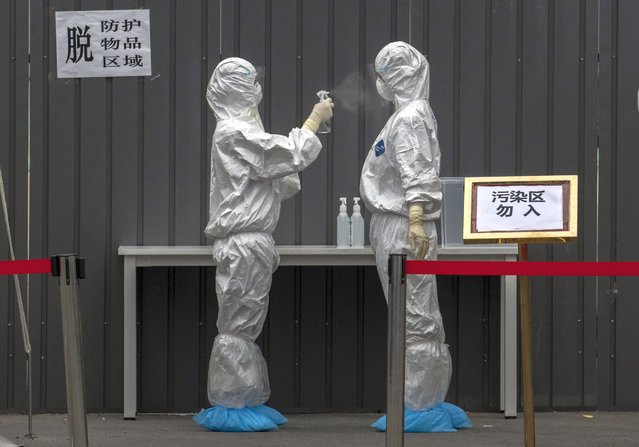
Chinese epidemic control workers wear protective suits as they disinfect each other after performing nucleic acid swab test for COVID-19 on citizens at a government testing site in Xicheng District during an organized tour on June 24, 2020 in Beijing, China. While Chinese government medical officials have said they believe they have controlled the spread, authorities are trying to contain the outbreak linked to the Xinfadi wholesale food market, Beijing's biggest supplier of produce and meat. More than 2.5 million people have undergone nucleic acid tests for COVID-19 at dozens of sites across the city in recent days, with officials using contact tracing to target high and middle risk areas and people who may have had contact with the market or food that came from there. Several neighborhoods have been locked down and a number of other food markets have been closed, The outbreak has triggered fears of a second wave of infection after 56 straight days with no domestically transmitted cases in the capital. (Photo by Kevin Frayer/Getty Images)

Chinese epidemic control workers wear protective suits as they disinfect each other after performing nucleic acid swab test for COVID-19 on citizens at a government testing site in Xicheng District during an organized tour on June 24, 2020 in Beijing, China. While Chinese government medical officials have said they believe they have controlled the spread, authorities are trying to contain the outbreak linked to the Xinfadi wholesale food market, Beijing's biggest supplier of produce and meat. (Photo by Kevin Frayer/Getty Images)
Details
26 Jun 2020 00:01:00
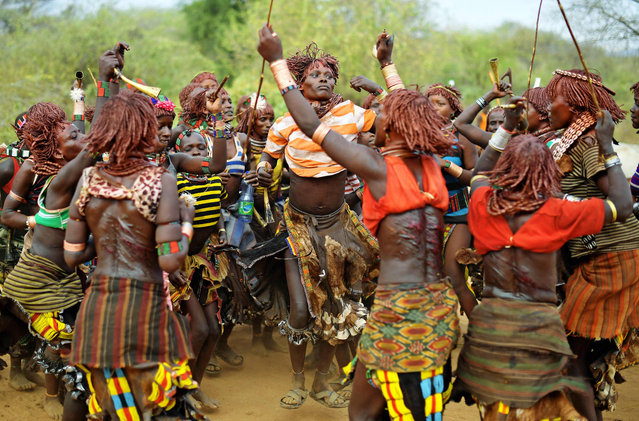
Hamar women dance before a bull jumping ceremony in Ethiopia's southern Omo Valley region near Turmi on September 19, 2016. The Hamar are a Nilotic ethnic group in Ethiopia. The construction of the Gibe III dam, the third largest hydroelectric plant in Africa, and large areas of very “thirsty” cotton and sugar plantations and factories along the Omo river are impacting heavily on the lives of tribes living in the Omo Valley who depend on the river for their survival and way of life. Human rights groups fear for the future of the tribes if they are forced to scatter, give up traditional ways through loss of land or ability to keep cattle as globalisation and development increases. (Photo by Carl De Souza/AFP Photo)

Hamar women dance before a bull jumping ceremony in Ethiopia's southern Omo Valley region near Turmi on September 19, 2016. The Hamar are a Nilotic ethnic group in Ethiopia. The construction of the Gibe III dam, the third largest hydroelectric plant in Africa, and large areas of very “thirsty” cotton and sugar plantations and factories along the Omo river are impacting heavily on the lives of tribes living in the Omo Valley who depend on the river for their survival and way of life. (Photo by Carl De Souza/AFP Photo)
Details
02 Oct 2016 08:45:00
Mayu adjusts Koiku’s kimono, as Koiku wears a protective face mask while posing for a photograph, before they work at a party where they will entertain with other geisha at Japanese luxury restaurant Asada in Tokyo, Japan, June 23, 2020. The coronavirus pandemic has made Tokyo's geisha fear for their centuries-old profession as never before. Though the number of geisha - famed for their witty conversation, beauty and skill at traditional arts - has been falling for years, they were without work for months due to Japan's state of emergency and now operate under awkward social distancing rules. Engagements are down 95 percent, and come with new rules: no pouring drinks for customers or touching them even to shake hands, and sitting 2 meters apart. Masks are hard to wear with their elaborate wigs, so they mostly don't. “I was just full of anxiety”, said Mayu, 47. “I went through my photos, sorted my kimonos ... The thought of a second wave is terrifying”. (Photo by Kim Kyung-Hoon/Reuters)

Mayu adjusts Koiku’s kimono, as Koiku wears a protective face mask while posing for a photograph, before they work at a party where they will entertain with other geisha at Japanese luxury restaurant Asada in Tokyo, Japan, June 23, 2020. (Photo by Kim Kyung-Hoon/Reuters)
Details
23 Jul 2020 00:03:00
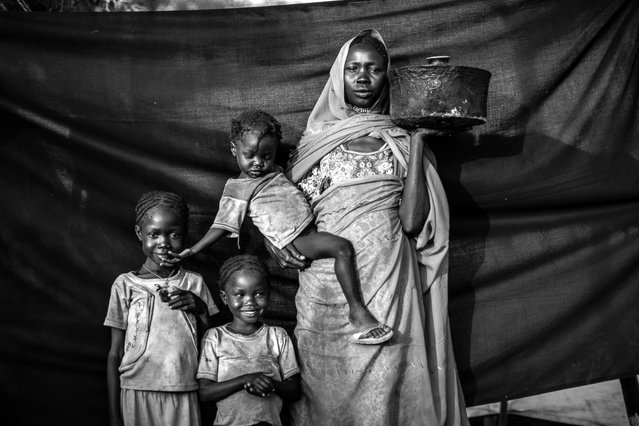
Magbola Alhadi, 20, and her three children pose for a portrait in Jamam refugee camp in Maban County, South Sudan on August 11th, 2012. Magboola and her family weathered aerial bombing raids for several months, but decided it was time to leave their village of Bofe the night that soldiers arrived and opened fire. (Photo by Brian Sokol/Panos Pictures)

Magbola Alhadi, 20, and her three children pose for a portrait in Jamam refugee camp in Maban County, South Sudan on August 11th, 2012. Magboola and her family weathered aerial bombing raids for several months, but decided it was time to leave their village of Bofe the night that soldiers arrived and opened fire. With her three children, she travelled for 12 days from Bofe to the town of El Fudj, on the South Sudanese border. The most important thing that Magboola was able to bring with her is the saucepan she holds in this photograph. It wasn't the largest pot that she had in Bofe, but it was small enough she could travel with it, yet big enough to cook sorghum for herself and her three daughters (from left: Aduna Omar, 6, Halima Omar, 4, and Arfa Omar, 2) during their journey. (Photo by Brian Sokol/Panos Pictures)
Details
18 Sep 2015 15:04:00
Caterine Ibarguen of Team Colombia competes in the Women's Triple Jump Qualification on day seven of the Tokyo 2020 Olympic Games at Olympic Stadium on July 30, 2021 in Tokyo, Japan. (Photo by Matthias Hangst/Getty Images)

Caterine Ibarguen of Team Colombia competes in the Women's Triple Jump Qualification on day seven of the Tokyo 2020 Olympic Games at Olympic Stadium on July 30, 2021 in Tokyo, Japan. (Photo by Matthias Hangst/Getty Images)
Details
04 Aug 2021 08:48:00