Loading...
Done
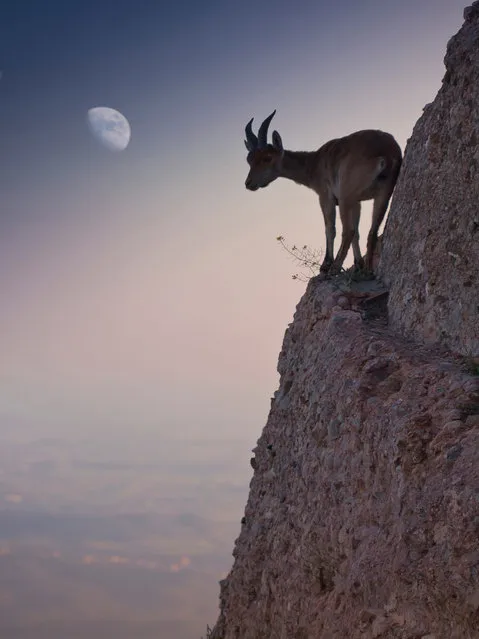
“For a bouquet of flowers”. Photographs made ​​in the last hours of the day. A goat is directed by a dangerous way to eat a small bouquet of flowers. Location: España, Barcelona, Montserrat. (Photo and caption by Renato Lopez Baldo/National Geographic Traveler Photo Contest)

“For a bouquet of flowers”. Photographs made ​​in the last hours of the day. A goat is directed by a dangerous way to eat a small bouquet of flowers. Location: España, Barcelona, Montserrat. (Photo and caption by Renato Lopez Baldo/National Geographic Traveler Photo Contest)

ATTENTION! All pictures are presented in high resolution. To see Hi-Res images – just TWICE click on any picture. In other words, click small picture – opens the BIG picture. Click BIG picture – opens VERY BIG picture.
Details
25 Jun 2013 12:51:00
The new Toyota Concept-i concept car, designed to learn about its driver is unveiled during the Toyota press conference at CES in Las Vegas, January 4, 2017. (Photo by Rick Wilking/Reuters)

The new Toyota Concept-i concept car, designed to learn about its driver is unveiled during the Toyota press conference at CES in Las Vegas, January 4, 2017. (Photo by Rick Wilking/Reuters)
Details
05 Jan 2017 13:20:00
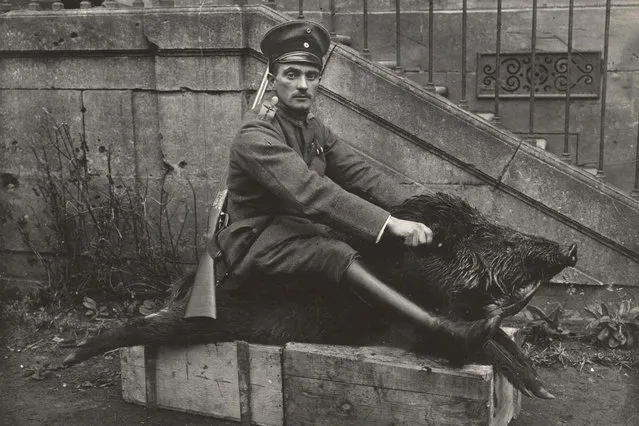
A German Air Force Officer sits astride a dead boar outside a house where he is stationed near the Western Front, in this 1918 handout picture. This picture is part of a previously unpublished set of World War One (WWI) images from a private collection. The pictures offer an unusual view of varied and contrasting aspects of the conflict, from high tech artillery to mobile pigeon lofts, and from officers partying in their headquarters to the grim reality of life and death in the trenches. The year 2014 marks the centenary of the start of the war. (Photo by Reuters/Archive of Modern Conflict London)

A German Air Force Officer sits astride a dead boar outside a house where he is stationed near the Western Front, in this 1918 handout picture. This picture is part of a previously unpublished set of World War One (WWI) images from a private collection. The pictures offer an unusual view of varied and contrasting aspects of the conflict, from high tech artillery to mobile pigeon lofts, and from officers partying in their headquarters to the grim reality of life and death in the trenches. The year 2014 marks the centenary of the start of the war. (Photo by Reuters/Archive of Modern Conflict London)
Details
26 Jun 2014 12:13:00
The eruption of Cordon Caulle began on June 4, 2011, located in the Region of Los Rios in Chile. For about 12 months, people and animals became accustomed to living with the daily fall of ash, which also caused problems in the air traffic in South America. The explosions and lightning during first days of the eruption could be seen from hundreds of miles around. This photograph was taken on the second night of eruption from the town of Lago Ranco. (Photo and caption by Francisco Negroni/National Geographic Traveler Photo Contest)

The eruption of Cordon Caulle began on June 4, 2011, located in the Region of Los Rios in Chile. For about 12 months, people and animals became accustomed to living with the daily fall of ash, which also caused problems in the air traffic in South America. The explosions and lightning during first days of the eruption could be seen from hundreds of miles around. This photograph was taken on the second night of eruption from the town of Lago Ranco. (Photo and caption by Francisco Negroni/National Geographic Traveler Photo Contest)

ATTENTION! All pictures are presented in high resolution. To see Hi-Res images – just TWICE click on any picture. In other words, click small picture – opens the BIG picture. Click BIG picture – opens VERY BIG picture.
Details
23 Jun 2013 11:24:00
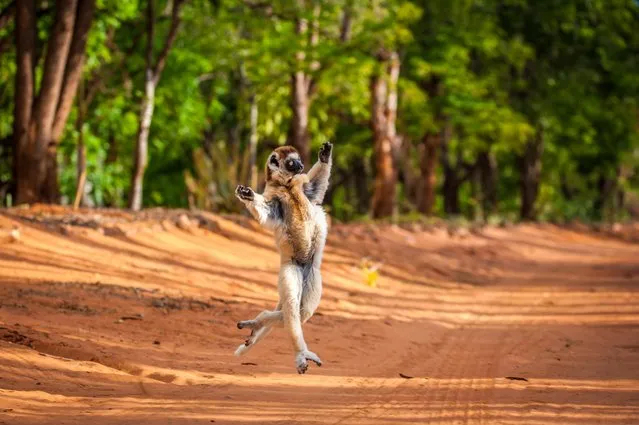
The Sifaka jumps along the road. (Photo by Shannon Wild/Caters News Agency)

The Verreauxs Sifaka, otherwise known as Dancing Sifaka, who was caught strutting its stuff in Madagascar, has definitely learnt a lesson or two from King Julian – from the 2005 film “Madagascar”. Raising both of its arms and lunging from side to side, this lemur definitely likes to move it, move it. (Photo by Shannon Wild/Caters News Agency)
Details
24 Jan 2018 06:17:00
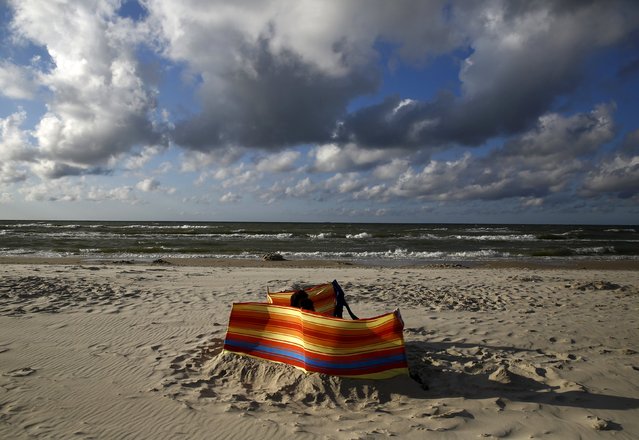
A couple sunbath on the beach in Ostrowo, northern Poland, July 20, 2015. Picture taken July 20, 2015. (Photo by Kacper Pempel/Reuters)

A couple sunbath on the beach in Ostrowo, northern Poland, July 20, 2015. Picture taken July 20, 2015. (Photo by Kacper Pempel/Reuters)
Details
10 Nov 2015 08:06:00


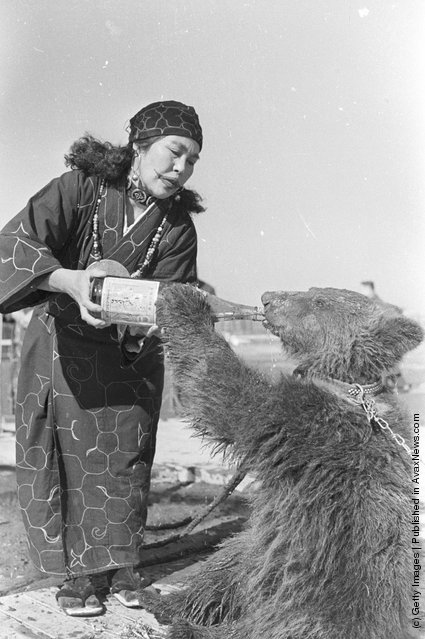
“The Ainu (アイヌ?), also called Aynu, Aino (アイノ), and in historical texts Ezo (蝦夷), are indigenous people or groups in Japan and Russia. Historically they spoke the Ainu language and related varieties and lived in Hokkaidō, the Kuril Islands, and much of Sakhalin. Most of those who identify themselves as Ainu still live in this same region, though the exact number of living Ainu is unknown. This is due to ethnic issues in Japan resulting in those with Ainu backgrounds hiding their identities and confusion over mixed heritages. In Japan, because of intermarriage over many years with Japanese, the concept of a 'pure Ainu' ethnic group is no longer feasible. Official estimates of the population are of around 25,000, while the unofficial number is upwards of 200,000 people”. – Wkipedia

Photo: A captive bear drinking from a large bottle held by an Ainu tribeswoman. (Photo by Evans/Three Lions/Getty Images). Circa 1955
Details
24 Mar 2011 14:01:00
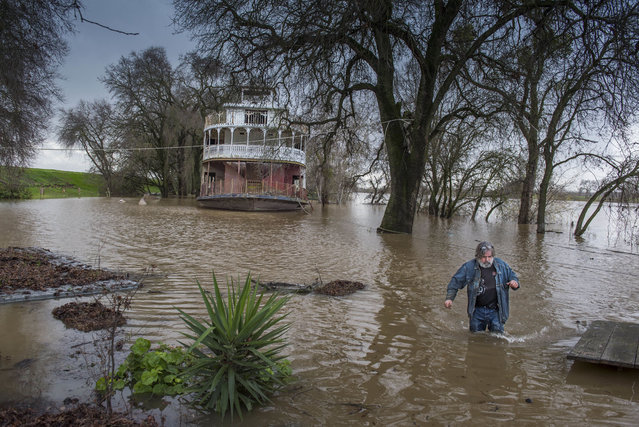
Rick Sorenson, owner of the Rio Ramaza Marina, wades in the Sacramento River after securing an old paddlewheel boat on his property as the river makes its way up the levee on Garden Highway in Sacramento, Calif., Monday, January 9, 2017. (Photo by Hector Amezcua/The Sacramento Bee via AP Photo)

Rick Sorenson, owner of the Rio Ramaza Marina, wades in the Sacramento River after securing an old paddlewheel boat on his property as the river makes its way up the levee on Garden Highway in Sacramento, Calif., Monday, January 9, 2017. (Photo by Hector Amezcua/The Sacramento Bee via AP Photo)
Details
21 Jan 2017 11:35:00