Loading...
Done
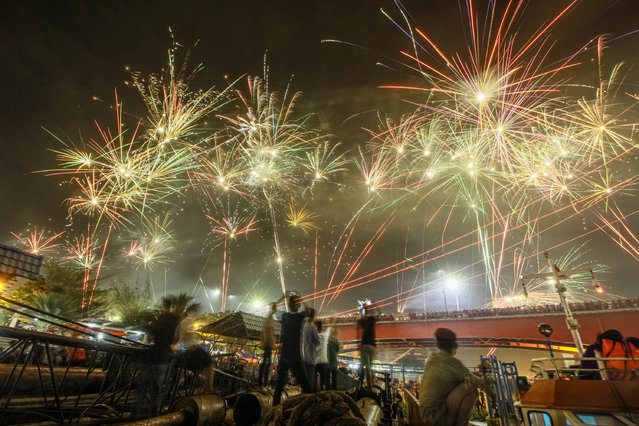
Fireworks illuminate the Ampera Bridge during a New Year's Eve celebrations in Palembang, Indonesia on January 1, 2020. (Photo by Muhammad Tohir/Sijori Images via ZUMA Wire/Rex Features/Shutterstoc)

Fireworks illuminate the Ampera Bridge during a New Year's Eve celebrations in Palembang, Indonesia on January 1, 2020. (Photo by Muhammad Tohir/Sijori Images via ZUMA Wire/Rex Features/Shutterstoc)
Details
02 Jan 2020 00:03:00
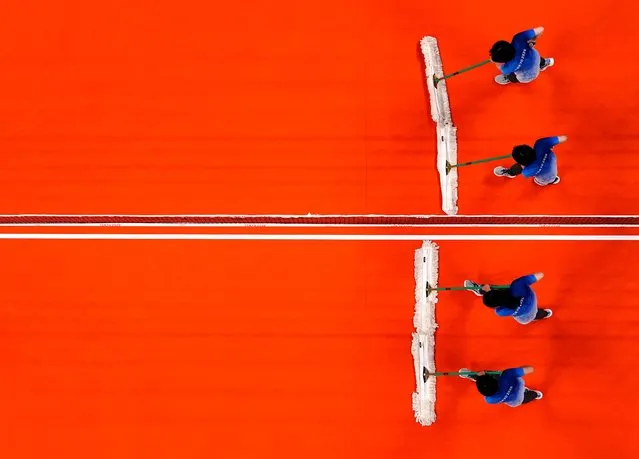
Staff members clean the court during the Women's Preliminary Round - Pool B volleyball match between China and Argentina on day ten of the Tokyo 2020 Olympic Games at Ariake Arena on August 2, 2021 in Tokyo, Japan. (Photo by Carlos Garcia Rawlins/Reuters)

Staff members clean the court during the Women's Preliminary Round - Pool B volleyball match between China and Argentina on day ten of the Tokyo 2020 Olympic Games at Ariake Arena on August 2, 2021 in Tokyo, Japan. (Photo by Carlos Garcia Rawlins/Reuters)
Details
15 Aug 2021 07:17:00
A woman, covered in coloured powder, takes part in the 2019 Colour Run, a 5 km run around the Luzhniki Olympic Complex, in Moscow, Russia on June 02, 2019. (Photo by Sefa Karacan/Anadolu Agency/Getty Images)

A woman, covered in coloured powder, takes part in the 2019 Colour Run, a 5 km run around the Luzhniki Olympic Complex, in Moscow, Russia on June 02, 2019. (Photo by Sefa Karacan/Anadolu Agency/Getty Images)
Details
04 Jun 2019 00:07:00
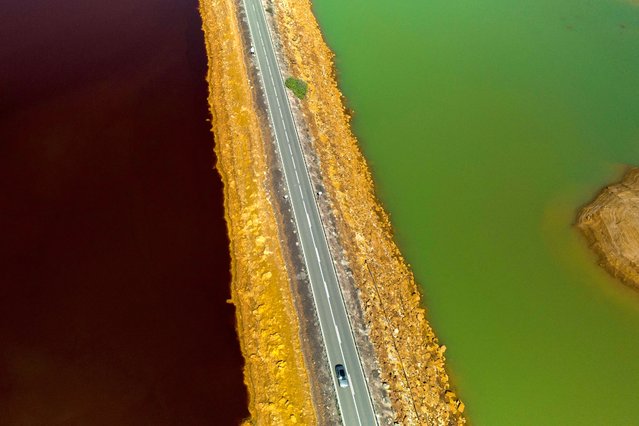
This aerial image shows a gossan reservoir at the Riotinto mines in Minas de Riotinto, near of Huelva on September 30, 2022. Although the Rio Tinto Company began to exploit these mines in 1873, this mining site already supplied minerals to the ancient Greeks and Romans. (Photo by Jorge Guerrero/AFP Photo)

This aerial image shows a gossan reservoir at the Riotinto mines in Minas de Riotinto, near of Huelva on September 30, 2022. Although the Rio Tinto Company began to exploit these mines in 1873, this mining site already supplied minerals to the ancient Greeks and Romans. (Photo by Jorge Guerrero/AFP Photo)
Details
29 Oct 2022 04:09:00
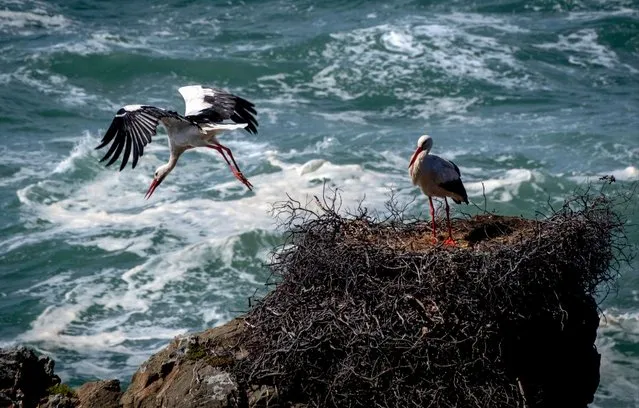
A stork starts from its nest in the cliffs high above the Atlantic Ocean in Cabo Sardao, Portugal, Friday, March 29, 2024. (Photo by Michael Probst/AP Photo)

A stork starts from its nest in the cliffs high above the Atlantic Ocean in Cabo Sardao, Portugal, Friday, March 29, 2024. (Photo by Michael Probst/AP Photo)
Details
21 Apr 2024 03:04:00
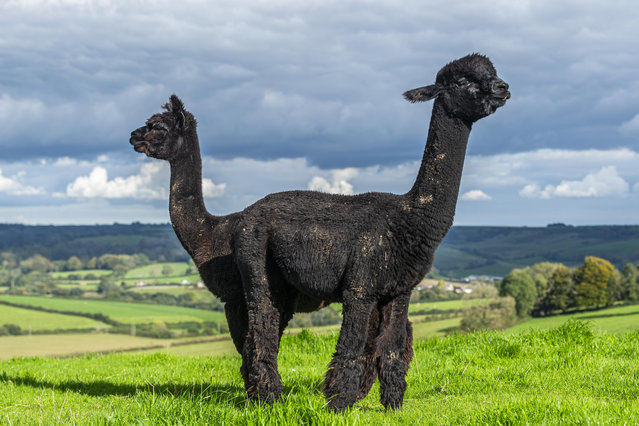
A pair of alpacas at a British farm in Dorchester, Dorset on October 9, 2024 pose together at the perfect time to conjure up a creature straight out of Dr Dolittle's imagination. (Phoot by MaxWillcock/Bournemouth News)

A pair of alpacas at a British farm in Dorchester, Dorset on October 9, 2024 pose together at the perfect time to conjure up a creature straight out of Dr Dolittle's imagination. (Phoot by MaxWillcock/Bournemouth News)
Details
13 Oct 2024 03:25:00
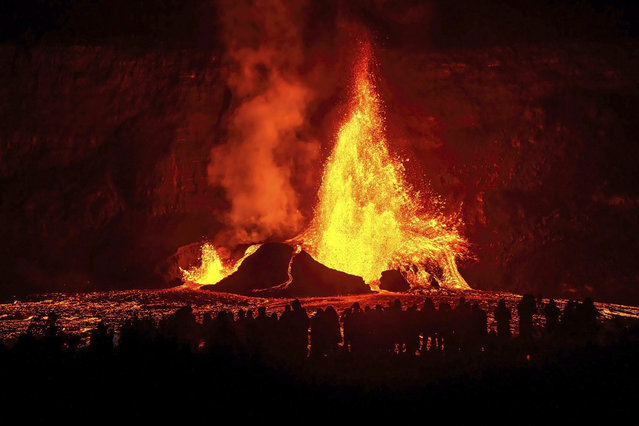
In this photo provided by Janice Wei, a fountain of lava spews from an eruption of Kilauea volcano in Hawaii Volcanoes National Park on the Big Island of Hawaii, on Monday, February 3, 2025. (Photo by Janice Wei/NPS via AP Photo)

In this photo provided by Janice Wei, a fountain of lava spews from an eruption of Kilauea volcano in Hawaii Volcanoes National Park on the Big Island of Hawaii, on Monday, February 3, 2025. (Photo by Janice Wei/NPS via AP Photo)
Details
24 Mar 2025 03:39:00
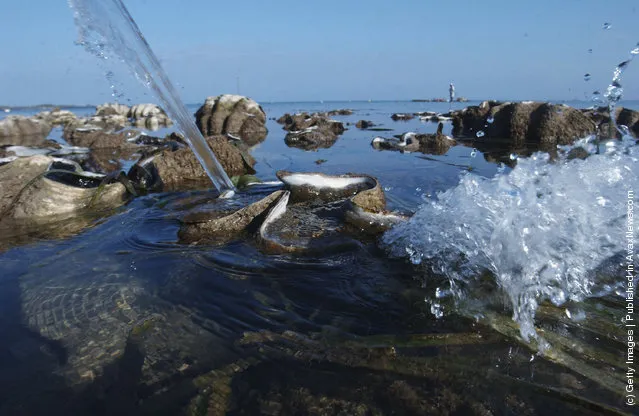
Tridacna Gigas, or Giant Clams

“The giant clam, Tridacna gigas (known as pā’ua in Cook Islands Māori), is the largest living bivalve mollusc. T. gigas is one of the most endangered clam species. It was mentioned as early as 1825 in scientific reports. One of a number of large clam species native to the shallow coral reefs of the South Pacific and Indian oceans, they can weigh more than 200 kilograms (440 lb) measure as much as 120 cm (47 in) across, and have an average lifespan in the wild of 100 years or more”. – Wikipedia

Photo: Tridacna Gigas, or Giant Clams spew water as a traditional fisherman passes by a small sanctuary on January 23, 2004 near Bolinao in the Northern Philippines. The clams, prime builders for coral reefs and providing shelter for spawning fish and other marine life, are exposed by low tides in the sanctuary. Overfishing and pollution throughout the country are not only threatening food security, but are also starting to choke one of the few working clam sanctuaries in the world. (Photo by David Greedy/Getty Images)
Details
01 Oct 2011 13:10:00