Loading...
Done
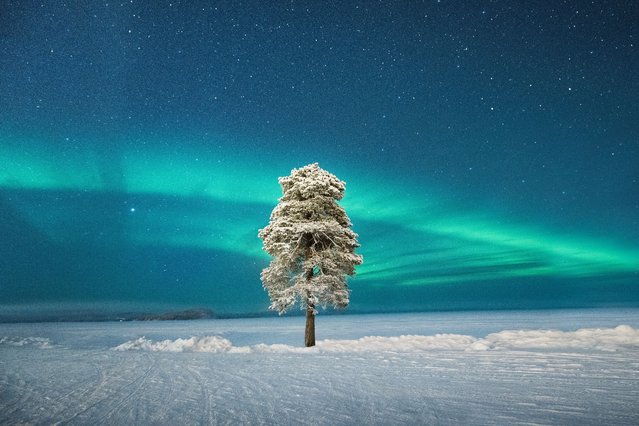
Aurorae category runner-up: Lone Tree under a Scandinavian Aurora by Tom Archer (UK). The photographer decided to explore the area around the hotel on a very crisp -35C evening in Finnish Lapland. When he found this tree, he decided to wait for the misty conditions to change and could not believe his luck when the sky cleared and the aurora came out in the perfect spot. Archer spent about an hour photographing it before his camera started to lock up because of the harsh conditions, but by then he was happy to call it a night. (Photo by Tom Archer/2020 Astronomy Photographer of the Year)

Aurorae category runner-up: Lone Tree under a Scandinavian Aurora by Tom Archer (UK). The photographer decided to explore the area around the hotel on a very crisp -35C evening in Finnish Lapland. When he found this tree, he decided to wait for the misty conditions to change and could not believe his luck when the sky cleared and the aurora came out in the perfect spot. Archer spent about an hour photographing it before his camera started to lock up because of the harsh conditions, but by then he was happy to call it a night. (Photo by Tom Archer/2020 Astronomy Photographer of the Year)
Details
17 Sep 2020 00:03:00
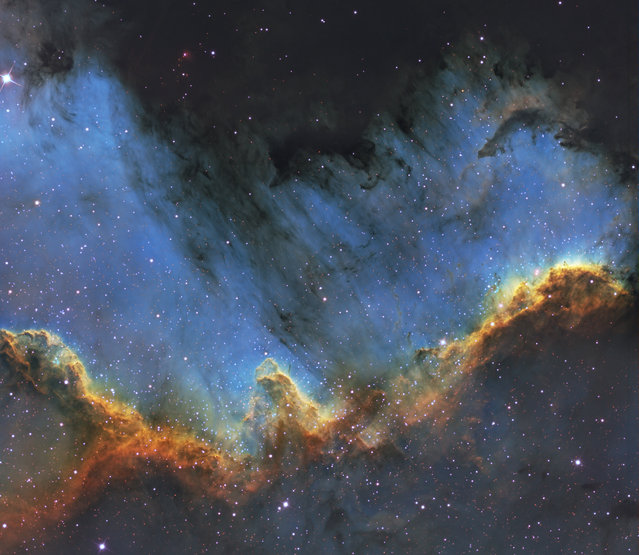
The Cygnus Wall is in the southern  area of NGC7000 also known as the North America Nebula. It is approximately 1800 light years from Earth, and is in the constellation Cygnus. The Wall is an energized shock front and contains the most concentrated star formations in the nebula. The size of the North America Nebula is about 4 full moons. (Bill Snyder)

Amateur astronomer Bill Snyder has been involved with astrophotography since 2007. Photo: The Cygnus Wall is in the southern area of NGC7000 also known as the North America Nebula. It is approximately 1800 light years from Earth, and is in the constellation Cygnus. The Wall is an energized shock front and contains the most concentrated star formations in the nebula. The size of the North America Nebula is about 4 full moons. (Photo and caption by Bill Snyder)
Details
30 Oct 2013 09:15:00
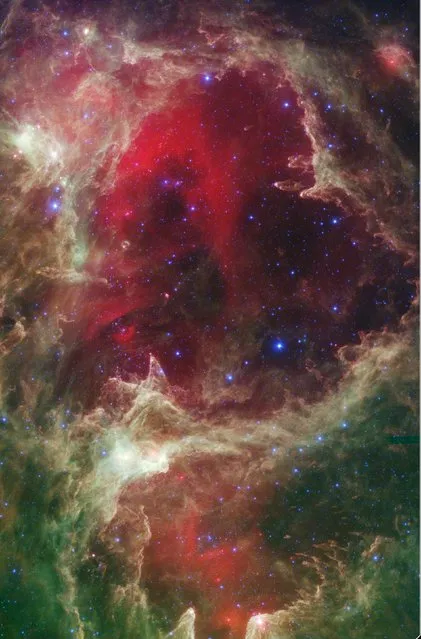
An infrared portrait from NASA's Spitzer Space Telescope which shows generations of stars is seen in this undated NASA handout image released February 14, 2013. In this wispy star-forming region, called W5, the oldest stars can be seen as blue dots in the centers of the two hollow cavities (other blue dots are background and foreground stars not associated with the region). Red shows heated dust that pervades the region's cavities, while green highlights dense clouds. (Photo by NASA/Reuters/JPL-Caltech/Harvard-Smithsonian/Handout)

An infrared portrait from NASA's Spitzer Space Telescope which shows generations of stars is seen in this undated NASA handout image released February 14, 2013. In this wispy star-forming region, called W5, the oldest stars can be seen as blue dots in the centers of the two hollow cavities (other blue dots are background and foreground stars not associated with the region). Red shows heated dust that pervades the region's cavities, while green highlights dense clouds. (Photo by NASA/Reuters/JPL-Caltech/Harvard-Smithsonian/Handout)
Details
03 Mar 2013 08:44:00
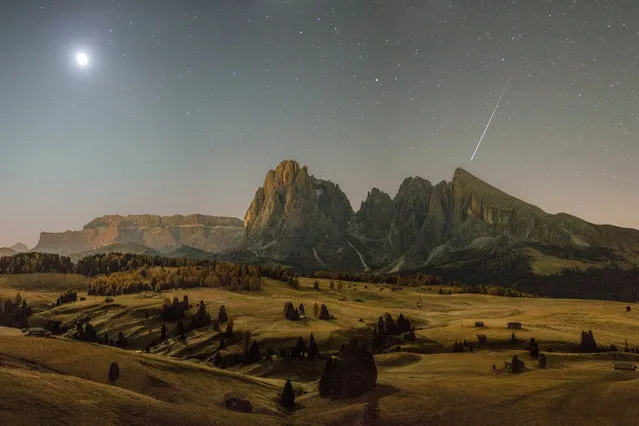
Young category winner. Great autumn morning by Fabian Dalpiaz. (Photo by Fabian Dalpiaz/2018 Astronomy Photographer of the Year)

Young category winner. Great autumn morning by Fabian Dalpiaz. (Photo by Fabian Dalpiaz/2018 Astronomy Photographer of the Year)
Details
26 Oct 2018 00:03:00
Katelin Wie Qi Heng of Team Singapore competes with ball during the Team Final and Individual Qualification on day seven of the Birmingham 2022 Commonwealth Games at Arena Birmingham on August 04, 2022 in Birmingham, England. (Photo by Elsa/Getty Images)

Katelin Wie Qi Heng of Team Singapore competes with ball during the Team Final and Individual Qualification on day seven of the Birmingham 2022 Commonwealth Games at Arena Birmingham on August 04, 2022 in Birmingham, England. (Photo by Elsa/Getty Images)
Details
19 Nov 2023 04:50:00
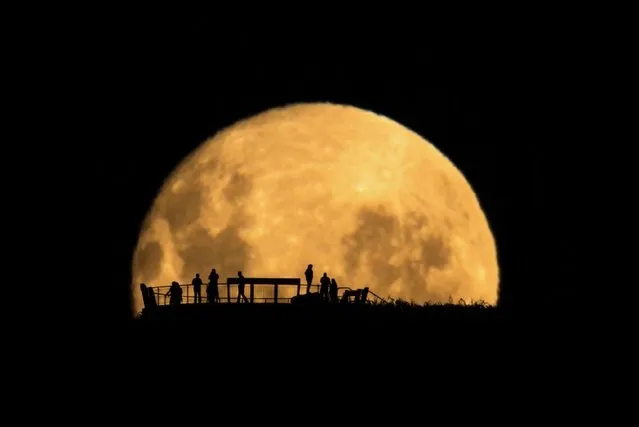
Astronomy Photographer Of The Year 2013 Part1

The Royal Observatory just announced its Astronomy Photographer Of The Year 2013 winners. Australian photographer Mark Gee was chosen among a thousand amateur and professional photographers around the globe to win the top title. His work is part of an exhibition of the winning photographers, which opened on Sept. 19 at the Royal Observatory Greenwich. The Royal Observatory shared with us the winners and notable mentions of the competition. Their descriptions of the prizewinners can be found below the images.
Details
04 Oct 2013 11:45:00
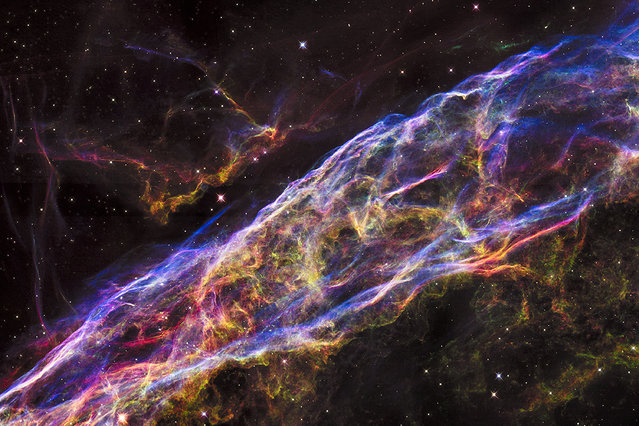
A small section of the expanding remains of the Veil Nebula, a massive star that exploded about 8,000 years ago. The entire nebula is 110 light-years across, covering six full moons on the sky as seen from Earth, and resides about 2,100 light-years away in the constellation Cygnus, the Swan. Image taken by NASA's Hubble Space Telescope. Released September 24, 2015. (Photo by Reuters/NASA/ESA/Hubble Heritage Team)

A small section of the expanding remains of the Veil Nebula, a massive star that exploded about 8,000 years ago. The entire nebula is 110 light-years across, covering six full moons on the sky as seen from Earth, and resides about 2,100 light-years away in the constellation Cygnus, the Swan. Image taken by NASA's Hubble Space Telescope. Released September 24, 2015. (Photo by Reuters/NASA/ESA/Hubble Heritage Team)
Details
10 Dec 2015 08:01:00
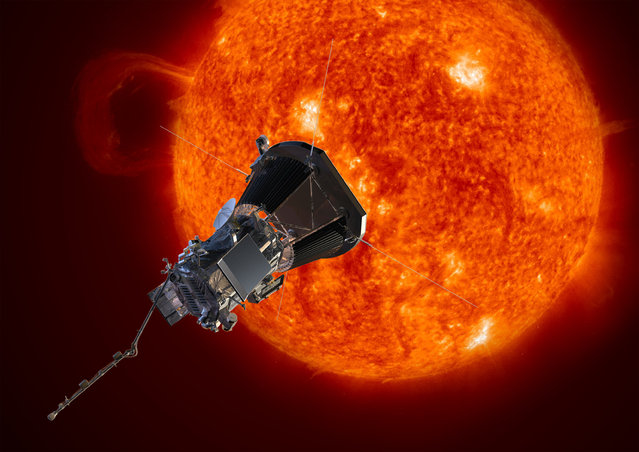
This image made available by the Johns Hopkins University Applied Physics Laboratory on Wednesday, May 31, 2017 depicts NASA's Solar Probe Plus spacecraft approaching the sun. On Wednesday, NASA announced it will launch the probe in summer 2018 to explore the solar atmosphere. It will be subjected to brutal heat and radiation like no other man-made structure before. (Photo by Johns Hopkins University Applied Physics Laboratory via AP Photo)

This image made available by the Johns Hopkins University Applied Physics Laboratory on Wednesday, May 31, 2017 depicts NASA's Solar Probe Plus spacecraft approaching the sun. On Wednesday, NASA announced it will launch the probe in summer 2018 to explore the solar atmosphere. It will be subjected to brutal heat and radiation like no other man-made structure before. (Photo by Johns Hopkins University Applied Physics Laboratory via AP Photo)
Details
08 Sep 2017 09:42:00