Loading...
Done
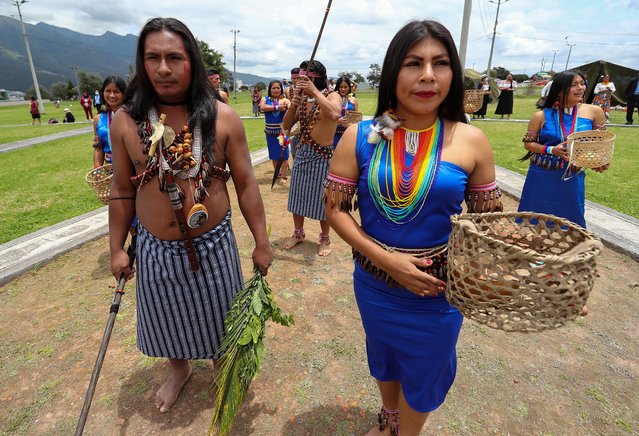
Ecuadorian indigenous people celebrate the festival of the moon or Kulla Raymi, in Quito, Ecuador, 21 September 2021. A circle on the ground made up of fruits and inside the Andean symbol of the chacana, multinational geometric flags and a cross that symbolizes the four cardinal points, were the setting in which the festival of the moon, the Kulla, was commemorated this Tuesday. Raymi, on a hill in Quito. It is one of the four most significant festivities of the Andean agroecological calendar, which commemorates the beginning of life and exalts women as the maximum representation of fertility. (Photo by Jose Jacome/EPA/EFE)

Ecuadorian indigenous people celebrate the festival of the moon or Kulla Raymi, in Quito, Ecuador, 21 September 2021. A circle on the ground made up of fruits and inside the Andean symbol of the chacana, multinational geometric flags and a cross that symbolizes the four cardinal points, were the setting in which the festival of the moon, the Kulla, was commemorated this Tuesday. Raymi, on a hill in Quito. It is one of the four most significant festivities of the Andean agroecological calendar, which commemorates the beginning of life and exalts women as the maximum representation of fertility. (Photo by Jose Jacome/EPA/EFE)
Details
22 Sep 2021 09:01:00
A South Korean diver wearing a little mermaid costume performs in a tank ahead of the “Chuseok” national holiday, at the Coex Aquarium in Seoul, South Korea, 26 August 2022. Chuseok is the autumn harvest celebration of the Lunar Calendar and is one of Korea's biggest traditional holiday, which falls on 10 Setpember this year. (Photo by Jeon Heon-Kyun/EPA/EFE)

A South Korean diver wearing a little mermaid costume performs in a tank ahead of the “Chuseok” national holiday, at the Coex Aquarium in Seoul, South Korea, 26 August 2022. Chuseok is the autumn harvest celebration of the Lunar Calendar and is one of Korea's biggest traditional holiday, which falls on 10 Setpember this year. (Photo by Jeon Heon-Kyun/EPA/EFE)
Details
21 Sep 2022 04:50:00
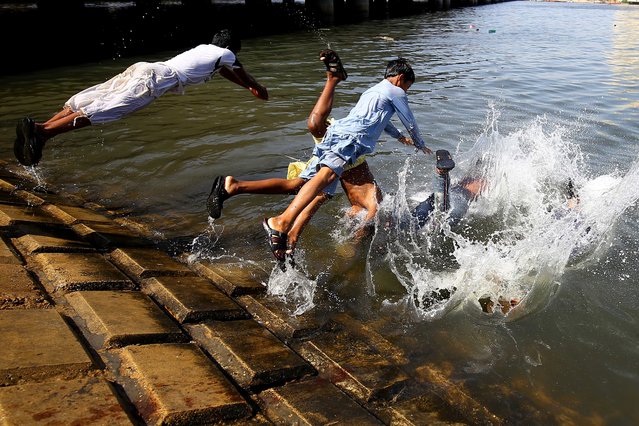
Children play in water to beat the heat during the Muslim holy month of Ramadan amid lockdown of the Sindh province due to the ongoing coronavirus COVID-19 disease pandemic in Karachi, Pakistan, 28 April 2020. Muslims around the world celebrate the holy month of Ramadan, by praying during the night time and abstaining from eating, drinking, and sexual acts during the period between sunrise and sunset. Ramadan is the ninth month in the Islamic calendar and it is believed that the revelation of the first verse in Koran was during its last 10 nights. (Photo by Shahzaib Akber/EPA/EFE)

Children play in water to beat the heat during the Muslim holy month of Ramadan amid lockdown of the Sindh province due to the ongoing coronavirus COVID-19 disease pandemic in Karachi, Pakistan, 28 April 2020. Muslims around the world celebrate the holy month of Ramadan, by praying during the night time and abstaining from eating, drinking, and sexual acts during the period between sunrise and sunset. Ramadan is the ninth month in the Islamic calendar and it is believed that the revelation of the first verse in Koran was during its last 10 nights. (Photo by Shahzaib Akber/EPA/EFE)
Details
20 May 2020 00:05:00
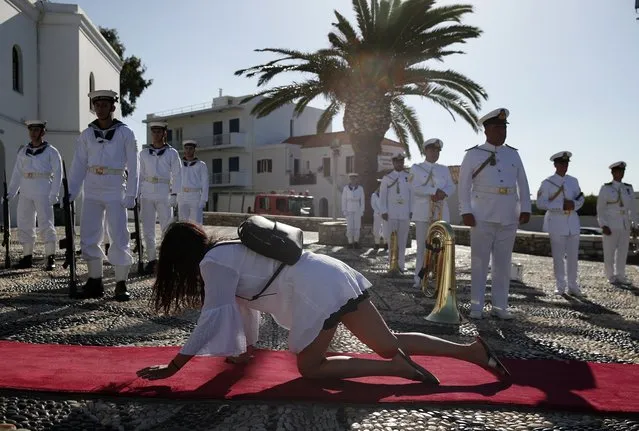
A pilgrim crawls in front of the Navy band outside the Holy Church of Panagia of Tinos, on the Aegean island of Tinos, Greece, on Saturday, August 15, 2020. For nearly 200 years, Greek Orthodox faithful have flocked to Tinos for the August 15 feast day of the Assumption of the Virgin Mary, the most revered religious holiday in the Orthodox calendar after Easter. But this year there was no procession, the ceremony – like so many lives across the globe – upended by the coronavirus pandemic. (Photo by Thanassis Stavrakis/AP Photo)

A pilgrim crawls in front of the Navy band outside the Holy Church of Panagia of Tinos, on the Aegean island of Tinos, Greece, on Saturday, August 15, 2020. For nearly 200 years, Greek Orthodox faithful have flocked to Tinos for the August 15 feast day of the Assumption of the Virgin Mary, the most revered religious holiday in the Orthodox calendar after Easter. But this year there was no procession, the ceremony – like so many lives across the globe – upended by the coronavirus pandemic. (Photo by Thanassis Stavrakis/AP Photo)
Details
17 Aug 2020 00:07:00
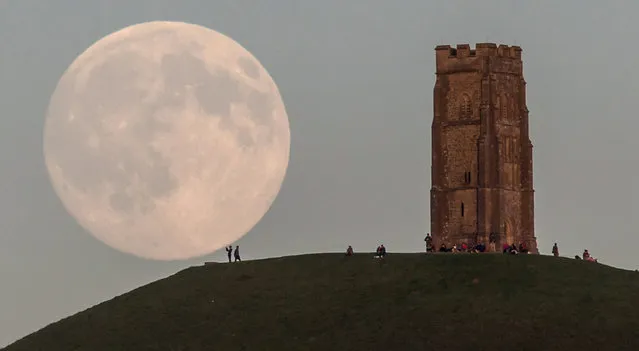
The moon rises over people gathered on Glastonbury Tor ahead of tomorrow's Blue Moon on July 30, 2015 in Somerset, England. The full moon appearing on July 31 will be what's called a Blue Moon, which refers to the second of two full moons appearing in the same calendar month. The last time this happened was in 2012 and there isn't due another until 2018. (Photo by Matt Cardy/Getty Images)

The moon rises over people gathered on Glastonbury Tor ahead of tomorrow's Blue Moon on July 30, 2015 in Somerset, England. The full moon appearing on July 31 will be what's called a Blue Moon, which refers to the second of two full moons appearing in the same calendar month. The last time this happened was in 2012 and there isn't due another until 2018. (Photo by Matt Cardy/Getty Images)
Details
02 Aug 2015 13:07:00
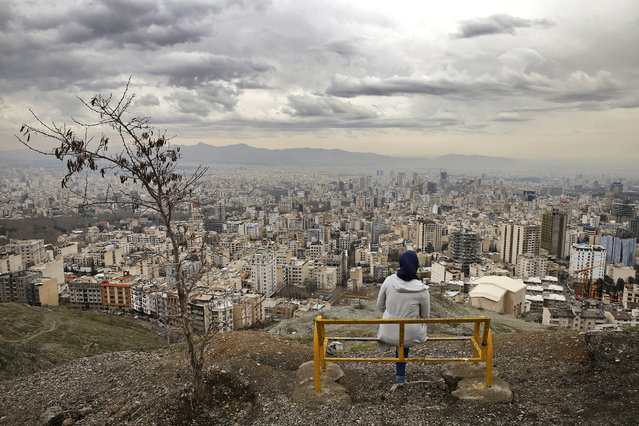
A woman spends her time outdoors to observe the ancient festival of Sizdeh Bedar, an annual public picnic day on the 13th day of the Iranian new year, at the Tochal mountainous area northern Tehran, Iran, Sunday, April, 2, 2017. Sizdeh Bedar, which comes from the Farsi words for “thirteen” and “day out”, is a legacy from Iran's pre-Islamic past that hard-liners in the Islamic Republic never managed to erase from calendars. (Photo by Ebrahim Noroozi/AP Photo)

A woman spends her time outdoors to observe the ancient festival of Sizdeh Bedar, an annual public picnic day on the 13th day of the Iranian new year, at the Tochal mountainous area northern Tehran, Iran, Sunday, April, 2, 2017. Sizdeh Bedar, which comes from the Farsi words for “thirteen” and “day out”, is a legacy from Iran's pre-Islamic past that hard-liners in the Islamic Republic never managed to erase from calendars. (Photo by Ebrahim Noroozi/AP Photo)
Details
21 Apr 2017 07:38:00
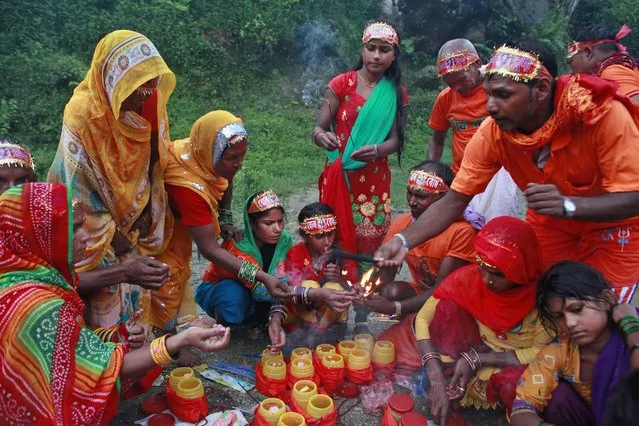
Hindu devotees perform rituals during the Bol Bom pilgrimage, on the outskirts of Kathmandu, Nepal, Monday, August 8, 2016. During this pilgrimage, devotees walk miles barefooted before offering water collected from Bagmati river, at the Pashupatinath temple in Katmandu. Shravan Somwar or Monday of Hindu calendar month of Shravan is considered auspicious for offering prayers to Lord Shiva, the god of destruction. (Photo by Niranjan Shrestha/AP Photo)

Hindu devotees perform rituals during the Bol Bom pilgrimage, on the outskirts of Kathmandu, Nepal, Monday, August 8, 2016. During this pilgrimage, devotees walk miles barefooted before offering water collected from Bagmati river, at the Pashupatinath temple in Katmandu. Shravan Somwar or Monday of Hindu calendar month of Shravan is considered auspicious for offering prayers to Lord Shiva, the god of destruction. (Photo by Niranjan Shrestha/AP Photo)
Details
09 Aug 2016 12:42:00
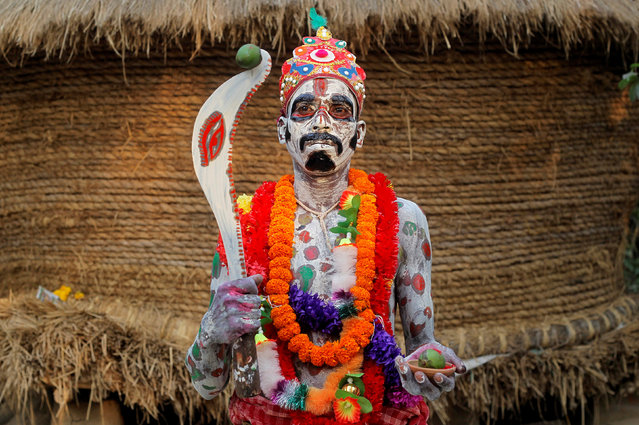
A devotee with his body painted poses as he waits to perform during a ritual as part of the annual Shiva Gajan religious festival at Sona Palasi village, in West Bengal, India, April 11, 2016. Devotees offer sacrifices and perform acts of devotion during the festival in the hopes of winning the favour of Hindu god Shiva and ensuring the fulfillment of their wishes, and also to mark the end of the Bengali calendar year. (Photo by Rupak De Chowdhuri/Reuters)

A devotee with his body painted poses as he waits to perform during a ritual as part of the annual Shiva Gajan religious festival at Sona Palasi village, in West Bengal, India, April 11, 2016. Devotees offer sacrifices and perform acts of devotion during the festival in the hopes of winning the favour of Hindu god Shiva and ensuring the fulfillment of their wishes, and also to mark the end of the Bengali calendar year. (Photo by Rupak De Chowdhuri/Reuters)
Details
13 Apr 2016 09:42:00