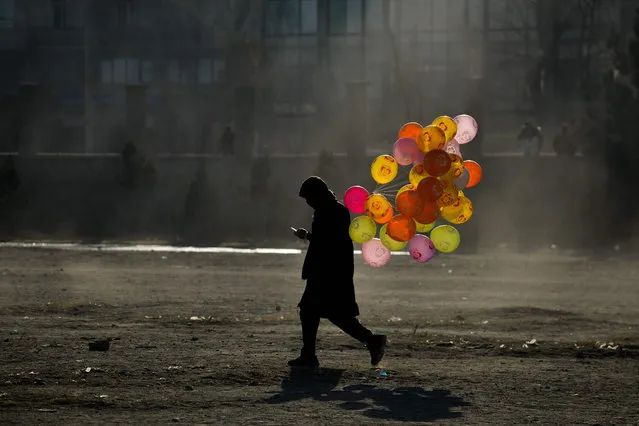
An Afghan hawker selling balloons walks along a path in a ground in Chaman-e-Hozori area in Kabul on December 10, 2021. (Photo by Ahmad Sahel Arman/AFP Photo)
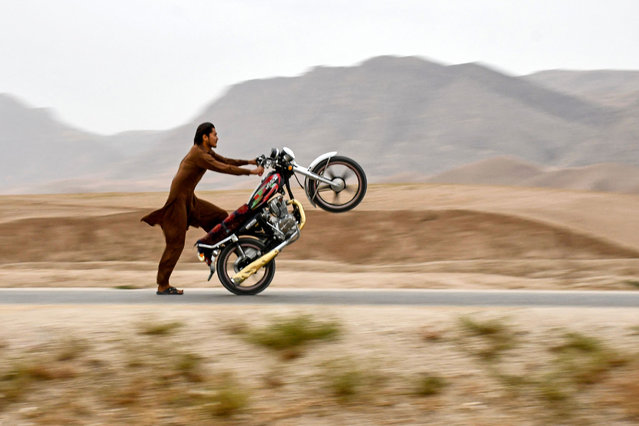
An Afghan man shows his skills while riding a motorcycle along a road on the outskirts of Mazar-i-Sharif on October 6, 2024. (Photo by Atif Aryan/AFP Photo)
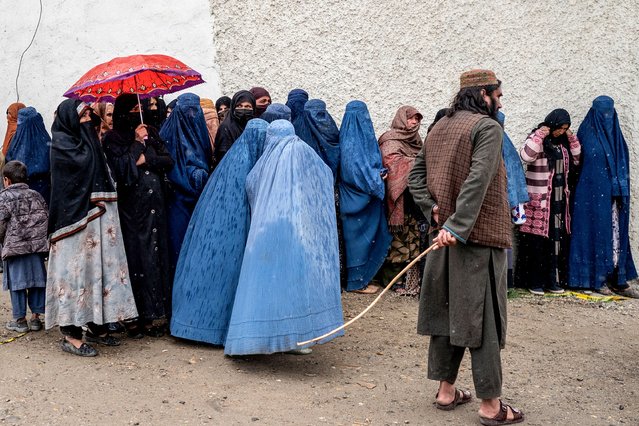
A Taliban security personnel stands guard as Afghan burqa-clad women wait in queue in the midst of a downpour to receive food supplies donated during the Islamic holy fasting month of Ramadan, in Kabul on March 25, 2025. (Photo by Wakil Kohsar/AFP Photo)
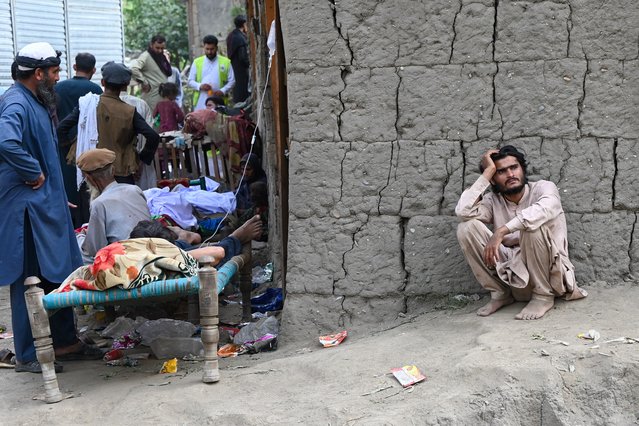
An Afghan man mourns outside a damaged house, after earthquakes at Mazar Dara village in Nurgal district, Kunar province, in Eastern Afghanistan, on September 1, 2025. (Photo by Wakil Kohsar/AFP Photo)
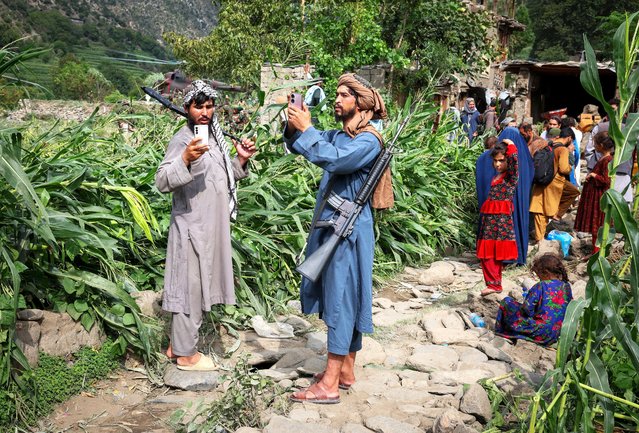
Members of Taliban take pictures of the devastated village of Mazar Dara following a deadly magnitude-6 earthquake that struck Afghanistan, Kunar province, Afghanistan, on September 1, 2025. (Photo by Sayed Hassib/Reuters)
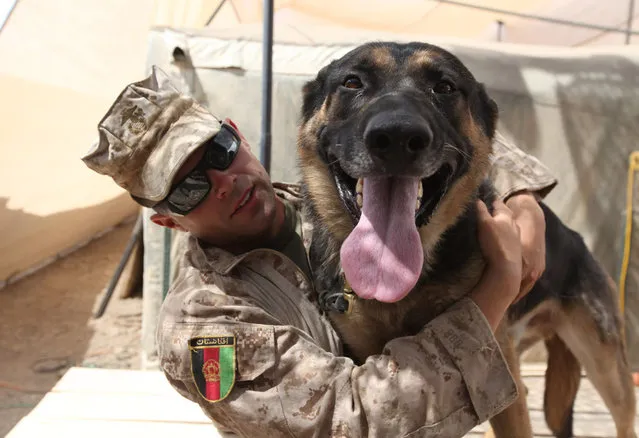
Throughout the course of the long war in Afghanistan, Coalition troops have relied on thousands of military working dogs to help keep them safe, and make their jobs easier. The dogs are trained to detect explosives, to find illegal drugs, to search for missing comrades, or target enemy combatants. Not only are they active on the front lines, but behind the lines they serve as therapy dogs, service dogs, and loyal companions. They also share the same risks as the ground troops, suffering injuries and sometimes death on the battlefields. Gathered here are images of these dogs and their handlers in Afghanistan and back home, from over the past several years, part of the ongoing series here on Afghanistan.
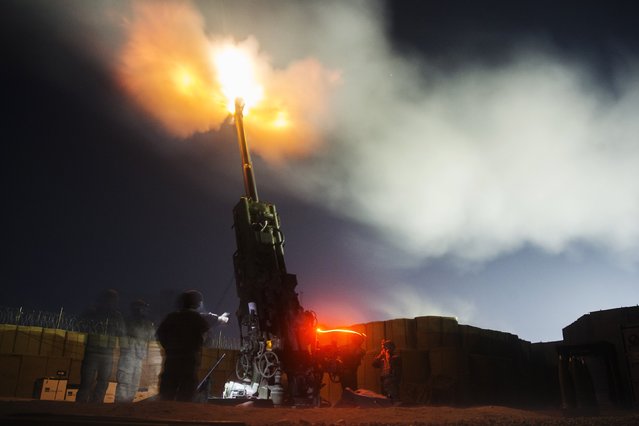
U.S. soldiers from the 3rd Cavalry Regiment take part in an artillery exercise on forward operating base Gamberi in the Laghman province of Afghanistan December 24, 2014. (Photo by Lucas Jackson/Reuters)