Loading...
Done
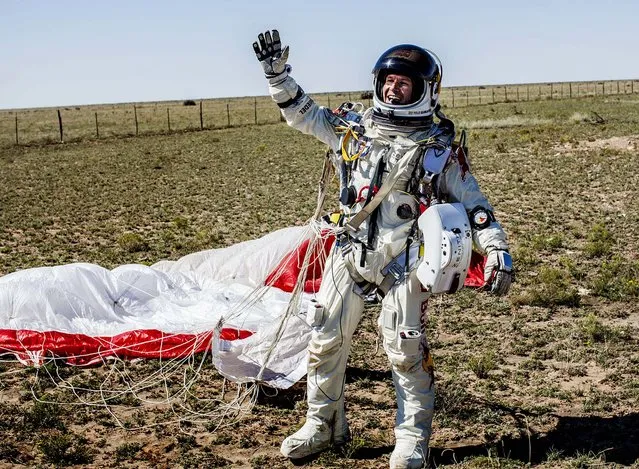
Baumgartner celebrates after successfully completing the jump. (Photo by Balazs Gardi/Red Bull Stratos)

“A skydiver has made history by smashing the world record for the highest skydive after leaping from 128,097ft (39,044m). Daredevil Felix Baumgartner ascended to the edge of space in a pressurised capsule suspended beneath a giant helium balloon. He then jumped out, freefalling for four minutes and 19 seconds before opening his parachute”.

Photo: Baumgartner celebrates after successfully completing the jump. (Photo by Balazs Gardi/Red Bull Stratos)

Details
15 Oct 2012 10:17:00
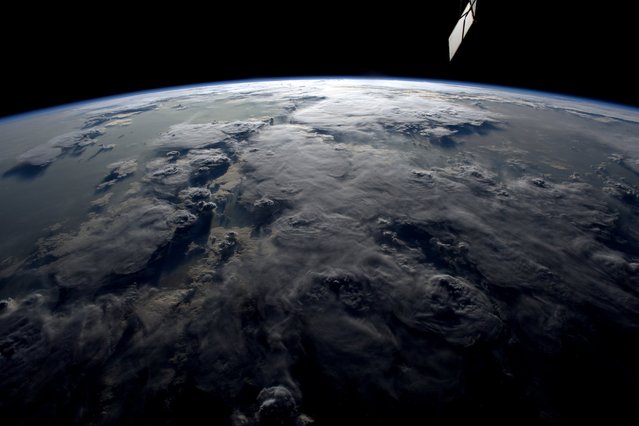
European Space Agency astronaut Tim Peake will return home after a six-month long mission on the International Space Station,on June 18, 2016. Peake was the first British ESA astronaut to visit the ISS and captured hundreds of photographs of the Earth during his mission. Here: “Lots of sun-glint right now during our whole orbit – we haven't seen a sunset for over 3 days”, he wrote. (Photo by Tim Peake/ESA/NASA)

European Space Agency astronaut Tim Peake will return home after a six-month long mission on the International Space Station,on June 18, 2016. Peake was the first British ESA astronaut to visit the ISS and captured hundreds of photographs of the Earth during his mission. Here: “Lots of sun-glint right now during our whole orbit – we haven't seen a sunset for over 3 days”, he wrote. (Photo by Tim Peake/ESA/NASA)
Details
18 Jun 2016 13:08:00
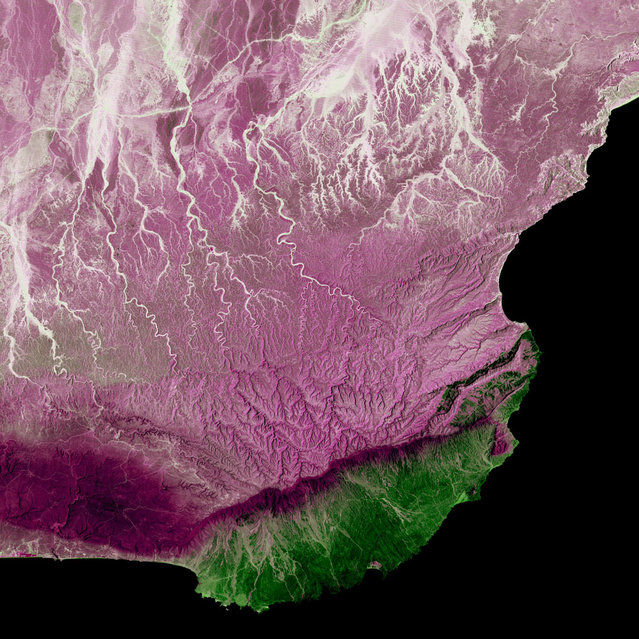
Dhofar Region, Oman. Much of Oman is desert, but the Arabian Sea coast in the Dhofar region represents a startling difference in climate. This coastal region catches the monsoon rains, or khareef, during the summer months. Drenching rains fall primarily on the mountainous ridge that separates the lush, fertile areas along the coast from the arid interior, recharging streams, waterfalls and springs that provide plentiful water supplies in the fertile lowlands for the remainder of the year. Image taken by Landsat 5 on April 2, 2005. (Photo by USGS/NASA)

Dhofar Region, Oman. Much of Oman is desert, but the Arabian Sea coast in the Dhofar region represents a startling difference in climate. This coastal region catches the monsoon rains, or khareef, during the summer months. Drenching rains fall primarily on the mountainous ridge that separates the lush, fertile areas along the coast from the arid interior, recharging streams, waterfalls and springs that provide plentiful water supplies in the fertile lowlands for the remainder of the year. Image taken by Landsat 5 on April 2, 2005. (Photo by USGS/NASA)
Details
25 Dec 2012 11:13:00
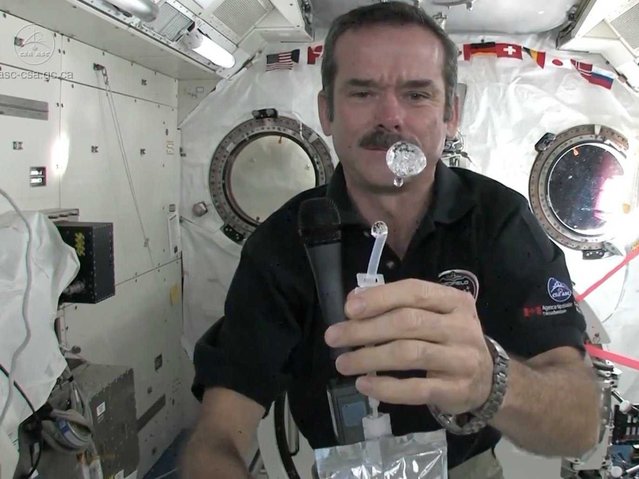
How To Wash Your Hands in Space - Chris Hadfield

Astronaut Chris Hadfield Explains How to Wash your Hands in Space.
Details
15 Feb 2013 11:32:00
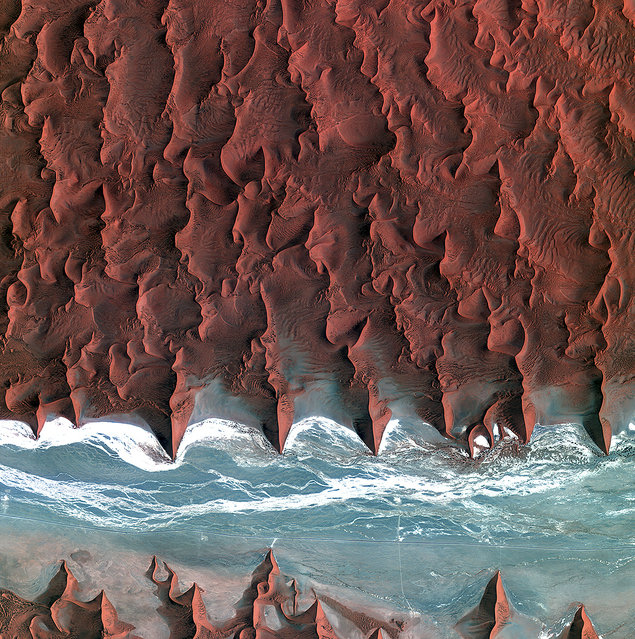
These are the dunes of the Namib Desert, taken by Korea's Kompstat-2 satellite. The blue and white area is the dried riverbed of the Tsauchab river. (Photo by The European Space Agency)

These are the dunes of the Namib Desert, taken by Korea's Kompstat-2 satellite. The blue and white area is the dried riverbed of the Tsauchab river. (Photo by The European Space Agency)
Details
17 Aug 2014 09:13:00


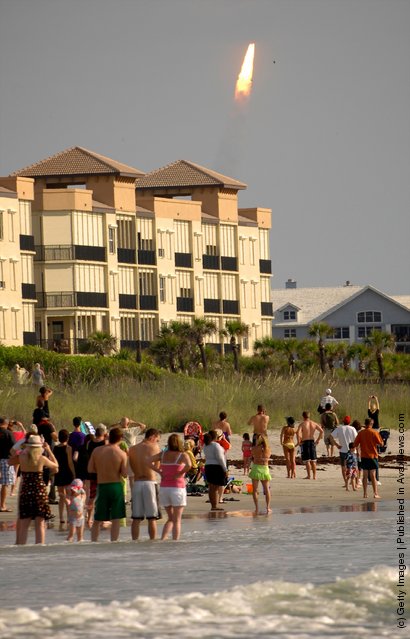
Crowds gather and watch the launch of NASA space shuttle Endeavour from Kennedy Space Center on the beach May 16, 2011 in Cocoa Beach, Florida. (Photo by Roberto Gonzalez/Getty Images)
Details
17 May 2011 06:35:00


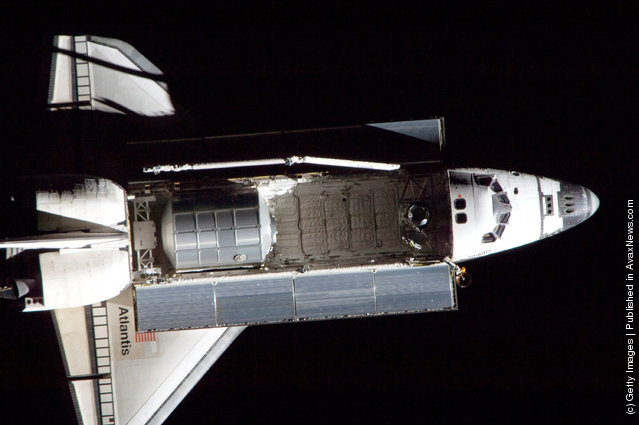
NASA space shuttle Atlantis in Earth orbit is seen during a Rendezvous Pitch Maneuver, or back flip to enable space station crew members to take high resolution digital pictures of the shuttle's heat shield before docking for the last time with the International Space Station July 10, 2011 in space. Atlantis has embarked on a 12-day mission to the International Space Station where it will deliver the Raffaello multi-purpose logistics module packed with supplies and spare parts. This will be the final launch of the space shuttle program, which began on April 12, 1981 with the launch of Colombia. (Photo by NASA via Getty Images)
Details
11 Jul 2011 10:57:00
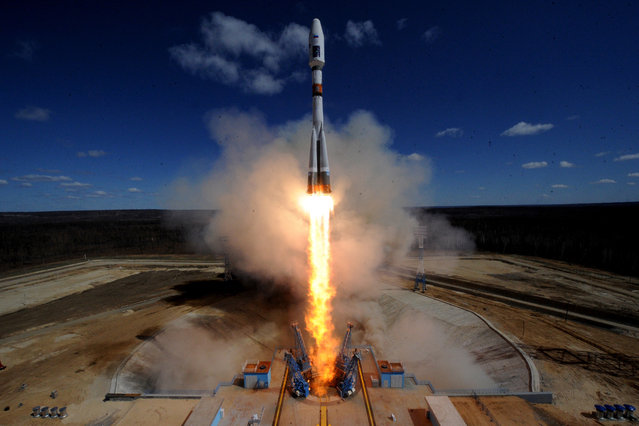
A Russian Soyuz 2.1a rocket carrying Lomonosov, Aist-2D and SamSat-218 satellites lifts off from the launch pad at the new Vostochny Cosmodrome outside the city of Uglegorsk, about 200 kilometers (125 miles) from the city of Blagoveshchensk in the far eastern Amur region Thursday, April 28, 2016. (Photo by Kirill Kudryavtsev/Pool Photo via AP Photo)

A Russian Soyuz 2.1a rocket carrying Lomonosov, Aist-2D and SamSat-218 satellites lifts off from the launch pad at the new Vostochny Cosmodrome outside the city of Uglegorsk, about 200 kilometers (125 miles) from the city of Blagoveshchensk in the far eastern Amur region Thursday, April 28, 2016. The launch of the first rocket from Russia's new space facility has been delayed after a last-minute problem. (Photo by Kirill Kudryavtsev/Pool Photo via AP Photo)
Details
28 Apr 2016 12:20:00