Loading...
Done
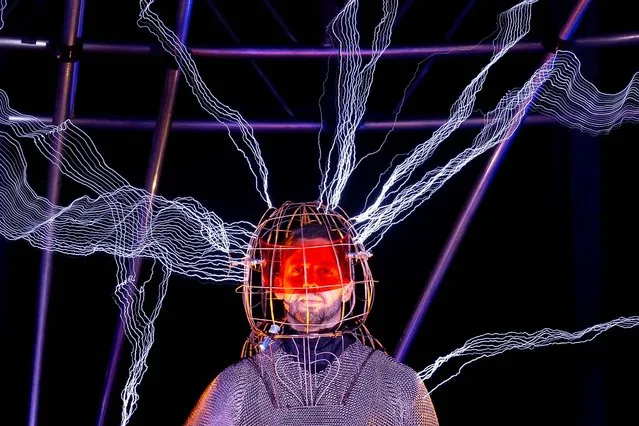
Blaine stands inside the apparatus, surrounded by a million volts of electric currents streamed by tesla coils. The stunt, sponsored by Intel, is the latest of daredevil endeavors by the magician whose previous stunts included being encased in ice for over 60 hours in Times Square, on October 5, 2012. (Photo by John Minchillo/Associated Press)

“Magician David Blaine's latest stunt boasts lots of high-voltage snap, crackle and pop – but experts say he'll be safe from electrocution as long as he wears his chain-mail suit and metal headgear”. – NBC News. Photo: Blaine stands inside the apparatus, surrounded by a million volts of electric currents streamed by tesla coils. The stunt, sponsored by Intel, is the latest of daredevil endeavors by the magician whose previous stunts included being encased in ice for over 60 hours in Times Square, on October 5, 2012. (Photo by John Minchillo/Associated Press)
Details
06 Oct 2012 08:06:00
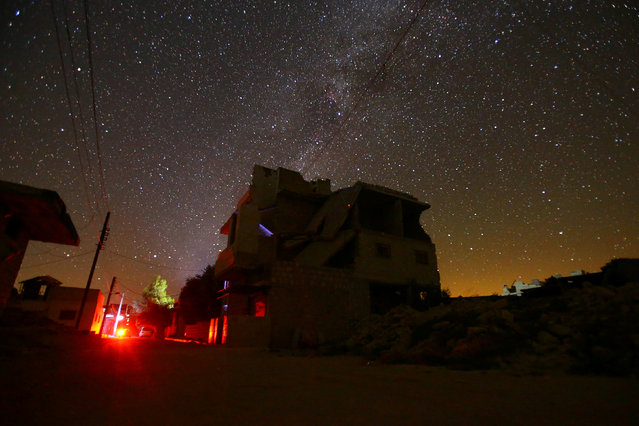
Damaged buildings stand in the rebel-controlled area of Maaret al-Numan in Idlib province, Syria September 6, 2016. (Photo by Ammar Abdullah/Reuters)

Damaged buildings stand in the rebel-controlled area of Maaret al-Numan in Idlib province, Syria September 6, 2016. (Photo by Ammar Abdullah/Reuters)
Details
15 Dec 2016 09:11:00
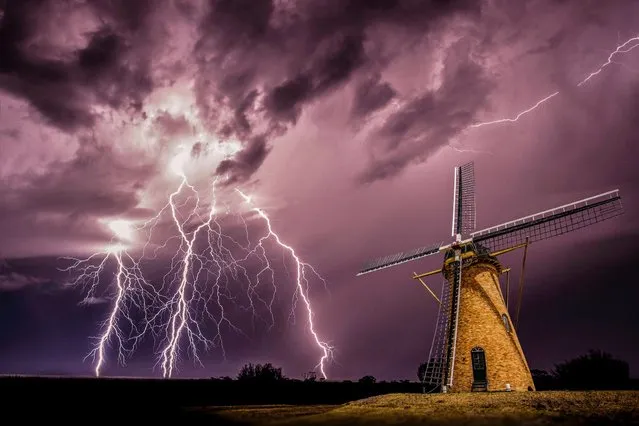
A thrill-seeking storm chaser captured the precise moment these giant lightning bolts lit up dark skies in a series of incredible storms. (Photo by Craig Eccles/Solent News & Photo Agency)

A thrill-seeking storm chaser captured the precise moment these giant lightning bolts lit up dark skies in a series of incredible storms. (Photo by Craig Eccles/Solent News & Photo Agency)
Details
15 Jun 2014 11:41:00
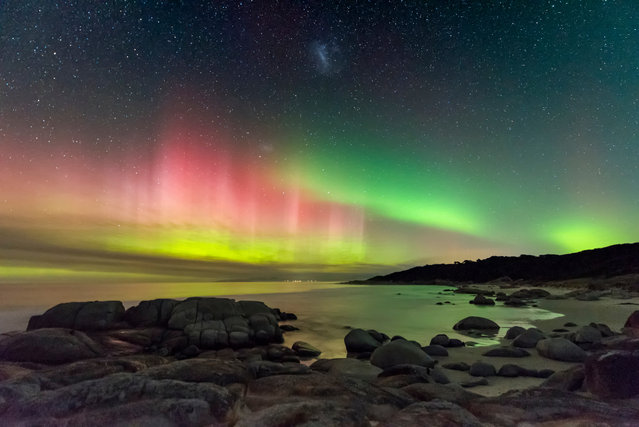
Aurora Australis from Beerbarrel Beach, by James Stone. Runner Up: Aurorae. (Photo by James Stone/Astronomy Photographer of the Year)

Aurora Australis from Beerbarrel Beach, by James Stone. Runner Up: Aurorae. (Photo by James Stone/Astronomy Photographer of the Year)
Details
14 Sep 2019 00:05:00
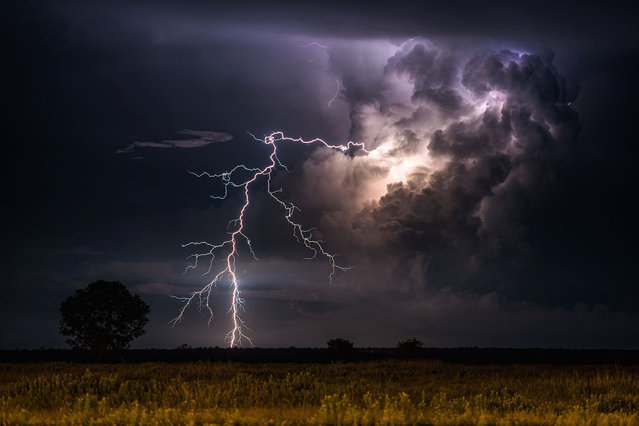
An incredible clear-air lightning display from storms to the east of Noonamah, just outside Darwin on April 6, 2015. (Photo by Jacci Ingham/The Guardian)

An incredible clear-air lightning display from storms to the east of Noonamah, just outside Darwin on April 6, 2015. (Photo by Jacci Ingham/The Guardian)
Details
12 Jun 2017 09:16:00
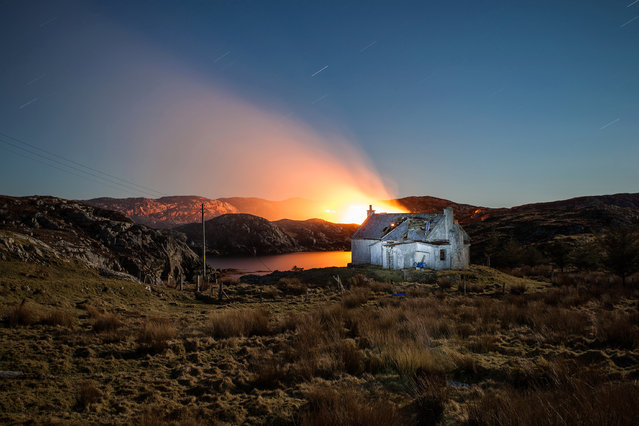
“Peat Fire”. Taken in March 2013 on the east coast of Harris. The fire is from muir-burning, when farmers burn off grasses and heather to improve grazing for their sheep. (Photo by John Maher/The Guardian)

Photographer John Maher, once the drummer with punk bank Buzzcocks, travelled to the Outer Hebrides to photograph abandoned crofters’ cottages – many of which, like this one, have seemingly been untouched since. Here: “Peat Fire”. Taken in March 2013 on the east coast of Harris. The fire is from muir-burning, when farmers burn off grasses and heather to improve grazing for their sheep. (Photo by John Maher/The Guardian)
Details
19 Aug 2016 11:39:00
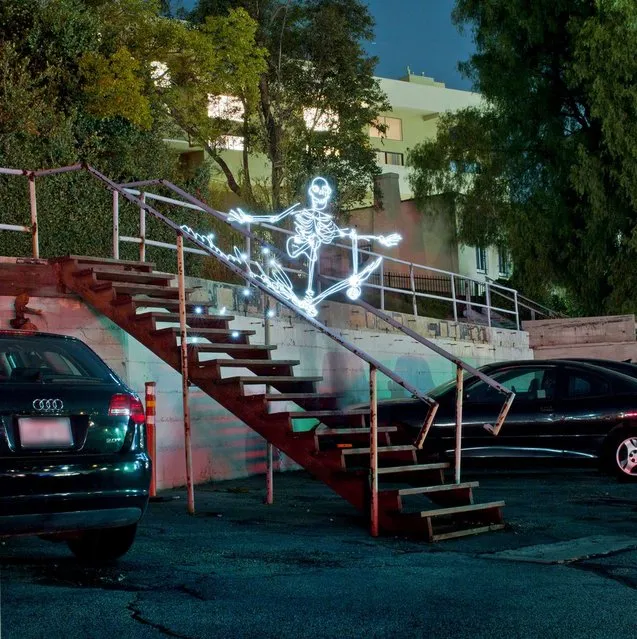
A light skateboarder grinding a rail. (Photo by Darren Pearson/Caters News)

These stunning light art pictures of skateboarding skeletons were created by Darren Pearson from Los Angeles. He works as a full time illustrator by day and by night he explores the varying landscapes of California in search of the perfect scene for his light-sculptures. Pearson makes complex light-effect photographs, none of which are photoshopped. He describes the work as location-based light art. Photo: A light skateboarder grinding a rail. (Photo by Darren Pearson/Caters News)
Details
26 Jun 2013 04:57:00
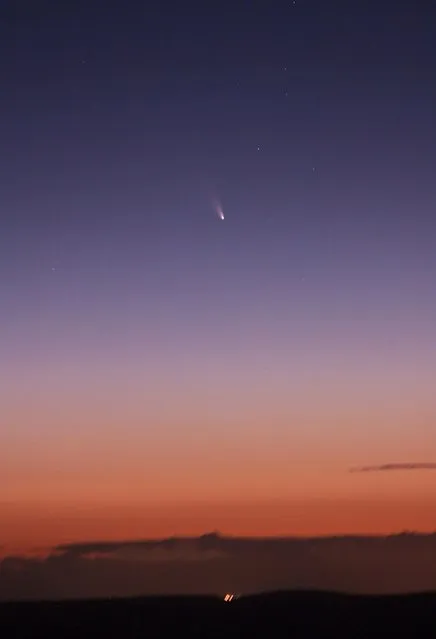
This image provided by NASA shoaws the comet PANSTARRS as seen from Mount Dale, Western Australia on March 5, 2013. According to NASA on March 10, it will make its closest approach to the sun about 28 million miles (45 million kilometers) away. As it continues its nightly trek across the sky, the comet may get lost in the sun's glare but should return and be visible to the naked eye by March 12. (Photo by AP Photo/NASA)

It’s time to start watching for Comet PANSTARRS, one of two comets to get excited about in 2013. Photo: This image provided by NASA shoaws the comet PANSTARRS as seen from Mount Dale, Western Australia on March 5, 2013. According to NASA on March 10, it will make its closest approach to the sun about 28 million miles (45 million kilometers) away. As it continues its nightly trek across the sky, the comet may get lost in the sun's glare but should return and be visible to the naked eye by March 12. (Photo by AP Photo/NASA)
Details
13 Mar 2013 08:03:00