Loading...
Done
A Mexican wearing a period costume re-enacts the battle of Puebla, in the Penon de los Banos neighbourhood of Mexico City, Mexico May 5, 2016. (Photo by Henry Romero/Reuters)

A Mexican wearing a period costume re-enacts the battle of Puebla, in the Penon de los Banos neighbourhood of Mexico City, Mexico May 5, 2016. The battle marked the defeat of French forces by Mexican troops and local Indians in the central state of Puebla in 1862. During the re-enactment, participants fired homemade shotguns loaded with gunpowder and hundreds of men dressed as Indian peasants fought mock battles against others dressed as French invaders. (Photo by Henry Romero/Reuters)
Details
07 May 2016 12:38:00
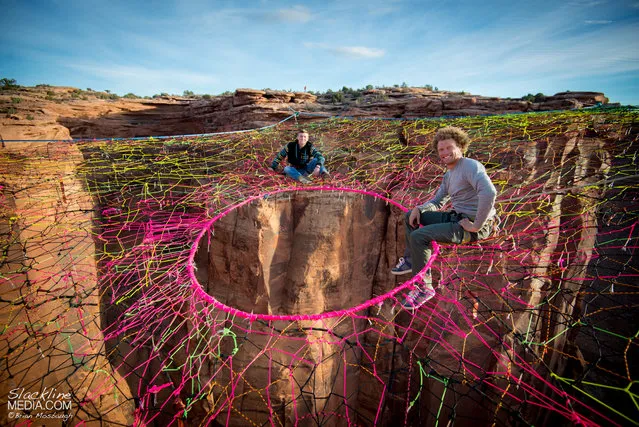
Stupefying Hand-Knitted Hammock Is Suspended

Exhilaration beyond imaginable, intense concentration on a single point, and complete freedom of soul – all these things very accurately describe the art of highlining. Highlining is a branch of a new sport called slacklining, which involves walking on special webbing secured between two points. Andi Lewis is one of the most famous slackliners in the world, particularly due to his performance during Superbowl Halftime Show in 2012. He never fails to surprise people with an amazing stunt or a project. This time he and his friends have created a completely incredible hand-knitted hammock located hundreds of feet above the ground. Just getting to this hammock requires immense skills and bravery. But once you’re finally there, you can rest a while, before mustering up the courage to go back across a narrow line with nothing but thin air beneath your feet.

Details
27 Feb 2015 18:38:00
Grandmother Tips

Chacho Puebla, a creative director from Madrid is back with loads of social media tips from grandma. After receiving a lot of appreciation from the first version of 'Grandmother Tips' project, he decided to share some more valuable tips. "My grandmother's tips never end. Neither do my sister's photos, or help from my girlfriend, who never stops giving me ideas." shares Puebla.
Details
04 Jan 2013 12:23:00
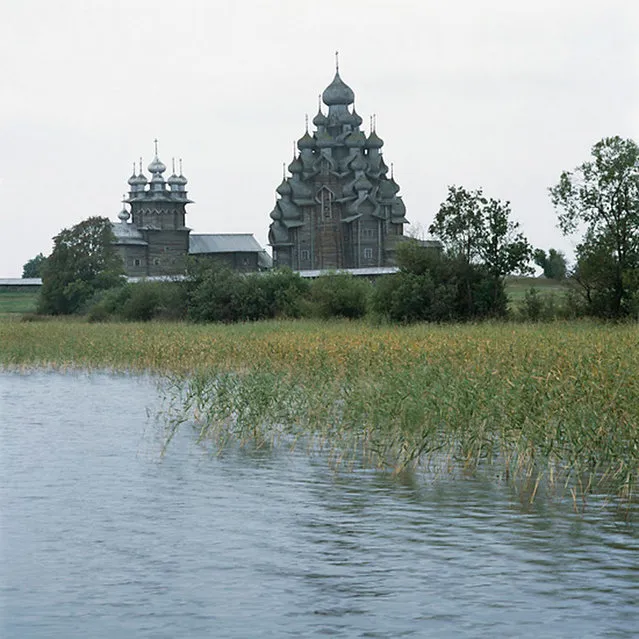
Wooden Churches - Travelling In The Russian North By Richard Davies Part 1

While communism, collectivism, worms, dry rot and casual looting failed to destroy the majestic wooden churches of Russia, it may be ordinary neglect that finally does them in. Dwindled now to several hundred remaining examples, these glories of vernacular architecture lie scattered amid the vastness of the world’s largest country. Just over a decade ago, Richard Davies, a British architectural photographer, struck out on a mission to record the fragile and poetic structures. Austerely beautiful and haunting, “Wooden Churches: Traveling in the Russian North” (White Sea Publishing; $132) is the result. Covering thousands of miles, Mr. Davies described how he and the writer Matilda Moreton tracked down the survivors from among the thousands of onion-domed structures built after Prince Vladimir converted to Christianity in 988.
Details
25 Nov 2013 12:47:00
Piper Hoppe, 10, from Minnetonka, Minnesota, holds a sign at the doorway of River Bluff Dental clinic in protest against the killing of a famous lion in Zimbabwe, in Bloomington, Minnesota July 29, 2015. (Photo by Eric Miller/Reuters)

Piper Hoppe, 10, from Minnetonka, Minnesota, holds a sign at the doorway of River Bluff Dental clinic in protest against the killing of a famous lion in Zimbabwe, in Bloomington, Minnesota July 29, 2015. A Zimbabwean court on Wednesday charged a professional local hunter Theo Bronkhorst with failing to prevent an American from unlawfully killing “Cecil”, the southern African country's best-known lion. The American, Walter James Palmer, a Minnesota dentist who paid $50,000 to kill the lion, has left Zimbabwe. He says he did kill the animal but believed the hunt was legal and that the necessary permits had been issued. (Photo by Eric Miller/Reuters)
Details
30 Jul 2015 12:01:00
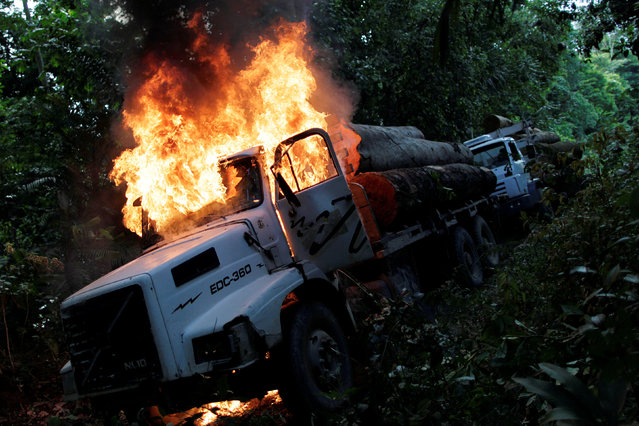
Trucks loaded with tree trunks are burned by agents of the Brazilian Institute for the Environment and Renewable Natural Resources, or Ibama, during an operation to combat illegal mining and logging, in the municipality of Novo Progresso, Para State, northern Brazil, November 11, 2016. When able to do their job, agents of the Brazilian Institute for the Environment and Renewable Natural Resources, or Ibama, are decisive, punishing illegal loggers on the spot. Nearly twice the size of India, the Amazon absorbs an estimated 2 billion tonnes of carbon dioxide per year, making its preservation vital in the fight to halt global warming. Ibama, responsible for preserving Brazil's 65 percent share of the world's largest rainforest, is one of the most important groups in that fight. But after years of surprising success, the rate of deforestation is on the rise again. Over the past four years it has risen 35 percent, as Ibama suffered from a lack of funding amid Brazil's worst recession in a century. (Photo by Ueslei Marcelino/Reuters)

Trucks loaded with tree trunks are burned by agents of the Brazilian Institute for the Environment and Renewable Natural Resources, or Ibama, during an operation to combat illegal mining and logging, in the municipality of Novo Progresso, Para State, northern Brazil, November 11, 2016. When able to do their job, agents of the Brazilian Institute for the Environment and Renewable Natural Resources, or Ibama, are decisive, punishing illegal loggers on the spot. Nearly twice the size of India, the Amazon absorbs an estimated 2 billion tonnes of carbon dioxide per year, making its preservation vital in the fight to halt global warming. (Photo by Ueslei Marcelino/Reuters)
Details
30 Nov 2016 12:36:00
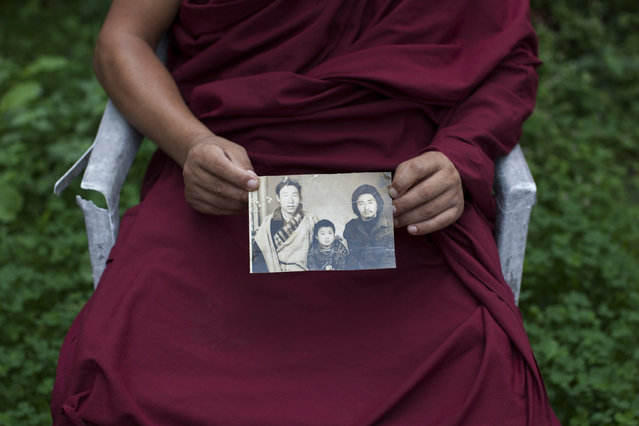
In this Saturday, September 27, 2014 photo, Tibetan monk Dorjee, 38, displays a photograph of his father, left, and himself, center, taken in Tibet, in Dharamsala, India. Dorjee said he held back his tears when he spoke with his parents on the phone after a separation period of 27 years. He exchanged a few words with his father but said his mother fainted on hearing his voice. (Photo by Tsering Topgyal/AP Photo)

“When I was 8 years old, my parents paid a smuggler to take me across the Himalayas, a weekslong walk over the mountains from Tibet to India. It was a trek that tens of thousands of other Tibetans have taken since the Dalai Lama fled a failed 1959 uprising against Chinese rule. My parents must have had their reasons to send me here; they must have had the best of intentions. But 18 years later, I still don't know why they did it. They are not political people. They are small farmers who raise barley and a few yak in a rural area not far from Lhasa, the Tibetan capital. I have not seen them since I left...”. – Tsering Topgyal via The Associated Press. (Photo by Tsering Topgyal/AP Photo)
Details
05 Nov 2014 12:27:00
A fuel rod is inserted into a reactor vessel inside the No. 1 reactor building at Kyushu Electric Power's Sendai nuclear power station in Satsumasendai, Kagoshima prefecture, Japan, July 8, 2015. (Photo by Issei Kato/Reuters)

A fuel rod is inserted into a reactor vessel inside the No. 1 reactor building at Kyushu Electric Power's Sendai nuclear power station in Satsumasendai, Kagoshima prefecture, Japan, July 8, 2015. Kyushu Electric Power Co started loading uranium fuel rods into a reactor on Tuesday, marking the first attempt to reboot Japan's nuclear industry in nearly two years after the sector was shutdown following the 2011 Fukushima disaster. (Photo by Issei Kato/Reuters)
Details
09 Jul 2015 11:52:00