Loading...
Done
Ethnic Cham Muslim people pass the time near their boats on banks of Mekong river in Phnom Penh July 29, 2013. (Photo by Damir Sagolj/Reuters)

Ethnic Cham Muslim people pass the time near their boats on banks of Mekong river in Phnom Penh July 29, 2013. About 100 ethnic Cham families, made up of nomads and fishermen without houses or land who arrived at the Cambodian capital in search of better lives, live on their small boats on a peninsula where the Mekong and Tonle Sap rivers meet, just opposite the city's centre. The community has been forced to move several times from their locations in Phnom Penh as the land becomes more valuable. They fear that their current home, just behind a new luxurious hotel under construction at the Chroy Changva district is only temporary and that they would have to move again soon. (Photo by Damir Sagolj/Reuters)
Details
31 Jul 2013 06:34:00
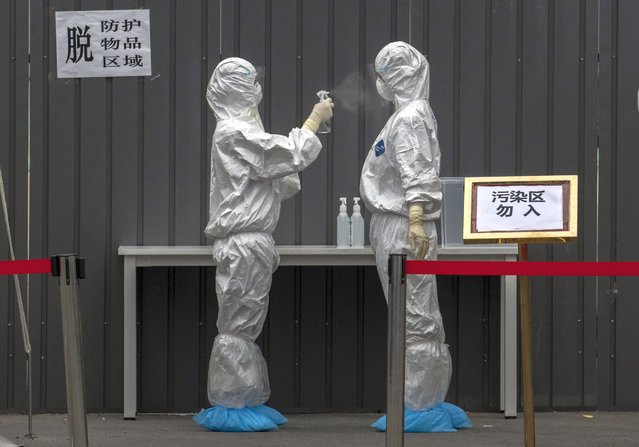
Chinese epidemic control workers wear protective suits as they disinfect each other after performing nucleic acid swab test for COVID-19 on citizens at a government testing site in Xicheng District during an organized tour on June 24, 2020 in Beijing, China. While Chinese government medical officials have said they believe they have controlled the spread, authorities are trying to contain the outbreak linked to the Xinfadi wholesale food market, Beijing's biggest supplier of produce and meat. More than 2.5 million people have undergone nucleic acid tests for COVID-19 at dozens of sites across the city in recent days, with officials using contact tracing to target high and middle risk areas and people who may have had contact with the market or food that came from there. Several neighborhoods have been locked down and a number of other food markets have been closed, The outbreak has triggered fears of a second wave of infection after 56 straight days with no domestically transmitted cases in the capital. (Photo by Kevin Frayer/Getty Images)

Chinese epidemic control workers wear protective suits as they disinfect each other after performing nucleic acid swab test for COVID-19 on citizens at a government testing site in Xicheng District during an organized tour on June 24, 2020 in Beijing, China. While Chinese government medical officials have said they believe they have controlled the spread, authorities are trying to contain the outbreak linked to the Xinfadi wholesale food market, Beijing's biggest supplier of produce and meat. (Photo by Kevin Frayer/Getty Images)
Details
26 Jun 2020 00:01:00
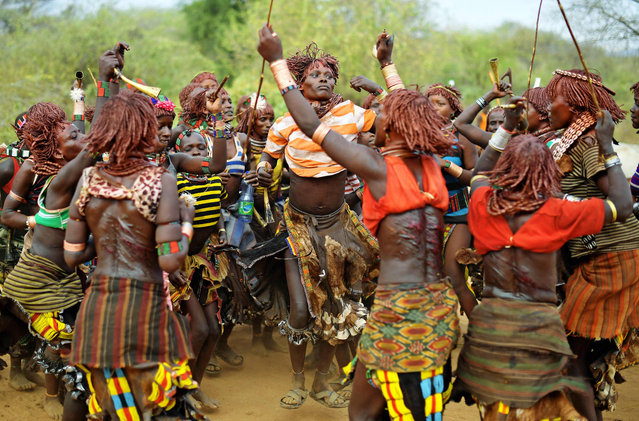
Hamar women dance before a bull jumping ceremony in Ethiopia's southern Omo Valley region near Turmi on September 19, 2016. The Hamar are a Nilotic ethnic group in Ethiopia. The construction of the Gibe III dam, the third largest hydroelectric plant in Africa, and large areas of very “thirsty” cotton and sugar plantations and factories along the Omo river are impacting heavily on the lives of tribes living in the Omo Valley who depend on the river for their survival and way of life. Human rights groups fear for the future of the tribes if they are forced to scatter, give up traditional ways through loss of land or ability to keep cattle as globalisation and development increases. (Photo by Carl De Souza/AFP Photo)

Hamar women dance before a bull jumping ceremony in Ethiopia's southern Omo Valley region near Turmi on September 19, 2016. The Hamar are a Nilotic ethnic group in Ethiopia. The construction of the Gibe III dam, the third largest hydroelectric plant in Africa, and large areas of very “thirsty” cotton and sugar plantations and factories along the Omo river are impacting heavily on the lives of tribes living in the Omo Valley who depend on the river for their survival and way of life. (Photo by Carl De Souza/AFP Photo)
Details
02 Oct 2016 08:45:00
Mayu adjusts Koiku’s kimono, as Koiku wears a protective face mask while posing for a photograph, before they work at a party where they will entertain with other geisha at Japanese luxury restaurant Asada in Tokyo, Japan, June 23, 2020. The coronavirus pandemic has made Tokyo's geisha fear for their centuries-old profession as never before. Though the number of geisha - famed for their witty conversation, beauty and skill at traditional arts - has been falling for years, they were without work for months due to Japan's state of emergency and now operate under awkward social distancing rules. Engagements are down 95 percent, and come with new rules: no pouring drinks for customers or touching them even to shake hands, and sitting 2 meters apart. Masks are hard to wear with their elaborate wigs, so they mostly don't. “I was just full of anxiety”, said Mayu, 47. “I went through my photos, sorted my kimonos ... The thought of a second wave is terrifying”. (Photo by Kim Kyung-Hoon/Reuters)

Mayu adjusts Koiku’s kimono, as Koiku wears a protective face mask while posing for a photograph, before they work at a party where they will entertain with other geisha at Japanese luxury restaurant Asada in Tokyo, Japan, June 23, 2020. (Photo by Kim Kyung-Hoon/Reuters)
Details
23 Jul 2020 00:03:00
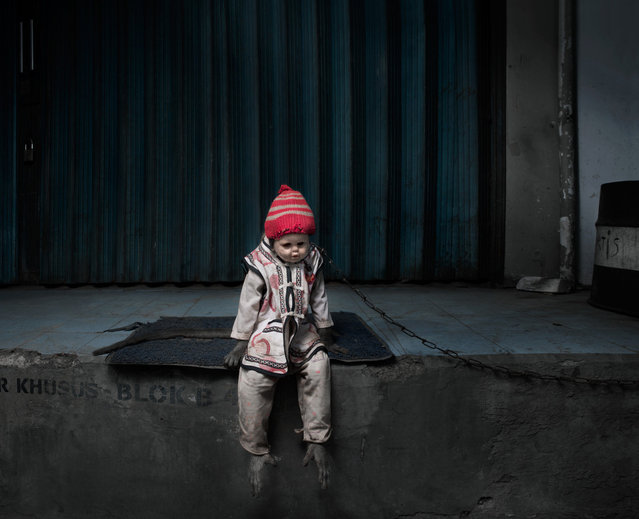
The Monkey and the Mask: Terrifying Portraits of Indonesia’s Street-Performing Macaques. (Photo by Perttu Saksa)

“A Kind of You” is a documentary work of an uncanny asian tradition, where monkeys are trained and dressed to act humanlike in order to ask money from the bypassers. Modern city culture has turned the old tradition in to eerie and haunting act of cruel street theatre where animals become something else, never able to reach our expectations”. – Perttu Saksa. (Photo by Perttu Saksa)

SEE ALSO: «Topeng Monyet: The Masked Monkeys Of Indonesia»


Details
06 Nov 2013 10:42:00
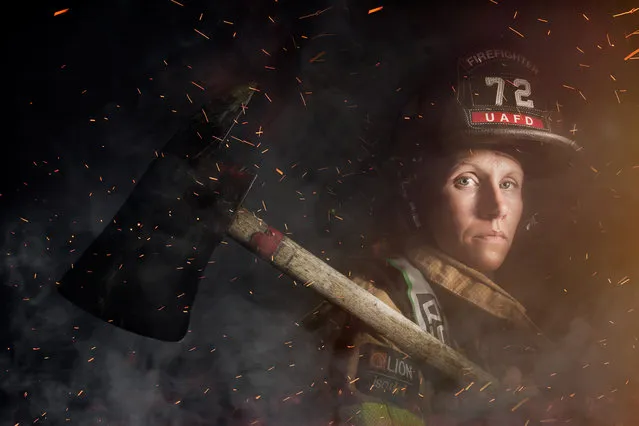
A truck driver, butcher and firefighter are some of the subjects in the latest project by the photographer Chris Crisman. This series portrays women at work and focuses on occupations traditionally seen as male dominated. Here: Firefighter Mindy Gabriel, from Upper Arlington, Ohio. (Photo by Chris Crisman/The Guardian)

A truck driver, butcher and firefighter are some of the subjects in the latest project by the photographer Chris Crisman. This series portrays women at work and focuses on occupations traditionally seen as male dominated. Here: Firefighter Mindy Gabriel, from Upper Arlington, Ohio. (Photo by Chris Crisman/The Guardian)
Details
13 Dec 2016 06:59:00
A surfer braves a large wave at Queenscliff in Sydney, Monday, June 6, 2016. Storms have lashed Australia's easter coast for several days whipping up waves as high as 12 meters (40 feet), which caused serious beach erosion and forced hundreds of coastal residents to evacuate. (Photo by Rick Rycroft/AP Photo)

A surfer braves a large wave at Queenscliff in Sydney, Monday, June 6, 2016. Storms have lashed Australia's easter coast for several days whipping up waves as high as 12 meters (40 feet), which caused serious beach erosion and forced hundreds of coastal residents to evacuate. (Photo by Rick Rycroft/AP Photo)
Details
07 Jun 2016 13:39:00
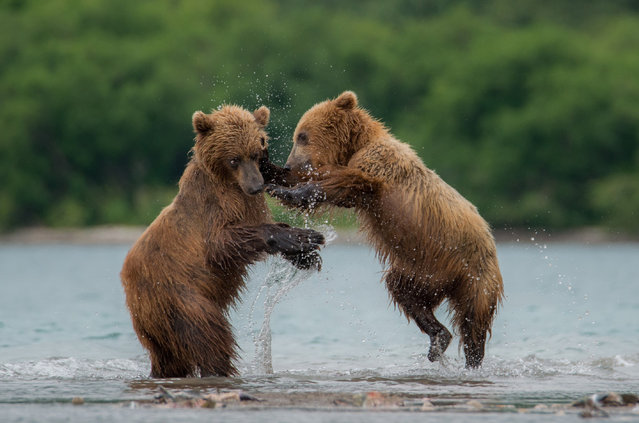
Kamchatka brown bears at Kurile Lake in Kamchatka peninsula’s volcanic terrain, Russia on August, 2017. Kamchatka brown bears are generally not dangerous to humans, and only 1% of encounters result in attack. (Photo by Igor Ivanko/Anadolu Agency/Getty Images)

Kamchatka brown bears at Kurile Lake in Kamchatka peninsula’s volcanic terrain, Russia on August, 2017. Kamchatka brown bears are generally not dangerous to humans, and only 1% of encounters result in attack. (Photo by Igor Ivanko/Anadolu Agency/Getty Images)
Details
03 Sep 2017 07:17:00