Loading...
Done
A university in the Philippines in March 2024 has come up with a novel way to stop students cheating in exams – by getting them to wear hats in the shape of animated characters and random objects such as a crate of beer. (Photo by Angelo Ebora/beampix/Solent news)

A university in the Philippines in March 2024 has come up with a novel way to stop students cheating in exams – by getting them to wear hats in the shape of animated characters and random objects such as a crate of beer. (Photo by Angelo Ebora/beampix/Solent news)
Details
17 Apr 2024 06:06:00
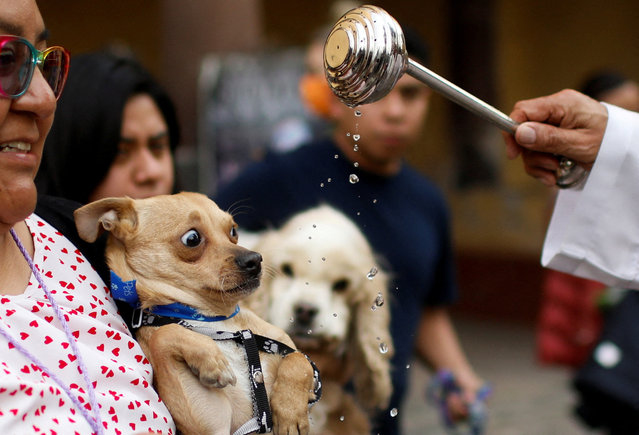
A woman holds her dog to be blessed by a priest at the Cathedral San Bernardino de Siena during the ceremony commemorating the Feast of San Antonio Abad, the patron saint of domestic animals, in Xochimilco on the outskirts of Mexico City, Mexico on January 17, 2024. (Photo by Raquel Cunha/Reuters)

A woman holds her dog to be blessed by a priest at the Cathedral San Bernardino de Siena during the ceremony commemorating the Feast of San Antonio Abad, the patron saint of domestic animals, in Xochimilco on the outskirts of Mexico City, Mexico on January 17, 2024. (Photo by Raquel Cunha/Reuters)
Details
23 Apr 2025 03:38:00
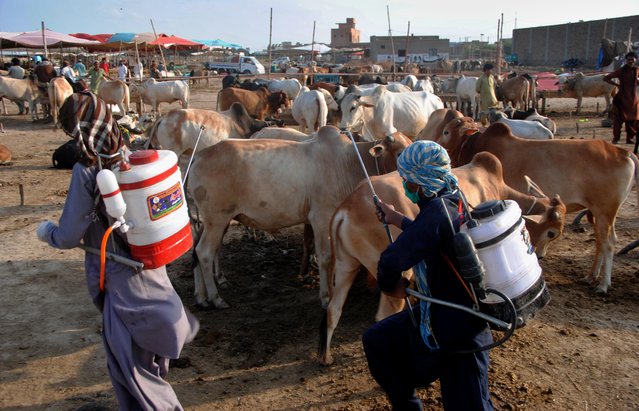
Health workers wearing face masks spray disinfectant liquid on sacrificial animals amid concerns over the spread of the SARS-CoV-2 coronavirus that causes the pandemic COVID-19 disease ahead of the Muslim festival of Eid al-Adha at an animal market in Hyderabad, southern Pakistan, 21 July 2020. Eid al-Adha, also known as the Festival of the Sacrifice, is the second and holiest of the two main Islamic holidays celebrated each year (the other one being Eid al-Fitr). Every year, on the 10th day of the Islamic lunar month of Dhu al-Hijjah, Muslims around the world ritually slaughter a sacrificial animal and split the meat into three parts: one is reserved for the family, another for friends and relatives, and the third is given to the poor and needy. The Saudi Supreme Court has declared that the first day of Eid al-Adha this year falls on 31 July. (Photo by Nadeem Khawar/EPA/EFE)

Health workers wearing face masks spray disinfectant liquid on sacrificial animals amid concerns over the spread of the SARS-CoV-2 coronavirus that causes the pandemic COVID-19 disease ahead of the Muslim festival of Eid al-Adha at an animal market in Hyderabad, southern Pakistan, 21 July 2020. (Photo by Nadeem Khawar/EPA/EFE)
Details
23 Jul 2020 00:07:00
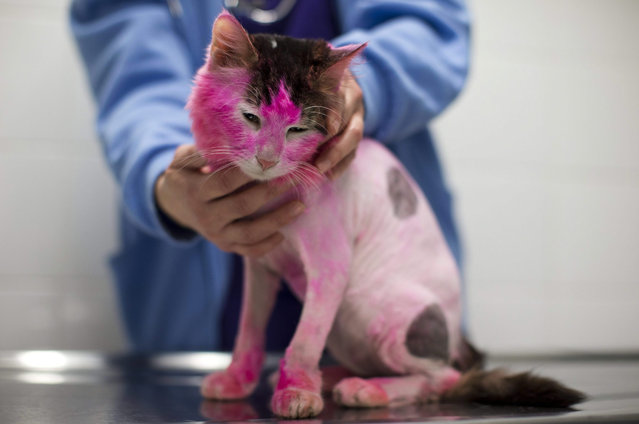
“Bazooka”, a one year old stray cat, is treated at the SPCA (Society for Prevention of Cruelty to Animals) clinic in Tel Aviv, Israel, 06 January 2016. Bazooka arrived at the clinic in critical condition after he went through severe abuse with bruises all over his body and painted with pink oxidation. (Photo by Abir Sultan/EPA)

“Bazooka”, a one year old stray cat, is treated at the SPCA (Society for Prevention of Cruelty to Animals) clinic in Tel Aviv, Israel, 06 January 2016. Bazooka arrived at the clinic in critical condition after he went through severe abuse with bruises all over his body and painted with pink oxidation. The Israeli street cat population is estimated to be about two million. Without enough financial support from the state, animal rights organizations find it difficult to keep the up with the pace when it comes to spaying and neutering feral cats, causing the population to grow. (Photo by Abir Sultan/EPA)
Details
27 Jan 2016 13:17:00
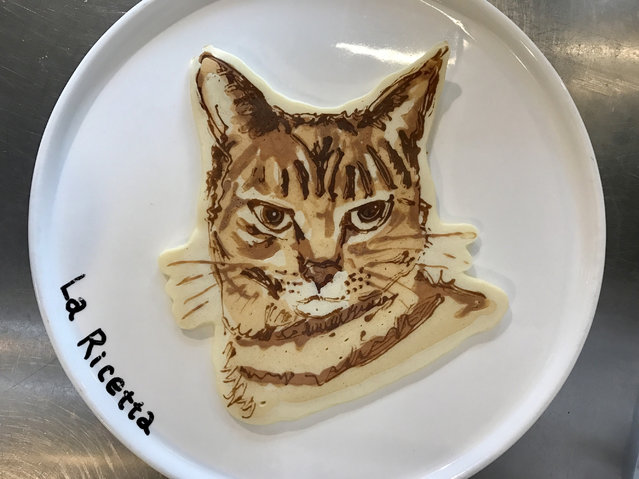
A pancake that looks like a cat, in Zama City, Japan. (Photo by Keisuke Inagaki/Barcroft Images)

As pancake day has creped up on us once again, a Japanese chef has combined our favourite things; cute animals and sugar. Keisuke Inagaki has been a chef at his restaurant La Ricetta in Zama City, Japan, for the last 18 years. He rose to Instagram fame from his Pokemon and anime pancake art, and the time around heis created a lifelike animal series. The 46-year-old chef began making pancakes in 2011 to raise spirits after the devastating nuclear disaster in Fukushima, Japan. Here: A pancake that looks like a cat, in Zama City, Japan. (Photo by Keisuke Inagaki/Barcroft Images)
Details
02 Mar 2017 00:03:00
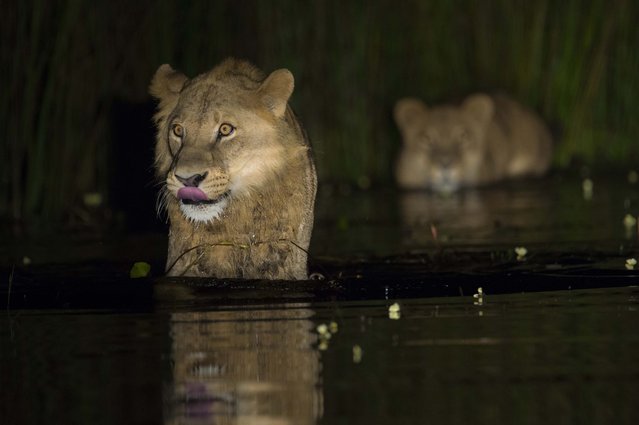
Lions submerged in water. (Photo by Wim van den Heever/Caters News)

These breath-taking photographs reveal the everyday lives of animals living in the wild. The incredible images were taken by wildlife photographer Wim van dan Heever, from Pretoria, South Africa, during trips to locations including Japan, Botswana and Svalbard. The 43-year-old has been photographing wildlife since he was a young boy and turned his passion for animals into a career and set up ODP Safaris. He has travelled across the globe to photograph wild animals – from lions and tigers, to elephants, dolphins and eagles – as they hunt, give birth and graze in their natural habitats. Here: Lions submerged in water. (Photo by Wim van den Heever/Caters News)
Details
07 Aug 2015 11:43:00
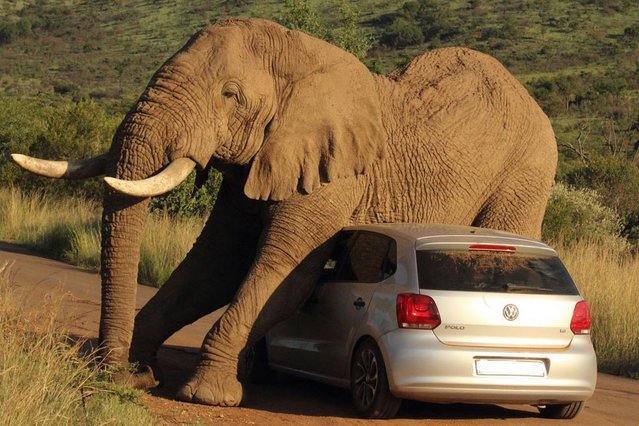
Two terrified occupants of a Volkswagen Polo found themselves in the wrong place at the wrong time as the giant animal stooped down to rub itself against the vehicle's roof and bonnet. The incredible scene was captured by field guide and lodge manager Armand Grobler, 21, at Pilanesburg National Park in South Africa. (Photo by Armand Grobler/Barcroft Media)

Two terrified occupants of a Volkswagen Polo found themselves in the wrong place at the wrong time as the giant animal stooped down to rub itself against the vehicle's roof and bonnet. The incredible scene was captured by field guide and lodge manager Armand Grobler, 21, at Pilanesburg National Park in South Africa. (Photo by Armand Grobler/Barcroft Media)
Details
07 Aug 2014 10:05:00
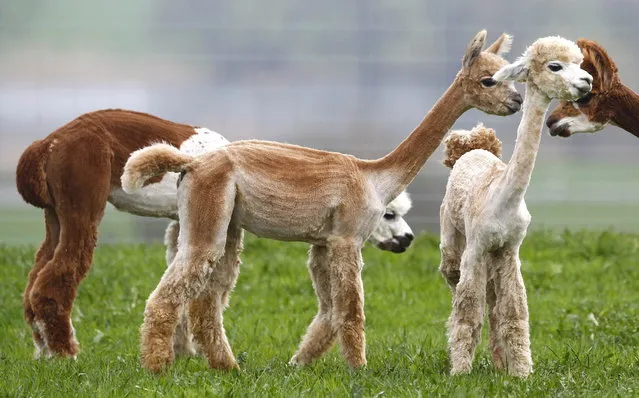
Freshly shorn alpacas are pictured on a meadow in the village of Winklarn near Regensburg April 22, 2013. The alpacas are always shorn in spring, to make the animals more comfortable for the summer months and to collect the expensive and well known alpaca wool. (Photo by Michaela Rehle/Reuters)

Freshly shorn alpacas are pictured on a meadow in the village of Winklarn near Regensburg April 22, 2013. The alpacas are always shorn in spring, to make the animals more comfortable for the summer months and to collect the expensive and well known alpaca wool. (Photo by Michaela Rehle/Reuters)
Details
23 Apr 2013 07:30:00