Loading...
Done
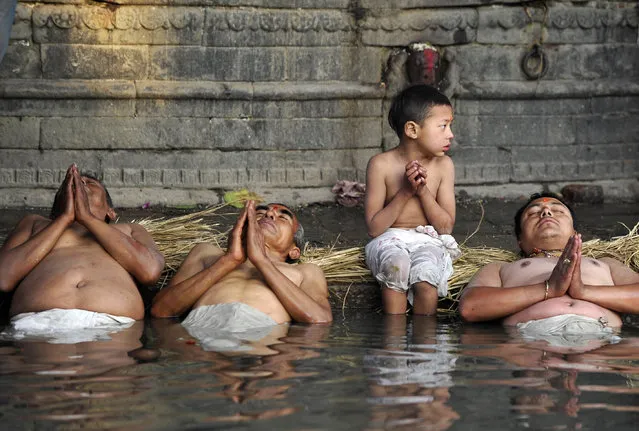
Nepalese Hindu devotees take part in a bathing ritual on the last day of the month-long Swasthani Festival in the Hanumante River at Bhaktapur on the outskirts of Kathmandu on February 22, 2016. Devotees mark the Swasthani Festival with fasting, and with women in particular undertaking rituals in the hope of a prosperous life for her family and conjugal happiness. (Photo by Prakash Mathema/AFP Photo)

Nepalese Hindu devotees take part in a bathing ritual on the last day of the month-long Swasthani Festival in the Hanumante River at Bhaktapur on the outskirts of Kathmandu on February 22, 2016. Devotees mark the Swasthani Festival with fasting, and with women in particular undertaking rituals in the hope of a prosperous life for her family and conjugal happiness. (Photo by Prakash Mathema/AFP Photo)
Details
23 Feb 2016 11:52:00
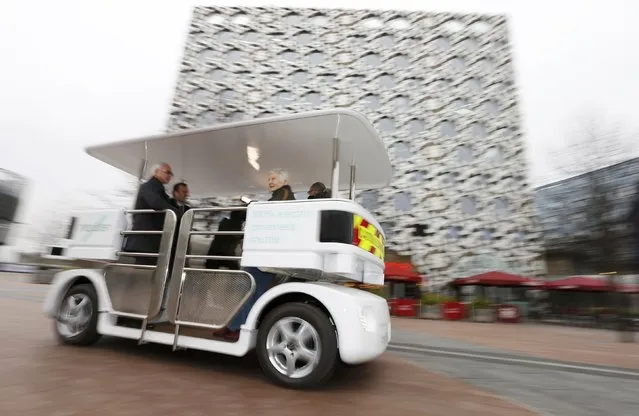
People ride a prototype of a driverless vehicle as it is moves through a pedestrian area in Greenwich, east London, February 11, 2015. (Photo by Suzanne Plunkett/Reuters)

People ride a prototype of a driverless vehicle as it is moves through a pedestrian area in Greenwich, east London, February 11, 2015. Britain has begun testing driverless cars in four cities, launching the first official trials ahead of a series of planned rule reviews to accommodate the new technology. (Photo by Suzanne Plunkett/Reuters)
Details
12 Feb 2015 13:16:00
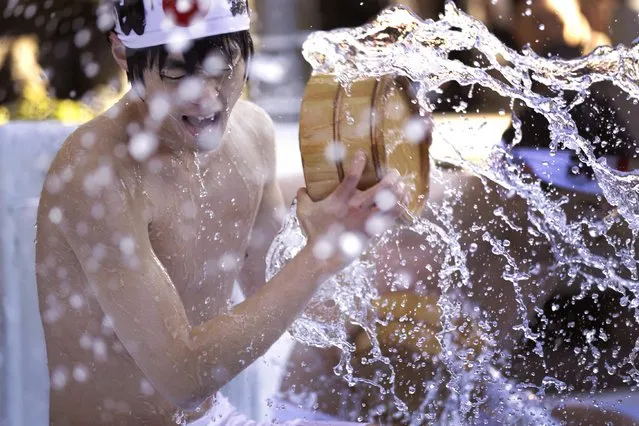
A half-naked shrine parishioner using a wooden tub pours cold water onto himself during an annual cold-endurance festival at the Kanda Myojin Shinto shrine in Tokyo, Saturday, January 10, 2015. Pouring cold water on their bodies is believed to purify their souls. (Photo by Eugene Hoshiko/AP Photo)

A half-naked shrine parishioner using a wooden tub pours cold water onto himself during an annual cold-endurance festival at the Kanda Myojin Shinto shrine in Tokyo, Saturday, January 10, 2015. Pouring cold water on their bodies is believed to purify their souls. (Photo by Eugene Hoshiko/AP Photo)
Details
11 Jan 2015 12:52:00
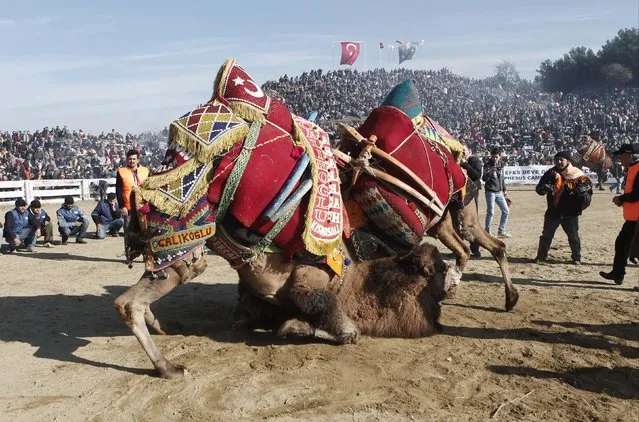
Two wrestling camels fight at the Pamucak arena during the Selcuk-Efes Camel Wrestling Festival in the town of Selcuk, near the western Turkish coastal city of Izmir January 18, 2015. (Photo by Osman Orsal/Reuters)

Two wrestling camels fight at the Pamucak arena during the Selcuk-Efes Camel Wrestling Festival in the town of Selcuk, near the western Turkish coastal city of Izmir January 18, 2015. Thousands of enthusiasts visit the city through the weekend to watch wrestling between Dromedary camels, who are bred specially for the annual Selcuk-Efes Camel Wrestling Festival. (Photo by Osman Orsal/Reuters)
Details
19 Jan 2015 12:44:00
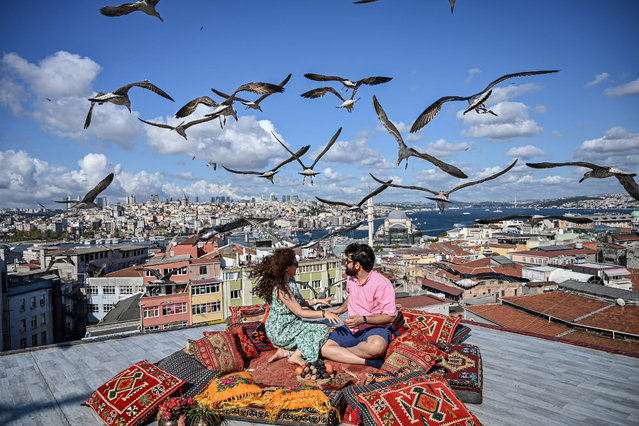
A couple sit on the terrase of a cafe in Istanbul as seagulls fly over them on September 10, 2019. (Photo by Ozan Kose/AFP Photo)

A couple sit on the terrase of a cafe in Istanbul as seagulls fly over them on September 10, 2019. (Photo by Ozan Kose/AFP Photo)
Details
12 Sep 2019 00:05:00
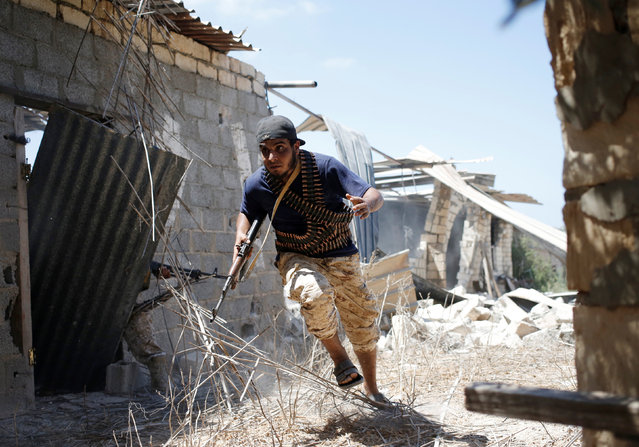
A fighter of Libyan forces allied with the U.N.-backed government runs for cover during a battle with Islamic State fighters in Sirte, Libya, July 31, 2016. (Photo by Goran Tomasevic/Reuters)

A fighter of Libyan forces allied with the U.N.-backed government runs for cover during a battle with Islamic State fighters in Sirte, Libya, July 31, 2016. (Photo by Goran Tomasevic/Reuters)
Details
01 Aug 2016 10:16:00
Lv Mengmeng, who was born in 1995, poses for a photograph in Shanghai August 22, 2014. When asked if she would like siblings, Mengmeng said: “Maybe brothers, because I think they could protect me”. (Photo by Carlos Barria/Reuters)

Reuters Photographer Carlos Barria photographed a person born in each year China's one child policy has been in existence; from a man born in 1979, to a baby born in 2014, and asked them if they would have like to have siblings. Here: Lv Mengmeng, who was born in 1995, poses for a photograph in Shanghai August 22, 2014. When asked if she would like siblings, Mengmeng said: “Maybe brothers, because I think they could protect me”. (Photo by Carlos Barria/Reuters)
Details
06 Oct 2014 08:20:00
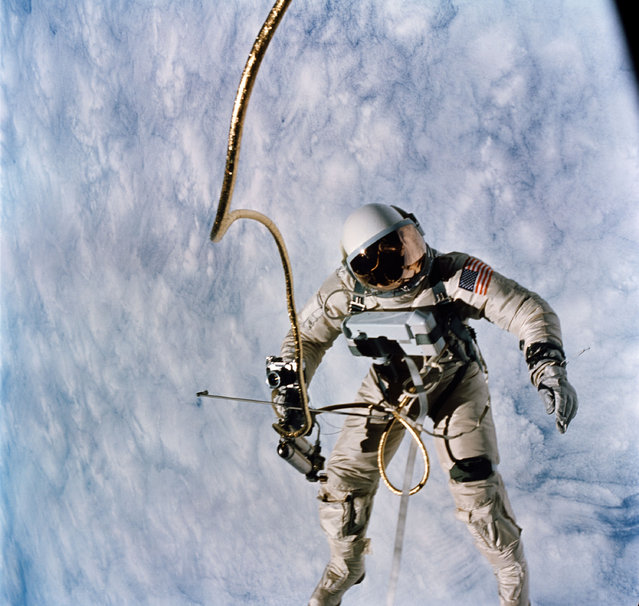
Astronaut Edward H. White II, pilot for the Gemini-Titan 4 (GT-4) spaceflight, floats in the zero-gravity of space during the third revolution of the GT-4 spacecraft on June 3, 1965. White wears a specially designed spacesuit. His face is shaded by a gold-plated visor to protect him from unfiltered rays of the sun. (Photo by NASA)

Astronaut Edward H. White II, pilot for the Gemini-Titan 4 (GT-4) spaceflight, floats in the zero-gravity of space during the third revolution of the GT-4 spacecraft on June 3, 1965. White wears a specially designed spacesuit. His face is shaded by a gold-plated visor to protect him from unfiltered rays of the sun. In his right hand he carries a Hand-Held Self-Maneuvering Unit (HHSMU) that gives him control over his movements in space. White also wears an emergency oxygen chest pack; and he carries a camera mounted on the HHSMU for taking pictures of the sky, Earth and the GT-4 spacecraft. He is secured to the spacecraft by a 25-feet umbilical line and a 23-feet tether line. Both lines are wrapped together in gold tape to form one cord. Astronaut James A. McDivitt, command pilot, remained inside the spacecraft during the extravehicular activity (EVA). Astronaut White died in the Apollo/Saturn 204 fire at Cape Kennedy on January 27, 1967. (Photo by NASA)
Details
22 Jul 2014 12:05:00