Loading...
Done
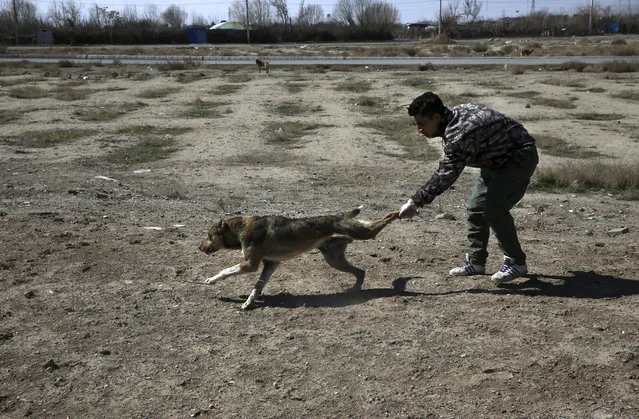
In this picture taken on Sunday, March 5, 2017, a Tehran's urban animal control worker catches a stray dog after being shot with his anesthetic dart on the outskirts of the capital Tehran, Iran. (Photo by Vahid Salemi/AP Photo)

In this picture taken on Sunday, March 5, 2017, a Tehran's urban animal control worker catches a stray dog after being shot with his anesthetic dart on the outskirts of the capital Tehran, Iran. The shelter has been hired by the Tehran city government to take a new, more humane approach to deal with the burgeoning problem of stray dogs in the capital. It’s a sign of changing attitudes among officials in a country where Islamic authorities long saw dogs as “un-Islamic” and would at times confiscate them from people who kept them as pets. (Photo by Vahid Salemi/AP Photo)
Details
17 Mar 2017 00:03:00
“Whether that means getting up way before the sun, like I do most days, going out somewhere that I’m not comfortable or just trying to get different angles or styles of photos, I am trying to display the crazy beauty of the ocean, and usually moments that literally last less than a split second”. (Photo by Ryan Pernoski/Caters News Agency)

These kaleidoscopic images are the work of one persistent photographer’s efforts to capture vibrant hues at the exact moment a wave breaks. Ryan Pernofski‘s stunning shots feature brilliant yellows, reds, blues and purples as an array of sunlight hits the water at the perfect time. What’s even more impressive: Ryan, a 27-year-old Australian, began shooting his popular masterpieces without using a professional camera, taking his iPhone out into the water instead. Ryan began experimenting with this method in 2012, using an underwater housing to protect his phone, as he could not afford a professional camera. (Photo by Ryan Pernoski/Caters News Agency)
Details
09 Jun 2018 00:05:00
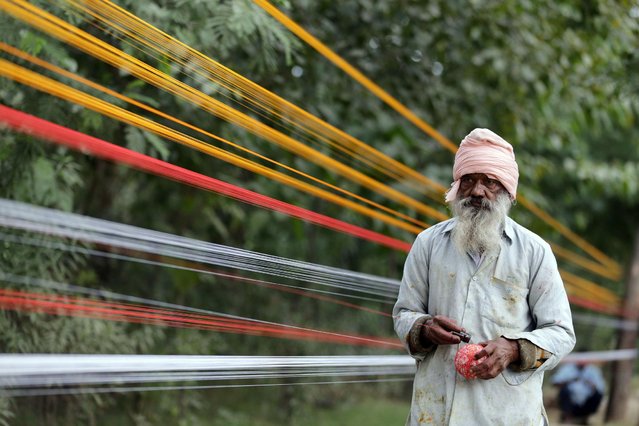
An Indian worker makes a roll of the kite thread being prepared on a roadside on the outskirts of Amritsar, India, 24 November 2020. The kite string or the “Dor”, in the local language, is made of crushed glass, glue, colors, and egg to make it strong enough to hold the kite. With the onset of the winter season, kite flying enthusiasts especially in northern Punjab, ranging from children to aged people, start flying kites as a leisure activity from their homes' rooftops and from open spaces, enjoying warmth of the winter sun at the same time. Kite flying season peaks in Amritsar on Lohri festival which marks the culmination of winter and is celebrated in the month of January every year. (Photo by Raminder Pal Singh/EPA/EFE)

An Indian worker makes a roll of the kite thread being prepared on a roadside on the outskirts of Amritsar, India, 24 November 2020. The kite string or the “Dor”, in the local language, is made of crushed glass, glue, colors, and egg to make it strong enough to hold the kite. (Photo by Raminder Pal Singh/EPA/EFE)
Details
07 Dec 2020 00:01:00


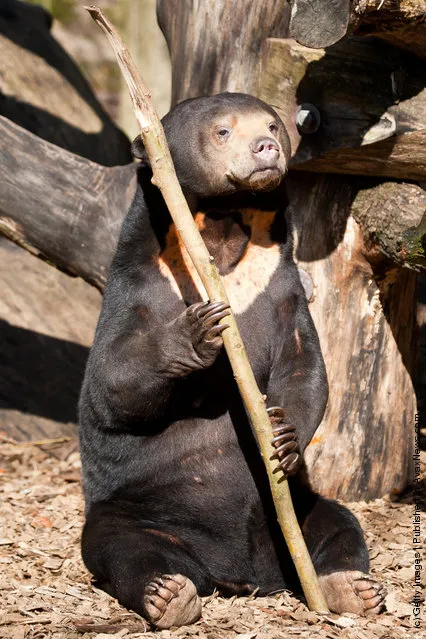
The sun bear (Ursus malayanus), also known as the honey bear, is a bear found primarily in the tropical rainforest (the dense lowland forests) in Southeast Asia; North-East India, Bangladesh, Myanmar, Thailand, Laos, Cambodia, Vietnam, Southern China, Peninsular Malaysia, and the islands of Sumatra and Borneo.
Details
03 May 2012 23:37:00
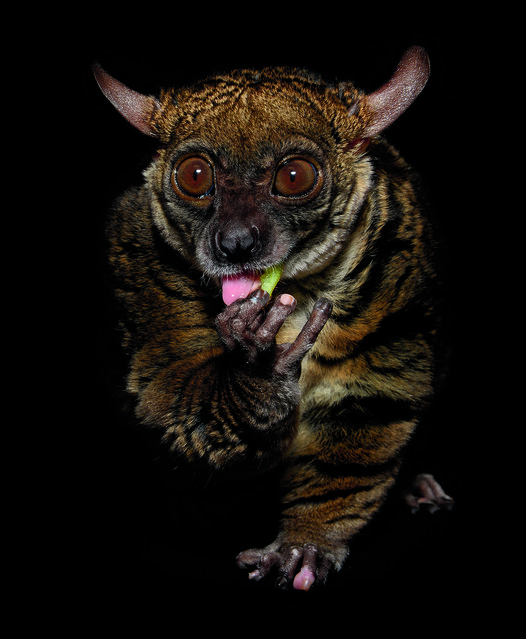
Galagos, more commonly known as bush babies, are tiny African primates with remarkable jumping abilities. Thanks to the elastic energy stored in the tendons of their lower legs, small-eared galagos can jump 6 feet straight up in the air. (Photo by Traer Scott/Chronicle Books)

Galagos, more commonly known as bush babies, are tiny African primates with remarkable jumping abilities. Thanks to the elastic energy stored in the tendons of their lower legs, small-eared galagos can jump 6 feet straight up in the air. (Photo by Traer Scott/Chronicle Books)
Details
07 Sep 2014 12:38:00
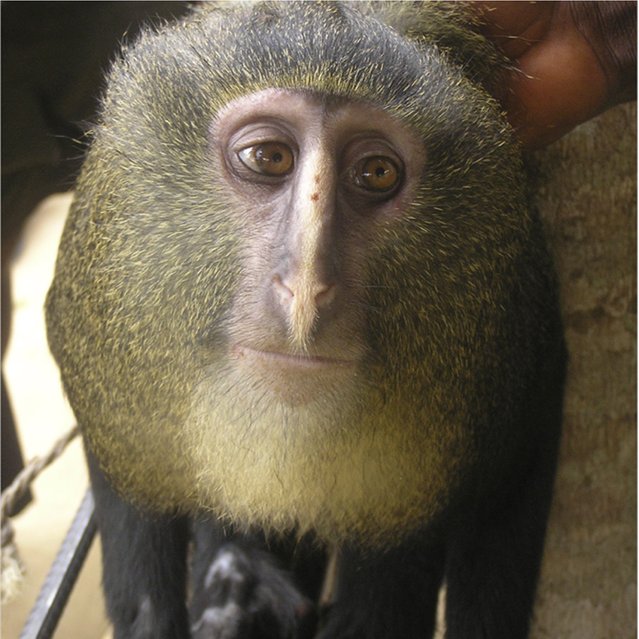
A new species of monkey found in the Democratic Republic of the Congo and identified as Lesula (Cercopithecus lomamiensis) is seen in this undated photograph from an article published September 12, 2012 in the science journal PLOS One. (Photo by Hart J. A., Detwiler K. M., Gilbert C. C./Reuters)

A new species of monkey found in the Democratic Republic of the Congo and identified as Lesula (Cercopithecus lomamiensis) is seen in this undated photograph from an article published September 12, 2012 in the science journal PLOS One. The monkey was first seen in 2007 by researchers John and Terese Hart of the Peabody Museum of Natural History at Yale Research Project. The finding of C. lomamiensis represents only the second new species of African monkey to be discovered in the past 28 years, according to the research article. (Photo by Hart J. A., Detwiler K. M., Gilbert C. C./Reuters)
Details
27 Sep 2012 08:17:00
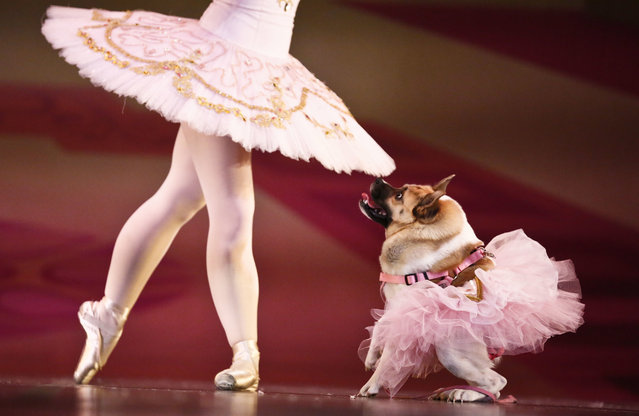
The Sugar Plum Fairy, Katherine Free, left, dances with the dog, Pig, during the Birmingham's Ballet “Mutt-cracker”, a rendition of the famous ballet “The Nutcracker”, in Birmingham, Alabama, December 8, 2016. (Photo by Brynn Anderson/AP Photo)

The Sugar Plum Fairy, Katherine Free, left, dances with the dog, Pig, during the Birmingham's Ballet “Mutt-cracker”, a rendition of the famous ballet “The Nutcracker”, in Birmingham, Alabama, December 8, 2016. (Photo by Brynn Anderson/AP Photo)
Details
14 Dec 2016 11:01:00
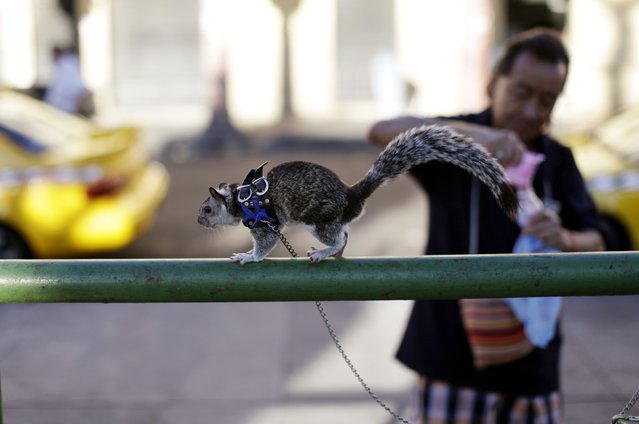
Carlos Melendez prepares to feed his pet squirrel “Colita” in downtown San Salvador January 29, 2015. (Photo by Jose Cabezas/Reuters)

Carlos Melendez prepares to feed his pet squirrel “Colita” in downtown San Salvador January 29, 2015. (Photo by Jose Cabezas/Reuters)
Details
31 Jan 2015 13:35:00