Loading...
Done


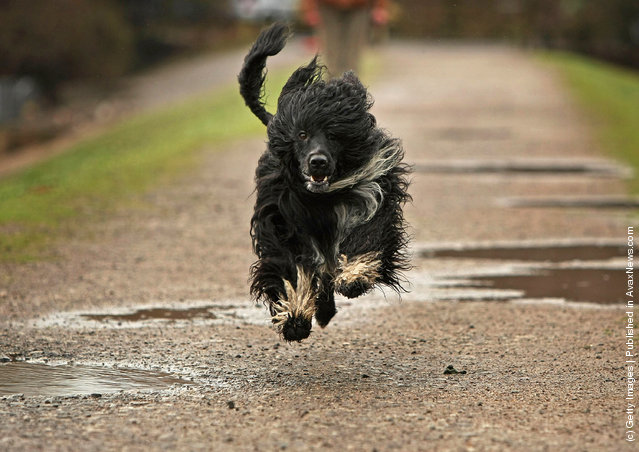
“The Portuguese Water Dog is a breed of working dog as classified by the American Kennel Club. Portuguese Water Dogs are originally from the Portuguese region of the Algarve, from where the breed expanded to all around Portugal's coast, where they were taught to herd fish into fishermen's nets, to retrieve lost tackle or broken nets, and to act as couriers from ship to ship, or ship to shore. Portuguese Water Dogs rode in bobbing fishing trawlers as they worked their way from the warm Atlantic waters of Portugal to the frigid fishing waters off the coast of Iceland where the fleets caught cod to bring home. Portuguese Water Dogs were often taken with sailors during the Portuguese discoveries”. – Wikipedia

Photo: Kix, a Portuguese Water Dog , enjoys a walk around the muddy fields near his home before the grooming and preparation starts for this years Crufts on March 3, 2009 in Telford, England. (Photo by Christopher Furlong/Getty Images)
Details
26 Jul 2011 11:27:00
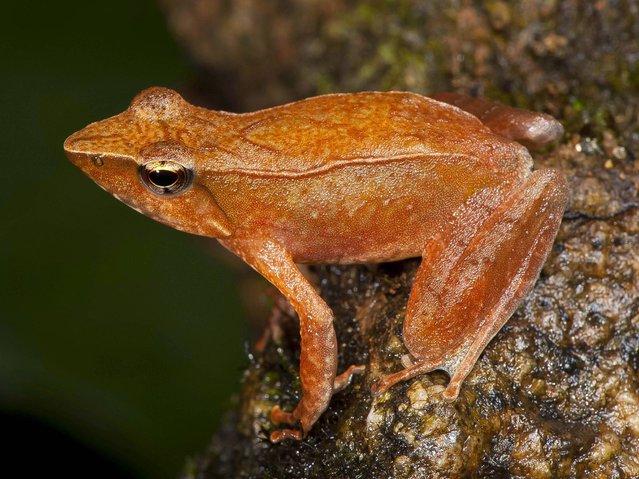
Orange dancing frog discovered by a team headed by University of Delhi professor Sathyabhama Das Biju in the jungle mountains of southern India. (Photo by Satyabhama Das Biju/AP Photo)

This undated photograph shows one of the 14 new species of so-called dancing frogs discovered by a team headed by University of Delhi professor Sathyabhama Das Biju in the jungle mountains of southern India. The study listing the new species brings the number of known Indian dancing frogs to 24 and attempts the first near-complete taxonomic sampling of the single-genus family found exclusively in southern India's lush mountain range called the Western Ghats, which stretches 1,600 kilometers (990 miles) from the west state of Maharashtra down to the country's southern tip. (Photo by Satyabhama Das Biju/AP Photo)
Details
09 May 2014 08:50:00
Women in kimonos look at pictures they took in front of paper lanterns during the annual Mitama Festival at the Yasukuni Shrine in Tokyo July 13, 2014. Over 30,000 lanterns light up the precincts of the shrine, where more than 2.4 million war dead are enshrined, during the four-day festival. The festival goes on till July 16. (Photo by Yuya Shino/Reuters)

Women in kimonos look at pictures they took in front of paper lanterns during the annual Mitama Festival at the Yasukuni Shrine in Tokyo July 13, 2014. Over 30,000 lanterns light up the precincts of the shrine, where more than 2.4 million war dead are enshrined, during the four-day festival. The festival goes on till July 16. (Photo by Yuya Shino/Reuters)
Details
15 Jul 2014 10:41:00
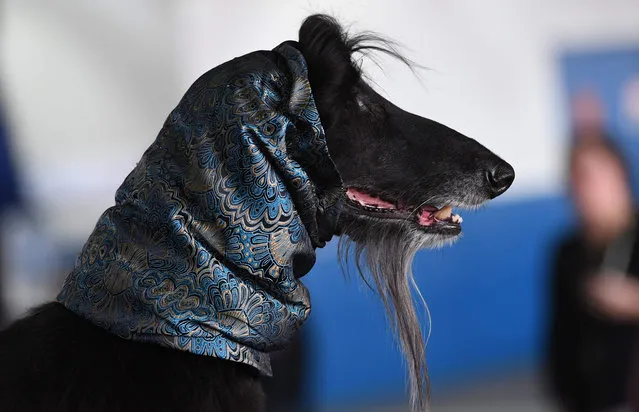
An Afghan Hound waits in the benching area during the Daytime Session in the Breed Judging across the Hound, Toy, Non-Sporting and Herding groups at the 143rd Annual Westminster Kennel Club Dog Show at Pier 92/94 in New York City on February 11, 2019. (Photo by Timothy A. Clary/AFP Photo)

An Afghan Hound waits in the benching area during the Daytime Session in the Breed Judging across the Hound, Toy, Non-Sporting and Herding groups at the 143rd Annual Westminster Kennel Club Dog Show at Pier 92/94 in New York City on February 11, 2019. (Photo by Timothy A. Clary/AFP Photo)
Details
14 Feb 2019 00:03:00
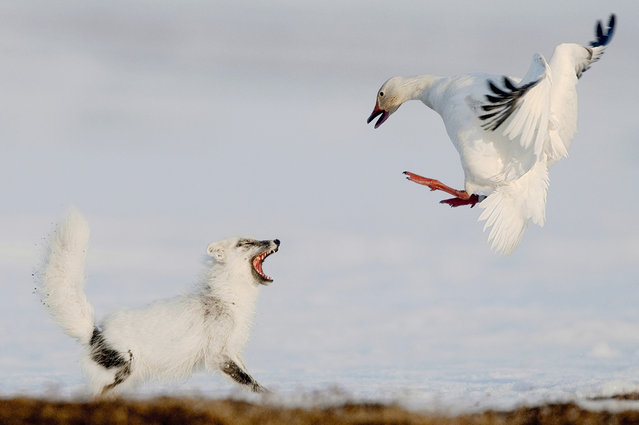
Commended. In late May, about a quarter of a million snow geese arrive from North America to nest on Wrangel Island, in northeastern Russia. They form the world's largest breeding colony of snow geese. Photographer Sergey Gorshkov spent two months on the remote island photographing the unfolding dramas. (Photo by Sergey Gorshkov/Veolia Environnement Wildlife Photographer)

Commended. In late May, about a quarter of a million snow geese arrive from North America to nest on Wrangel Island, in northeastern Russia. They form the world's largest breeding colony of snow geese. Photographer Sergey Gorshkov spent two months on the remote island photographing the unfolding dramas. Arctic foxes take advantage of the abundance of eggs, caching surplus eggs for leaner times. But a goose (here the gander) is easily a match for a fox, which must rely on speed and guile to steal eggs. “The battles were fairly equal”, notes Sergey, “and I only saw a fox succeed in grabbing an egg on a couple of occasions, despite many attempts”. Surprisingly, “the geese lacked any sense of community spirit”, he adds, “and never reacted when a fox harassed a neighboring pair nesting close by”. (Photo by Sergey Gorshkov/Veolia Environnement Wildlife Photographer)
Details
16 Jun 2015 12:30:00
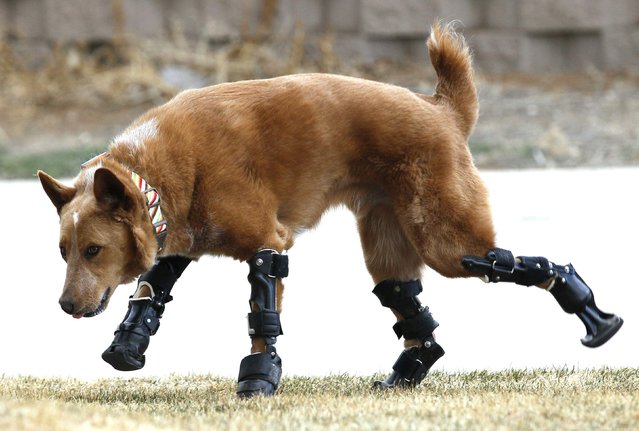
Naki'o, a mixed-breed dog with four prosthetic devices, goes for a run in Colorado Springs April 12, 2013. Naki'o lost all four feet to frostbite when he was abandoned as a puppy in a foreclosed home. (Photo by Rick Wilking/Reuters)

Naki'o, a mixed-breed dog with four prosthetic devices, goes for a run in Colorado Springs April 12, 2013. Naki'o lost all four feet to frostbite when he was abandoned as a puppy in a foreclosed home. (Photo by Rick Wilking/Reuters)
Details
28 Apr 2013 09:16:00
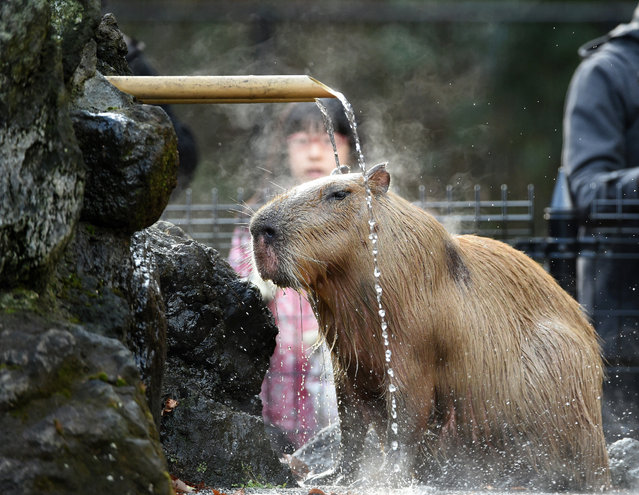
A Capybara bathes in the hot spring water at the Saitama Children's zoo in Higashi Matsuyama city, Saitama prefecture on December 21, 2014. Seven capybaras in the zoo, originally from South America, enjoyed the hot spring water on the chilly winter day in Japan. (Photo by Toshifumi Kitamura/AFP Photo)

A Capybara bathes in the hot spring water at the Saitama Children's zoo in Higashi Matsuyama city, Saitama prefecture on December 21, 2014. Seven capybaras in the zoo, originally from South America, enjoyed the hot spring water on the chilly winter day in Japan. (Photo by Toshifumi Kitamura/AFP Photo)
Details
27 Dec 2014 12:59:00
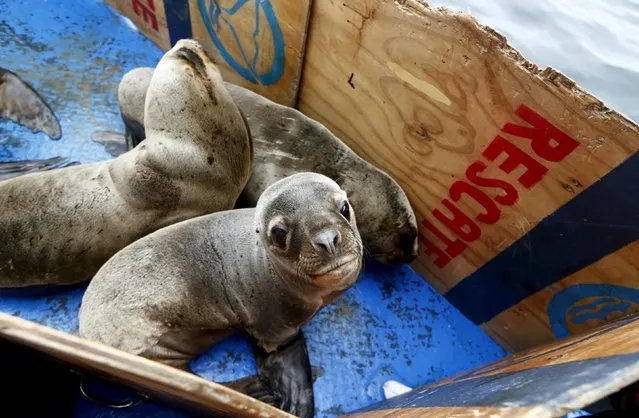
Sea lions wait on the deck of the boat before being released in front of Palomino island, in Callao, Peru September 12, 2015. (Photo by Mariana Bazo/Reuters)

Sea lions wait on the deck of the boat before being released in front of Palomino island, in Callao, Peru September 12, 2015. Four young sea lions returned to the wild after being rescued by marine biologists and treated for various illnesses. The sea lions are survivors of various illnesses which they contracted off the coast of Peru caused by the elevated temperatures in the water because of the El Nino phenomenon, according to Carlos Yaipen, Director of Animal Science and Well-being Organization (ORCA). (Photo by Mariana Bazo/Reuters)
Details
14 Sep 2015 13:37:00