Loading...
Done
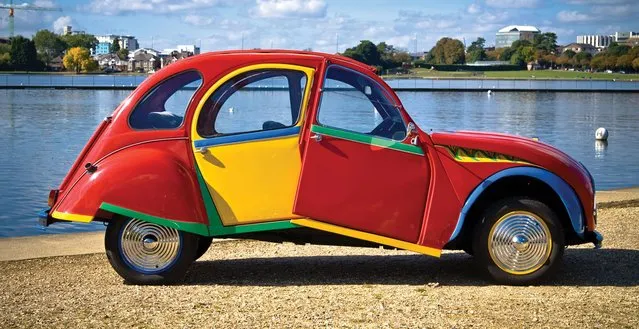
Picasso Citroën By Andy Saunders

The mechanical masterpiece was inspired by Picasso’s Three Musicians and his portrait of Dora Maar. Andy added: “I decided to try and blur the line between car design and art by using Picasso as inspiration.”
Details
01 Sep 2014 08:36:00
Illustrator Scott Brundage

Scott Brundage was born and raised in Connecticut. He began his career while studying at the University of Arts in Philadelphia. He lives and works in New York. Collaborates with The Wall Street Magazine, The New York Times, The Washington Post, The Artist’s Magazine and etc.
Details
26 Feb 2014 13:00:00
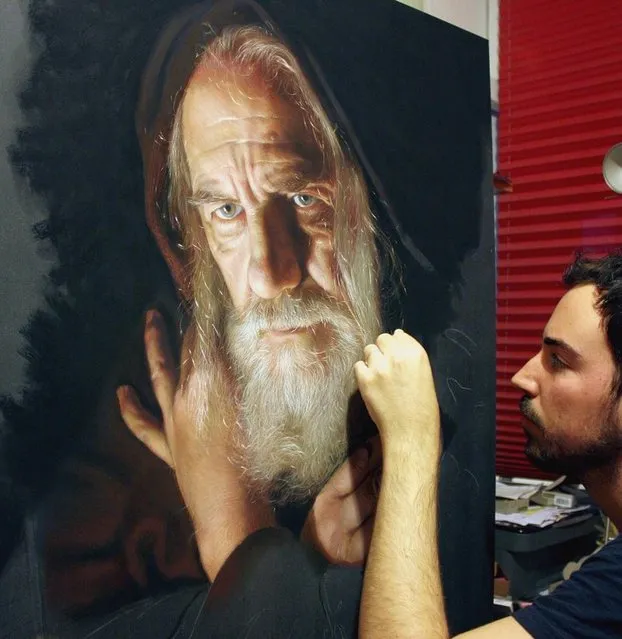
Realistic Drawings By Ruben Belloso Adorna

Ruben Belloso Adorna, a young artist from Seville, Spain, has taken the art world by storm with his incredibly detailed portraits of real-life and fictional characters drawn exclusively in pastel on wooden canvas.
Details
18 Jun 2014 10:24:00
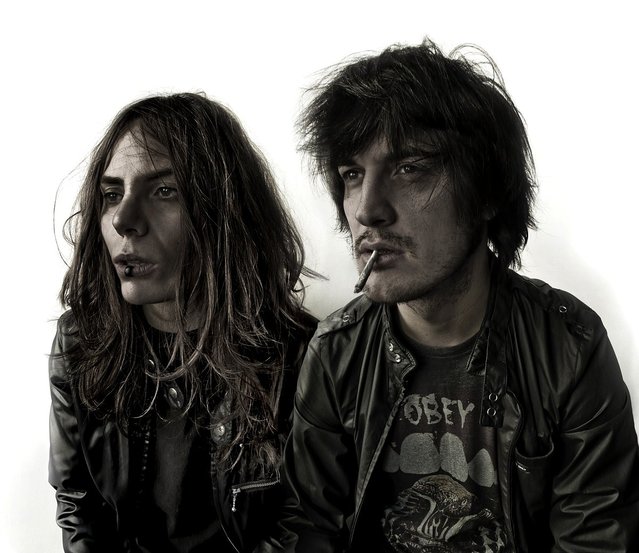
Couples By Reclarkgable

Reclarkgable is a photographer/art director from Madrid, Spain. He has recently created a really fun series showing how versatile appearances really are.
Details
04 Mar 2013 11:21:00
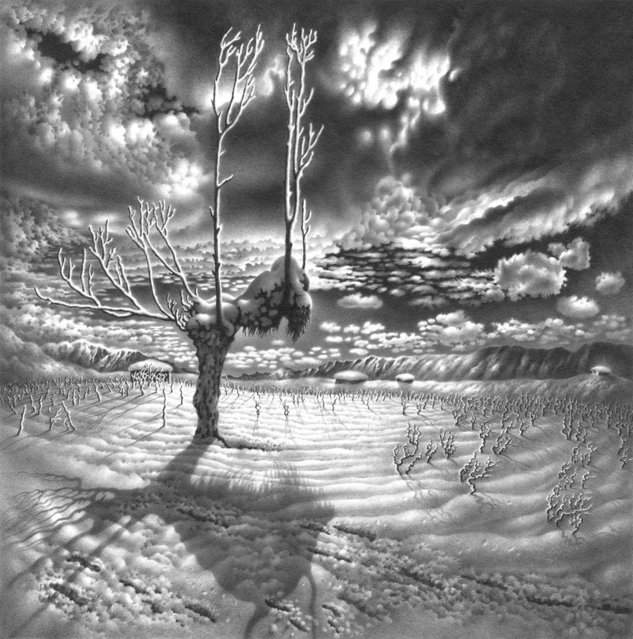
Pencil Drawings By Guram Dolenjashvili

Dolenjashvili is a Georgian painter often working in a monochrome technique. He is a Meritorious Artist of Georgia and an honorary member of Russian Academy of Arts.
Details
15 Jun 2015 14:34:00
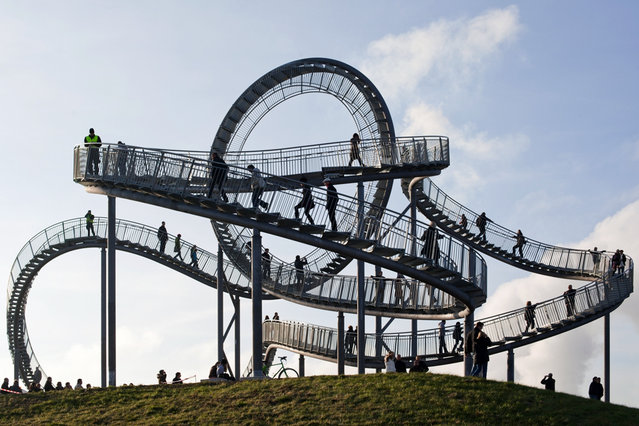
Walkable Roller-Coaster In Germany

“Tiger and Turtle–Magic Mountain” by German art duo Heike Mutter and Ulrich Genth is a walkable sculpture shaped like a roller coaster. Visitors can stroll along the track (except for the loop sections). The 69 foot tall sculpture is located in Wanheim Duisburg, Germany.
Details
18 Aug 2015 10:37:00
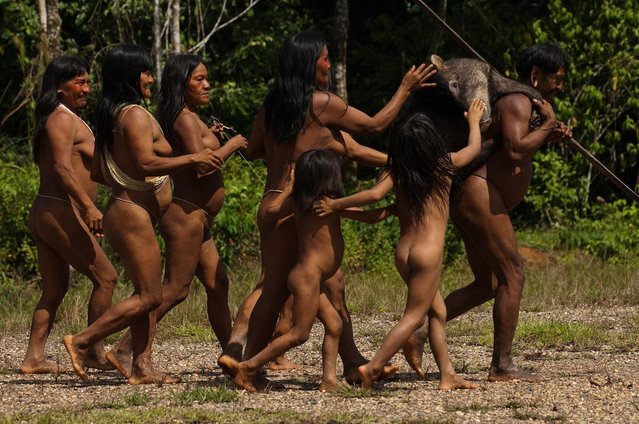
Spectacular images offering insight into the lives of the Huaorani people in the Ecuadorian Amazon have been revealed showing how they use traditional methods to hunt monkeys for food. The stunning pictures were taken by conservation photographer Pete Oxford from Torquay, Devon in the Ecuadorian Amazon. “The Huaorani Indians are a forest people highly in tune with their environment. Many are now totally acculturated since the 1950s by missionaries”, said Pete. “Today they face radical change to their culture to the proximity of oil exploration within their territory and the Yasuni National Park and Biosphere Reserve, they are vastly changed. Some still live very traditionally and for this shoot, through my Huaorani friend, a direct relative of those photographed he wanted to depict them as close to their original culture as possible. They still largely hunt with blow pipes and spears eating a lot of monkeys and peccaries”. The Huaorani are also known as the Waorani, Waodani or the Waos and are native Amerindians. Their lands are located between the Curaray and Napo rivers and speak the Huaorani language. Pete says that during his visit he was welcomed into the group and hopes that ancient cultures can be saved. Here: The tribe were seen celebrating after a hunter returned to camp with a wild pig. (Photo by Pete Oxford/Mediadrumworld.com)

Spectacular images offering insight into the lives of the Huaorani people in the Ecuadorian Amazon have been revealed showing how they use traditional methods to hunt monkeys for food. The stunning pictures were taken by conservation photographer Pete Oxford from Torquay, Devon in the Ecuadorian Amazon. Here: The tribe were seen celebrating after a hunter returned to camp with a wild pig. (Photo by Pete Oxford/Mediadrumworld.com)
Details
20 Jan 2017 07:58:00
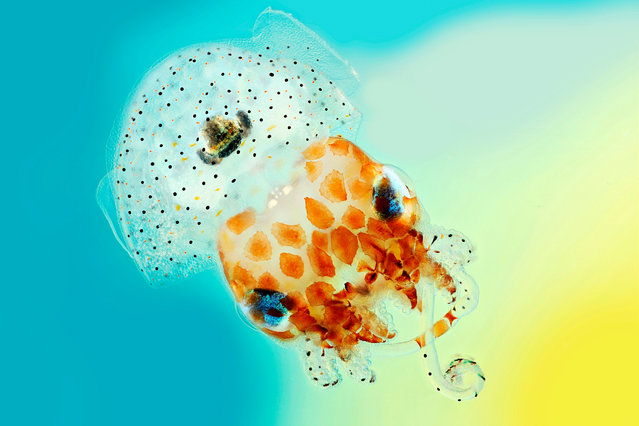
With its huge eyes, comical name and diminutive size, Mark R. Smith’s image of a baby Hawaiian bobtail squid can’t help but raise a smile. A curiously endearing creature, the cephalopod is just 1.5cm across, its mantle cavity bearing more than a passing resemblance to a rather natty shower cap. But it is also a beautiful example of symbiosis – nature’s version of “I’ll scratch your back if you scratch mine” – for on the underside of the squid is a light organ which houses bioluminescent bacteria. The squid offers the bacteria protection and food, while the bacteria emit a glow – a handy trait that the squid uses to offset its silhouette, helping it to evade predators in the depths below. Mark R. Smith’s entry combines several images of a Hawaiian bobtail squid with different focus lengths to create a final picture with greater depth of field than normal. (Photo by Mark R. Smith/Wellcome Images/Macroscopic Solutions)

With its huge eyes, comical name and diminutive size, Mark R. Smith’s image of a baby Hawaiian bobtail squid can’t help but raise a smile. A curiously endearing creature, the cephalopod is just 1.5cm across, its mantle cavity bearing more than a passing resemblance to a rather natty shower cap. But it is also a beautiful example of symbiosis – nature’s version of “I’ll scratch your back if you scratch mine” – for on the underside of the squid is a light organ which houses bioluminescent bacteria. The squid offers the bacteria protection and food, while the bacteria emit a glow – a handy trait that the squid uses to offset its silhouette, helping it to evade predators in the depths below. Mark R. Smith’s entry combines several images of a Hawaiian bobtail squid with different focus lengths to create a final picture with greater depth of field than normal. (Photo by Mark R. Smith/Wellcome Images/Macroscopic Solutions)
Details
08 Mar 2017 00:05:00