Loading...
Done
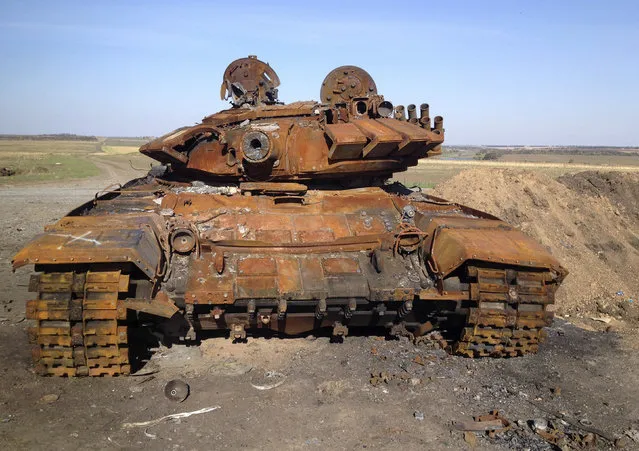
A destroyed T-72 tank, which presumably came from Russia, is seen on a battlefield near separatist-controlled Starobesheve, eastern Ukraine, October 2, 2014.(Photo by Maria Tsvetkova/Reuters)

A destroyed T-72 tank, which presumably came from Russia, is seen on a battlefield near separatist-controlled Starobesheve, eastern Ukraine, October 2, 2014. The burnt-out remains of dozens of tanks and armoured vehicles in fields near the small village of Horbatenko bear witness to the ferocity of a battle that turned the tide of the conflict in eastern Ukraine. Among the debris, Reuters found the blackened carcasses of what military experts have since identified as two Russian army tanks, supporting statements by Kiev and the West that the rebels were backed by troops and equipment sent by Moscow. (Photo by Maria Tsvetkova/Reuters)
Details
24 Oct 2014 12:14:00
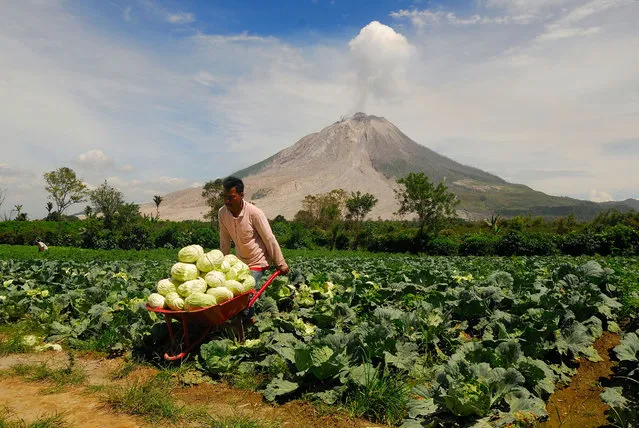
A farmer seen harvesting his crops while Mount Sinabung spewing out volcanic ash on July 4, 2017 in North Sumatera, Indonesia. The increased volume of lava dome that reaches one million eight hundred cubic meters, said volcanologist, through radio communications, do not dampen the activities of the people around sinabung, such as farming, harvesting their crops, picking up objects that are still left behind, or just take a picture while walking around near mount Sinabung. (Photo by Sabirin Manurung/Pacific Press/Barcroft Images)

A farmer seen harvesting his crops while Mount Sinabung spewing out volcanic ash on July 4, 2017 in North Sumatera, Indonesia. The increased volume of lava dome that reaches one million eight hundred cubic meters, said volcanologist, through radio communications, do not dampen the activities of the people around sinabung, such as farming, harvesting their crops, picking up objects that are still left behind, or just take a picture while walking around near mount Sinabung. (Photo by Sabirin Manurung/Pacific Press/Barcroft Images)
Details
06 Aug 2017 07:50:00
A young woman looks at her smartphone sitting in front of a mannequin use to keep social distancing at a Chinese cuisine restaurant in Tokyo, Japan, 27 July 2020. Japan's total number of COVID-19 cases crossed the 30,000 line showing the new coronavirus pandemic is spreading across the country and not only in Tokyo and Osaka megalopolis. (Photo by Franck Robichon/EPA/EFE)

A young woman looks at her smartphone sitting in front of a mannequin use to keep social distancing at a Chinese cuisine restaurant in Tokyo, Japan, 27 July 2020. Japan's total number of COVID-19 cases crossed the 30,000 line showing the new coronavirus pandemic is spreading across the country and not only in Tokyo and Osaka megalopolis. (Photo by Franck Robichon/EPA/EFE)
Details
21 Aug 2020 00:01:00
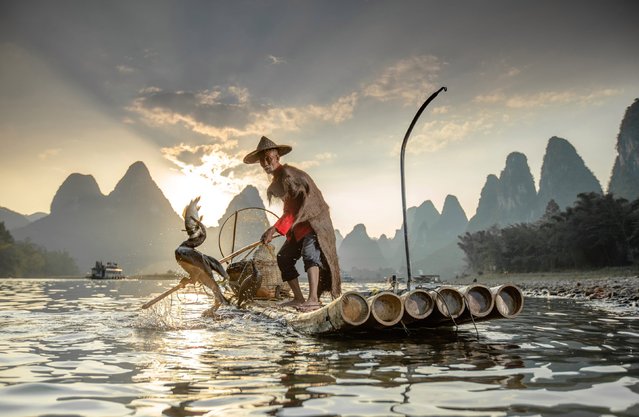
A fisherman with a close bond to cormorants uses the flock of birds to catch big fish in Li river in Guilin, China. The aquatic birds can be seen perching on a bamboo raft before swooping into the calm water to grasp hold of prey. (Photo by Julia Wimmerlin/Solnet News & Photo Agency)

A fisherman with a close bond to cormorants uses the flock of birds to catch big fish in Li river in Guilin, China. The aquatic birds can be seen perching on a bamboo raft before swooping into the calm water to grasp hold of prey. (Photo by Julia Wimmerlin/Solnet News & Photo Agency)
Details
19 Dec 2019 00:05:00
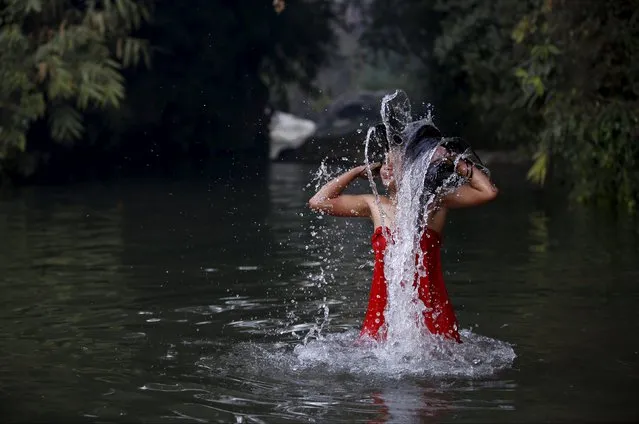
A devotee takes a holy bath in River Saali in Sankhu during the Swasthani Brata Katha festival in Kathmandu, Nepal, January 24, 2016. (Photo by Navesh Chitrakar/Reuters)

A devotee takes a holy bath in River Saali in Sankhu during the Swasthani Brata Katha festival in Kathmandu, Nepal, January 24, 2016. During the month long festival, devotees recite one chapter of a Hindu tale daily from the 31-chapter sacred Swasthani Brata Katha book that is dedicated to God Madhavnarayan and Goddess Swasthani, alongside various other gods and goddess and the miraculous feats performed by them. The devotees also go on pilgrimages to various temples, perform religious rituals, take a holy bath in the rivers and fast for a month, especially among women who believe fasting helps in their family's well-being or in getting them a good husband. (Photo by Navesh Chitrakar/Reuters)
Details
25 Jan 2016 12:05:00
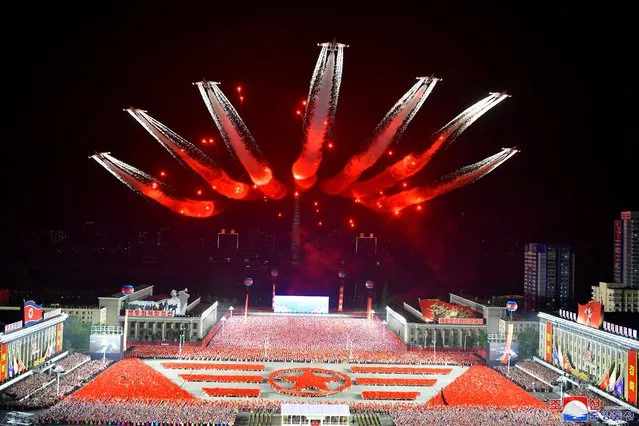
This picture taken on April 25, 2022 and released from North Korea's official Korean Central News Agency (KCNA) on April 26 shows a military parade to celebrate the 90th anniversary of the founding of the Korean People's Revolutionary Army at Kim Il Sung Square in Pyongyang. (Photo by KCNA via KNS/AFP Photo)

This picture taken on April 25, 2022 and released from North Korea's official Korean Central News Agency (KCNA) on April 26 shows a military parade to celebrate the 90th anniversary of the founding of the Korean People's Revolutionary Army at Kim Il Sung Square in Pyongyang. (Photo by KCNA via KNS/AFP Photo)
Details
28 Apr 2022 05:44:00
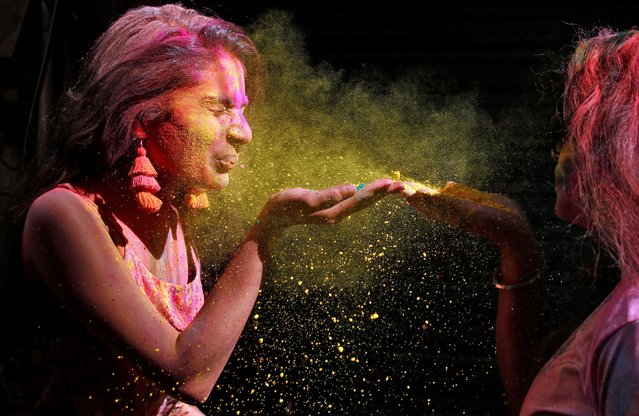
Women blow coloured power during Holi celebrations in Chennai, India, March 10, 2020. (Photo by P. Ravikumar/Reuters)

Women blow coloured power during Holi celebrations in Chennai, India, March 10, 2020. Holi is observed in India at the end of the winter season on the last full moon of the lunar month. (Photo by P. Ravikumar/Reuters)
Details
12 Mar 2020 00:01:00
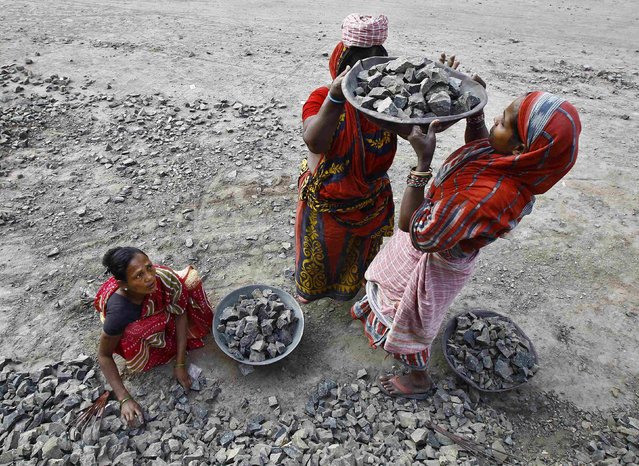
Women labourers work at the construction site of a road in Kolkata January 8, 2015. Across towns and cities in India, it is not uncommon to see women cleaning building sites, carrying bricks and or shoveling gravel - helping construct the infrastructure necessary for the country's economic and social development. (Photo by Rupak De Chowdhuri/Reuters)

Women labourers work at the construction site of a road in Kolkata January 8, 2015. Across towns and cities in India, it is not uncommon to see women cleaning building sites, carrying bricks and or shoveling gravel – helping construct the infrastructure necessary for the country's economic and social development. They help build roads, railway tracks, airports, and offices. They lay pipes for clean water supplies, cables for telecommunications, and dig the drains for sewage systems. But although women make up at least 20 percent of India's 40 million construction workers, they are less recognized than male workers with lower pay and often prone to safety hazards and sexual harassment. They are often unaware of their rights or scared to complain, say activists now trying to campaign for better treatment of women in the construction industry. (Photo by Rupak De Chowdhuri/Reuters)
Details
15 Jan 2015 13:47:00