Loading...
Done
Beltane Fire Society performers celebrate the coming of summer by participating in the Beltane Fire Festival on Calton Hill April 30, 2019 in Edinburgh, Scotland. (Photo by Jeff J. Mitchell/Getty Images)

Beltane Fire Society performers celebrate the coming of summer by participating in the Beltane Fire Festival on Calton Hill April 30, 2019 in Edinburgh, Scotland. The event celebrates the ending of winter and is a revival of the ancient Celtic and Pagan festival of Beltane, the Gaelic name for the month of May. This years festival was highlighting climate change, with the central character The May Queen being seen to express her rage at the damage done to Earth. (Photo by Jeff J. Mitchell/Getty Images)
Details
03 May 2019 00:03:00
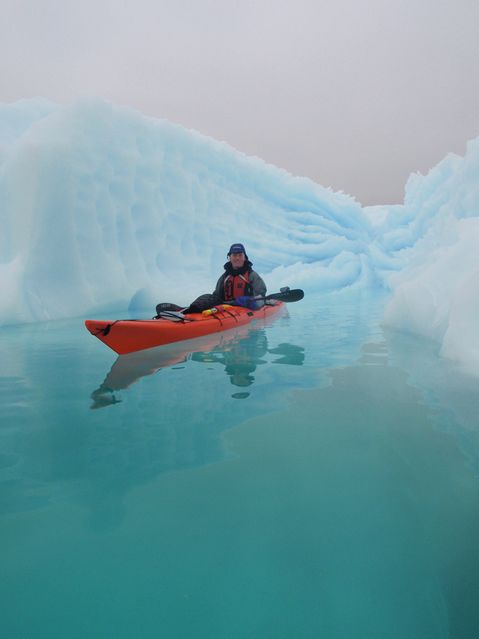
Chasing Ice in Greenland

The Greenland ice sheet is a vast body of ice covering 660,235 sq miles, roughly 80% of the surface of Greenland. It is the second largest ice body in the world, after the Antarctic Ice Sheet. Some scientists predict that climate change may be near a "tipping point" where the entire ice sheet will melt in about 2000 years. If the entire 2,850,000 cubic kilometres (683,751 cu mi) of ice were to melt, it would lead to a global sea level rise of 7.2 m (23.6 ft).
Details
30 Apr 2014 13:15:00
Young Japanese women pose with a green bear costumed person during the 'Earth Parade 2015' in Tokyo, Japan, Saturday, November 28, 2015. (Photo by Franck Robichon/EPA)

Young Japanese women pose with a green bear costumed person during the 'Earth Parade 2015' in Tokyo, Japan, Saturday, November 28, 2015. Ahead of the U.N. climate change summit in Paris starting this week, about 1,000 citizens and environmental activists took to the streets of Tokyo on Saturday, calling for strong actions to combat global warming. (Photo by Franck Robichon/EPA)
Details
30 Nov 2015 08:00:00
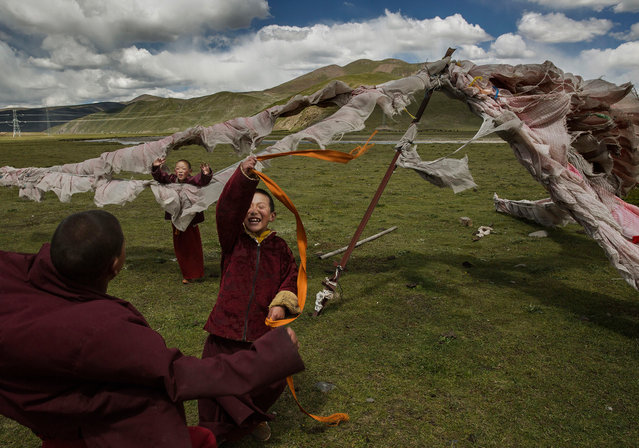
Young Buddhist novice monks play at a Tibetan nomadic summer grazing area on July 24, 2015 on the Tibetan Plateau in Yushu County, Qinghai, China. (Photo by Kevin Frayer/Getty Images)

Young Buddhist novice monks play at a Tibetan nomadic summer grazing area on July 24, 2015 on the Tibetan Plateau in Yushu County, Qinghai, China. Tibetan nomads face many challenges to their traditional way of life including political pressures, forced resettlement by China's government, climate change and rapid modernization. The Tibetan Plateau, often called “The Roof of the World”, is the world's highest and largest plateau. (Photo by Kevin Frayer/Getty Images)
Details
12 Aug 2015 13:16:00


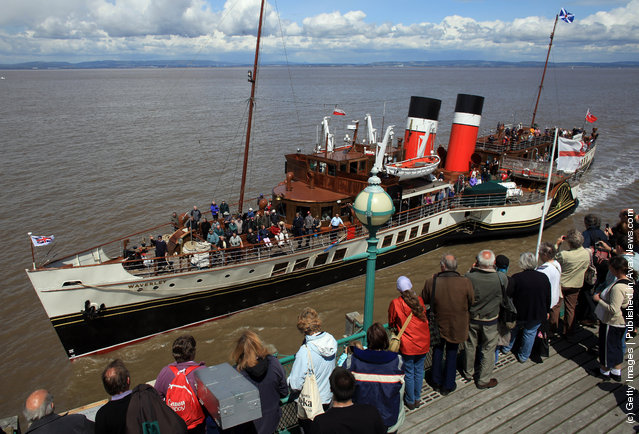
Passengers watch as The Waverley, the world's last remaining seagoing passenger paddle steamer arrives at Clevedon Pier on June 10, 2011 in Clevedon, England. Built in 1946, the trust which owns and operates the Waverley, is warning that this could be the last season for the vessel and is appealling for more public funding saying it is struggling to make ends meet in the current financial climate due in part to rising fuel costs. Restored in 1973 after service on Loch Long in Scotland, since 2003, Waverley has been listed in the British National Register of Historic Ships core collection as 'a vessel of pre-eminent national importance'. (Photo by Matt Cardy/Getty Images)
Details
11 Jun 2011 12:02:00
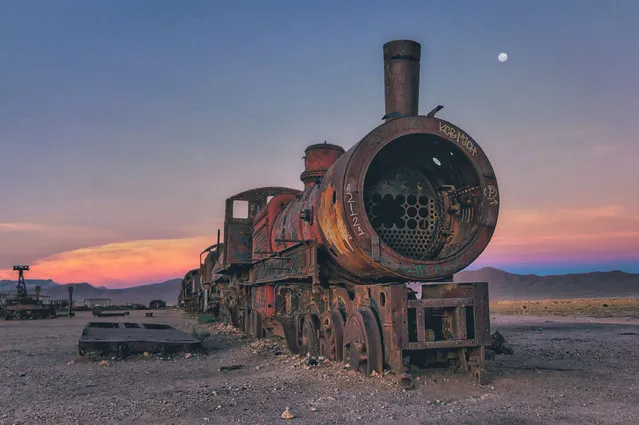
Many of the trains and locomotives are British imports and have been eroded by the harsh Bolivian climate. (Photo by Chris Staring/Rex Features/Shutterstock)

Chris Staring photographs a mysterious train graveyard in the heart of southern Bolivia, where the skeletons of British steam locomotives and rail cars rust away on the edge of the world’s largest salt flats. More than 100 rail cars and locomotives can be found in different states of decay in the train graveyard. (Photo by Chris Staring/Rex Features/Shutterstock)
Details
03 Jul 2016 10:46:00
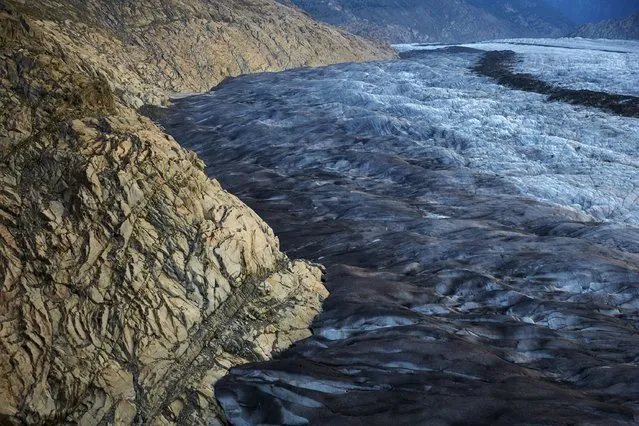
The Aletsch Glacier is pictured at dusk in Fiesch, Switzerland, August 11, 2015. (Photo by Denis Balibouse/Reuters)

The Aletsch Glacier is pictured at dusk in Fiesch, Switzerland, August 11, 2015. One of Europe's biggest glaciers, the Great Aletsch coils 23 km (14 miles) through the Swiss Alps – and yet this mighty river of ice could almost vanish in the lifetimes of people born today because of climate change. The glacier, 900 metres (2,950 feet) thick at one point, has retreated about 3 km (1.9 miles) since 1870 and that pace is quickening. (Photo by Denis Balibouse/Reuters)
Details
18 Oct 2015 08:05:00
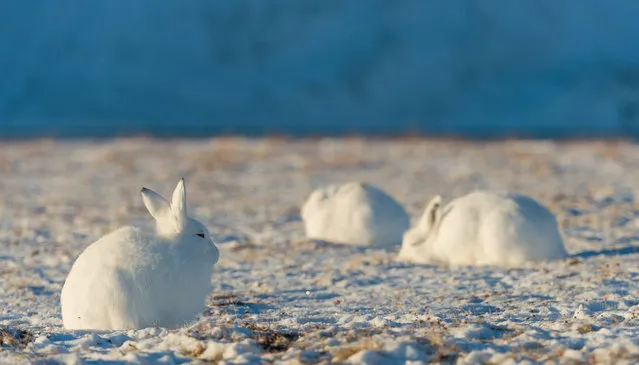
Arctic Hare

The arctic hare, or polar rabbit, is a species of hare which is adapted largely to polar and mountainous habitats. The arctic hare survives with a thick coat of fur and usually digs holes in the ground or under snow to keep warm and sleep. Arctic hares look like rabbits but have shorter ears, are taller when standing, and, unlike rabbits, can thrive in cold climates. They can travel together with many other hares, sometimes huddling with dozens or more, but are usually found alone, taking, in some cases, more than one partner. The arctic hare can run up to 60 kilometres per hour (40 mph). Its predators include the arctic wolf, arctic fox, and ermine.
Details
17 Mar 2014 13:56:00