Loading...
Done


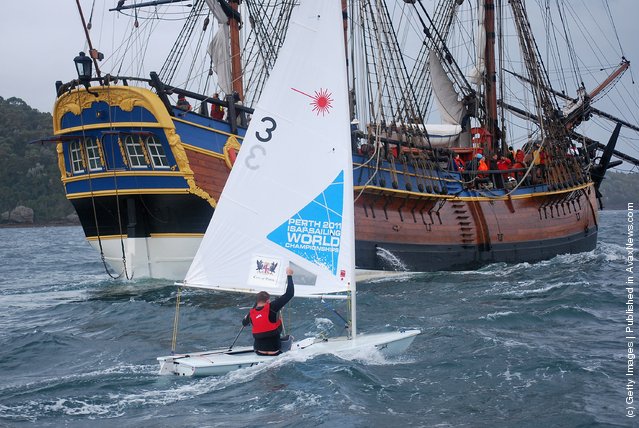
In this handout image provided by Perth 2011, HMB Endeavour, the replica of Captain James Cook's ship, is farewelled from Sydney Harbour accompanied by three Olympic class Laser yachts on April 16, 2011 in Sydney, Australia. The ship was farewelled from Sydney to start her circumnavigation of Australia, ending up in Freemantle where she will play a role in the Perth 2011 ISAF Sailing World Championships in December. (Photo by Richard Palfreyman/Perth 2011 via Getty Images)
Details
16 Apr 2011 11:12:00
Danny Santos started photography as a hobby a few years ago, shooting strangers in the streets of Singapore every weekends. He still does that from time to time. Now he juggles between his day job as a graphic designer, and his part-time work as a freelance photographer. (Photo by Danny Santos)

Danny Santos started photography as a hobby a few years ago, shooting strangers in the streets of Singapore every weekends. He still does that from time to time. Now he juggles between his day job as a graphic designer, and his part-time work as a freelance photographer. (Photo by Danny Santos)
Details
17 Aug 2014 09:05:00
Latin dancing featured on the opening day of the 98th Blackpool Dance Festival in the Empress Ballroom in the city’s Winter Gardens on May 28, 2024. (Photo by James Glossop/ The Times & Sunday Times)

Latin dancing featured on the opening day of the 98th Blackpool Dance Festival in the Empress Ballroom in the city’s Winter Gardens on May 28, 2024. (Photo by James Glossop/ The Times & Sunday Times)
Details
02 Jun 2024 04:36:00
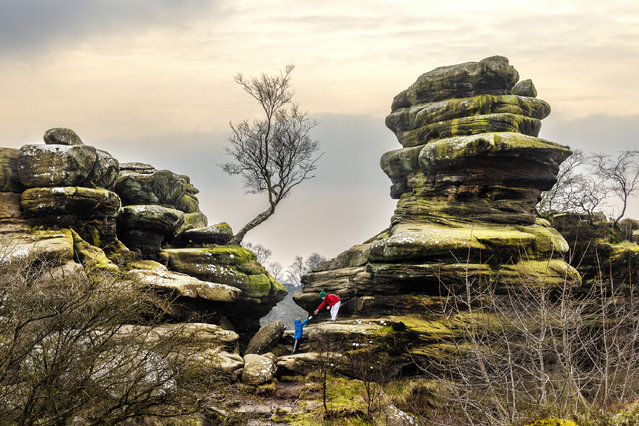
Families and children play at Brimham Rocks during their half term break in North Yorkshire, UK on February 18, 2025. (Photo by James Glossop/The Times & Sunday Times)

Families and children play at Brimham Rocks during their half term break in North Yorkshire, UK on February 18, 2025. (Photo by James Glossop/The Times & Sunday Times)
Details
04 Sep 2025 03:30:00
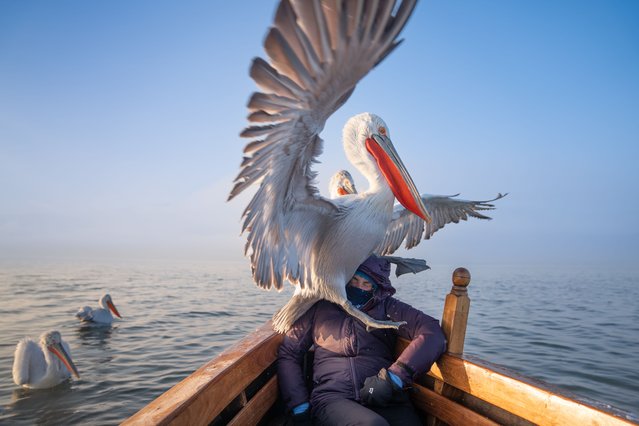
Michael Olivant, a Times reader, saw a chance to contribute when a Dalmatian pelican landed on his wife’s head at Lake Kerkini in northern Greece in the first decade of February 2025. (Photo by Michael Olivant/The Times)

Michael Olivant, a Times reader, saw a chance to contribute when a Dalmatian pelican landed on his wife’s head at Lake Kerkini in northern Greece in the first decade of February 2025. (Photo by Michael Olivant/The Times)
Details
16 Feb 2025 03:40:00


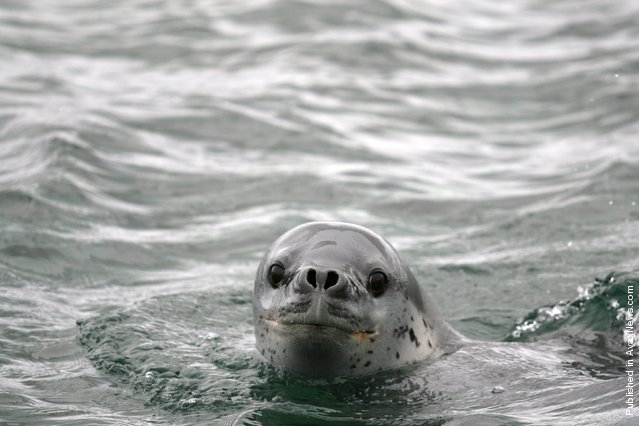
“The leopard seal (Hydrurga leptonyx), also referred to as the sea leopard, is the second largest species of seal in the Antarctic (after the southern elephant seal). It is most common in the southern hemisphere along the coast of Antarctica and on most sub-Antarctic islands, but can also be found on the coasts of southern Australia, Tasmania, South Africa, New Zealand, Lord Howe Island, Tierra del Fuego, the Cook Islands, and the Atlantic coast of South America. It can live twenty-six years, possibly more. Orcas and large sharks are the only natural predators of leopard seals”. – Wikipedia

Photo by: Gilad Rom; Source: Flickr
Details
13 Nov 2011 11:24:00
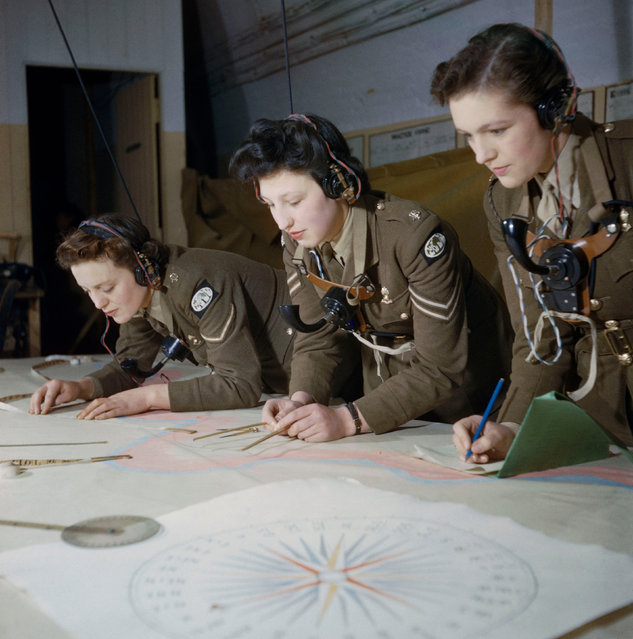
Auxiliary Territorial Service (ATS) plotters at work at Coastal Artillery Headquarters in Dover, December 1942. (Photo by Ted Dearberg/IWM/PA Wire)

Auxiliary Territorial Service (ATS) plotters at work at Coastal Artillery Headquarters in Dover, December 1942. The Auxiliary Territorial Service was the women's branch of the British Army during the Second World War. It was formed on 9 September 1938, initially as a women's voluntary service, and existed until 1 February 1949, when it was merged into the Women's Royal Army Corps. The ATS had its roots in the Women's Auxiliary Army Corps (WAAC), which was formed in 1917 as a voluntary service. During the First World War its members served in a number of jobs including clerks, cooks, telephonists and waitresses. The WAAC was disbanded after four years in 1921. (Photo by Ted Dearberg/IWM/PA Wire)
Details
13 Jul 2017 07:52:00
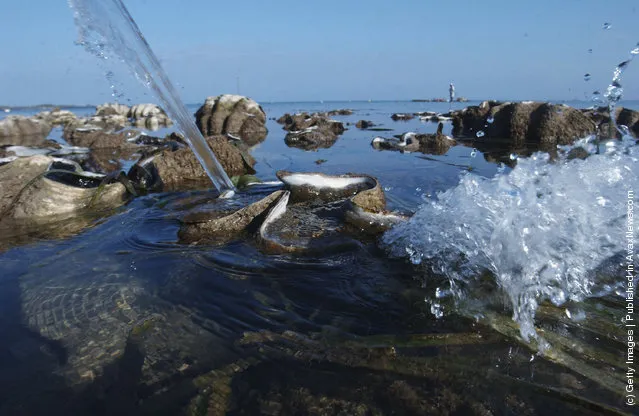
Tridacna Gigas, or Giant Clams

“The giant clam, Tridacna gigas (known as pā’ua in Cook Islands Māori), is the largest living bivalve mollusc. T. gigas is one of the most endangered clam species. It was mentioned as early as 1825 in scientific reports. One of a number of large clam species native to the shallow coral reefs of the South Pacific and Indian oceans, they can weigh more than 200 kilograms (440 lb) measure as much as 120 cm (47 in) across, and have an average lifespan in the wild of 100 years or more”. – Wikipedia

Photo: Tridacna Gigas, or Giant Clams spew water as a traditional fisherman passes by a small sanctuary on January 23, 2004 near Bolinao in the Northern Philippines. The clams, prime builders for coral reefs and providing shelter for spawning fish and other marine life, are exposed by low tides in the sanctuary. Overfishing and pollution throughout the country are not only threatening food security, but are also starting to choke one of the few working clam sanctuaries in the world. (Photo by David Greedy/Getty Images)
Details
01 Oct 2011 13:10:00