Belarus' Aryna Sabalenka in action against Karolina Muchova at Roland Garros Grand Slam Tournament – Day 12 on June 08, 2023 in Paris, France. (Photo by Lisi Niesner/Reuters)
Piccacho, Pokemon passes the Hero toys and is guided into the goods lift in London, United Kingdom on January 24, 2023. (Photo by Guy Bell/Alamy Live News)
People shop at a market ahead of the Lunar New Year in Hong Kong on February 6, 2024 ahead of the Lunar New Year of the Dragon which falls on February 10. (Photo by Peter Parks/AFP Photo)
Canadian fashion model Winnie Harlow poses on the red carpet during the MTV Europe Music Awards, in Budapest, Hungary, November 14, 2021. (Photo by Marton Monus/Reuters)
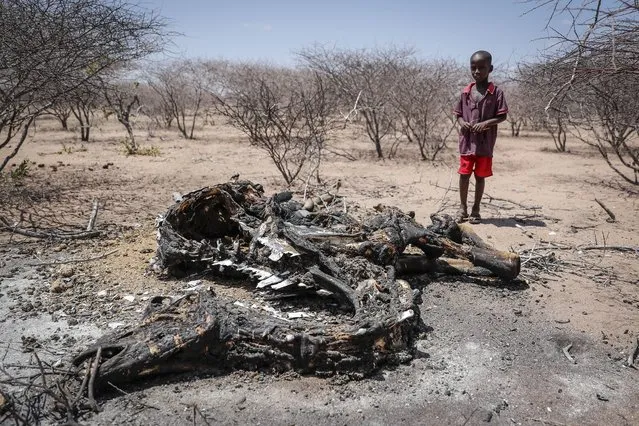
A boy stands near the rotting carcass of a camel that that died of hunger which people had burned to stop the bad smell, in Belif, Garissa county, Kenya on Sunday, October 24, 2021. (Photo by Brian Inganga/AP Photo)
Canada's Deanna Stellato-Dudek and Maxime Deschamps perform in the gala exhibition during the ISU Grand Prix of Figure Skating Final in Beijing on December 10, 2023. (Photo by Wang Zhao/AFP Photo)
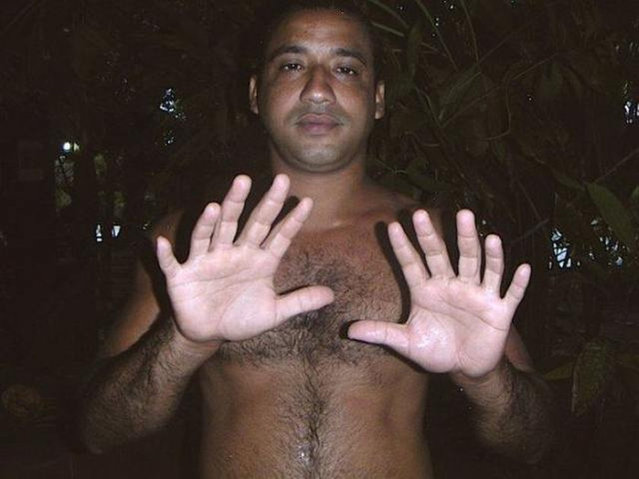
Yoandri Hernandez Garrido, 37, proudly displays his 12 fingers in Baracoa, Guantanamo province, Cuba. His condition, known as polydactyly, is relatively common, but it's rare for extra digits to be so perfect.
Polydactyly or polydactylism (from Ancient Greek πολύς (polus) "many" + δάκτυλος (daktulos) "finger"), also known as hyperdactyly, is a congenital physical anomaly in humans, dogs, and cats having supernumerary fingers or toes. Polydactyly is the opposite of oligodactyly (fewer fingers or toes).
A Ugandan soldier, part of the 9,000-strong African Union Mission in Somalia, (AMISOM) walks through the Banadir soccer stadium on August 15, 2011 in Mogadishu, Somalia. The stadium, Somalia's largest soccer facility, had been under control by Islamic extremist Shabab militants for the past two years until they withdrew from the capital more than a week ago. (Photo by John Moore/Getty Images)