Loading...
Done
Women atop a boat take a group photo as the U.S. Navy’s Flight Demonstration Squadron’s Blue Angels perform in the skies over Annapolis, Maryland, on May 22, 2024. (Photo by Kevin Lamarque/Reuters)

Women atop a boat take a group photo as the U.S. Navy’s Flight Demonstration Squadron’s Blue Angels perform in the skies over Annapolis, Maryland, on May 22, 2024. (Photo by Kevin Lamarque/Reuters)
Details
18 Jun 2024 03:06:00
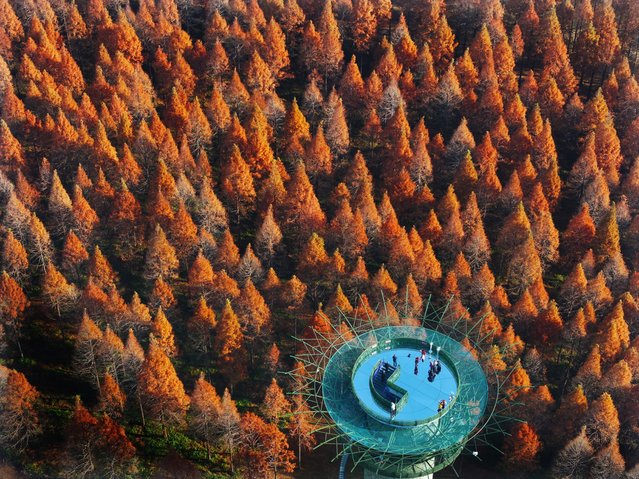
A blue observation point contrasts with the orange winter foliage of the metasequoia trees – dawn redwoods – at Huanghai Forest Park on the east coast of China in the second decade of December 2024. (Photo by Splash News and Pictures)

A blue observation point contrasts with the orange winter foliage of the metasequoia trees – dawn redwoods – at Huanghai Forest Park on the east coast of China in the second decade of December 2024. (Photo by Splash News and Pictures)
Details
10 Jan 2025 03:51:00
New York Mets' Luisangel Acuña is introduced before a baseball game against the Toronto Blue Jays, April 4, 2025, in New York. (Photo by Julia Demaree Nikhinson/AP Photo)

New York Mets' Luisangel Acuña is introduced before a baseball game against the Toronto Blue Jays, April 4, 2025, in New York. (Photo by Julia Demaree Nikhinson/AP Photo)
Details
18 Apr 2025 03:12:00
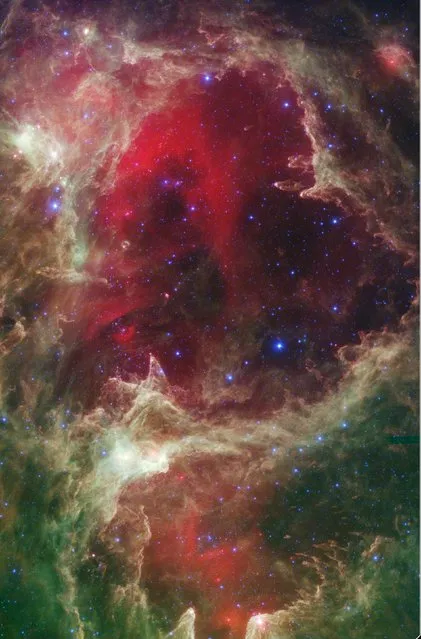
An infrared portrait from NASA's Spitzer Space Telescope which shows generations of stars is seen in this undated NASA handout image released February 14, 2013. In this wispy star-forming region, called W5, the oldest stars can be seen as blue dots in the centers of the two hollow cavities (other blue dots are background and foreground stars not associated with the region). Red shows heated dust that pervades the region's cavities, while green highlights dense clouds. (Photo by NASA/Reuters/JPL-Caltech/Harvard-Smithsonian/Handout)


An infrared portrait from NASA's Spitzer Space Telescope which shows generations of stars is seen in this undated NASA handout image released February 14, 2013. In this wispy star-forming region, called W5, the oldest stars can be seen as blue dots in the centers of the two hollow cavities (other blue dots are background and foreground stars not associated with the region). Red shows heated dust that pervades the region's cavities, while green highlights dense clouds. (Photo by NASA/Reuters/JPL-Caltech/Harvard-Smithsonian/Handout)
Details
03 Mar 2013 08:44:00
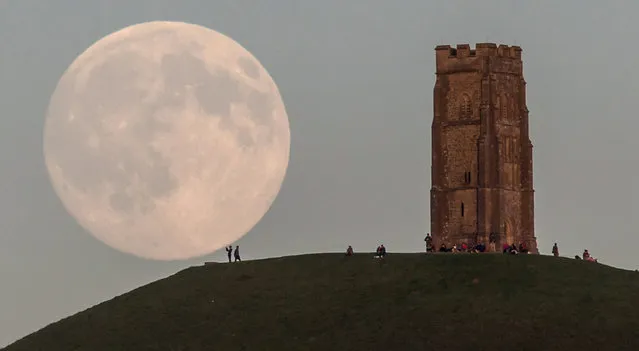
The moon rises over people gathered on Glastonbury Tor ahead of tomorrow's Blue Moon on July 30, 2015 in Somerset, England. The full moon appearing on July 31 will be what's called a Blue Moon, which refers to the second of two full moons appearing in the same calendar month. The last time this happened was in 2012 and there isn't due another until 2018. (Photo by Matt Cardy/Getty Images)

The moon rises over people gathered on Glastonbury Tor ahead of tomorrow's Blue Moon on July 30, 2015 in Somerset, England. The full moon appearing on July 31 will be what's called a Blue Moon, which refers to the second of two full moons appearing in the same calendar month. The last time this happened was in 2012 and there isn't due another until 2018. (Photo by Matt Cardy/Getty Images)
Details
02 Aug 2015 13:07:00
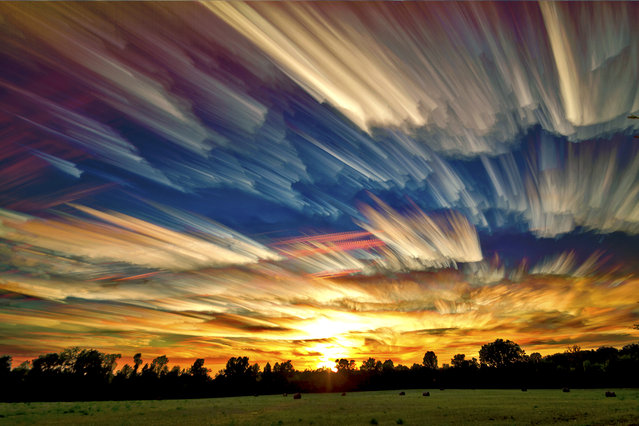
“Smeared Sky Sunset”. (Matt Molloy)

“Smeared Sky Sunset”. (Photo by Matt Molloy)

Details
27 Feb 2013 12:23:00
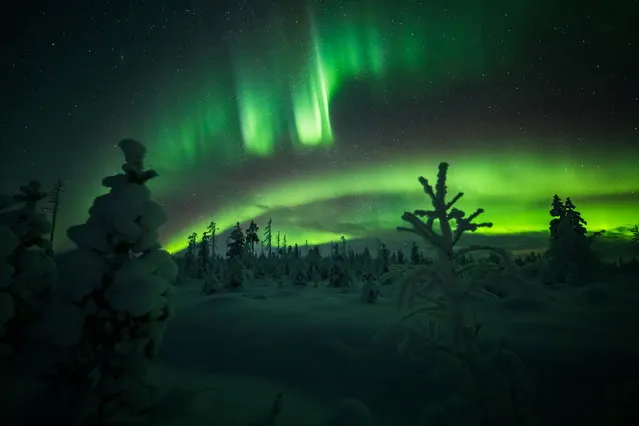
The Aurora Borealis (Northern Lights) is seen in the sky over Muonio in Lapland, Finland on January 18, 2021. (Photo by Alexander Kuznetsov/Reuters)

The Aurora Borealis (Northern Lights) is seen in the sky over Muonio in Lapland, Finland on January 18, 2021. (Photo by Alexander Kuznetsov/Reuters)
Details
12 Nov 2021 09:09:00
Freida Pinto as Jas Mitra in Showtime's “Guerrilla”, 2016. (Photo by Sky UK Limited/SHOWTIME)

Freida Pinto as Jas Mitra in Showtime's “Guerrilla”, 2016. (Photo by Sky UK Limited/SHOWTIME)
Details
28 Jan 2017 07:23:00