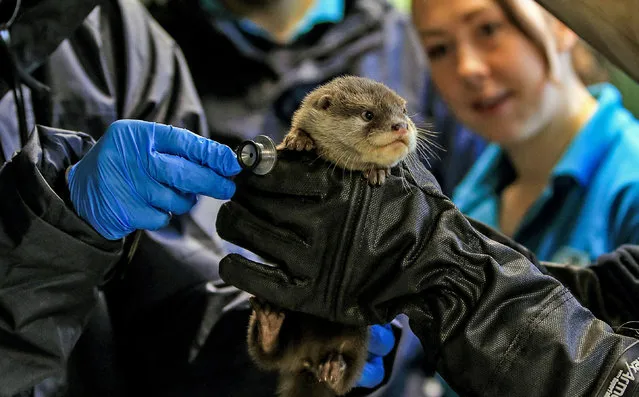
A baby otter has its first health checkup at Chester zoo, England on May 2, 2018. It was among five pups being weighed and microchipped. (Photo by Peter Byrne/PA Wire)
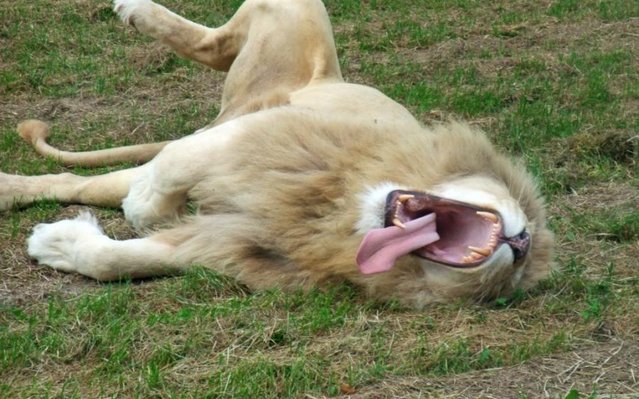
In animals, yawning can serve as a warning signal. For example, Charles Darwin, in his book The Expression of the Emotions in Man and Animals, mentioned that baboons yawn to threaten their enemies, possibly by displaying large canine teeth. Similarly, Siamese fighting fish yawn only when they see a conspecific (same species) or their own mirror-image, and their yawn often accompanies aggressive attack. Guinea pigs also yawn in a display of dominance or anger, displaying their impressive incisor teeth. This is often accompanied by teeth chattering, purring and scent marking.
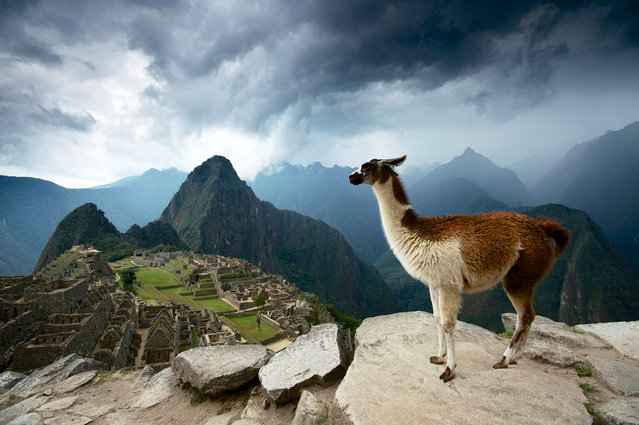
Machu Picchu, Peru. A llama’s-eye view of the legendary Inca settlement at Machu Picchu, isolated high in the Peruvian Andes. (Photo by Jim Turner/National Geographic)
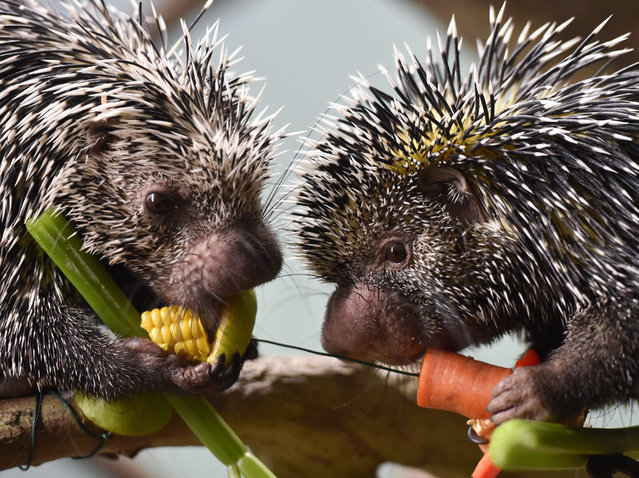
The coendou porcupine couple 'Joppi' (L) and 'Fletcher' nibble at a vegetables in their enclosure at the zoo in Frankfurt am Main, Germany, 03 December 2015. Coendou porcupines are nocturnal rodents related to porcupines and guinea pigs and native to the rain forests of Central and South America as well as Trinidad. (Photo by Arne Dedert/EPA)
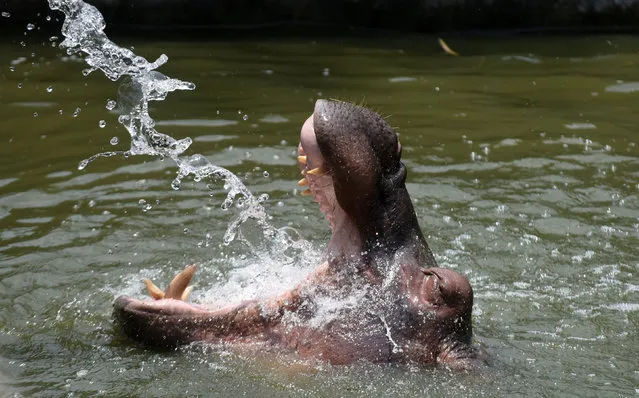
A hippopotamus is sprayed with water on a hot summer day at Anna National Zoological Park in Chennai, India on April 26, 2017. (Photo by Arun Sankar/AFP Photo)
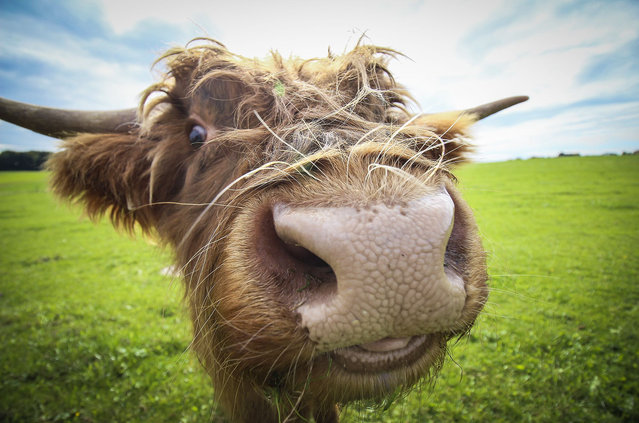
A hungry cow smiles for the camera in Salzburg, Austria. One of a series of funny animal mugshots taken by Chanel Cartell and Stevo Dirnberger during their travels around the globe. (Photo by Chanel Cartell/Stevo Dirnberger/Rex Features/Shutterstock)
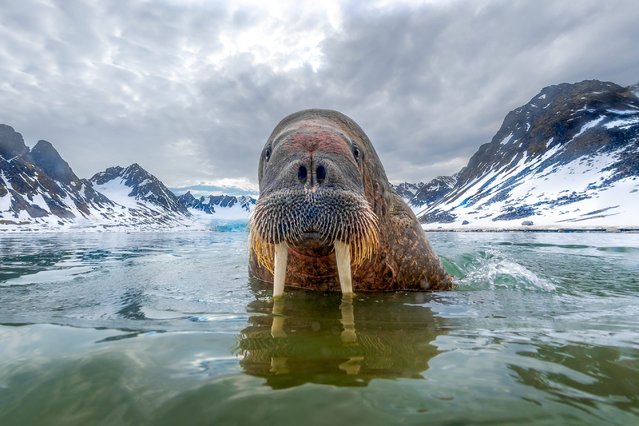
A walrus takes centre stage after barging another out of the way to be in a photograph in Svalbard, between mainland Norway and the North Pole in January 2025. (Photo by Olav Thokle/Syndicated Photos/Solent News)