Loading...
Done
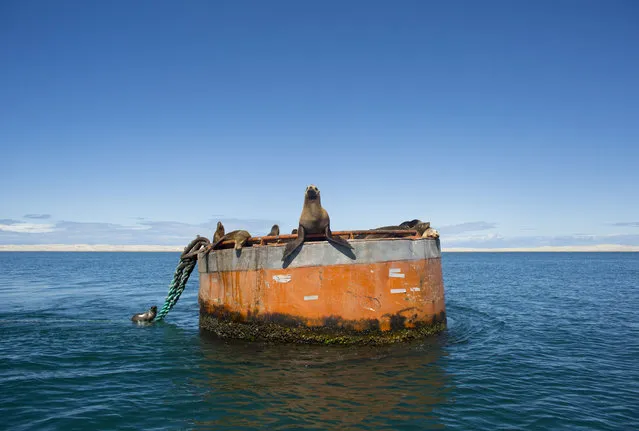
In this March 3, 2015 photo, a group of California sea lions rest on a large bouy in the San Ignacio lagoon, in the Pacific Ocean, near Guerrero Negro, in Mexico's Baja California peninsula. (Photo by Dario Lopez-Mills/AP Photo)

In this March 3, 2015 photo, a group of California sea lions rest on a large bouy in the San Ignacio lagoon, in the Pacific Ocean, near Guerrero Negro, in Mexico's Baja California peninsula. (Photo by Dario Lopez-Mills/AP Photo)
Details
20 Mar 2015 10:37:00
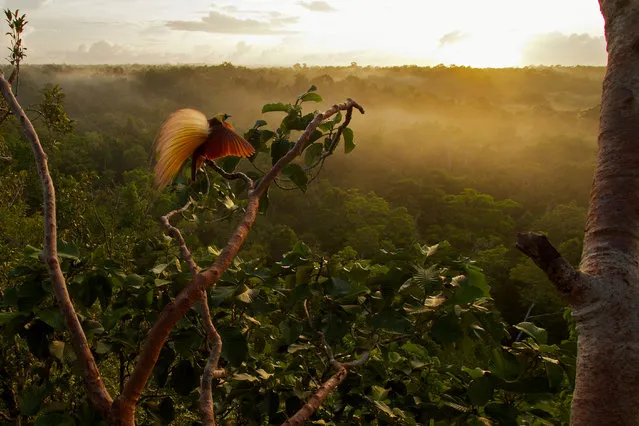
A greater bird of paradise (Paradisaea apoda) displaying in Badigaki Forest, Wokam Island (Aru Islands, Indonesia). Found here in Aru and on adjacent New Guinea, the greater bird of paradise represents about 40 different species of birds of paradise that depend on intact rainforest across the New Guinea region spanning eastern Indonesia and Papua New Guinea. With more than 80% of forest cover still intact, this region represents the largest remaining block of rainforest in the entire Asia-Pacific. (Photo by Tim Laman/naturepl.com/LDY Agency)

A greater bird of paradise (Paradisaea apoda) displaying in Badigaki Forest, Wokam Island (Aru Islands, Indonesia). Found here in Aru and on adjacent New Guinea, the greater bird of paradise represents about 40 different species of birds of paradise that depend on intact rainforest across the New Guinea region spanning eastern Indonesia and Papua New Guinea. With more than 80% of forest cover still intact, this region represents the largest remaining block of rainforest in the entire Asia-Pacific. (Photo by Tim Laman/naturepl.com/LDY Agency)
Details
14 Nov 2021 05:57:00
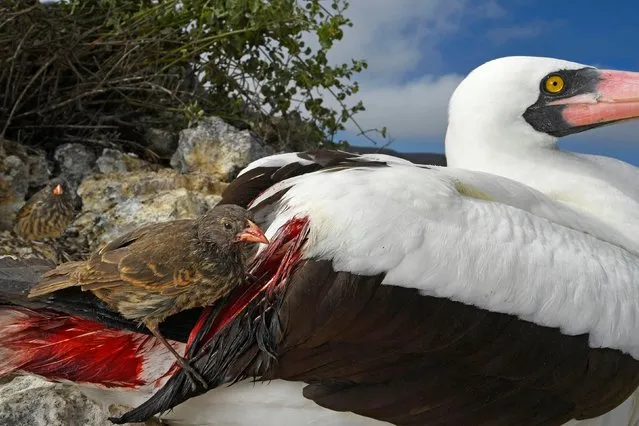
Bloodthirsty by Thomas P Peschak, Germany/South Africa — winner, Behaviour: birds. When rations run short on Wolf Island, in the remote northern Galápagos, the sharp-beaked ground finches become vampires. Their sitting targets are Nazca boobies and other large birds. The finches rely on a scant diet of seeds and insects, which regularly dries up, so they drink blood to survive. ‘I’ve seen more than half a dozen finches drinking from a single Nazca booby,’ says Tom. Rather than leave their nests the boobies tolerate the vampires, and the blood loss doesn’t seem to cause permanent harm. (Photo by Thomas P Peschak/2018 Wildlife Photographer of the Year)

Bloodthirsty by Thomas P. Peschak, Germany/South Africa — winner, Behaviour: birds. When rations run short on Wolf Island, in the remote northern Galápagos, the sharp-beaked ground finches become vampires. Their sitting targets are Nazca boobies and other large birds. The finches rely on a scant diet of seeds and insects, which regularly dries up, so they drink blood to survive. ‘I’ve seen more than half a dozen finches drinking from a single Nazca booby,’ says Tom. Rather than leave their nests the boobies tolerate the vampires, and the blood loss doesn’t seem to cause permanent harm. (Photo by Thomas P. Peschak/2018 Wildlife Photographer of the Year)

Details
19 Oct 2018 00:05:00
Vanishing Act By Art Wolfe

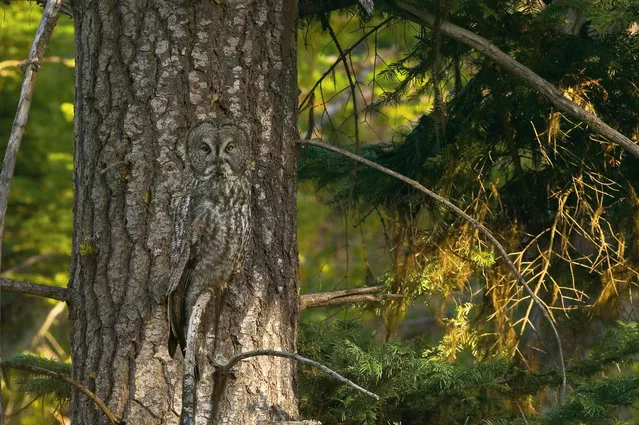
An amazing series by Art Wolfe that were taken as part of his “Vanishing Act” in which the Seattle-based photographer shows the talent of animals in disguising themselves from predators. “This collection has been a long time in the making. Finding and filming animals on location is an exhilarating and painstaking process. I’m still adding to the project even now”. Have fun spotting the hidden animals.
Details
22 Oct 2013 09:44:00
Is it a leaf? Is it tree bark? No, it’s the Satanic leaf-tailed gecko. Cleverly disguised as a rotting leaf, Madagascar’s camouflage king has red eyes, pointy horns and a taste for night hunting: it’s nature’s most devilish deceiver. (Photo by Thomas Marent/ARDEA)

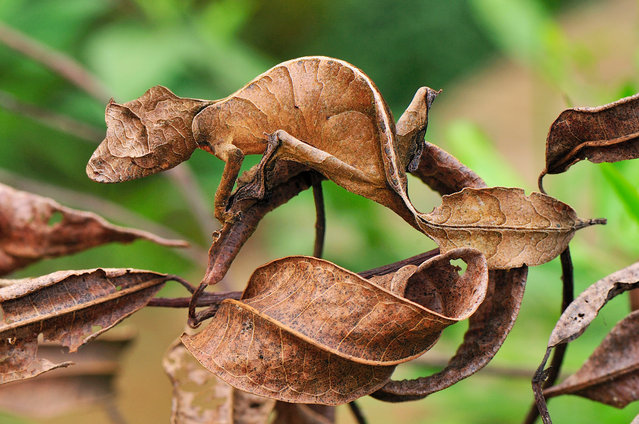
Is it a leaf? Is it tree bark? No, it’s the Satanic leaf-tailed gecko. Cleverly disguised as a rotting leaf, Madagascar’s camouflage king has red eyes, pointy horns and a taste for night hunting: it’s nature’s most devilish deceiver. The twisted body and veiny skin echo the detail of a dry leaf, which ensures the gecko blends in with its forest home. The mottled tail appears to have sections missing, as though it has withered over time. This mini-monster epitomises survival of the fittest, having adapted gradually to become today’s extraordinary leaf impersonator. (Photo by Thomas Marent/ARDEA)
Details
20 Nov 2015 08:03:00
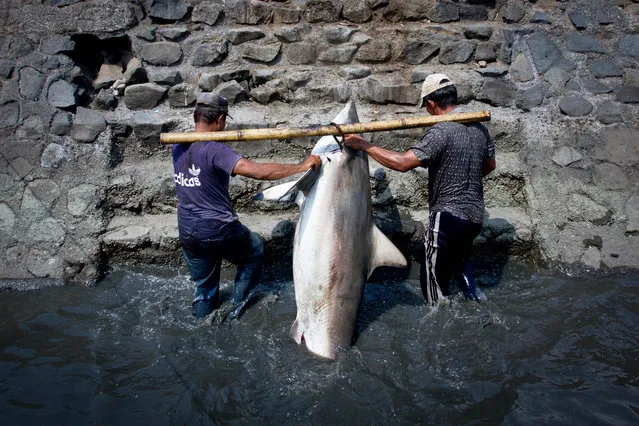
The Predator’s Fins: Atho Ullah, Indonesia. 3rd place, Portfolio category. A freshly caught shark is taken ashore. Efforts to regulate shark fishing in Indonesia are not effective enough. Lack of awareness of the role sharks play in the ocean’s ecosystem poses a major threat to marine life. (Photo by Atho Ullah/2020 Hamdan International Photography Award)

The Predator’s Fins: Atho Ullah, Indonesia. 3rd place, Portfolio category. A freshly caught shark is taken ashore. Efforts to regulate shark fishing in Indonesia are not effective enough. Lack of awareness of the role sharks play in the ocean’s ecosystem poses a major threat to marine life. (Photo by Atho Ullah/2020 Hamdan International Photography Award)
Details
25 Jun 2020 00:03:00


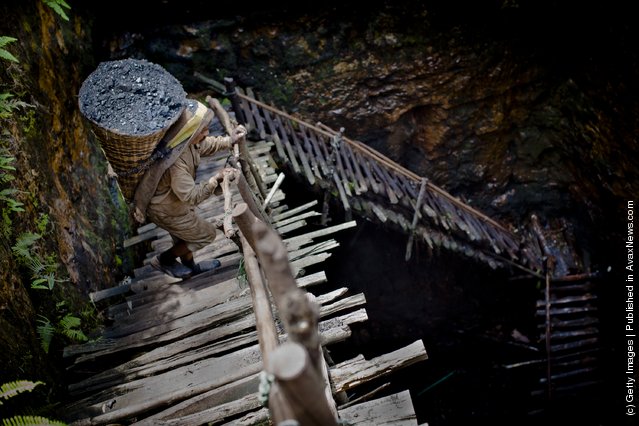
38 year old Prabhat Sinha, from Assam, carries a load of coal weighing 60kg's, supported by a head-strap, as he ascends the staircase of a coal mine on April 16, 2011 near the village of Khliehriat, in the district of Jaintia Hills, India. (Photo by Daniel Berehulak/Getty Images)
Details
15 May 2011 07:45:00
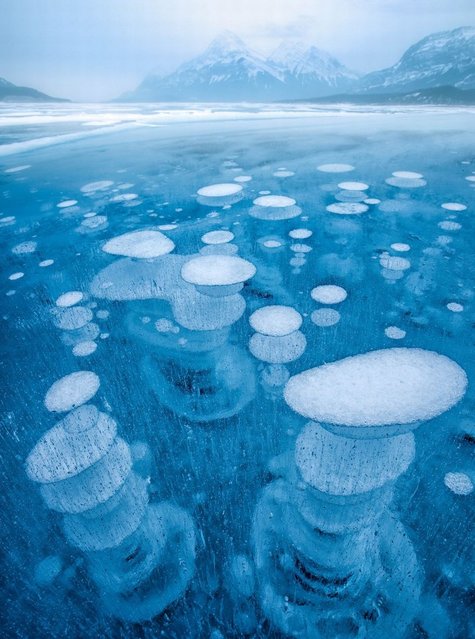
Ice bubbles in Abraham Lake, located at the foot of the Rocky Mountains in Canada. (Photo by Chip Phillips/Rex Features)

Located at the foot of the Rocky Mountains on the North Saskatchewan River, the rare phenomenon occurs each winter in the man-made lake. Photo: Ice bubbles in Abraham Lake. (Photo by Chip Phillips/Rex Features)
Details
27 Jun 2013 07:19:00