Loading...
Done
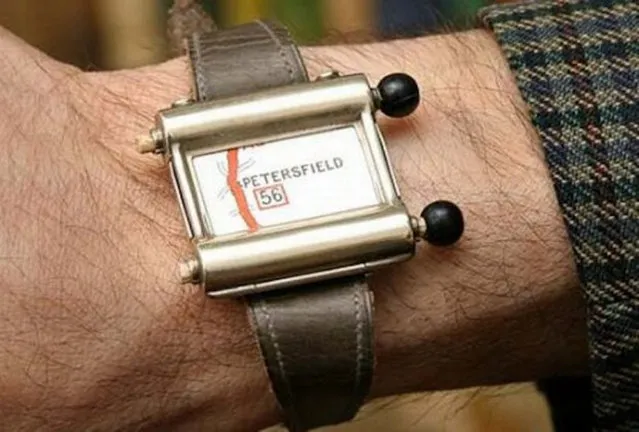
Plus Fours Routefinder - Worlds First Navigation System

Invented in 1920′s this could be world’s first navigation system. No satellites or digital screens were used in the making of this portable navigation system. Called Plus Fours Routefinder, this little invention was designed to be worn on your wrist, and the “maps” were printed on little wooden rollers which you would turn manually as you drove along.
Details
19 Mar 2014 15:14:00
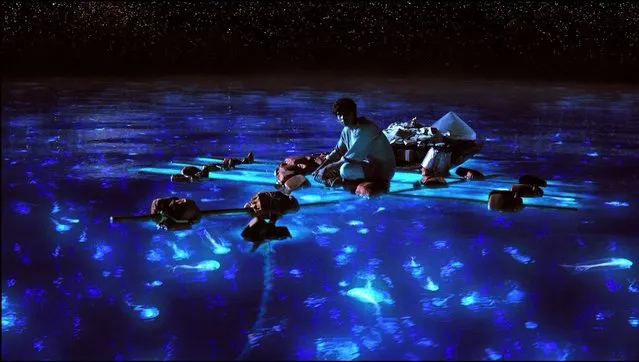
Glowing Bioluminescent Plankton

If you’ve had the unique privilege of witnessing bioluminescent plankton while diving at night, you know firsthand how beautiful the underwater light show can be. For those of us who haven’t experienced it, this unique phenomenon. So what makes this beautiful show possible? In a recent post at online scuba site AquaViews they share some insight we thought you all would find interesting.
Details
04 Jun 2013 10:55:00
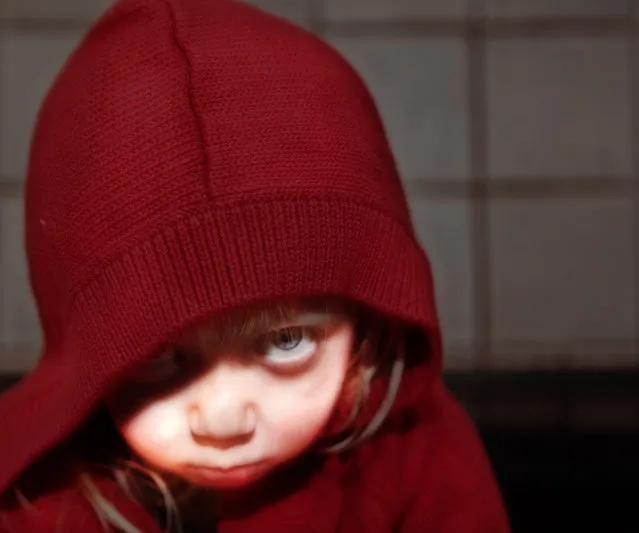
Little Red Riding Hood. “The moment I pulled this sweater out of the drawer for Frankie I knew what I wanted for my picture today. I envisioned the look, the style, and the composition. When working with a 2 year old it is never easy to actually get the shot you want, especially when they decide to skip nap time. But I really like how this one turned out” – Rich. (Photo by Rich)

«Little Red Riding Hood». “The moment I pulled this sweater out of the drawer for Frankie I knew what I wanted for my picture today. I envisioned the look, the style, and the composition. When working with a 2 year old it is never easy to actually get the shot you want, especially when they decide to skip nap time. But I really like how this one turned out” – Rich. (Photo by Rich)
Details
17 Sep 2012 12:51:00
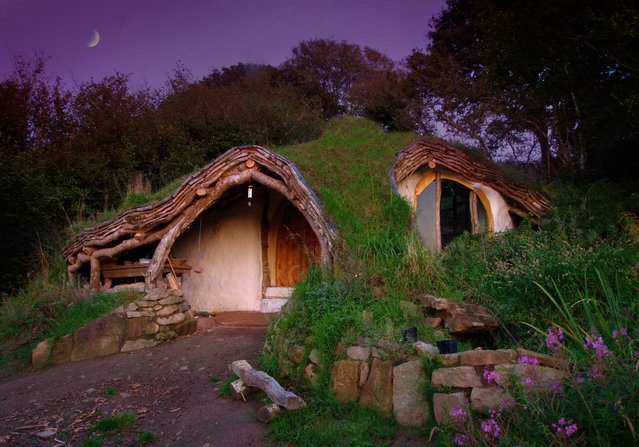
Hobbit house by Simon Dale

You are looking at pictures of a house I built for our family in Wales. It was built by myself and my father in law with help from passers by and visiting friends. 4 months after starting we were moved in and cosy. I estimate 1000-1500 man hours and £3000 put in to this point. Not really so much in house buying terms (roughly £60/sq m excluding labour).
Details
13 Nov 2012 12:48:00
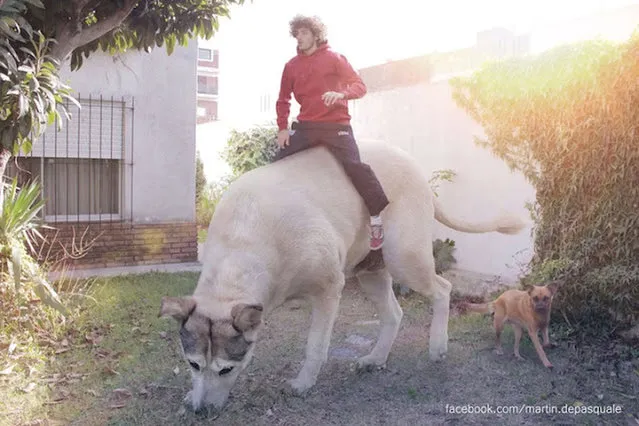
Impossible Photography by Martín De Pasquale

These images by Buenos Aires-based graphic design student Martín De Pasquale are so surreal that, obviously, you know they are photoshopped. But they are perfectly executed and very funny. To learn more about the artist and the art of photoshopping we suggest you to check out some of his behind the scenes photos in his Fotografía Imposible folder on Facebook
.
Details
09 Dec 2012 12:59:00
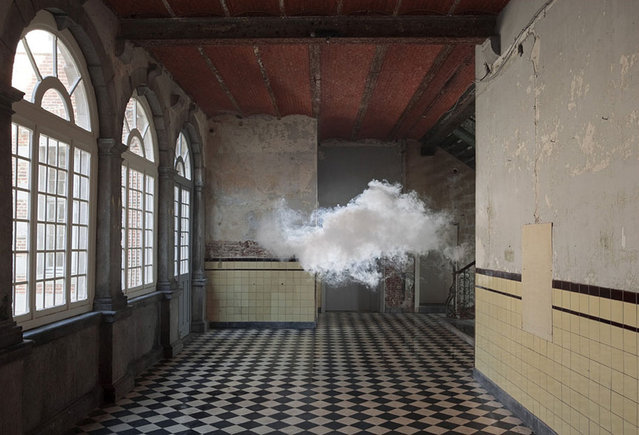
Berndnaut Smilde Creater Clouds

Dutch artist Berndnaut Smilde is interested in the ephemeral -- impermanent states of being which he documents through photographs. For Nimbus II, he used a smoke machine, combined with moisture and dramatic lighting to create a hovering indoor cloud in the empty setting of a sixteenth-century chapel in Hoorn, a small town in Holland. “I imagined walking into a museum hall with just empty walls. The place even looked deserted. On the one hand I wanted to create an ominous situation. You could see the cloud as a sign of misfortune. You could also read it as an element out of the Dutch landscape paintings in a physical form in a classical museum hall.”
Details
25 Dec 2012 12:31:00
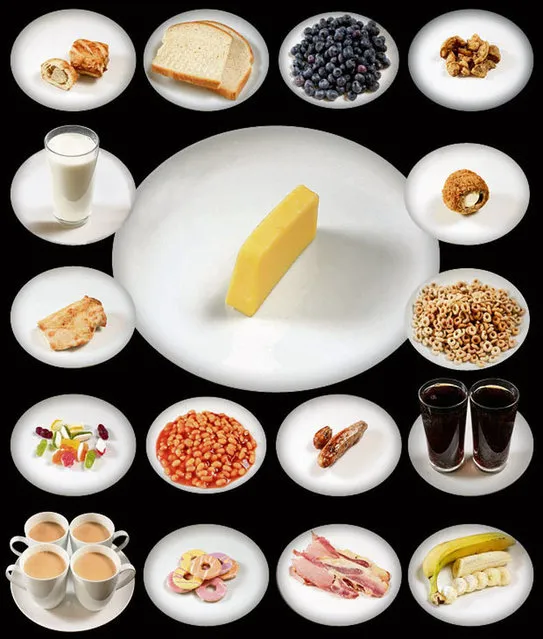
What 200 Calories Looks Like In Different Foods Part 1

Some foods have significantly more Calories than others but what does the difference actually look like. Each of the photographs below represents 200 Calories of the particular type of food; the images are sorted from low to high calorie density. When you consider that an entire plate of broccoli contains the same number of Calories as a small spoonful of peanut butter, you might think twice the next time you decide what to eat. According to the U.S. Department of Agriculture, the average adult needs to consume about 2000 - 2500 Calories to maintain their weight. In other words, you have a fixed amount of Calories to "spend" each day; based on the following pictures, which would you eat?


See Also: Ppart 2 _ Part 3
Details
30 Jul 2014 10:18:00
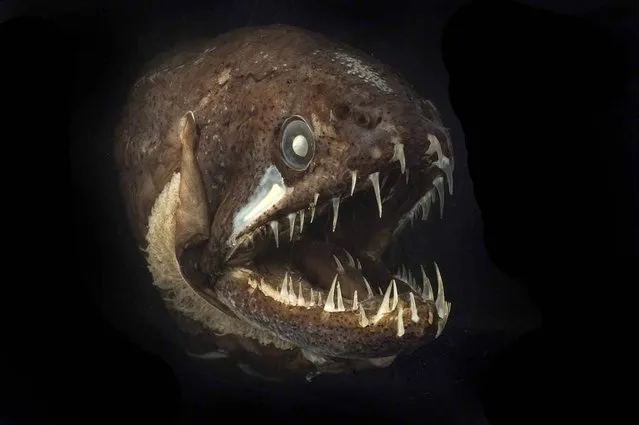
Imagine living in the sea where it is permanently dark, cold, and food is hard to find. For many animals at depth, it may be weeks to months between meals. If you find something to eat, you have to hang on to it

Imagine living in the sea where it is permanently dark, cold, and food is hard to find. For many animals at depth, it may be weeks to months between meals. If you find something to eat, you have to hang on to it. This is why so many deep-sea fishes have lots of big teeth. This dragonfish, spotted off the coast of Australia, even has teeth on its tongue. They would be terrifying animals ... if they weren’t the size of a banana. (Photo by Julian Finn/Museum Victoria)
Details
21 May 2012 12:14:00