Loading...
Done
Ice Age – Tibet, China. “This is the Chinese version of the blue ice lake, Pumoungcuo, at an altitude of 5,070 metres (16,600 feet). This lake in Tibet freezes every winter. At night, under the low temperatures of -20C, you can listen to the sound of the ice cracking while capturing the most beautiful winter sky. The blue ice surface and dazzling Orion constellation create a fantasy landscape. I felt so happy to have the stars as my companion on this magical night”. (Photo by Daniel Zafra Portill/Milky Way Photographer of the Year)

Ice Age – Tibet, China. “This is the Chinese version of the blue ice lake, Pumoungcuo, at an altitude of 5,070 metres (16,600 feet). This lake in Tibet freezes every winter. At night, under the low temperatures of -20C, you can listen to the sound of the ice cracking while capturing the most beautiful winter sky. The blue ice surface and dazzling Orion constellation create a fantasy landscape. I felt so happy to have the stars as my companion on this magical night”. (Photo by Daniel Zafra Portill/Milky Way Photographer of the Year)
Details
21 May 2022 05:10:00
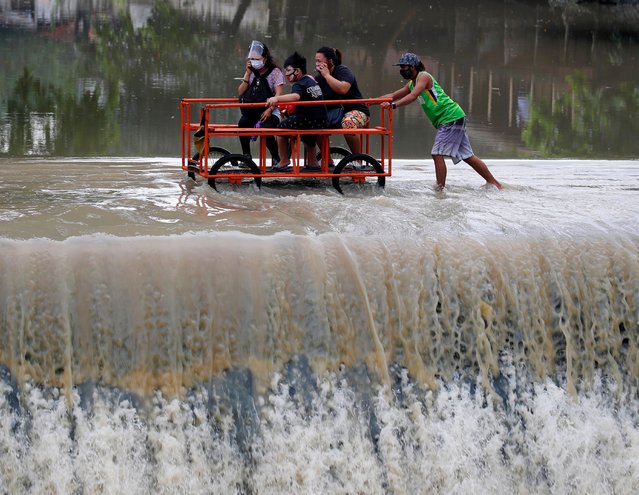
Villagers riding a rickshaw maneuver along an overflowing dam at the border between Cavite province and Las Pinas city, in Las Pinas, Philippines, 25 October 2020. According to Philippine Atmospheric Geophysical and Astronomical Services Administration (PAGASA), Typhoon Molave will make landfall in the evening of 25 October in southern Luzon island. An alert was issued to residents for possible floods and landslides. (Photo by Francis R Malasig/EPA/EFE)

Villagers riding a rickshaw maneuver along an overflowing dam at the border between Cavite province and Las Pinas city, in Las Pinas, Philippines, 25 October 2020. According to Philippine Atmospheric Geophysical and Astronomical Services Administration (PAGASA), Typhoon Molave will make landfall in the evening of 25 October in southern Luzon island. An alert was issued to residents for possible floods and landslides. (Photo by Francis R Malasig/EPA/EFE)
Details
28 Oct 2020 00:01:00
A staff of the Beijing 2022 Winter Olympic Games holds a placard reading “Mask on” as USA's players react after their defeat in the women's gold medal match of the Beijing 2022 Winter Olympic Games ice hockey competition between Canada and USA, at the Wukesong Sports Centre in Beijing on February 17, 2022. (Photo by Kirill Kudryavtsev/AFP Photo)

A staff of the Beijing 2022 Winter Olympic Games holds a placard reading “Mask on” as USA's players react after their defeat in the women's gold medal match of the Beijing 2022 Winter Olympic Games ice hockey competition between Canada and USA, at the Wukesong Sports Centre in Beijing on February 17, 2022. (Photo by Kirill Kudryavtsev/AFP Photo)
Details
23 Feb 2022 06:54:00
Underwater pictures show the 23-year-old diver cosying up to a range of animals. (Photo by Amelia Klonaris/Mediadrumworld)

Dublin student beat depression by befriending sharks, stingrays and pigs in the Bahamas. Awesome underwater pictures show the 23-year-old diver cosying up to a range of animals including turtles, stingray and sharks. The sunny selfies were taken in the Bahamas by Stuart’s Cove dive instructor and native of the island, Amelia Klonaris – who beat depression by embracing her incredible beach paradise lifestyle. (Photo by Amelia Klonaris/Mediadrumworld)
Details
01 Jul 2017 07:38:00
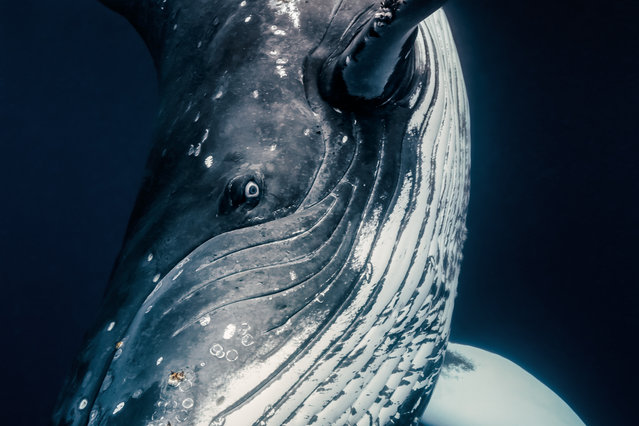
“To look into a whale’s eye is life-changing and humbling. Well, it’s the same with dolphins but they are mostly very fast in the water. A whale’s eye is unexpectedly looking, just like a human eye, kinda checking you out”. (Photo by Rita Kluge/The Guardian)

With the humpback calving season drawing to a close, here’s a look at some of Rita Kluge’s distinctive marine photos from the south Pacific. The Sydney-based photographer fell in love with whales after witnessing southern rights from the New South Wales coastline as they travelled to and from their feeding grounds in the Antarctic. She has since been to Tonga, where humpbacks breed and calf in winter months, to photograph them in the water. (Photo by Rita Kluge/The Guardian)
Details
26 Oct 2016 11:09:00
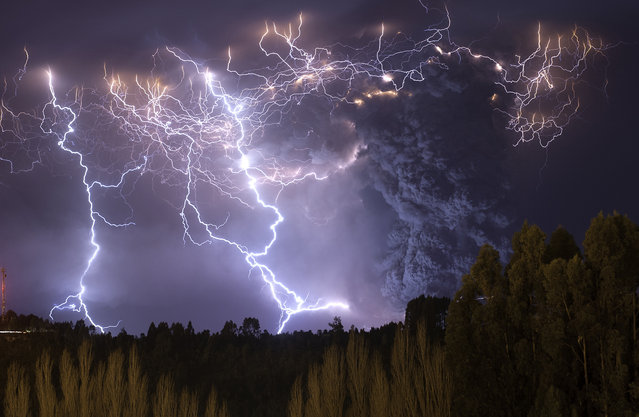
The eruption of Cordon Caulle began on June 4, 2011, located in the Region of Los Rios in Chile. For about 12 months, people and animals became accustomed to living with the daily fall of ash, which also caused problems in the air traffic in South America. The explosions and lightning during first days of the eruption could be seen from hundreds of miles around. This photograph was taken on the second night of eruption from the town of Lago Ranco. (Photo and caption by Francisco Negroni/National Geographic Traveler Photo Contest)

The eruption of Cordon Caulle began on June 4, 2011, located in the Region of Los Rios in Chile. For about 12 months, people and animals became accustomed to living with the daily fall of ash, which also caused problems in the air traffic in South America. The explosions and lightning during first days of the eruption could be seen from hundreds of miles around. This photograph was taken on the second night of eruption from the town of Lago Ranco. (Photo and caption by Francisco Negroni/National Geographic Traveler Photo Contest)

ATTENTION! All pictures are presented in high resolution. To see Hi-Res images – just TWICE click on any picture. In other words, click small picture – opens the BIG picture. Click BIG picture – opens VERY BIG picture.
Details
23 Jun 2013 11:24:00
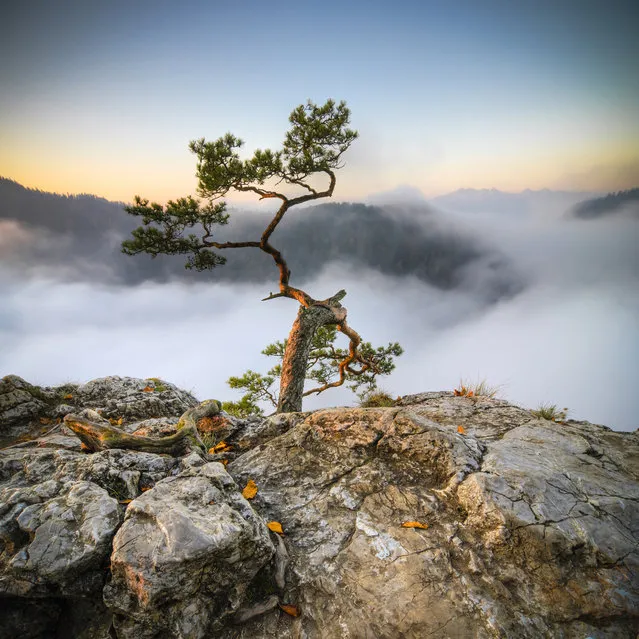
“Sokolica”. Sokolica, Poland. (Photo and caption by Marcin Kęsek/National Geographic Traveler Photo Contest)

“Sokolica”. Sokolica, Poland. (Photo and caption by Marcin Kęsek/National Geographic Traveler Photo Contest)

ATTENTION! All pictures are presented in high resolution. To see Hi-Res images – just TWICE click on any picture. In other words, click small picture – opens the BIG picture. Click BIG picture – opens VERY BIG picture.
Details
25 Jun 2013 09:13:00
A dinosaur robot produced by Tyco Electronics Japan G.K. is controlled by a smartphone at CEATEC (Combined Exhibition of Advanced Technologies) Japan 2014 held at at Makuhari Messe in Chiba, east of Tokyo, Japan, 07 October 2014. The CEATEC opened on 07 October for a five-day exhibition. (Photo by Kimimasa Mayama/EPA)

A dinosaur robot produced by Tyco Electronics Japan G.K. is controlled by a smartphone at CEATEC (Combined Exhibition of Advanced Technologies) Japan 2014 held at at Makuhari Messe in Chiba, east of Tokyo, Japan, 07 October 2014.With a Sharp Aquos ZETA mobile phone model, users can make the 6.5-meter (21 feet, 4 inches) long, 2.1-meter (6 feet, 11 inches) tall dinosaur robot to walk forward and backward, jump, move its head, hands and legs up and down, left and right, open and close its mouth by touching the screen panel and make it bark by shaking the handheld. (Photo by Kimimasa Mayama/EPA)
Details
08 Oct 2014 11:54:00