Loading...
Done
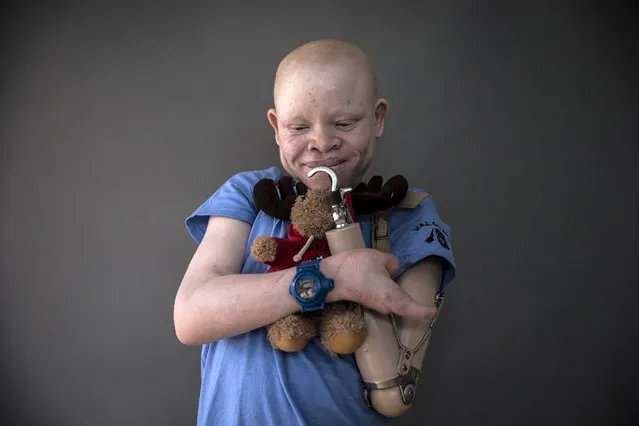
13-year-old Emmanuel Festo from Tanzania poses for a portrait with a plush toy that he says makes him feel safe at night and that he sleeps with, in New York's Staten Island, September 21, 2015. Albino body parts are highly valued in witchcraft and can fetch a high price. Superstition leads many to believe albino children are ghosts who bring bad luck. (Photo by Carlo Allegri/Reuters)

13-year-old Emmanuel Festo from Tanzania poses for a portrait with a plush toy that he says makes him feel safe at night and that he sleeps with, in New York's Staten Island, September 21, 2015. Albino body parts are highly valued in witchcraft and can fetch a high price. Superstition leads many to believe albino children are ghosts who bring bad luck. Some believe the limbs are more potent if the victims scream during amputation, according to a 2013 United Nations report. (Photo by Carlo Allegri/Reuters)
Details
03 Oct 2015 08:04:00
Vendors sell clothes on the roadside at a second-hand street side clothing market in Mumbai January 28, 2015. (Photo by Danish Siddiqui/Reuters)

Vendors sell clothes on the roadside at a second-hand street side clothing market in Mumbai January 28, 2015. The market is open daily for three hours and hundreds of vendors gather to barter or sell used clothing. (Photo by Danish Siddiqui/Reuters)
Details
05 Feb 2015 12:19:00
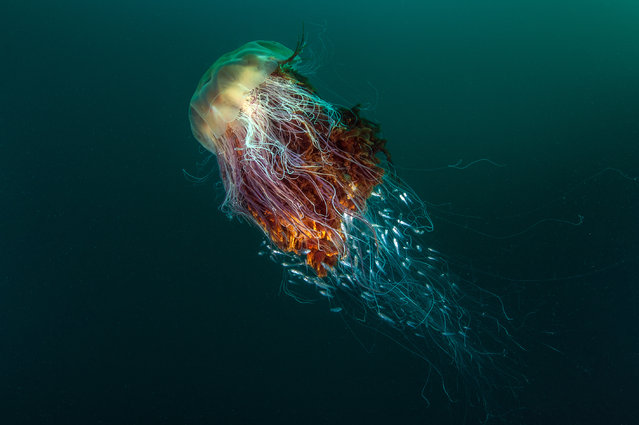
This year’s overall winner and winner of the coast and marine category is George Stoyle with his image “Hitchhikers” of a Lion’s mane jellyfish, photographed at St Kilda, off the Island of Hirta, Scotland. (Photo by George Stoyle/British Wildlife Photography Awards 2016)

This year’s overall winner and winner of the coast and marine category is George Stoyle with his image “Hitchhikers” of a Lion’s mane jellyfish, photographed at St Kilda, off the Island of Hirta, Scotland. (Photo by George Stoyle/British Wildlife Photography Awards 2016)
Details
06 Sep 2016 10:08:00
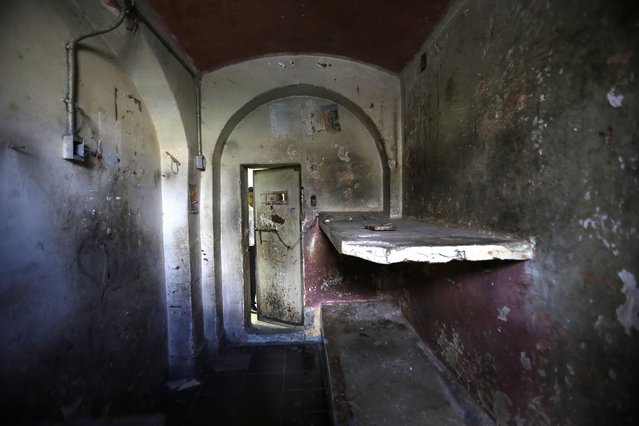
In this April 7, 2015 photo, a tourist peers through the door of a jail cell inside the now empty Garcia Moreno prison during a guided tour for the public in Quito, Ecuador. According to tour guides, this cell was nicknamed “Los Polillas”, or “The Moths”. Here, in a room designed to hold two prisoners, about 15 inmates with drug addictions were locked in overnight by the prison gangs that controlled daily life. The locked-in prisoners were also known to prostitute themselves to get access to drugs. (Photo by Dolores Ochoa/AP Photo)

In this April 7, 2015 photo, a tourist peers through the door of a jail cell inside the now empty Garcia Moreno prison during a guided tour for the public in Quito, Ecuador. According to tour guides, this cell was nicknamed “Los Polillas”, or “The Moths”. Here, in a room designed to hold two prisoners, about 15 inmates with drug addictions were locked in overnight by the prison gangs that controlled daily life. The locked-in prisoners were also known to prostitute themselves to get access to drugs. (Photo by Dolores Ochoa/AP Photo)
Details
03 May 2015 10:34:00
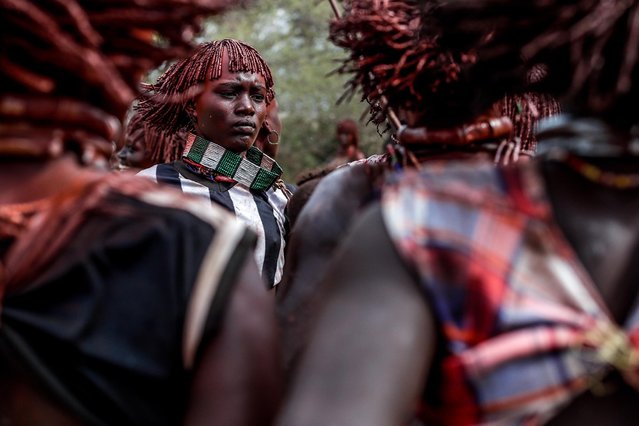
Female members of the Hammer tribe from the village of Turmi, situated in southern Ethiopia near the Kenyan border, dance as part of a ritual called the “bull jumping ceremony” that takes place during the passage of a young boy to adulthood, in Turmi, Ethiopia, 25 September 2019. (Photo by Stéphanie Lecocq/EPA/EFE)

Female members of the Hammer tribe from the village of Turmi, situated in southern Ethiopia near the Kenyan border, dance as part of a ritual called the “bull jumping ceremony” that takes place during the passage of a young boy to adulthood, in Turmi, Ethiopia, 25 September 2019. (Photo by Stéphanie Lecocq/EPA/EFE)
Details
26 Oct 2019 00:01:00
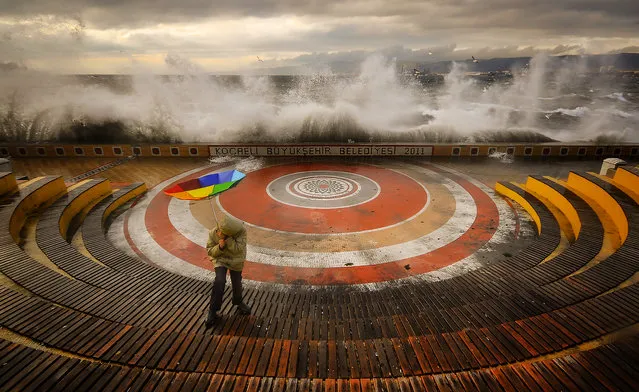
“The Storm”. During I was taking photo with my nephew, the storm came and I caught this beautiful moment. Photo location: Kocaeli, Turkey. (Photo and caption by Aytül Akbaş/National Geographic Photo Contest)

Honorable Mention: “The Storm”. During I was taking photo with my nephew, the storm came and I caught this beautiful moment. Photo location: Kocaeli, Turkey. (Photo and caption by Aytül Akbaş/National Geographic Photo Contest)
Details
28 Dec 2014 10:58:00
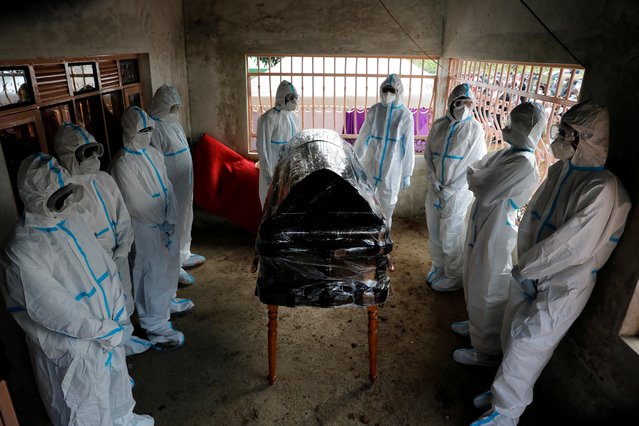
Men dressed in protective suits stand around the coffin of Kenyan doctor Daniel Alushula who died of coronavirus disease (COVID-19), during his funeral in the village of Khumusalaba, in Kakamega county, Kenya on November 13, 2020. (Photo by Baz Ratner/Reuters)

Men dressed in protective suits stand around the coffin of Kenyan doctor Daniel Alushula who died of coronavirus disease (COVID-19), during his funeral in the village of Khumusalaba, in Kakamega county, Kenya on November 13, 2020. (Photo by Baz Ratner/Reuters)
Details
27 Nov 2020 00:01:00
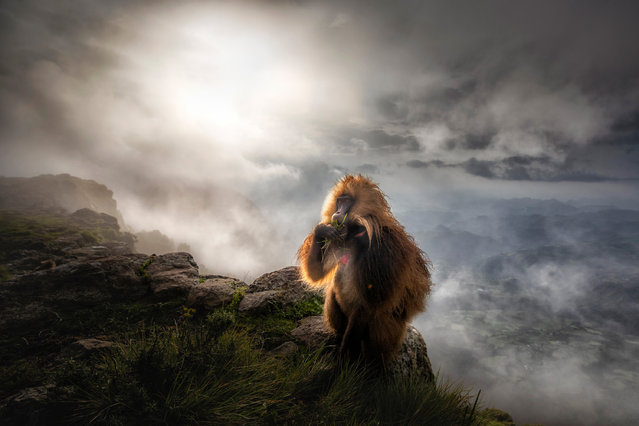
Highly commended, mammals: Gelada after the storm – Marco Gaiotti (Italy). “Gelada baboons are the only monkey species in the world that feed on grasses. They are native to the tableland of Ethiopia. Every morning large family groups wander from their sleeping places in the steep rock face, up to 1,000 metres high, to the feeding grounds at the tablelands. This image clearly depicts their feeding strategy: they pull out bunches of grass, sort the stalks and then lift them to their mouth. This shot was taken towards the end of the rainy season after a heavy storm”. (Photo by Marco Gaiotti/2019 GDT European Wildlife Photographer of the Year)

Highly commended, mammals: Gelada after the storm – Marco Gaiotti (Italy). “Gelada baboons are the only monkey species in the world that feed on grasses. They are native to the tableland of Ethiopia. Every morning large family groups wander from their sleeping places in the steep rock face, up to 1,000 metres high, to the feeding grounds at the tablelands. This image clearly depicts their feeding strategy: they pull out bunches of grass, sort the stalks and then lift them to their mouth. This shot was taken towards the end of the rainy season after a heavy storm”. (Photo by Marco Gaiotti/2019 GDT European Wildlife Photographer of the Year)
Details
31 Oct 2019 00:03:00