Loading...
Done
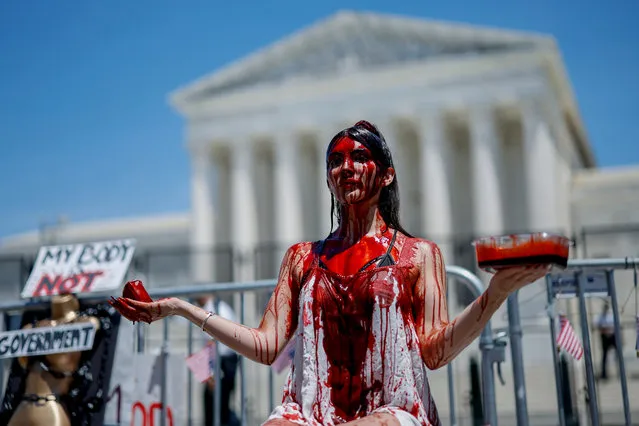
An abortion rights demonstrator covered in fake blood during an “Abortion is Freedom” rally outside the US Supreme Court in Washington, D.C., US, on Monday, July 4, 2022. Last month the Supreme Court overturned the 1973 Roe v. Wade decision and wiped out the constitutional right to abortion, leaving it to individual states to decide whether abortions are allowed. (Photo by Ting Shen/Bloomberg via Getty Images)

An abortion rights demonstrator covered in fake blood during an “Abortion is Freedom” rally outside the US Supreme Court in Washington, D.C., US, on Monday, July 4, 2022. Last month the Supreme Court overturned the 1973 Roe v. Wade decision and wiped out the constitutional right to abortion, leaving it to individual states to decide whether abortions are allowed. (Photo by Ting Shen/Bloomberg via Getty Images)
Details
16 Jul 2022 04:35:00
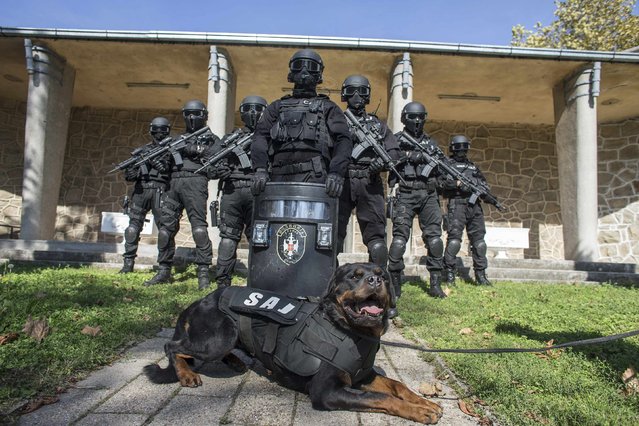
Serbian police officers of the Special Anti-Terrorist Unit pose for a picture in their base outside Belgrade October 8, 2014. (Photo by Marko Djurica/Reuters)

Serbian police officers of the Special Anti-Terrorist Unit pose for a picture in their base outside Belgrade October 8, 2014. When the killing of an unarmed black teenager by a white policeman in Ferguson, Missouri, in August sparked sometimes violent protests, the response of police in camouflage gear and armoured vehicles wielding stun grenades and assault rifles seemed more like a combat operation than a public order measure. Some U.S. police departments have recently acquired U.S. military-surplus hardware from wars abroad, but there are many law enforcers around the world whose rules of engagement also allow the use of lethal force with relatively few restrictions. But for every regulation that gives police wide scope to use firearms, there is another code that sharply limits their use. In Serbia, police may use measures ranging from batons to special vehicles, water cannon and tear gas on groups of people who have gathered illegally and are behaving in a way that is violent or could cause violence, but they may use firearms only when life is endangered. (Photo by Marko Djurica/Reuters)

Details
27 Nov 2014 14:53:00
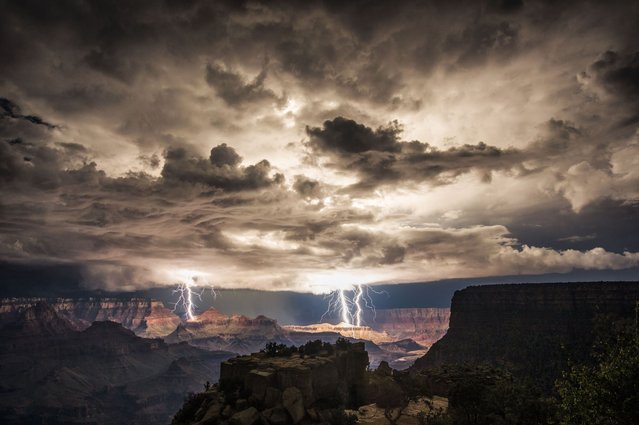
Using clever low exposure techinques, photographer Rolf Maeder managed to capture multiple strikes hitting the canyon under atmospheric stormy skies. (Photo by Rolf Maeder)

Using clever low exposure techinques, photographer Rolf Maeder managed to capture multiple strikes hitting the canyon under atmospheric stormy skies. (Photo by Rolf Maeder)
Details
19 Sep 2013 11:01:00
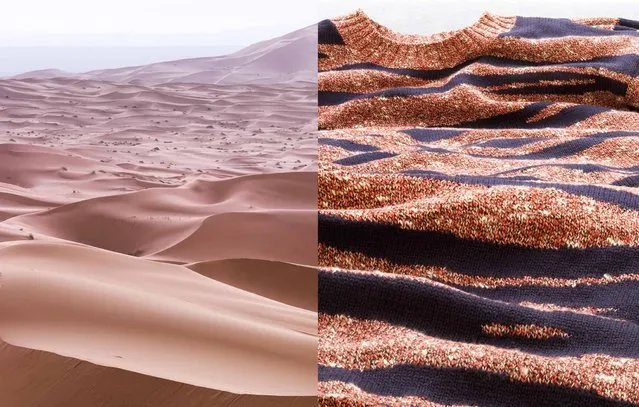
Alternative Landscapes By Joseph Ford

This interesting and canny project by Joseph Ford combines aerial photography with fashion, using a technique that I have never seen before. The concept is simple, yet ingenious. Using various elements within both the aerial and fashion images, Joseph alligns them next to one another to create an alternative reality, and in some shots, it seems as if the garments were purposely created for this to happen. Such a great project that has so much room for experimentation.
Details
13 Oct 2013 16:16:00
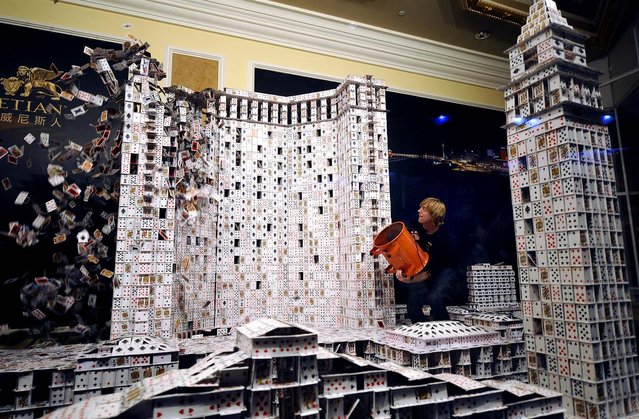
Cardstacker: Bryan Berg

Bryan Berg was introduced to card-stacking by his grandfather at the age of 8. He is a self-taught artist in all of the techniques he uses today. Berg's freestanding card structures are based on a grid-like arrangement, which Berg tested in a structural engineering lab to support 660 lbs per square foot―using no tape, no glue, no folding, and no tricks.
Details
05 Jun 2013 11:52:00
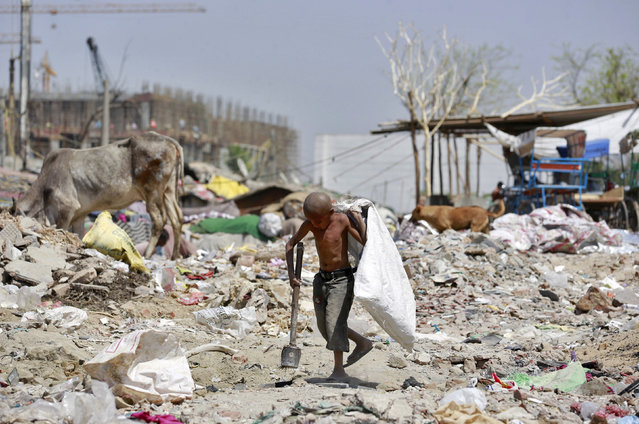
A boy looks for scrap metal using an improvised magnetic tool near a construction site in New Delhi, India, March 21, 2016. (Photo by Cathal McNaughton/Reuters)

A boy looks for scrap metal using an improvised magnetic tool near a construction site in New Delhi, India, March 21, 2016. (Photo by Cathal McNaughton/Reuters)
Details
09 Jul 2016 09:50:00
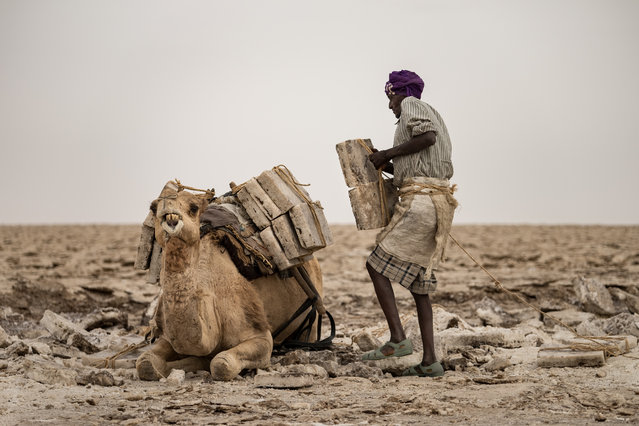
Dromedaries and donkeys are used to transport the salt. (Photo by Joel Santos/Barcroft Images)

Unforgiving temperatures of up to 60℃ (140℉) beat down on these saltminers on a daily basis. The mines, situated in the Afar Triangle in Ethiopia, stretch across 38,000 sq miles and at their lowest point are more than 300ft below sea level. Joel Santos travelled to capture the area’s dry, brutal beauty. Here: Dromedaries and donkeys are used to transport the salt. (Photo by Joel Santos/Barcroft Images)
Details
24 Aug 2016 11:31:00
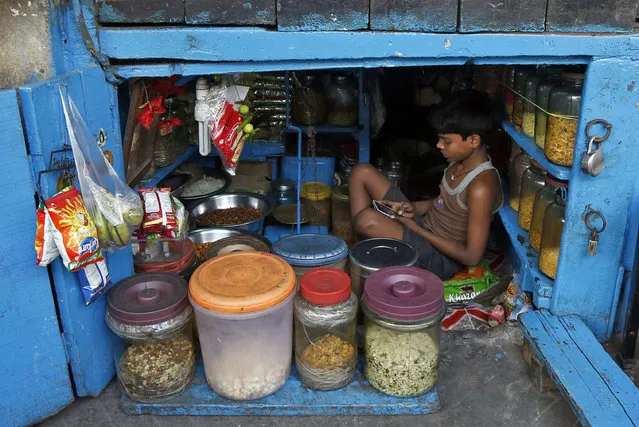
A boy uses a mobile phone as he sits inside his father's snacks shop along a road in Kolkata, India, February 22, 2016. (Photo by Rupak De Chowdhuri/Reuters)

A boy uses a mobile phone as he sits inside his father's snacks shop along a road in Kolkata, India, February 22, 2016. (Photo by Rupak De Chowdhuri/Reuters)
Details
23 Feb 2016 11:38:00