Loading...
Done
The eruption of Cordon Caulle began on June 4, 2011, located in the Region of Los Rios in Chile. For about 12 months, people and animals became accustomed to living with the daily fall of ash, which also caused problems in the air traffic in South America. The explosions and lightning during first days of the eruption could be seen from hundreds of miles around. This photograph was taken on the second night of eruption from the town of Lago Ranco. (Photo and caption by Francisco Negroni/National Geographic Traveler Photo Contest)

The eruption of Cordon Caulle began on June 4, 2011, located in the Region of Los Rios in Chile. For about 12 months, people and animals became accustomed to living with the daily fall of ash, which also caused problems in the air traffic in South America. The explosions and lightning during first days of the eruption could be seen from hundreds of miles around. This photograph was taken on the second night of eruption from the town of Lago Ranco. (Photo and caption by Francisco Negroni/National Geographic Traveler Photo Contest)

ATTENTION! All pictures are presented in high resolution. To see Hi-Res images – just TWICE click on any picture. In other words, click small picture – opens the BIG picture. Click BIG picture – opens VERY BIG picture.
Details
23 Jun 2013 11:24:00
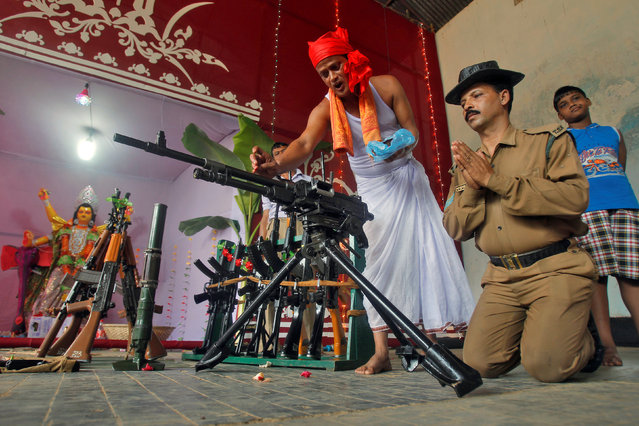
A police officer has weapons blessed by a Hindu priest during the Vishwakarma Puja festival in the outskirts of Agartala, India, September 17, 2016. (Photo by Jayanta Dey/Reuters)

A police officer has weapons blessed by a Hindu priest during the Vishwakarma Puja festival in the outskirts of Agartala, India, September 17, 2016. (Photo by Jayanta Dey/Reuters)
Details
21 Sep 2016 09:44:00
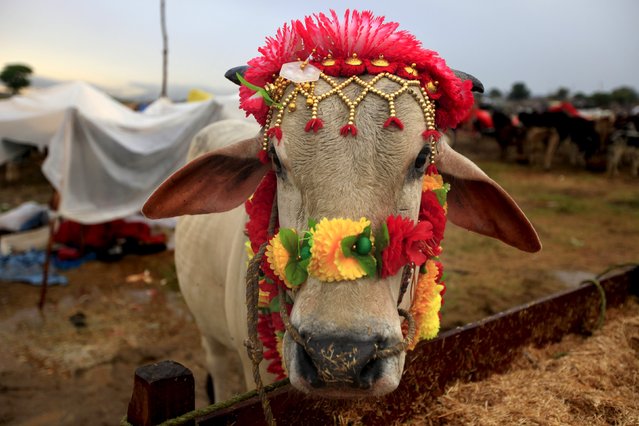
A sacrificial bull decorated for sale stands at its feed trough at the animal market on the outskirts of Islamabad, Pakistan, September 22, 2015. (Photo by Faisal Mahmood/Reuters)

A sacrificial bull decorated for sale stands at its feed trough at the animal market on the outskirts of Islamabad, Pakistan, September 22, 2015. Muslims across the world are preparing to celebrate the annual festival of Eid al-Adha or the Feast of the Sacrifice, which marks the end of the annual haj pilgrimage, by slaughtering goats, sheep, cows and camels in commemoration of the Prophet Abraham's readiness to sacrifice his son to show obedience to Allah. (Photo by Faisal Mahmood/Reuters)
Details
25 Sep 2015 08:04:00
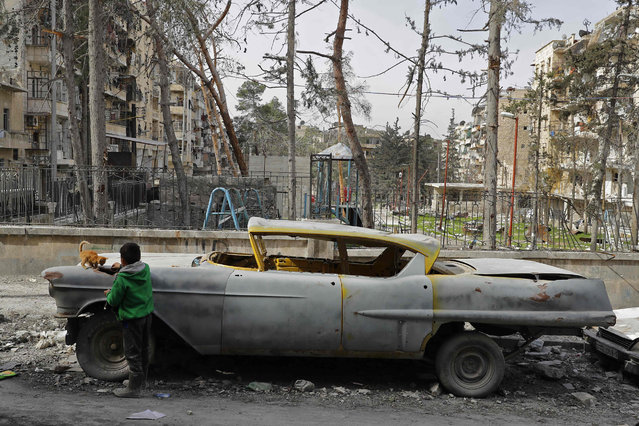
A picture taken on March 9, 2017, shows a boy playing with a cat next to a 1948 Buick parked outside the home of Mohammad Mohiedine Anis in the formerly rebel-held al-Shaar neighbourhood. (Photo by Joseph Eid/AFP Photo)

A picture taken on March 9, 2017, shows a boy playing with a cat next to a 1948 Buick parked outside the home of Mohammad Mohiedine Anis in the formerly rebel-held al-Shaar neighbourhood. (Photo by Joseph Eid/AFP Photo)
Details
19 Mar 2017 08:07:00
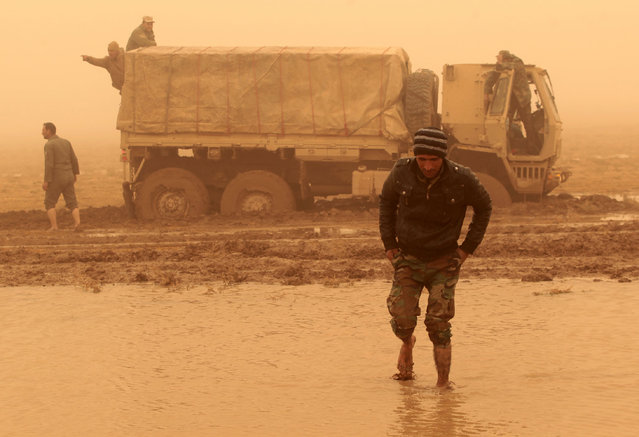
Iraqi army soldiers attempt to move their truck stuck in the mud near the village of Al-Boutha al-Sharqiyah, west of Mosul, on December 2, 2016, during a broad offencive by Iraq forces to retake the main hub city from Islamic State group jihadists. (Photo by Ahmad Al-Rubaye/AFP Photo)

Iraqi army soldiers attempt to move their truck stuck in the mud near the village of Al-Boutha al-Sharqiyah, west of Mosul, on December 2, 2016, during a broad offencive by Iraq forces to retake the main hub city from Islamic State group jihadists. (Photo by Ahmad Al-Rubaye/AFP Photo)
Details
05 Dec 2016 11:38:00
Peruvian shamans holding a poster of Russia's President Vladimir Putin perform a ritual of predictions for the new year at Morro Solar hill in Chorrillos, Lima, Peru, December 29, 2015. (Photo by Mariana Bazo/Reuters)

Peruvian shamans holding a poster of Russia's President Vladimir Putin perform a ritual of predictions for the new year at Morro Solar hill in Chorrillos, Lima, Peru, December 29, 2015. The ritual is an end-of-the-year tradition and the shamans called for world peace and wished good luck for the upcoming elections in Peru and the U.S. (Photo by Mariana Bazo/Reuters)
Details
01 Jan 2016 08:06:00
Zulmira Jesus poses for a portrait at a street in Povoa de Agracoes, near Chaves, Portugal April 19, 2016. (Photo by Rafael Marchante/Reuters)

Zulmira Jesus poses for a portrait at a street in Povoa de Agracoes, near Chaves, Portugal April 19, 2016. In the villages of Agracoes and Povoa de Agracoe, the steady drip-drip of emigration has brought down population numbers from more than 50 residents to fewer than a dozen each. These remaining villagers share the same glum acceptance that, after they have gone, their villages will die out too. It is the same desolate picture in scores of other backwater settlements in Portugal's interior, north to south. (Photo by Rafael Marchante/Reuters)
Details
29 Apr 2016 12:05:00
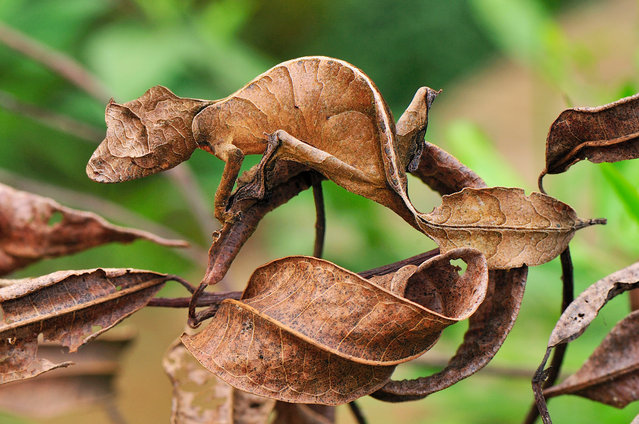
Is it a leaf? Is it tree bark? No, it’s the Satanic leaf-tailed gecko. Cleverly disguised as a rotting leaf, Madagascar’s camouflage king has red eyes, pointy horns and a taste for night hunting: it’s nature’s most devilish deceiver. (Photo by Thomas Marent/ARDEA)

Is it a leaf? Is it tree bark? No, it’s the Satanic leaf-tailed gecko. Cleverly disguised as a rotting leaf, Madagascar’s camouflage king has red eyes, pointy horns and a taste for night hunting: it’s nature’s most devilish deceiver. The twisted body and veiny skin echo the detail of a dry leaf, which ensures the gecko blends in with its forest home. The mottled tail appears to have sections missing, as though it has withered over time. This mini-monster epitomises survival of the fittest, having adapted gradually to become today’s extraordinary leaf impersonator. (Photo by Thomas Marent/ARDEA)
Details
20 Nov 2015 08:03:00