Loading...
Done
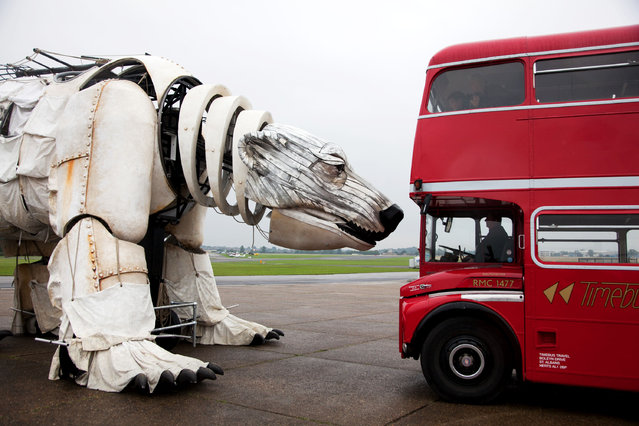
Giant Polar Bear Of London

Her name is Aurora, and she is the star of “Aurora's Parade”, the London chapter of ceride – Greenpeace’s global day of action to protest against Arctic destruction. According to DesignBoom, this giant people-powered super-puppet weighs about 3 tons and needs 15 puppeteers and 30 volunteers to operate. Aurora, described as “part protest, part performance”, has fur that includes the names of each supporter in the movement. Greenpeace hopes she will bring the voice and spirit of the Arctic to the public.
Details
13 Mar 2014 13:41:00
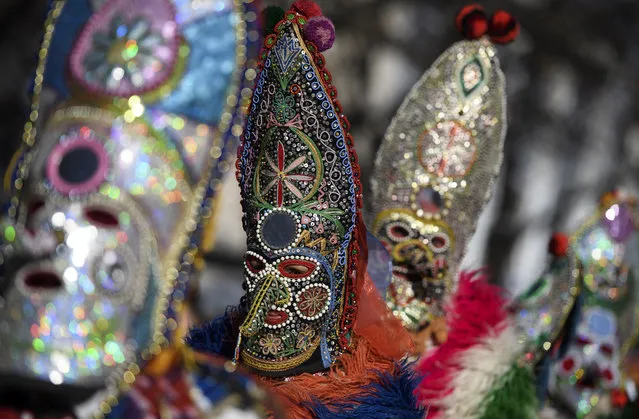
Mask dancers take part in a parade during the the International Festival of Masquerade Games “Surva” in the town of Pernik, some 30 km from Sofia, Bulgaria, 27 January 2019. In ancient times the old Thracians held the Kukeri Ritual Games in honor of god Dionysus – known as a god of wine and ecstasy. Even today these games are also known as the Dionysus' games. Among the Kukeri dancers' are many characters, including Dionysus and his satyrs as well as others from deep history such as the tsar, harachari, plyuvkachi, startzi, and pesyatzi. (Photo by Vassil Donev/EPA/EFE)

Mask dancers take part in a parade during the the International Festival of Masquerade Games “Surva” in the town of Pernik, some 30 km from Sofia, Bulgaria, 27 January 2019. In ancient times the old Thracians held the Kukeri Ritual Games in honor of god Dionysus – known as a god of wine and ecstasy. Even today these games are also known as the Dionysus' games. Among the Kukeri dancers' are many characters, including Dionysus and his satyrs as well as others from deep history such as the tsar, harachari, plyuvkachi, startzi, and pesyatzi. (Photo by Vassil Donev/EPA/EFE)
Details
31 Jan 2019 00:01:00


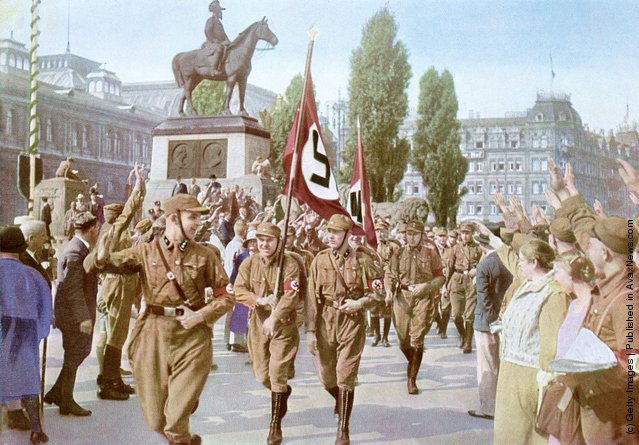
“Horst Ludwig Wessel (October 9, 1907 – February 23, 1930) was a German Nazi activist who was made a posthumous hero of the Nazi movement following his violent death in 1930. He was the author of the lyrics to the song “Die Fahne hoch” (“The Flag On High”), usually known as Horst-Wessel-Lied (“The Horst Wessel Song”), which became the Nazi Party anthem and, de facto, Germany's co-national anthem from 1933 to 1945”. – Wikipedia

Photo: German Nazi activist Horst Wessel (left) at the head of a parade of S.A. stormtroopers, or “brownshirts”, in Nuremberg, Germany, 1929. (Photo by Hulton Archive/Getty Images)
Details
08 Jul 2011 09:38:00
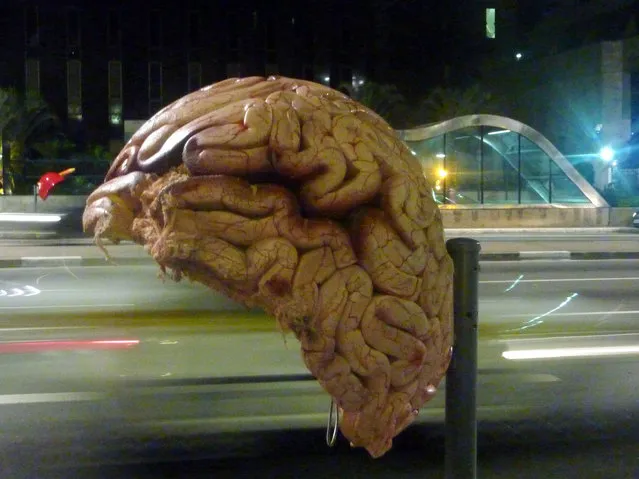
Call Paradei In Sao Paulo

Call Parade is an ongoing public art project in São Paulo sponsored by Brazilian telecommunications firm Vivo, that paired 100 artists with 100 street-side phone booths giving them free reign to transform the peculiar hooded fixtures into anything imaginable. The exhibition has proven to be extremely popular and Brazilian photographer Mariane Borgomani set out to capture a number of the phones, my favorite of which is the painted day/night treatment above by artist Maramgoní.
Details
26 Jun 2015 07:41:00
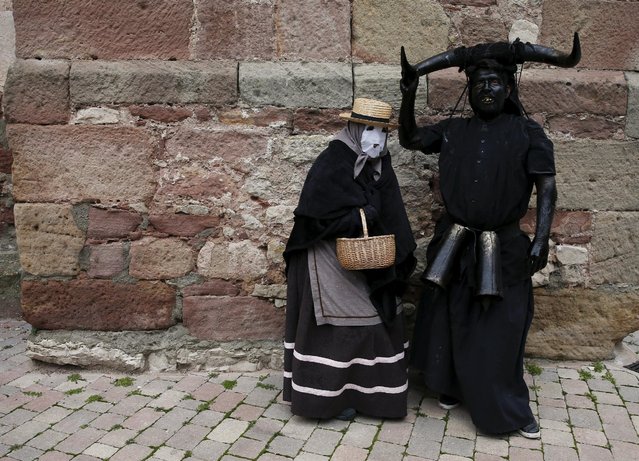
A reveller (R), dressed as “Diablos de Luzon” (Luzon Devils), stands next to a person dressed as a “Mascaritas” during carnival celebrations in the village of Luzon, Spain, February 6, 2016. (Photo by Sergio Perez/Reuters)

A reveller (R), dressed as “Diablos de Luzon” (Luzon Devils), stands next to a person dressed as a “Mascaritas” during carnival celebrations in the village of Luzon, Spain, February 6, 2016. The “Diablos” cover themselves in a mixture of soot and oil and adorn their heads with black-stained bull horns as they parade throughout the village with cowbells clanging around their waists to expel the evil spirits. (Photo by Sergio Perez/Reuters)
Details
08 Feb 2016 11:49:00
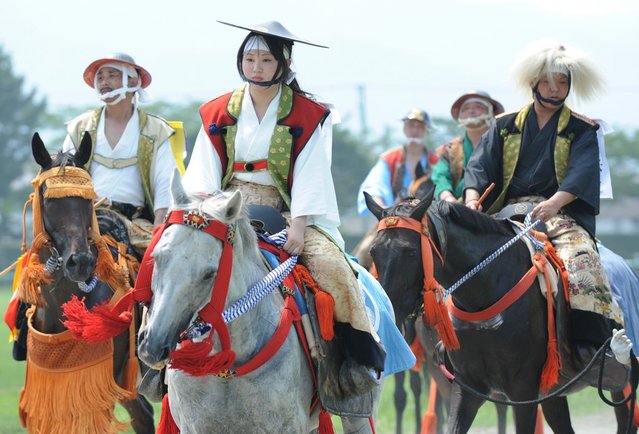
A young woman (C) clad in samurai costume leads other local poeple as she rides her horse during a parade at the annual Soma Nomaoi festival in Minamisoma, Fukushima Prefecture, on July 28, 2012.  The traditional full-scale festival kicked off for the first time after the accident of the Fukushima Dai-ichi Nuclear Power Plant following the massive earthquake and the tsunami on March 11, 2011. (Photo by Toru Yamanaka/AFP Photo)

Soma-Nomaoi is a festival that recreates a battle scene from more than 1,000 years ago. It is annually held for 4 days from July 22 to 25 in Haramachi City, Fukushima Prefecture, in the eastern part of Japan. In this historical event, 600 mounted samurai in traditional Japanese armor, with long swords at their side and ancestral flagstaffs streaming from their backs, ride across open fields. Soma-Nomaoi has been designated an Important Intangible Folk Cultural Property.

Photo: A young woman (C) clad in samurai costume leads other local poeple as she rides her horse during a parade at the annual Soma Nomaoi festival in Minamisoma, Fukushima Prefecture, on July 28, 2012. The traditional full-scale festival kicked off for the first time after the accident of the Fukushima Dai-ichi Nuclear Power Plant following the massive earthquake and the tsunami on March 11, 2011. (Photo by Toru Yamanaka/AFP Photo)
Details
02 Aug 2012 12:59:00
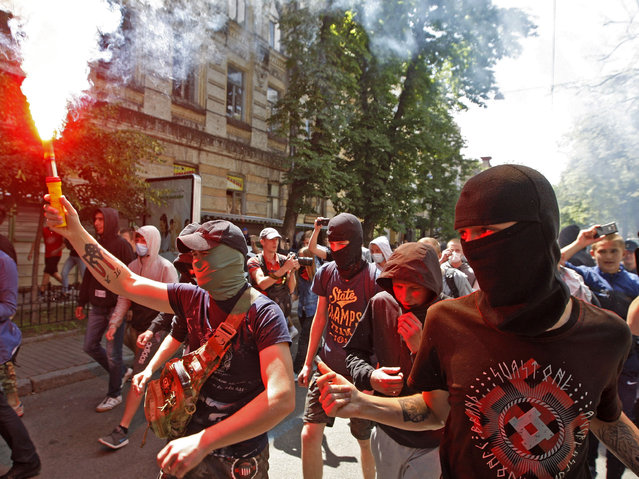
A man carries a smoke flare as far-right activists march during the Gay Pride parade on June 12, 2016 in Kiev. More than 700 gay rights activists marched through central Kiev on June 12 amid a massive police presence for the third such gay pride event in the ex-Soviet country where homophobia remains widespread. The June 12 march was the first ever gay pride rally to be held in central Kiev, prompting an unprecedented security operation with several thousand police and National Guard officers lining the route during the event, which lasted around 20 minutes. (Photo by Yuriy Kirnichny/AFP Photo)

A man carries a smoke flare as far-right activists march during the Gay Pride parade on June 12, 2016 in Kiev. More than 700 gay rights activists marched through central Kiev on June 12 amid a massive police presence for the third such gay pride event in the ex-Soviet country where homophobia remains widespread. The June 12 march was the first ever gay pride rally to be held in central Kiev, prompting an unprecedented security operation with several thousand police and National Guard officers lining the route during the event, which lasted around 20 minutes. (Photo by Yuriy Kirnichny/AFP Photo)
Details
13 Jun 2016 11:08:00
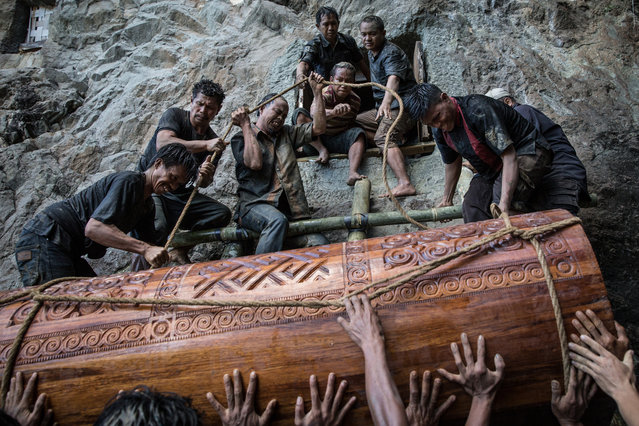
It is said that Torajans are people who “live to die”. For this Indonesian ethnic group, funerals are such extravagant events that they sometimes attract tourists. Families can postpone burials years (and the deceased are considered sick and hosted at home until the funeral) until the family can raise enough money and gather as many relatives as possible. And then it’s a jubilant multiday social event with a parade, dances and animal sacrifices. Agung Parameswara photographed these funerary practices when he traveled to South Sulawesi province, where the Torajans live. But often, their funeral isn’t the last time the dead are seen. In August, crypts are opened, coffins are slid back out and bodies delicately unsheathed. This tender ritual is known as Ma’Nene, which is customarily performed every few years. (Photo by Agung Parameswara/The Washington Post)

It is said that Torajans are people who “live to die”. For this Indonesian ethnic group, funerals are such extravagant events that they sometimes attract tourists. Families can postpone burials years (and the deceased are considered sick and hosted at home until the funeral) until the family can raise enough money and gather as many relatives as possible. And then it’s a jubilant multiday social event with a parade, dances and animal sacrifices. Agung Parameswara photographed these funerary practices when he traveled to South Sulawesi province, where the Torajans live. (Photo by Agung Parameswara/The Washington Post)
Details
06 Oct 2016 09:15:00