Loading...
Done
“Two Brothers”. We found about 20 lions eating a buffalo. When the male leaved the group we anticipated him to take photos. It is 8AM, light is perfect and the position too. The lion stops and looks down from the hill, another lion is coming up, it stiffens, I think that will be a fight, i'm tense, the camera is OK, the shots previously made perfect. Photo location: Masai Mara, Kenya. (Photo and caption by Massimo Mei/National Geographic Photo Contest)

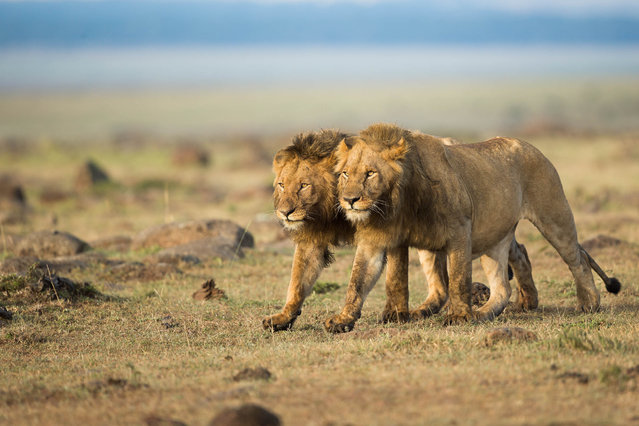
“Two Brothers”. We found about 20 lions eating a buffalo. When the male leaved the group we anticipated him to take photos. It is 8AM, light is perfect and the position too. The lion stops and looks down from the hill, another lion is coming up, it stiffens, I think that will be a fight, i'm tense, the camera is OK, the shots previously made perfect. The two meet, looking directly into their eyes, they sniff, rub against their heads, the tension drops, they start walking with the same step as when they were puppies, they are two brothers. Photo location: Masai Mara, Kenya. (Photo and caption by Massimo Mei/National Geographic Photo Contest)
Details
02 Jul 2014 09:45:00


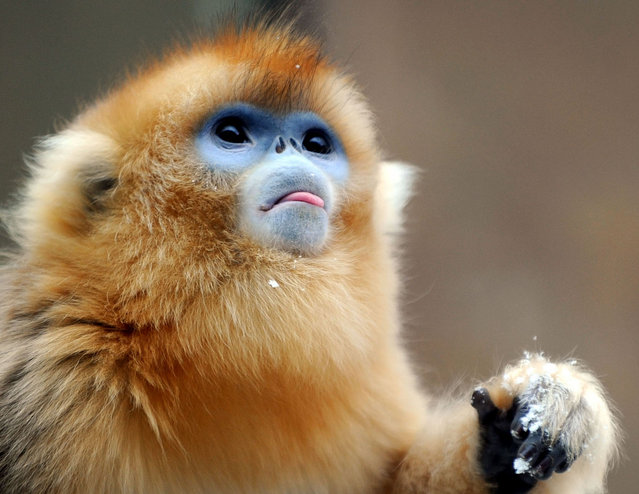
The golden monkey (Cercopithecus kandti) is a species of Old World monkey found in the Virunga volcanic mountains of Central Africa, including four national parks: Mgahinga, in south-west Uganda; Volcanoes, in north-west Rwanda; and Virunga and Kahuzi-Biéga, in the eastern Democratic Republic of Congo. It is restricted to highland forest, especially near bamboo.
Details
07 May 2012 04:39:00
ASCOT, ENGLAND - JUNE 17:  Actor Simon Baker is seen on Day 1 during Royal Ascot 2015 at Ascot racecourse on June 17, 2015 in Ascot, England.  (Photo by Alan Crowhurst/Getty Images for Ascot Racecourse)

ASCOT, ENGLAND - JUNE 17: Actor Simon Baker is seen on Day 1 during Royal Ascot 2015 at Ascot racecourse on June 17, 2015 in Ascot, England. (Photo by Alan Crowhurst/Getty Images for Ascot Racecourse)
Details
22 Jun 2015 12:57:00
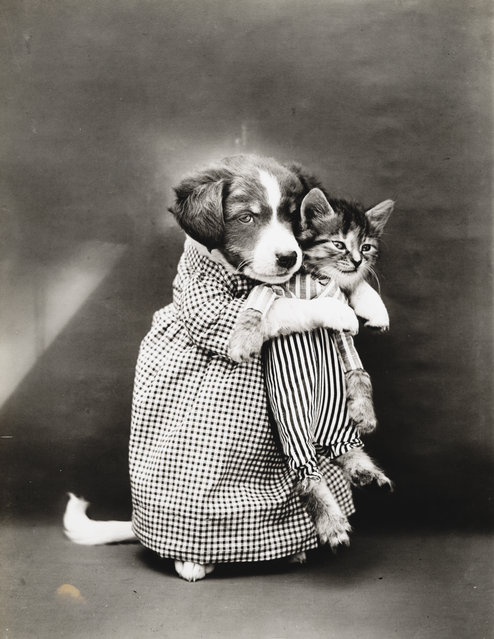
Photograph shows a puppy holding a kitten, 1914. (Photo by Harry Whittier Frees/Library of Congress)

“Harry Whittier Frees (1879–1953) was an American photographer who created novelty postcards and children's books based on his photographs of animals. He dressed the animals and posed them in human situations with props, often with captions; these can be seen as progenitors of modern lolcats”. – Wikipedia. Photo: “The nurse”. Photograph shows a puppy holding a kitten, 1914. (Photo by Harry Whittier Frees/Library of Congress)

P.S. All pictures are presented in high resolution. To see Hi-Res images – just TWICE click on any picture. In other words, click small picture – opens the BIG picture. Click BIG picture – opens VERY BIG picture (if available; this principle works anywhere on the site AvaxNews).
Details
28 Mar 2014 11:20:00
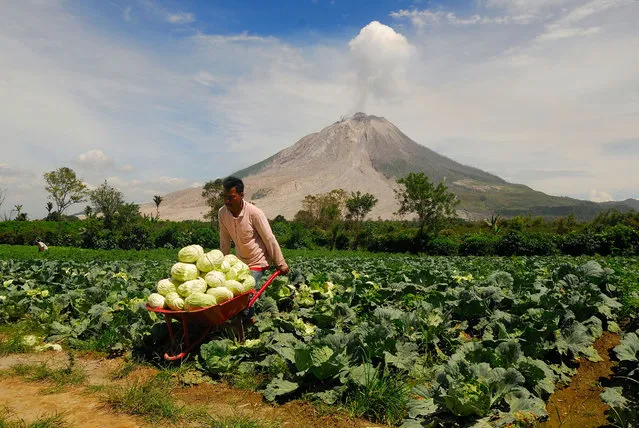
A farmer seen harvesting his crops while Mount Sinabung spewing out volcanic ash on July 4, 2017 in North Sumatera, Indonesia. The increased volume of lava dome that reaches one million eight hundred cubic meters, said volcanologist, through radio communications, do not dampen the activities of the people around sinabung, such as farming, harvesting their crops, picking up objects that are still left behind, or just take a picture while walking around near mount Sinabung. (Photo by Sabirin Manurung/Pacific Press/Barcroft Images)

A farmer seen harvesting his crops while Mount Sinabung spewing out volcanic ash on July 4, 2017 in North Sumatera, Indonesia. The increased volume of lava dome that reaches one million eight hundred cubic meters, said volcanologist, through radio communications, do not dampen the activities of the people around sinabung, such as farming, harvesting their crops, picking up objects that are still left behind, or just take a picture while walking around near mount Sinabung. (Photo by Sabirin Manurung/Pacific Press/Barcroft Images)
Details
06 Aug 2017 07:50:00
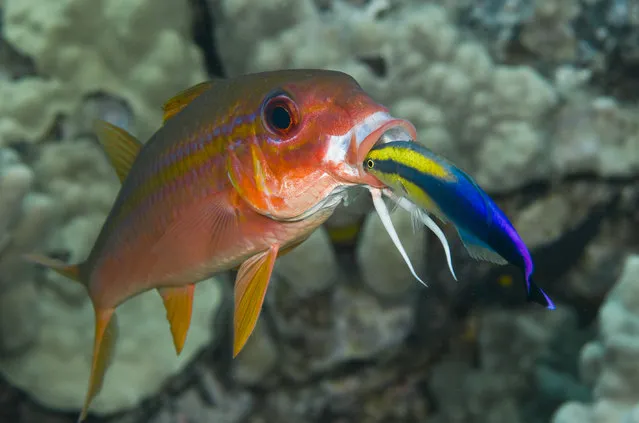
A Hawaiian cleaner wrasse provides its cleaning services to a yellowfin goatfish in a reef community off the Big Island in Hawaii. Cleaner species help rid their hosts of ectoparasites, dead tissue, bacteria and fungi. Studies have shown cleaning to play a vital role in keeping many reef ecosystems healthy. (Photo by Marty Snyderman/Caters News Agency)

A Hawaiian cleaner wrasse provides its cleaning services to a yellowfin goatfish in a reef community off the Big Island in Hawaii. Cleaner species help rid their hosts of ectoparasites, dead tissue, bacteria and fungi. Studies have shown cleaning to play a vital role in keeping many reef ecosystems healthy. (Photo by Marty Snyderman/Caters News Agency)
Details
21 Mar 2018 00:05:00
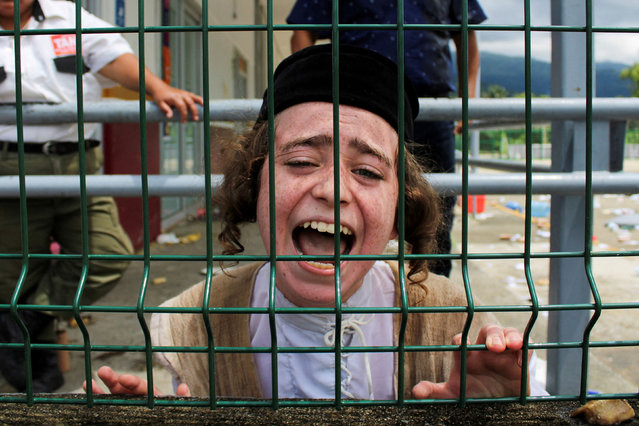
An Orthodox Jew child from Israel yells as other members of the community protest at a government facility where they are being held after being detained last Sunday during an operation by agents of the National Institute of Migration (INM), in Huixtla, Chiapas state, Mexico on September 28, 2022. (Photo by Jose Torres/Reuters)

An Orthodox Jew child from Israel yells as other members of the community protest at a government facility where they are being held after being detained last Sunday during an operation by agents of the National Institute of Migration (INM), in Huixtla, Chiapas state, Mexico on September 28, 2022. (Photo by Jose Torres/Reuters)
Details
03 Nov 2022 04:24:00
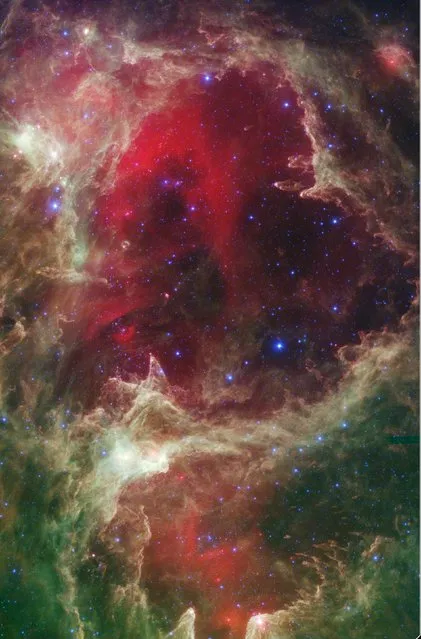
An infrared portrait from NASA's Spitzer Space Telescope which shows generations of stars is seen in this undated NASA handout image released February 14, 2013. In this wispy star-forming region, called W5, the oldest stars can be seen as blue dots in the centers of the two hollow cavities (other blue dots are background and foreground stars not associated with the region). Red shows heated dust that pervades the region's cavities, while green highlights dense clouds. (Photo by NASA/Reuters/JPL-Caltech/Harvard-Smithsonian/Handout)

An infrared portrait from NASA's Spitzer Space Telescope which shows generations of stars is seen in this undated NASA handout image released February 14, 2013. In this wispy star-forming region, called W5, the oldest stars can be seen as blue dots in the centers of the two hollow cavities (other blue dots are background and foreground stars not associated with the region). Red shows heated dust that pervades the region's cavities, while green highlights dense clouds. (Photo by NASA/Reuters/JPL-Caltech/Harvard-Smithsonian/Handout)
Details
03 Mar 2013 08:44:00