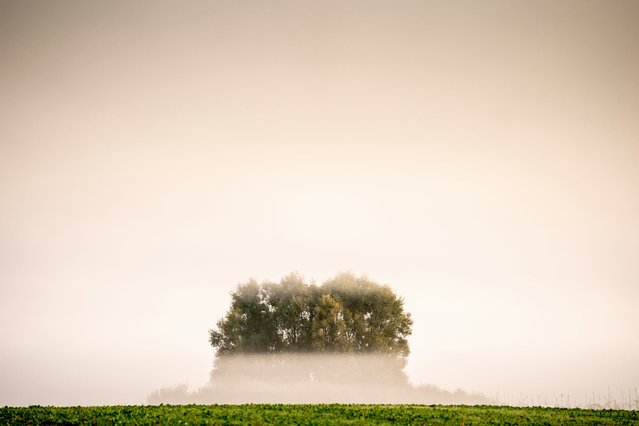
A view of trees shrouded in fog on a late summer morning between Tureby and Slimminge on Zealand, Denmark, 10 September 2021. (Photo by Mads Claus Rasmussen/EPA/EFE)
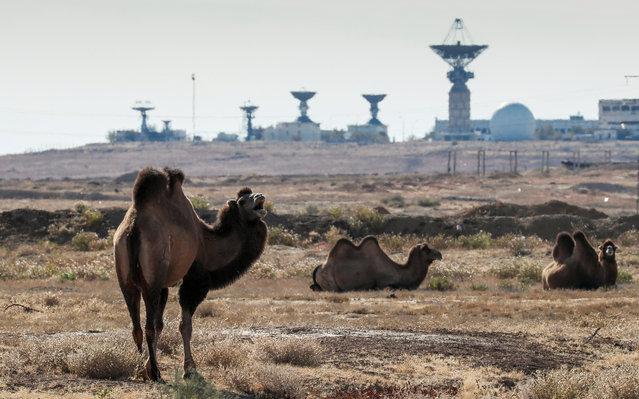
Camels graze in front of a spacecraft tracking station ahead of the Soyuz MS-10 upcoming launch at the Baikonur Cosmodrome, Kazakhstan, October 9, 2018. (Photo by Shamil Zhumatov/Reuters)
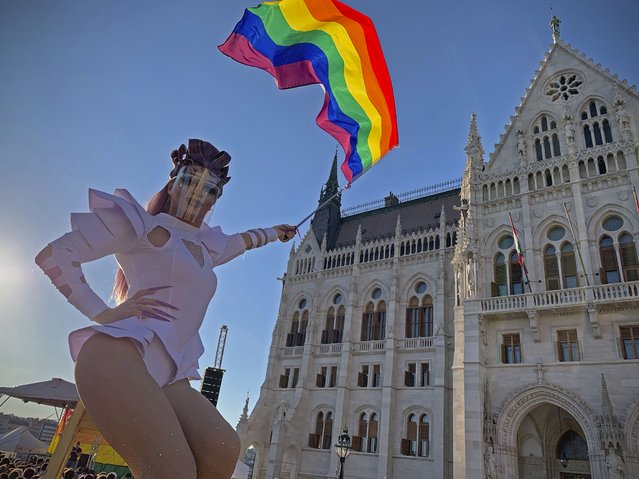
A drag queen waves a rainbow flag during an LGBT rights demonstration in front of the Hungarian Parliament building in Budapest, Hungary on June 14, 2021. During the protest human rights activists called on lawmakers in Hungary to reject legislation banning any content portraying or promoting homosexuality or sеx reassignment to anyone under 18. The bills, aiming at fighting pedophilia, have various amendments which would outlaw any depiction or discussion of different gender identities to youth in the public sphere. (Photo by Bela Szandelszky/AP Photo)
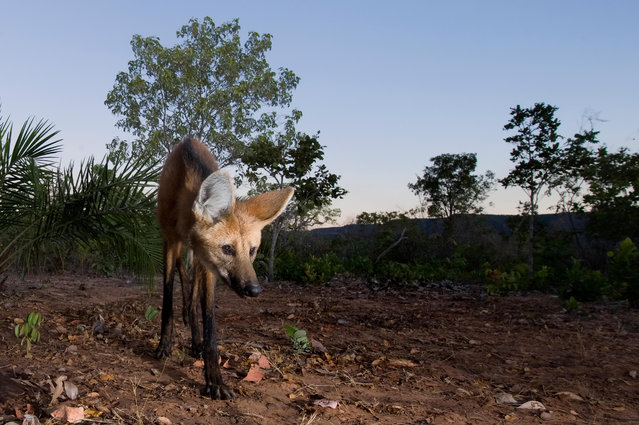
Global wildlife populations will decline by 67% by 2020 unless urgent action is taken to reduce human impact on species and ecosystems, warns the biennial Living Planet Index report from WWF (World Wide Fund for Nature) and ZSL (Zoological Society of London). From elephants to eels, here are some of the wildlife populations most affected by human activity. Here: The maned wolf is among the large mammals in the Brazilian Cerrado that are threatened by the increasing conversion of grasslands into farmland for grazing and growing crops. (Photo by Ben Cranke/Nature Picture Library/Alamy Stock Photo)
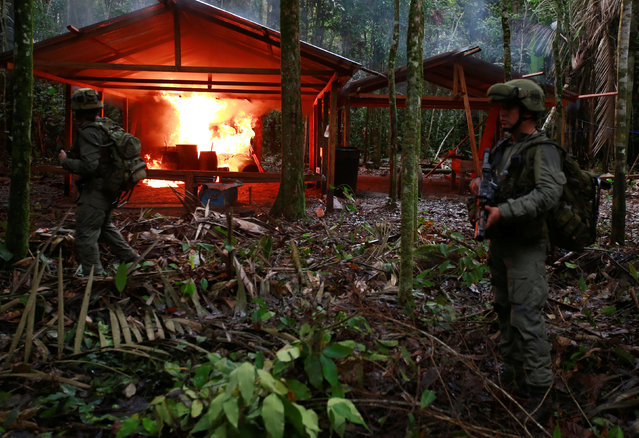
A Colombian anti-narcotics policeman stands guard after burning a cocaine lab, which police said belongs to criminal gangs, in a rural area of Calamar in Guaviare state, Colombia, August 2, 2016. Colombian law enforcement has destroyed 104 cocaine laboratories capable of producing some 100 tonnes of the drug annually, the head of the anti-narcotics police said on Tuesday. (Photo by John Vizcaino/Reuters)
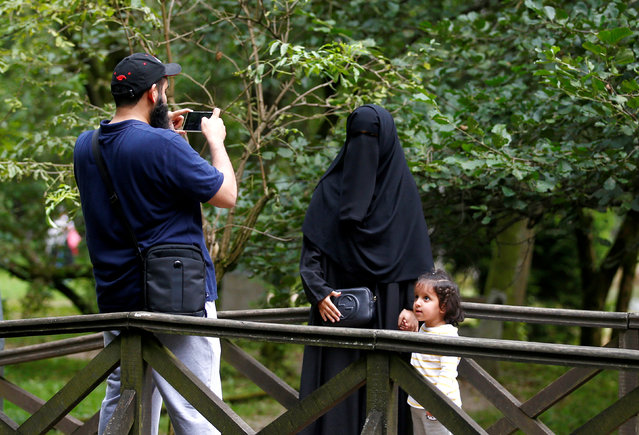
Tourists from the Middle East take pictures at Vrelo Bosne nature park in Ilidza near Sarajevo, Bosnia and Herzegovina, August 19, 2016. They discovered mountainous Bosnia, where half the population is Muslim, after the Arab Spring which destabilized many traditional holiday destinations such as Libya, Tunisia and Egypt. (Photo by Dado Ruvic/Reuters)