Loading...
Done
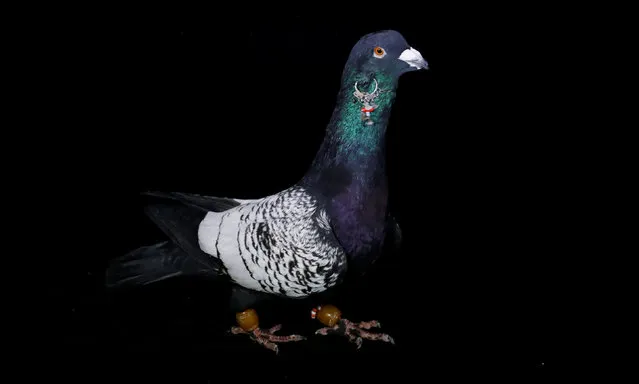
A pigeon, known as Siyah Kinifirli, with an approximate market value of 1000 Turkish Lira ($263), bred by 23-year-old Ismail Ozbek, is pictured in Sanliurfa, Turkey, December 23, 2016. As night-time approaches in Sanliurfa, southeastern Turkey, most of the alleyways of the city's old bazaar are emptying out of buyers and vendors, except for one. The bustle of daytime trading has died down, but on this little street, a stream of men carry cardboard boxes filled with pigeons to a cluster of three teahouses. Here, they sell the birds at Sanliurfa's famed auctions to a dedicated band of pigeon keepers and breeders, a pastime that has been thriving for hundreds of years across the region and over the nearby border into war-torn Syria. In a country where the minimum wage is about 1,400 Liras ($367) a month, enthusiasts regularly easily spend hundreds of dollars for one bird. “I once sold a pair of pigeons for 35,000 Turkish Lira”, says auctioneer Imam Dildas. “This is a passion, a hobby you cannot quit. I've been known to sell the fridge and my wife's gold bracelets to pay for pigeons”. (Photo by Umit Bektas/Reuters)

A pigeon, known as Siyah Kinifirli, with an approximate market value of 1000 Turkish Lira ($263), bred by 23-year-old Ismail Ozbek, is pictured in Sanliurfa, Turkey, December 23, 2016. As night-time approaches in Sanliurfa, southeastern Turkey, most of the alleyways of the city's old bazaar are emptying out of buyers and vendors, except for one. (Photo by Umit Bektas/Reuters)
Details
17 Jan 2017 12:05:00
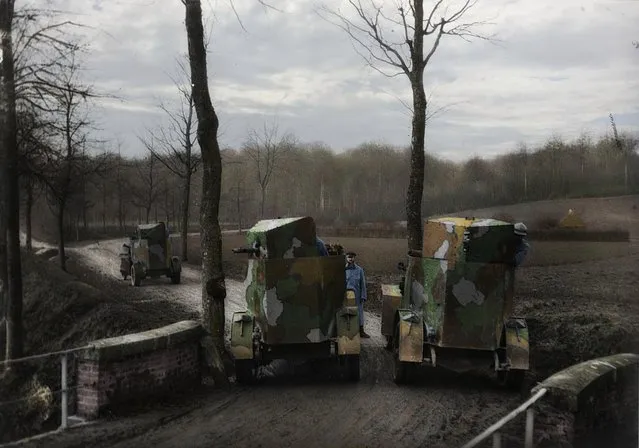
The expertly colourised shots were brought to life by French bank technician, Frédéric Duriez (51). The images were provided by the Valois collection which belongs to the BDIC. “By colourising these photos, I reduce the time that separates us today from this conflict”, said Frédéric. “A black and white photo does not attract the attention of young people, if you colour it, then people will look at it with curiosity. After this, we see the greater the misery and distress of these French fighters”. The total number of casualties in WW1 was more that 38 million. By the end of the war, over eight-million men had been called up to fight in the French army. France suffered 4.2 million casualties during the war with 1.3 million people dead. Here: Car cannon sections in firing position, Auxi-le-Château. (Photo by Frédéric Duriez/BDIC/Mediadrumworld.com)

The expertly colourised shots were brought to life by French bank technician, Frédéric Duriez (51). The images were provided by the Valois collection which belongs to the BDIC. “By colourising these photos, I reduce the time that separates us today from this conflict”, said Frédéric. Here: Car cannon sections in firing position, Auxi-le-Château. (Photo by Frédéric Duriez/BDIC/Mediadrumworld.com)
Details
03 May 2017 08:41:00
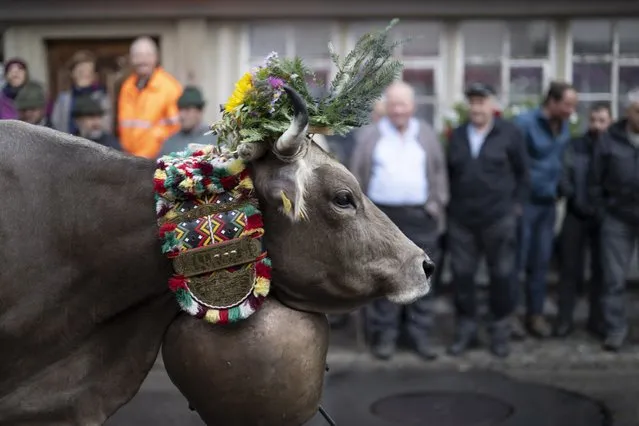
A cow carrying a bell and autumn flowers headgear walks by in front of spectators at the traditional cattle show in Schwellbrunn, Switzerland, 26 September 2022. The traditional show in the Appenzell region is held annually in autumn, when local farmers return from the alp with their groomed and cleaned cows to present them on a show ground. “The most beautiful and best performing cows are awarded prizes”, the Appenzellerland tourism office adds on their website. (Photo by Gian Ehrenzeller/EPA/EFE)

A cow carrying a bell and autumn flowers headgear walks by in front of spectators at the traditional cattle show in Schwellbrunn, Switzerland, 26 September 2022. The traditional show in the Appenzell region is held annually in autumn, when local farmers return from the alp with their groomed and cleaned cows to present them on a show ground. “The most beautiful and best performing cows are awarded prizes”, the Appenzellerland tourism office adds on their website. (Photo by Gian Ehrenzeller/EPA/EFE)
Details
23 Oct 2022 04:24:00
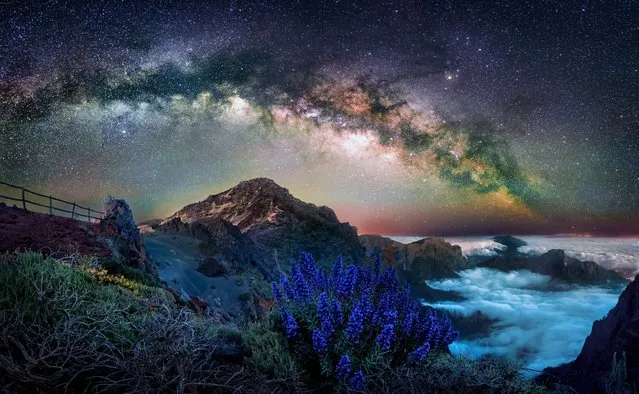
Tony North; First place, Breathing Spaces; Overall Winner; Blue Tajinaste, La Palma, Canary Islands, Spain. “Echium thyrsiflorum is endemic to the mountains of La Palma island – from high up, there was a magnificent view of both the caldera below, and the stars above. The Unesco La Palma biosphere reserve encompasses the entire island, with the Caldera de Taburiente containing mountains with a highest peak of 2,426 metres – the Roque de los Muchachos”. (Photo by Tony North/IGPOTY)

Tony North; First place, Breathing Spaces; Overall Winner; Blue Tajinaste, La Palma, Canary Islands, Spain. “Echium thyrsiflorum is endemic to the mountains of La Palma island – from high up, there was a magnificent view of both the caldera below, and the stars above. The Unesco La Palma biosphere reserve encompasses the entire island, with the Caldera de Taburiente containing mountains with a highest peak of 2,426 metres – the Roque de los Muchachos”. (Photo by Tony North/IGPOTY)
Details
10 Feb 2023 04:41:00
Vanessa: Hunts Point, Bronx

Vanessa: Hunts Point, Bronx

Vanessa, thirty-five, had three children with an abusive husband. She “lost her mind, started doing heroin”, after losing the children, who were taken away and given to her mother. The drugs led to homelessness and prostitution. She grew up on Arthur Avenue in the Bronx, but now spends her time in Hunts Point, “trying to survive everyday. Just doing whatever it takes”.
Details
13 May 2012 10:13:00
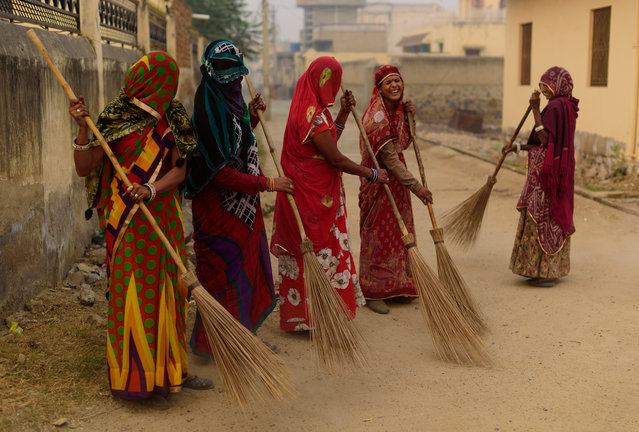
“Early morning in Mandawa, rural Rajasthan: it was the morning of Diwali and the streets were swept by smiling women in brightly coloured sarees as I took an early morning cup of chai. Celebrations started later, when darkness fell”. (Photo by Hamish Scott-Brown/Guardian Witness)

“Early morning in Mandawa, rural Rajasthan: it was the morning of Diwali and the streets were swept by smiling women in brightly coloured sarees as I took an early morning cup of chai. Celebrations started later, when darkness fell”. (Photo by Hamish Scott-Brown/Guardian Witness)
Details
20 Dec 2016 12:57:00
A performer wearing a lion mask performs the Ise Daikagura lion dance at the remote village of Yamanawa on February 08, 2021 in Ryuo, Japan. Ise Daikagura is a group of traditional Lion Dance performers who pray in front of farmers houses and businesses for good grain harvests and disease-free lives. Performers play sacred music using drums and flutes with two lion mask dancers. A lion mask is considered a symbol of God, who enters the house and performs in front of the Shinto God, a statue placed inside the house, mostly in the kitchen. These prayers are called “Kamodo Barai”. After the prayers, they are gifted with money, rice, sake and Japanese sweets from the householders. A group can travel for more than one hundred days to thousands of households and businesses throughout rural-villages in western Japan, and pray to those who are unable to visit the country’s most sacred shrine, the Grand Ise Shrine in Mie Prefecture. The group started its performance in the Edo era between 1603 to 1868 according to Japanese history. The Japanese government designated it as an important folk cultural national property in 1981. (Photo by Buddhika Weerasinghe/Getty Images)

A performer wearing a lion mask performs the Ise Daikagura lion dance at the remote village of Yamanawa on February 08, 2021 in Ryuo, Japan. Ise Daikagura is a group of traditional Lion Dance performers who pray in front of farmers houses and businesses for good grain harvests and disease-free lives. (Photo by Buddhika Weerasinghe/Getty Images)
Details
18 Feb 2021 09:27:00
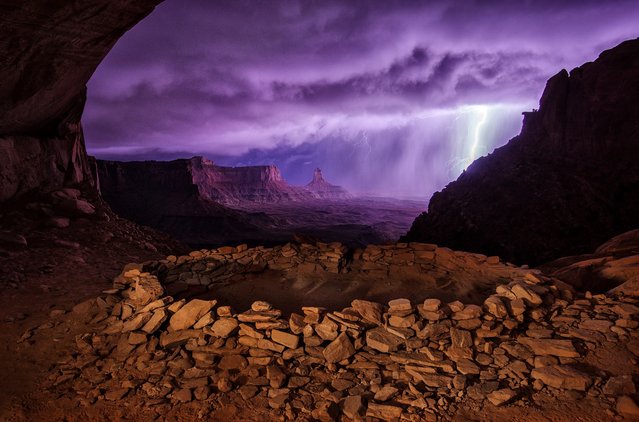
Second Place Winner: “Thunderstorm at False Kiva”. I hiked out to these ruins at night hoping to photograph them with the Milky Way, but instead a thunderstorm rolled through, creating this dramatic image. – Max Seigal. (Photo and caption by Max Seigal/National Geographic Traveler Photo Contest)

Second Place Winner: “Thunderstorm at False Kiva”. I hiked out to these ruins at night hoping to photograph them with the Milky Way, but instead a thunderstorm rolled through, creating this dramatic image. – Max Seigal. National Geographic Traveler Director of Photography Dan Westergren, one of this year's judges, shares his thoughts on the second place winner: “This photo combines two different scenes into one: the small kiva in a cliff dwelling and the grand vista of Canyonlands National Park across the valley. I really like the two different color palettes – warm inside and purple outside. This two-for-one scene was caused by the lightning storm outside the dwelling, which lit up the landscape like it was a huge electronic flash. Looking at this picture I can imagine what a wonderful sight it must have been for the ancient people who lived here. It doesn't seem too amazing now in our modern world, but might have been mind-blowing for the prehistoric residents”. Location: Utah. (Photo and caption by Max Seigal/National Geographic Traveler Photo Contest)
Details
02 Aug 2013 06:16:00