Loading...
Done


Yoga instructor Sarah Henry leads a class during a paddleboard yoga session at Adventure Sports Miami on July 10, 2011 in Miami, Florida. The paddle board is said to give the body's core more of a workout then in a gym since the platform is unstable and one must use the muscles to remain balanced on the board. (Photo by Joe Raedle/Getty Images)
Details
11 Jul 2011 11:11:00
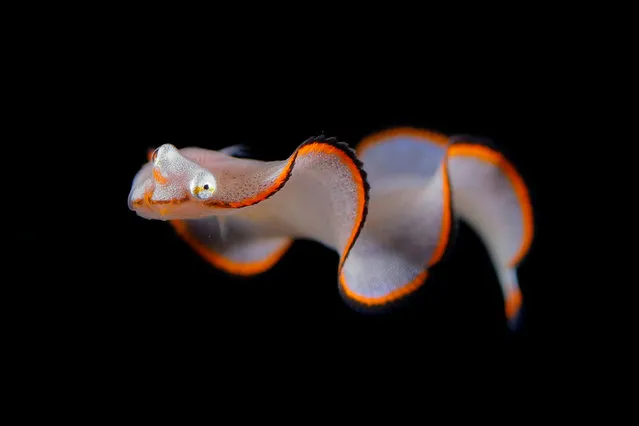
Batesian mimicry by a Soleichthys fish larva. (Photo by Ryo Minemizu/The Guardian)

Ryo Minemizu, one of Japan’s emerging stars in the field of marine life photography and the 2017 winner of the Nikkei National Geographic photography prize, captures the beauty and complexity of plankton that drift in our planet’s oceans and other bodies of water in meticulous detail. Here: Batesian mimicry by a Soleichthys fish larva. (Photo by Ryo Minemizu/The Guardian)
Details
21 Aug 2018 00:05:00
Thor, Virginia Tech College of Engineering, Robotics and Mechanisms Laboratory, tries to connect the hose to a firehose connection during the hose task at the Homestead-Miami Speedway, Friday, December 20, 2013, in Homestead, Fla. Seventeen teams from the United States, China, Japan, and Korea are participating in the DARPA Rpbotics Challenge Trials. The event is a test of some of the most advanced robots in the world. (AP Photo/Alan Diaz)

Thor, Virginia Tech College of Engineering, Robotics and Mechanisms Laboratory, tries to connect the hose to a firehose connection during the hose task at the Homestead-Miami Speedway, Friday, December 20, 2013, in Homestead, Fla. (Photo by Alan Diaz/AP Photo)
Details
03 Jan 2014 09:26:00
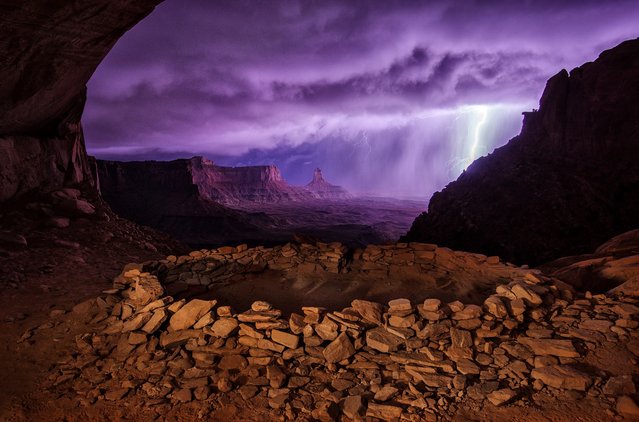
Second Place Winner: “Thunderstorm at False Kiva”. I hiked out to these ruins at night hoping to photograph them with the Milky Way, but instead a thunderstorm rolled through, creating this dramatic image. – Max Seigal. (Photo and caption by Max Seigal/National Geographic Traveler Photo Contest)

Second Place Winner: “Thunderstorm at False Kiva”. I hiked out to these ruins at night hoping to photograph them with the Milky Way, but instead a thunderstorm rolled through, creating this dramatic image. – Max Seigal. National Geographic Traveler Director of Photography Dan Westergren, one of this year's judges, shares his thoughts on the second place winner: “This photo combines two different scenes into one: the small kiva in a cliff dwelling and the grand vista of Canyonlands National Park across the valley. I really like the two different color palettes – warm inside and purple outside. This two-for-one scene was caused by the lightning storm outside the dwelling, which lit up the landscape like it was a huge electronic flash. Looking at this picture I can imagine what a wonderful sight it must have been for the ancient people who lived here. It doesn't seem too amazing now in our modern world, but might have been mind-blowing for the prehistoric residents”. Location: Utah. (Photo and caption by Max Seigal/National Geographic Traveler Photo Contest)
Details
02 Aug 2013 06:16:00
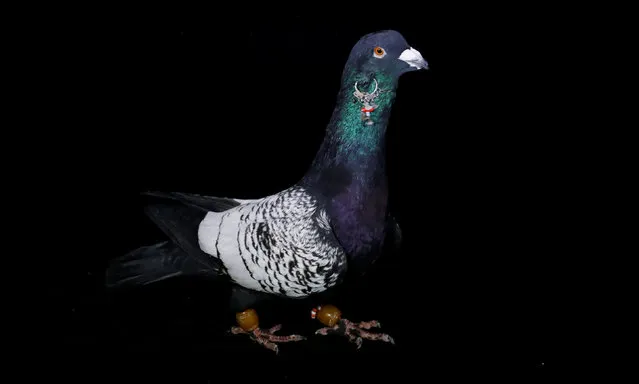
A pigeon, known as Siyah Kinifirli, with an approximate market value of 1000 Turkish Lira ($263), bred by 23-year-old Ismail Ozbek, is pictured in Sanliurfa, Turkey, December 23, 2016. As night-time approaches in Sanliurfa, southeastern Turkey, most of the alleyways of the city's old bazaar are emptying out of buyers and vendors, except for one. The bustle of daytime trading has died down, but on this little street, a stream of men carry cardboard boxes filled with pigeons to a cluster of three teahouses. Here, they sell the birds at Sanliurfa's famed auctions to a dedicated band of pigeon keepers and breeders, a pastime that has been thriving for hundreds of years across the region and over the nearby border into war-torn Syria. In a country where the minimum wage is about 1,400 Liras ($367) a month, enthusiasts regularly easily spend hundreds of dollars for one bird. “I once sold a pair of pigeons for 35,000 Turkish Lira”, says auctioneer Imam Dildas. “This is a passion, a hobby you cannot quit. I've been known to sell the fridge and my wife's gold bracelets to pay for pigeons”. (Photo by Umit Bektas/Reuters)

A pigeon, known as Siyah Kinifirli, with an approximate market value of 1000 Turkish Lira ($263), bred by 23-year-old Ismail Ozbek, is pictured in Sanliurfa, Turkey, December 23, 2016. As night-time approaches in Sanliurfa, southeastern Turkey, most of the alleyways of the city's old bazaar are emptying out of buyers and vendors, except for one. (Photo by Umit Bektas/Reuters)
Details
17 Jan 2017 12:05:00
A boat, center, is surrounded by Japan Cost Guard's patrol boats after some activists descended from the boat on Uotsuri Island, one of the islands of Senkaku in Japanese and Diaoyu in Chinese, in East China Sea Wednesday, Aug. 15, 2012. (Photo by Yomiuri Shimbun/Masataka Morita/AP Photo)

A boat, center, is surrounded by Japan Cost Guard's patrol boats after some activists descended from the boat on Uotsuri Island, one of the islands of Senkaku in Japanese and Diaoyu in Chinese, in East China Sea Wednesday, Aug. 15, 2012. Regional tensions flared on the emotional anniversary of Japan's World War II surrender as activists from China and South Korea used Wednesday's occasion to press rival territorial claims, prompting 14 arrests by Japanese authorities. The 14 people had traveled by boat from Hong Kong to the disputed islands controlled by Japan but also claimed by China and Taiwan. (Photo by Yomiuri Shimbun/Masataka Morita/AP Photo)
Details
18 Sep 2012 09:02:00


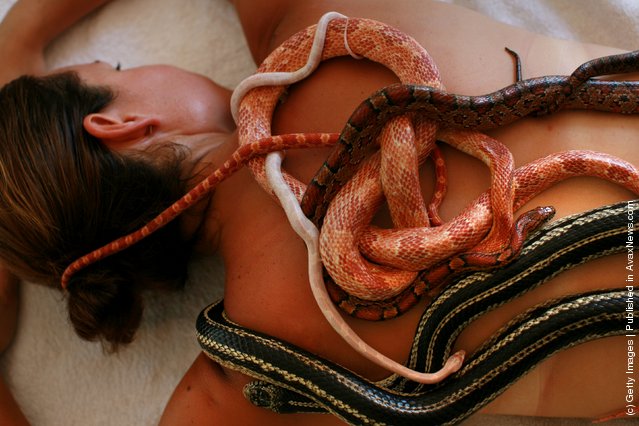
Meirav Stardinner receives a snake massage from Ada Barak at Barak's snake spa on September 11, 2008 in Talmei Elazar, Israel. Barack's income comes mostly from exhibiting her plants which eat everything from insects to small mammals. She discovered snakes' therapeutic value after letting people hold them after her act “Some people said that holding the snakes made them feel better, relaxed”, she says. “One old lady said it was soothing, like a cold compress”. Now she uses a combination of big snakes for deep massage and little ones for light massage, though all are non-venemous. (Photo by Uriel Sinai/Getty Images)
Details
07 May 2011 11:58:00
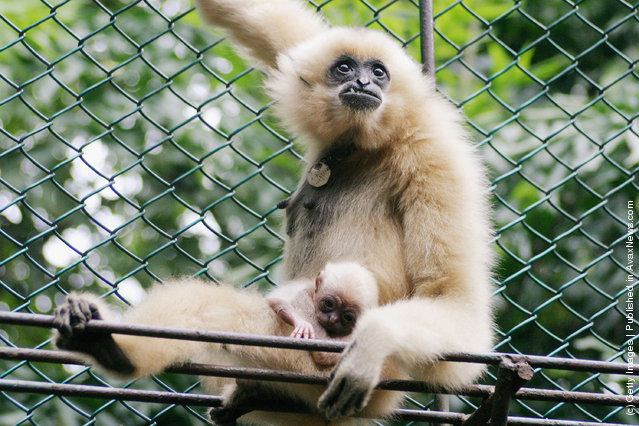
Newborn White-Cheeked Gibbon Nomascus

“Nomascus is the second most speciose genus of gibbons (family Hylobatidae). Originally this genus was a subgenus of Hylobates, and all individuals were considered one species, Hylobates concolor. Species within Nomascus are characterized by 52 chromosomes. Some species are all black, some light with a distinct black tuft of crown fur, and some by distinct, light-colored cheek patches. Nomascus is found from southern China (Yunnan) to southern Vietnam, and also on Hainan Island. One of the genus' species, Nomascus nasutus, has been deemed “the most critically endangered ape species in the world”. All of the species in this genus are endangered or critically endangered”. – Wikipedia

Photo: A newborn White-Cheeked Gibbon clings to its mother in the Nanning Zoo on April 12, 2004 in Nanning, Guangxi province, China. The White-Cheeked Gibbon's natural habitat is Southern China as well as Vietnam and Laos. They are classified as highly endangered and are on the brink of extinction due to poaching and reduction of natural rainforests. (Photo by Getty Images)

Details
12 Aug 2011 11:51:00