Loading...
Done
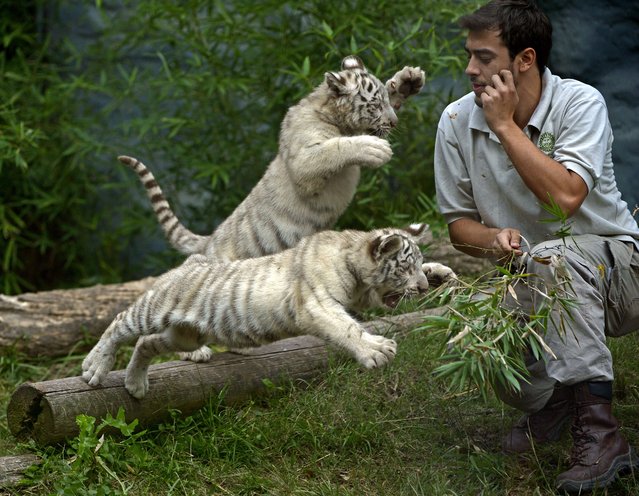
Two three-month-old female white Bengal tiger cubs play with a zoo keeper in their enclosure at the Buenos Aires' Zoo, in Argentina, on April 17, 2014. Captive white Bengal tiger Cloe, gave birth to three cubs – two females and one male – on January 14, 2014. (Photo by Juan Mabromata/AFP Photo)

Two three-month-old female white Bengal tiger cubs play with a zoo keeper in their enclosure at the Buenos Aires' Zoo, in Argentina, on April 17, 2014. Captive white Bengal tiger Cloe, gave birth to three cubs – two females and one male – on January 14, 2014. (Photo by Juan Mabromata/AFP Photo)
Details
19 Apr 2014 12:27:00
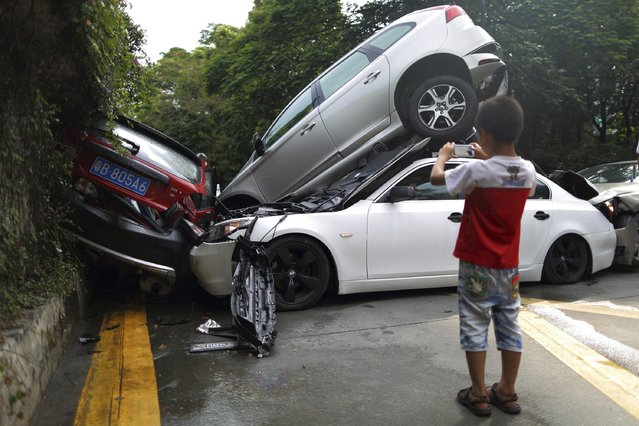
A boy takes a picture of a car crash in Shenzhen, Guangdong province, August 4, 2014. Two passengers were sent to hospital but no death was reported as a result of the accident, according to local media. (Photo by Reuters/Stringer)

A boy takes a picture of a car crash in Shenzhen, Guangdong province, August 4, 2014. Two passengers were sent to hospital but no death was reported as a result of the accident, according to local media. (Photo by Reuters/Stringer)
Details
09 Aug 2014 10:37:00
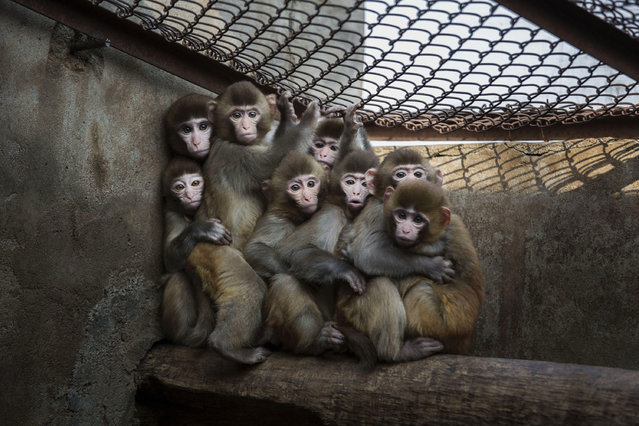
Macaque monkeys crowd together in their cage at a monkey farm on February 3, 2016 in Xinye county, Henan province, China. The area boasts a centuries-long and lucrative history of raising and training monkeys for performance. In Xinye, villagers are seeing an increase in business with the lunar calendar's “Year of the Monkey”. Farmers say most of the monkeys are bred and raised for domestic zoos, circuses, and performing groups, but add that some are also sold for medical research in China and the United States. Despite the popularity of the tradition, critics contend the training methods and conditions constitute animal cruelty. (Photo by Kevin Frayer/Getty Images)

Macaque monkeys crowd together in their cage at a monkey farm on February 3, 2016 in Xinye county, Henan province, China. The area boasts a centuries-long and lucrative history of raising and training monkeys for performance. In Xinye, villagers are seeing an increase in business with the lunar calendar's “Year of the Monkey”. Farmers say most of the monkeys are bred and raised for domestic zoos, circuses, and performing groups, but add that some are also sold for medical research in China and the United States. Despite the popularity of the tradition, critics contend the training methods and conditions constitute animal cruelty. (Photo by Kevin Frayer/Getty Images)
Details
31 Dec 2016 09:56:00
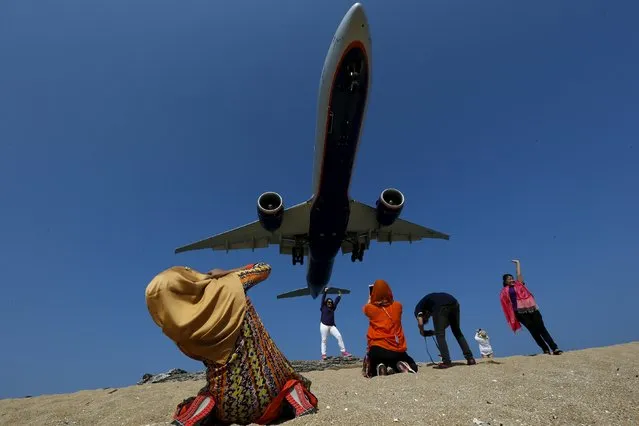
Tourist take pictures at Mai Khao Beach, as a plane approaches the Phuket International Airport in Phuket, Thailand March 17, 2016. With its palm-fringed beaches, Buddhist culture and racy nightlife, Thailand has been the poster child for Asian tourism for decades, attracting a range of visitors from backpackers and adventure-seekers, to families and culture vultures. But dark clouds could be forming even as a record of 32 million tourists are expected this year. (Photo by Athit Perawongmetha/Reuters)

Tourist take pictures at Mai Khao Beach, as a plane approaches the Phuket International Airport in Phuket, Thailand March 17, 2016. With its palm-fringed beaches, Buddhist culture and racy nightlife, Thailand has been the poster child for Asian tourism for decades, attracting a range of visitors from backpackers and adventure-seekers, to families and culture vultures. But dark clouds could be forming even as a record of 32 million tourists are expected this year. (Photo by Athit Perawongmetha/Reuters)
Details
31 Mar 2016 11:01:00
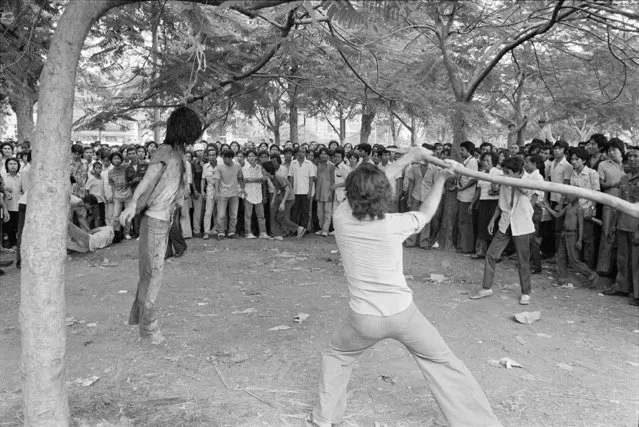
In this October 6, 1976 file photo a member of a Thai political faction strikes at the lifeless body of a hanged student outside Thammasat University in Bangkok Oct. 6, 1976. (Photo by Neal Ulevich/AP Photo)

In this October 6, 1976 file photo a member of a Thai political faction strikes at the lifeless body of a hanged student outside Thammasat University in Bangkok October 6, 1976. For some Thais, the bloody events of October 6, 1976 are still a nightmare. On that day, heavily armed security forces shot up Bangkok's Thammasat University campus and killed scores of students, while right-wing vigilantes captured would-be escapees, subjecting them to ghoulish lynchings. (Photo by Neal Ulevich/AP Photo)
Details
05 Oct 2016 09:22:00
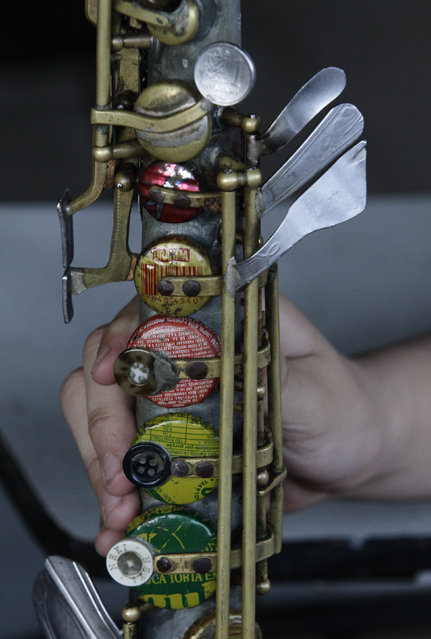
A student of the Orchestra of Recycled Instruments of Cateura holds an instrument made from recycled material by craftsman Nicolas Gomez, in Cateura, near Asuncion, May 9, 2013. The orchestra is the brainchild of its conductor Favio Chavez, who wanted to help the children of garbage pickers at the local landfill, and the instruments are made from salvaged materials by craftsman Gomez. (Photo by Jorge Adorno/Reuters)

A student of the Orchestra of Recycled Instruments of Cateura holds an instrument made from recycled material by craftsman Nicolas Gomez, in Cateura, near Asuncion, May 9, 2013. The orchestra is the brainchild of its conductor Favio Chavez, who wanted to help the children of garbage pickers at the local landfill, and the instruments are made from salvaged materials by craftsman Gomez. The orchestra now involves 30 schoolchildren who have toured countries in Latin America, North America and Europe to play music ranging from Beethoven and Mozart to the Beatles and Paraguayan folk songs. (Photo by Jorge Adorno/Reuters)
Details
12 Jul 2013 09:23:00
Afghanistan: Dogs of War Part 1

Throughout the course of the long war in Afghanistan, Coalition troops have relied on thousands of military working dogs to help keep them safe, and make their jobs easier. The dogs are trained to detect explosives, to find illegal drugs, to search for missing comrades, or target enemy combatants. Not only are they active on the front lines, but behind the lines they serve as therapy dogs, service dogs, and loyal companions. They also share the same risks as the ground troops, suffering injuries and sometimes death on the battlefields. Gathered here are images of these dogs and their handlers in Afghanistan and back home, from over the past several years, part of the ongoing series here on Afghanistan.
Details
03 Jun 2014 21:02:00


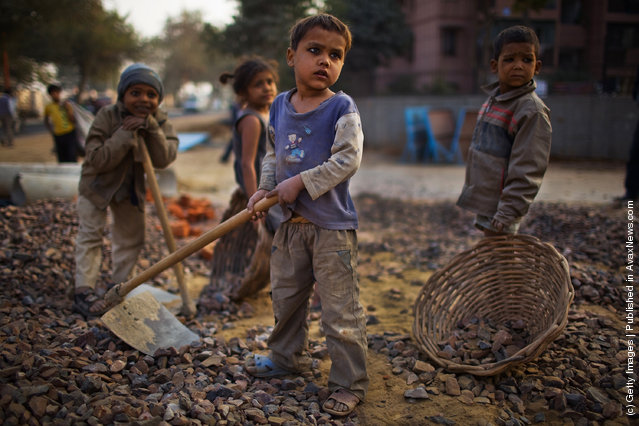
Indian children work nearby to their parents at a construction project in front of the Jawaharlal Nehru Stadium on January 30, 2010 in New Delhi, India. The children accompany their parents to the work site, where if they are prepared to work, they will receive money for bread an milk and be provided with dinner by the contractor. The sheer scale of the project has drawn an enormous population of migrant workers from all over India.
Details
20 May 2011 07:00:00