Loading...
Done
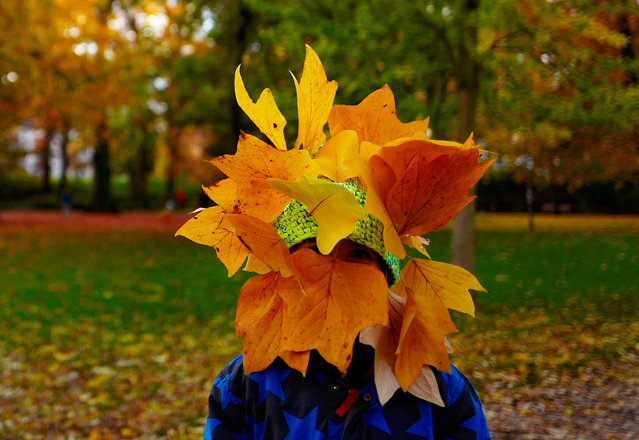
A boy covers his head with fallen leaves as he enjoys a stroll with his family in a park in downtown Frankfurt, Germany, November 6, 2016. (Photo by Kai Pfaffenbach/Reuters)

A boy covers his head with fallen leaves as he enjoys a stroll with his family in a park in downtown Frankfurt, Germany, November 6, 2016. (Photo by Kai Pfaffenbach/Reuters)
Details
14 Sep 2017 07:56:00
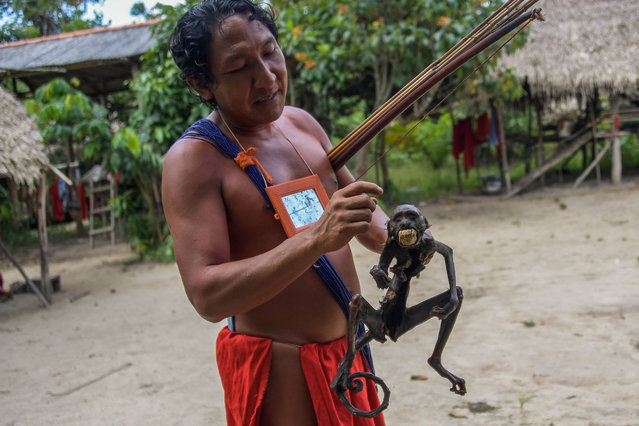
Chieftain Japarupi Waiapi shows a roasted monkey -part of Waiapi's diet, also based in Manioc and fruits- at the reserve in Amapa state in Brazil on October 13, 2017. When Waiapis walks into the Amazon forest surrounding their village, they do not see trees, but a kind of shopping mall providing medicine, food, shelter, tools and weapons  all under the eye of multiple spirits. (Photo by Apu Gomes/AFP Photo)

Chieftain Japarupi Waiapi shows a roasted monkey -part of Waiapi's diet, also based in Manioc and fruits- at the reserve in Amapa state in Brazil on October 13, 2017. When Waiapis walks into the Amazon forest surrounding their village, they do not see trees, but a kind of shopping mall providing medicine, food, shelter, tools and weapons all under the eye of multiple spirits. (Photo by Apu Gomes/AFP Photo)
Details
27 Oct 2017 08:39:00
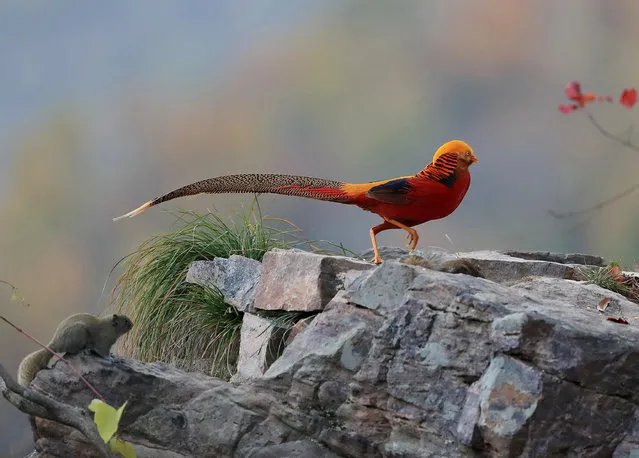
A golden pheasant and squirrels are seen in Lushan County of Pingdingshan City, central China's Henan Province, November 14, 2017. (Photo by Liu Xianguo/Xinhua/Barcroft Images)

A golden pheasant and squirrels are seen in Lushan County of Pingdingshan City, central China's Henan Province, November 14, 2017. (Photo by Liu Xianguo/Xinhua/Barcroft Images)
Details
19 Nov 2017 09:30:00
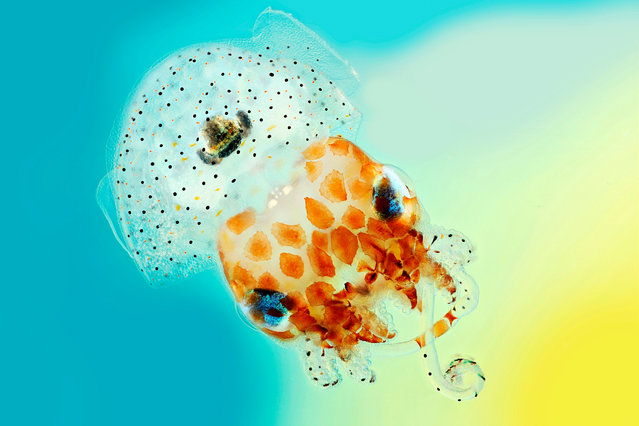
With its huge eyes, comical name and diminutive size, Mark R. Smith’s image of a baby Hawaiian bobtail squid can’t help but raise a smile. A curiously endearing creature, the cephalopod is just 1.5cm across, its mantle cavity bearing more than a passing resemblance to a rather natty shower cap. But it is also a beautiful example of symbiosis – nature’s version of “I’ll scratch your back if you scratch mine” – for on the underside of the squid is a light organ which houses bioluminescent bacteria. The squid offers the bacteria protection and food, while the bacteria emit a glow – a handy trait that the squid uses to offset its silhouette, helping it to evade predators in the depths below. Mark R. Smith’s entry combines several images of a Hawaiian bobtail squid with different focus lengths to create a final picture with greater depth of field than normal. (Photo by Mark R. Smith/Wellcome Images/Macroscopic Solutions)

With its huge eyes, comical name and diminutive size, Mark R. Smith’s image of a baby Hawaiian bobtail squid can’t help but raise a smile. A curiously endearing creature, the cephalopod is just 1.5cm across, its mantle cavity bearing more than a passing resemblance to a rather natty shower cap. But it is also a beautiful example of symbiosis – nature’s version of “I’ll scratch your back if you scratch mine” – for on the underside of the squid is a light organ which houses bioluminescent bacteria. The squid offers the bacteria protection and food, while the bacteria emit a glow – a handy trait that the squid uses to offset its silhouette, helping it to evade predators in the depths below. Mark R. Smith’s entry combines several images of a Hawaiian bobtail squid with different focus lengths to create a final picture with greater depth of field than normal. (Photo by Mark R. Smith/Wellcome Images/Macroscopic Solutions)
Details
08 Mar 2017 00:05:00
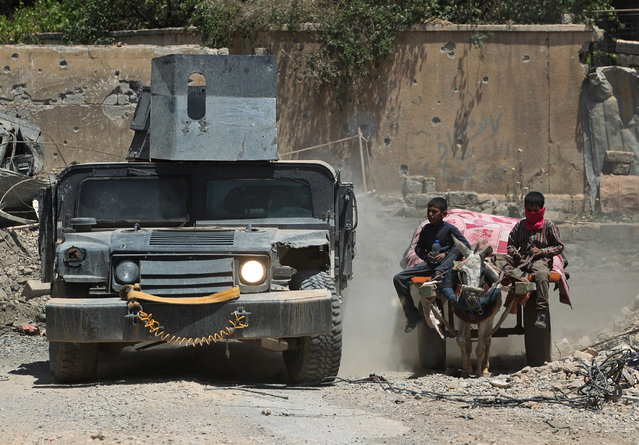
An Iraqi military vehicle passes displaced Iraqi boys returning to their homes in West Mosul's Oreibi neighbourhood after government forces retook control of the area from the Islamic State (IS) group during the ongoing offensive against the jihadists on May 21, 2017. (Photo by Ahmad Al-Rubaye/AFP Photo)

An Iraqi military vehicle passes displaced Iraqi boys returning to their homes in West Mosul's Oreibi neighbourhood after government forces retook control of the area from the Islamic State (IS) group during the ongoing offensive against the jihadists on May 21, 2017. (Photo by Ahmad Al-Rubaye/AFP Photo)
Details
22 May 2017 07:44:00
People carry drinks at 80s Bar in Damascus, Syria, March 11, 2016. (Photo by Omar Sanadiki/Reuters)

People carry drinks at 80s Bar in Damascus, Syria, March 11, 2016. In Damascus's Old City, just a mile from the battered frontline between government and rebel-held territory, young Syrians smoke, drink beer or soft drinks, and talk about anything but the war. The revival of activity in this once-vibrant quarter is part of efforts to project an air of normality in the Syrian capital, even as the five-year-old war that has killed more than 250,000 people and created 5 million refugees continues to rage nearby. (Photo by Omar Sanadiki/Reuters)
Details
28 Apr 2016 12:07:00
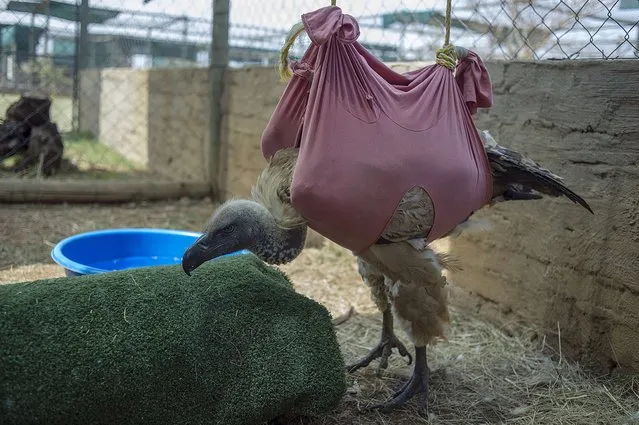
An injured vulture is treated at the VulPro Vulture Rehabilitation Centre in Hartebeepoortdam in the Magalisburg region on September 15, 2015. Confined to southern Africa, just under 4,000 breeding pairs of Cape Vultures remain in the wild, mostly in South Africa, Lesotho and Botswana. Unless conservation efforts are successful, Africa's largest vulture species may be facing eventual extinction. (Photo by Mujahid Safodien/AFP Photo)

An injured vulture is treated at the VulPro Vulture Rehabilitation Centre in Hartebeepoortdam in the Magalisburg region on September 15, 2015. Confined to southern Africa, just under 4,000 breeding pairs of Cape Vultures remain in the wild, mostly in South Africa, Lesotho and Botswana. Unless conservation efforts are successful, Africa's largest vulture species may be facing eventual extinction. (Photo by Mujahid Safodien/AFP Photo)
Details
19 Sep 2015 12:27:00
Chernobyl

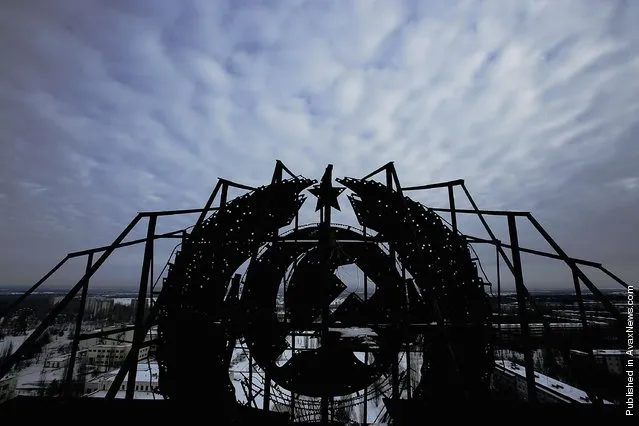
Scaffolding holding a remnant of the Soviet Union, the hammer and sickle, is seen on a rooftop of an abandoned building in the town of Pripyat on January 25, 2006 near Chernobyl, Ukraine. The town of Pripyat, deserted since the 1986 catastrophe, once housed 30,000 people, the majority of being workers from the Chernobyl Nuclear Power Plant. Days after the catastrophe the inhabitants were relocated to other locations in the Soviet Union. The town of Pripyat has remained uninhabited since. Prypyat and the surrounding area will not be safe for human habitation for several centuries. Scientists estimate that the most dangerous radioactive elements will take up to 900 years to decay sufficiently to render the area safe.
Details
14 Mar 2011 10:20:00