Loading...
Done


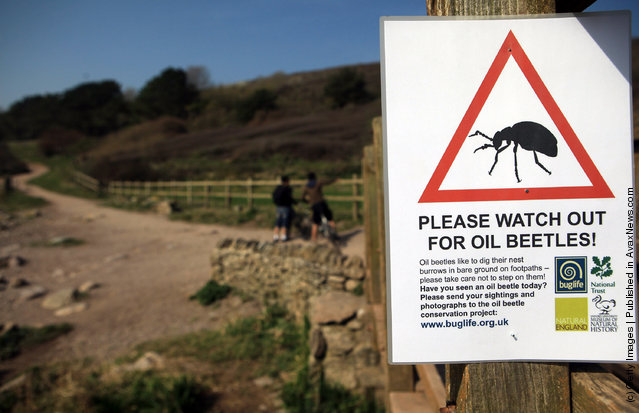
People enjoy the fine weather on the coast at Wembury during the first ever nationwide survey to map the location of the threatened and creatures on March 24, 2011 in near Plymouth, England. Often found on the coast, and particularly in the south west of England, the number of oil beetle species found in the UK has halved in the last 100 years and the survey will help establish the whereabouts of the remaining four species and boost efforts to secure their future. The survey is being launched today by Buglife: The Invertebrate Trust and the National Trust in partnership with Natural England and Oxford University Museum of Natural History. (Photo by Matt Cardy/Getty Images)
Details
25 Mar 2011 15:20:00
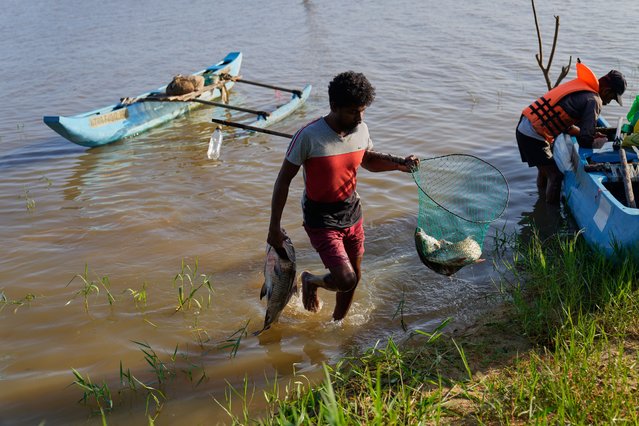
A fisherman brings his catch ashore from the Deduru Oya Reservoir, where giant snakeheads have become an invasive species in Walpaluwa village, Sri Lanka, Thursday, October 30, 2025. (Photo by Eranga Jayawardena/AP Photo)

A fisherman brings his catch ashore from the Deduru Oya Reservoir, where giant snakeheads have become an invasive species in Walpaluwa village, Sri Lanka, Thursday, October 30, 2025. (Photo by Eranga Jayawardena/AP Photo)
Details
17 Nov 2025 02:12:00
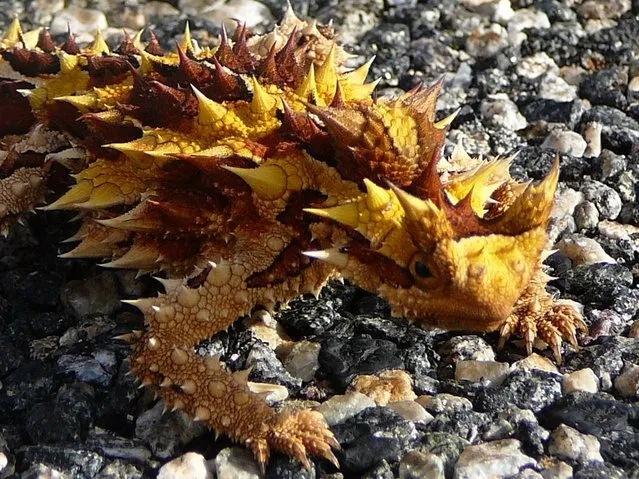
The Thorny Dragon Or Thorny Devil

The thorny dragon or thorny devil (Moloch horridus) is an Australian lizard, also known as the mountain devil, the thorny lizard, or the moloch. This is the sole species of genus Moloch. The thorny devil grows up to 20 cm (8.0 in) in length, and it can live up to 20 years.
Details
23 Jul 2014 20:20:00
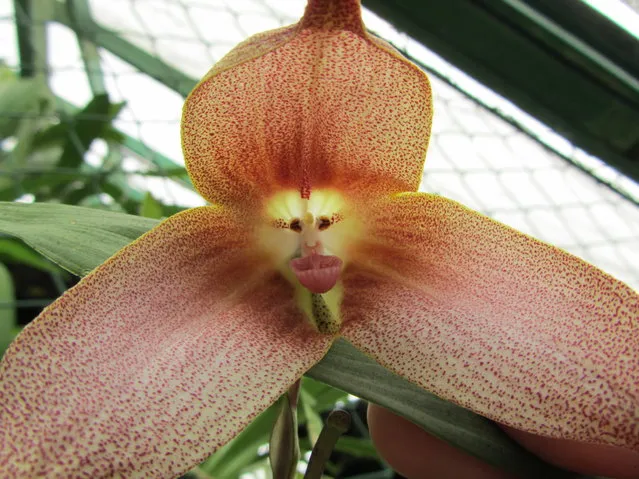
Monkey Orchid

The Monkey orchid (Orchis simia) is an orchid species of the Orchis genus. It is known for its pungent odor, which some say is similar to that of feces.
Details
01 Jul 2012 12:17:00


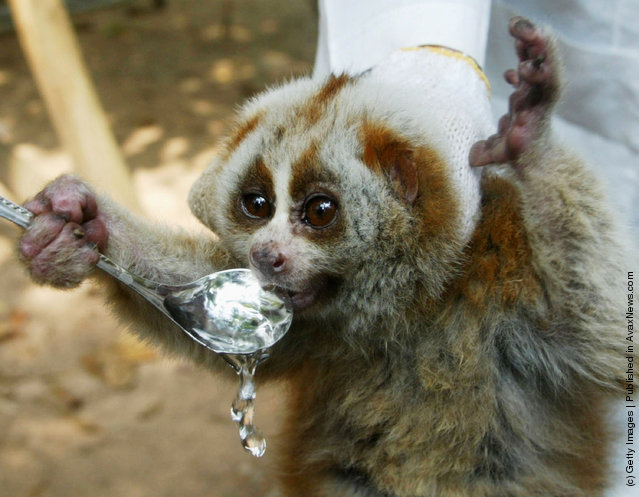
Workers feed water to a Slow Loris at the Guangdong Wild Animal Rescue Centre on December 21, 2004 in Guangzhou, China. Many protected species at the Centre have been seized by Police from illegal traders. (Photo by China Photos/Getty Images)
Details
17 Jun 2011 12:10:00


Is it worth eating live beings? This is a philosophical question: the history of our species and the ontology of being are saying that it's more likely yes, and on the other hand your mind and empathy are more likely to be against this idea. Or at least like in this Korean clip – eat, but with tears in your eyes.
Details
05 Jan 2019 13:13:00
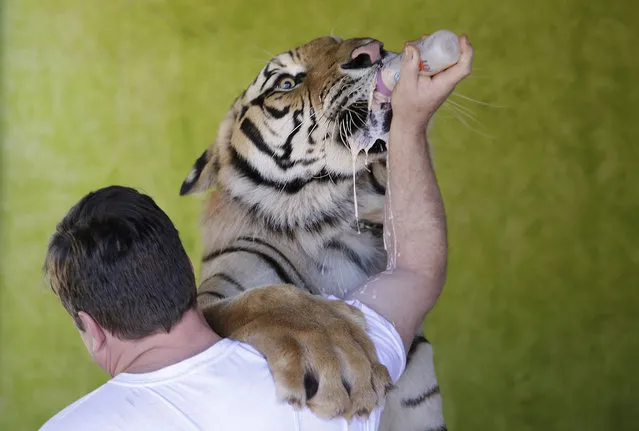
Ary Borges feeds his tiger named Dan at his home in Maringa, Brazil, Thursday, September 26, 2013.  Borges is in a legal battle with federal wildlife officials to keep his endangered animals from undergoing vasectomies and being taken away from him. He defends his right to breed the animals and says he gives them a better home than they might find elsewhere in Brazil. (Photo by Renata Brito/AP Photo)

Ary Borges feeds his tiger named Dan at his home in Maringa, Brazil, Thursday, September 26, 2013. Borges is in a legal battle with federal wildlife officials to keep his endangered animals from undergoing vasectomies and being taken away from him. He defends his right to breed the animals and says he gives them a better home than they might find elsewhere in Brazil. (Photo by Renata Brito/AP Photo)
Details
29 Sep 2013 12:49:00
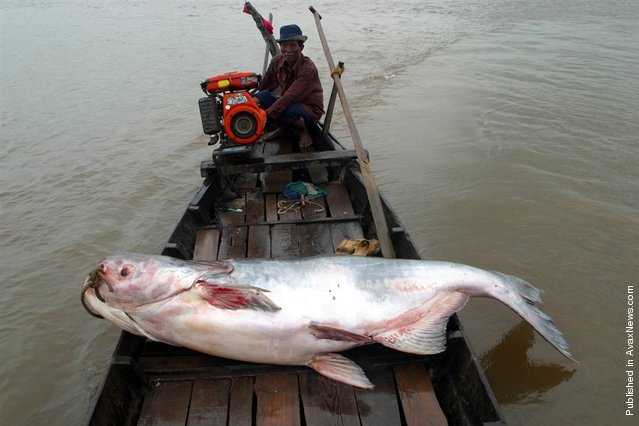
Among the fish populations that could be harmed by the Xayaburi dam in Laos is the critically endangered Mekong giant catfish, considered by the Guinness Book of World Records to be the world’s largest freshwater fish. The fish, which grows to 650 pounds and about 10 feet long, is only found in the Mekong River. It is migratory, moving between downstream habitats in Cambodia upstream to northern Thailand and Laos each year to spawn. Some experts fear the Xayaburi dam could block the migration and drive the giant catfish to extinction

Among the fish populations that could be harmed by the Xayaburi dam in Laos is the critically endangered Mekong giant catfish, considered by the Guinness Book of World Records to be the world’s largest freshwater fish. The fish, which grows to 650 pounds and about 10 feet long, is only found in the Mekong River. It is migratory, moving between downstream habitats in Cambodia upstream to northern Thailand and Laos each year to spawn. Some experts fear the Xayaburi dam could block the migration and drive the giant catfish to extinction. (Photo by Courtesy of Zeb Hogan/University of Nevada, Reno)
Details
20 Apr 2012 13:10:00