A person wears socks on shoes, as people queue to enter Liberty Inauguration ball, on inauguration day of Donald Trump's second presidential term, in Washington, U.S. January 20, 2025. (Photo by Jeenah Moon/Reuters)
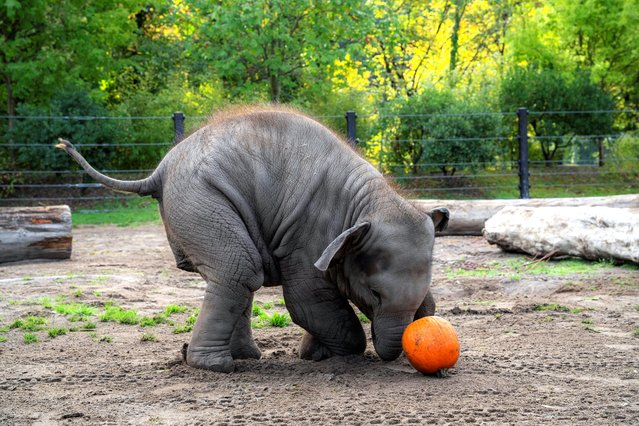
An elephant calf, Tula-Tu plays with a pumpkin, as the Oregon Zoo celebrates Halloween during the 27th annual Squishing of the Squash, in Portland, Oregon, U.S., October 16, 2025. (Photo by Oregon Zoo/Handout via Reuters)
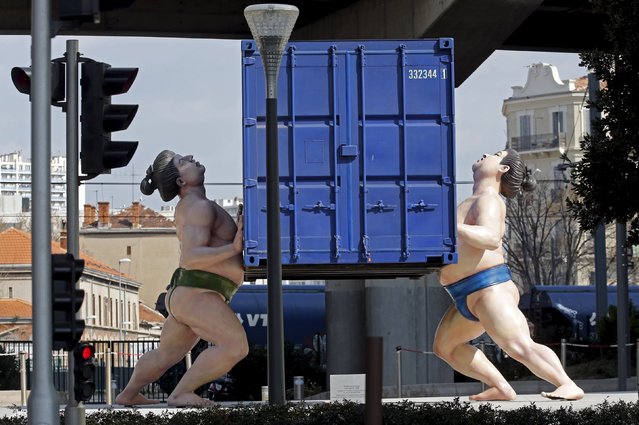
The sculpture “It Takes Two to Tango” by Scottish sculptor David Mach is seen in front of the headquarters of the CMA-CGM shipping company office tower in the port of Marseille, France, March 15, 2016. (Photo by Jean-Paul Pelissier/Reuters)
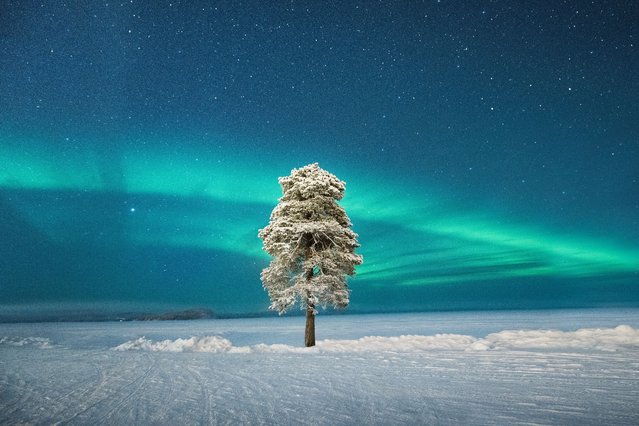
Aurorae category runner-up: Lone Tree under a Scandinavian Aurora by Tom Archer (UK). The photographer decided to explore the area around the hotel on a very crisp -35C evening in Finnish Lapland. When he found this tree, he decided to wait for the misty conditions to change and could not believe his luck when the sky cleared and the aurora came out in the perfect spot. Archer spent about an hour photographing it before his camera started to lock up because of the harsh conditions, but by then he was happy to call it a night. (Photo by Tom Archer/2020 Astronomy Photographer of the Year)
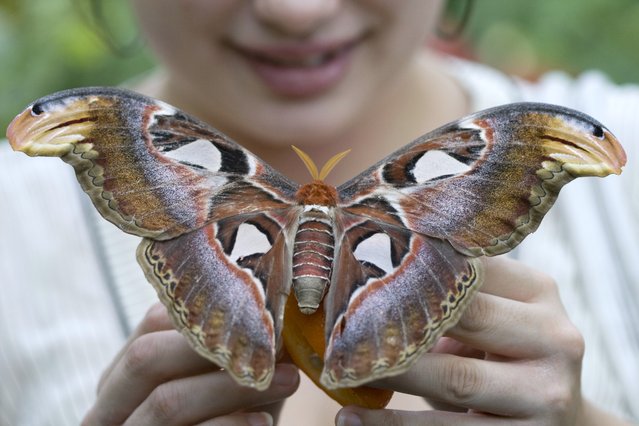
“The Atlas moth (Attacus atlas) is a large saturniid moth found in the tropical and subtropical forests of Southeast Asia, and common across the Malay archipelago. Atlas moths are considered the largest moths in the world in terms of total wing surface area [upwards of c. 400 cm2 (62 sq in)]. Their wingspans are also amongst the largest, reaching over 25 cm (10 in). Females are appreciably larger and heavier”. – Wikipedia. Photo: Atlas Moth. (Photo by Terri Oda)
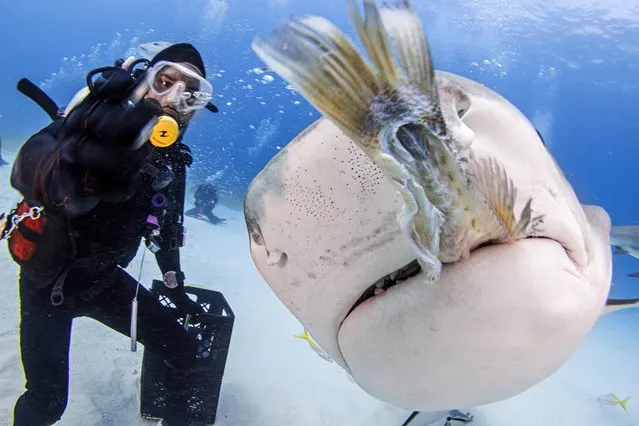
David Martinez, a divemaster and shark feeder, risks life and limb when he hand feeds tiger sharks at Tiger Beach in the Bahamas in December 2022. (Photo by Caters News Agency)