Loading...
Done
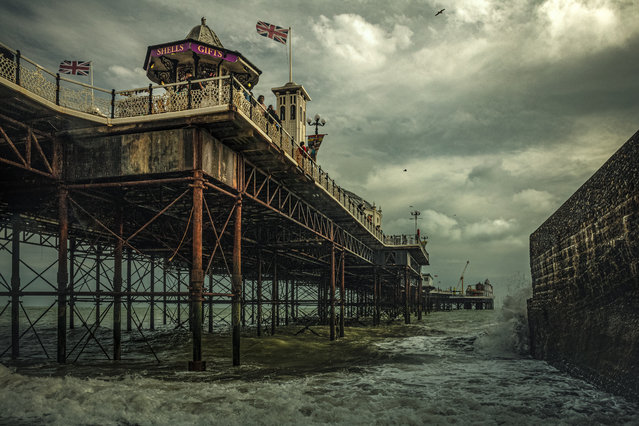
Overall Winner: The Brighton Palace Pier. “Standing in the full force of weather and time: the Brighton Palace Pier. My wife and I have been visiting Brighton for a few years now and I always strive to capture this lovely historic seaside town with a sense of the atmosphere and cinematic interpretation that it instills in me”. (Photo by Michael Marsh/Historic Photographer of the Year 2020)

The winners of the Historic Photographer of the Year Awards 2020 from triphistoric.com celebrate the places and cultural sites around the world that offer a window to the history that exists all around us. This year, restricted by Covid, photographers were called on to scour their photographic archive to share their imagery of those places that dominate our past. Here: The Brighton Palace Pier. (Photo by Michael Marsh/Historic Photographer of the Year 2020)
Details
27 Nov 2020 00:03:00
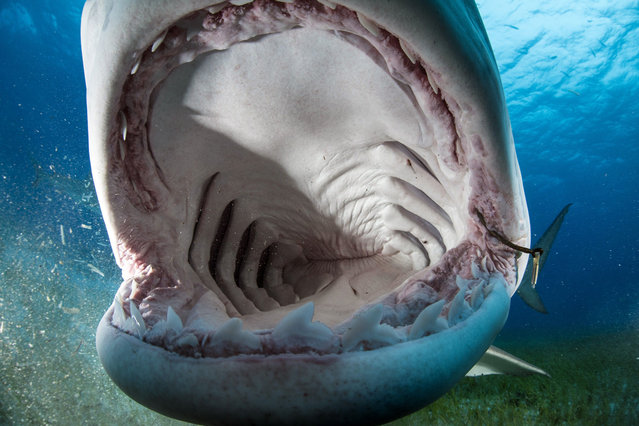
These jaw-some images show what its like to look inside the mouth of a tiger shark. Captured in amazing detail, the unique pictures show the alien-like anatomy of the shark and reveal rows upon rows of razor sharp teeth and white coloured gills. The incredible photographs were taken when a curious shark began to inspect the camera of British born photographer, Adam Hanlon, 46.(Photo by Adam Hanlon/Caters News)

These jaw-some images show what its like to look inside the mouth of a tiger shark. Captured in amazing detail, the unique pictures show the alien-like anatomy of the shark and reveal rows upon rows of razor sharp teeth and white coloured gills. The incredible photographs were taken when a curious shark began to inspect the camera of British born photographer, Adam Hanlon, 46. After sensing electronic impulses omitted by Adams camera, the inquisitive creature began to gently mouth at the cameras housing allowing him capture the unusual perspective. (Photo by Adam Hanlon/Caters News)
Details
29 Jan 2015 11:50:00
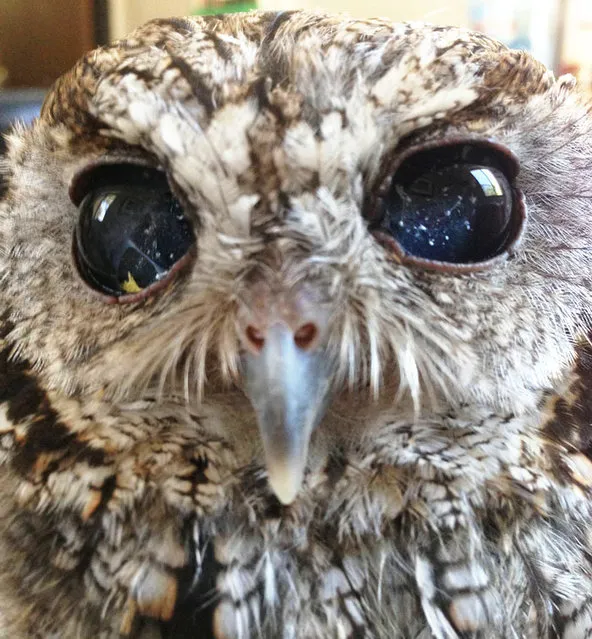
The Blind Owl With Stars Eyes

When you gaze into the eyes of this beautiful creature, you can almost make out constellations forming deep within. The name of this magnificent bird is Zeus, named after the Greek god of the sky for her one-of-a-kind eyes. The reason why she has such eyes is because she is blind. She was saved by a family in Southern California, when they found her injured on their front porch. After realizing that this poor creature is blind and unable to take care of itself, they took her to an animal hospital. After she healed up, everyone agreed that she should be sent to the Wildlife Learning Center. From that point on, Zeus has been happily living in the center. And though she cannot see, you can bet that her other senses are ten times as sharp. (Photo by Wildlife Learning Center)
Details
24 Nov 2014 13:31:00
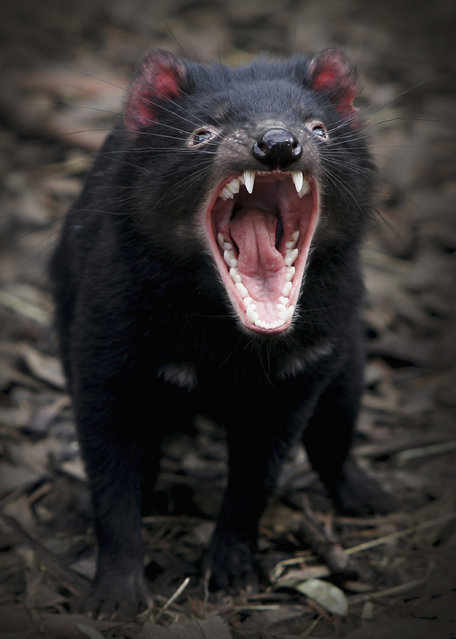
A Tasmanian Devil bears it's teeth at a quarantine facility August 31, 2005 in Hobart, Australia. The Devil, a native marsupial unique to Tasmania, is under threat from Devil Facial Tumor Disease (DFTD) which is decimating numbers throughout Tasmania. (Photo by Ian Waldie/Getty Images)

“The Tasmanian devil (Sarcophilus harrisii) is a carnivorous marsupial of the family Dasyuridae now found in the wild only in the Australian island state of Tasmania. The size of a small dog, it became the largest carnivorous marsupial in the world following the extinction of the thylacine in 1936. It is characterised by its stocky and muscular build, black fur, pungent odour, extremely loud and disturbing screech, keen sense of smell, and ferocity when feeding”. – Wikipedia. Photo: A Tasmanian Devil bears it's teeth at a quarantine facility August 31, 2005 in Hobart, Australia. (Photo by Ian Waldie/Getty Images)
Details
27 Jan 2014 09:45:00
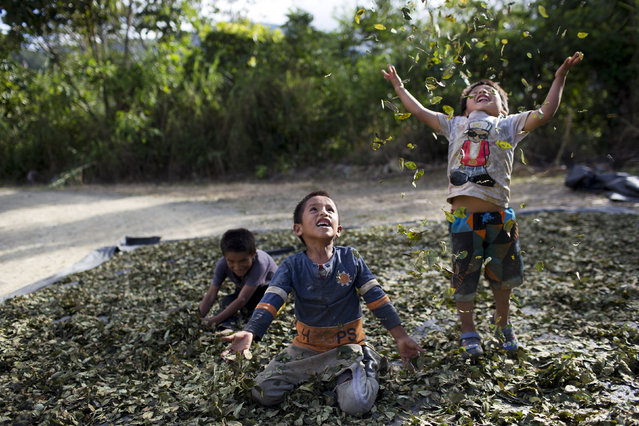
In this March 13, 2015 photo,  Yohan, 4, from left, Cristian, 7, and Angelo, 6, playfully toss coca leaves into the air, singing: “I have a lot of money, look at all the money I have”, in La Mar, province of Ayacucho, Peru. Hauling cocaine out of the remote valley is about the only way to earn decent cash in this region where a farmhand earns less than $10 a day. Beyond extinguishing young lives, the practice has packed Peru's highland prisons with cocaine backpackers while their bosses evade incarceration. (Photo by Rodrigo Abd/AP Photo)

In this March 13, 2015 photo, Yohan, 4, from left, Cristian, 7, and Angelo, 6, playfully toss coca leaves into the air, singing: “I have a lot of money, look at all the money I have”, in La Mar, province of Ayacucho, Peru. Hauling cocaine out of the remote valley is about the only way to earn decent cash in this region where a farmhand earns less than $10 a day. Beyond extinguishing young lives, the practice has packed Peru's highland prisons with cocaine backpackers while their bosses evade incarceration. (Photo by Rodrigo Abd/AP Photo)
Details
12 May 2015 12:40:00
From Britain to China to Mali, new maps showing travel times to the nearest urban centre reveal huge differences between countries. Using Open Street Map and Google, a University of Oxford team have created a visual breakdown that suggests major inequalities when it comes to commuting. Here: China. The dataset used for China was unique as it relied solely on Open Street Map, due to restrictions on accessing Google data. The population is densely concentrated in the east and accessibility is increased, whereas rural provinces in the west remain remote. (Photo by Daniel Weiss/Jennifer Rozier/Malaria Atlas Project/University of Oxford )

From Britain to China to Mali, new maps showing travel times to the nearest urban centre reveal huge differences between countries. Using Open Street Map and Google, a University of Oxford team have created a visual breakdown that suggests major inequalities when it comes to commuting. Here: China. The dataset used for China was unique as it relied solely on Open Street Map, due to restrictions on accessing Google data. The population is densely concentrated in the east and accessibility is increased, whereas rural provinces in the west remain remote. (Photo by Daniel Weiss/Jennifer Rozier/Malaria Atlas Project/University of Oxford)
Details
12 Jan 2018 06:43:00
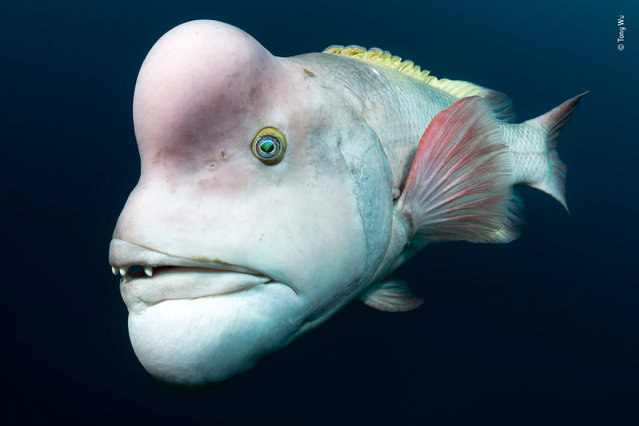
Looking for love by Tony Wu, USA. Highly commended, Animal Portraits. “Accentuating his mature appearance with pastel colours, protruding lips and an outstanding pink forehead, this Asian sheepshead wrasse sets out to impress females and see off rivals, which he will head-butt and bite, near Japan’s remote Sado Island. Individuals start out as females, and when they reach a certain age and size – up to a metre (more than 3 feet) long – can transform into males. Long-lived and slow-growing, the species is intrinsically vulnerable to overfishing”. (Photo by Tony Wu/2018 Wildlife Photographer of the Year)

Looking for love by Tony Wu, USA. Highly commended, Animal Portraits. “Accentuating his mature appearance with pastel colours, protruding lips and an outstanding pink forehead, this Asian sheepshead wrasse sets out to impress females and see off rivals, which he will head-butt and bite, near Japan’s remote Sado Island. Individuals start out as females, and when they reach a certain age and size – up to a metre (more than 3 feet) long – can transform into males. Long-lived and slow-growing, the species is intrinsically vulnerable to overfishing”. (Photo by Tony Wu/2018 Wildlife Photographer of the Year)
Details
03 Sep 2018 08:17:00
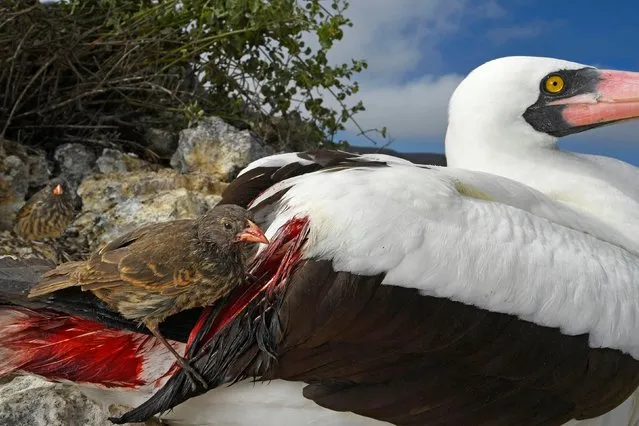
Bloodthirsty by Thomas P Peschak, Germany/South Africa — winner, Behaviour: birds. When rations run short on Wolf Island, in the remote northern Galápagos, the sharp-beaked ground finches become vampires. Their sitting targets are Nazca boobies and other large birds. The finches rely on a scant diet of seeds and insects, which regularly dries up, so they drink blood to survive. ‘I’ve seen more than half a dozen finches drinking from a single Nazca booby,’ says Tom. Rather than leave their nests the boobies tolerate the vampires, and the blood loss doesn’t seem to cause permanent harm. (Photo by Thomas P Peschak/2018 Wildlife Photographer of the Year)

Bloodthirsty by Thomas P. Peschak, Germany/South Africa — winner, Behaviour: birds. When rations run short on Wolf Island, in the remote northern Galápagos, the sharp-beaked ground finches become vampires. Their sitting targets are Nazca boobies and other large birds. The finches rely on a scant diet of seeds and insects, which regularly dries up, so they drink blood to survive. ‘I’ve seen more than half a dozen finches drinking from a single Nazca booby,’ says Tom. Rather than leave their nests the boobies tolerate the vampires, and the blood loss doesn’t seem to cause permanent harm. (Photo by Thomas P. Peschak/2018 Wildlife Photographer of the Year)
Details
19 Oct 2018 00:05:00