Loading...
Done
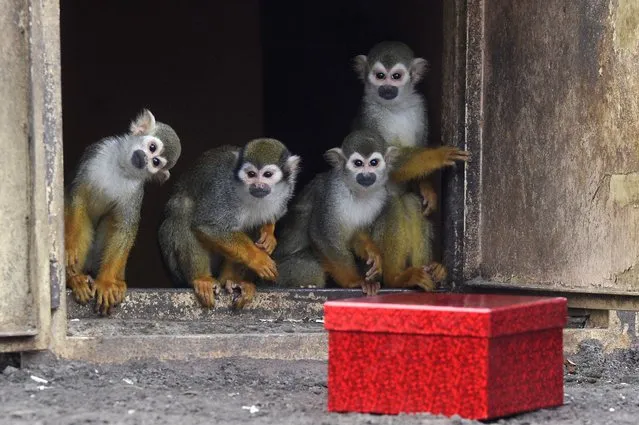
Common squirrel monkeys observe their Christmas present, a box full of mealworms, at the South America enclosure of the Budapest Zoo, in Budapest, Hungary, 24 December 2017. (Photo by Photo by Attila Kovacs/EPA/EFE/Rex Features/Shutterstock)

Common squirrel monkeys observe their Christmas present, a box full of mealworms, at the South America enclosure of the Budapest Zoo, in Budapest, Hungary, 24 December 2017. (Photo by Photo by Attila Kovacs/EPA/EFE/Rex Features/Shutterstock)
Details
31 Dec 2017 06:57:00
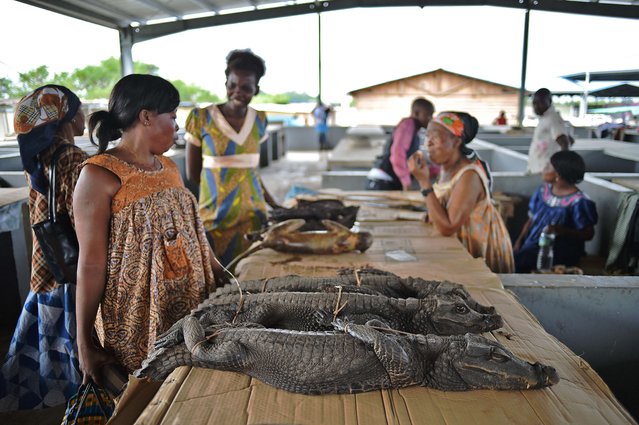
Shoppers walk past crocodiles for sale at a market in Bata on February 3, 2015. Markets in Equatorial Guinea sell a variety of animals including pangolins, monkeys and crocodiles as food. (Photo by Carl De Souza/AFP Photo)

Shoppers walk past crocodiles for sale at a market in Bata on February 3, 2015. Markets in Equatorial Guinea sell a variety of animals including pangolins, monkeys and crocodiles as food. (Photo by Carl De Souza/AFP Photo)
Details
07 Feb 2015 14:33:00
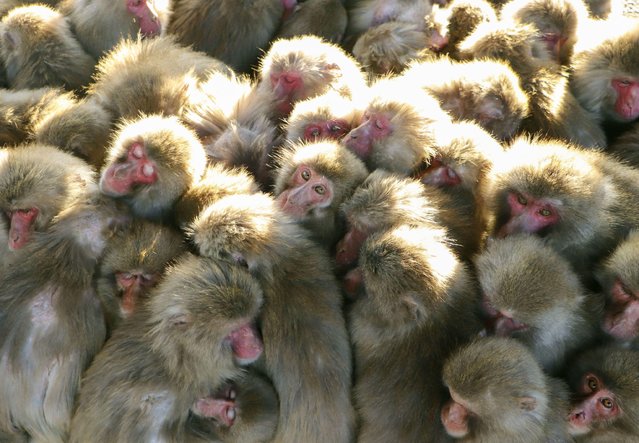
Japanese monkeys snuggle to keep warm at a zoo in Tonosho in Kagawa Prefecture, western Japan on January 24, 2023. (Photo by Kyodo Photo via Newscom/Alamy Live News)

Japanese monkeys snuggle to keep warm at a zoo in Tonosho in Kagawa Prefecture, western Japan on January 24, 2023. (Photo by Kyodo Photo via Newscom/Alamy Live News)
Details
02 Feb 2023 21:40:00


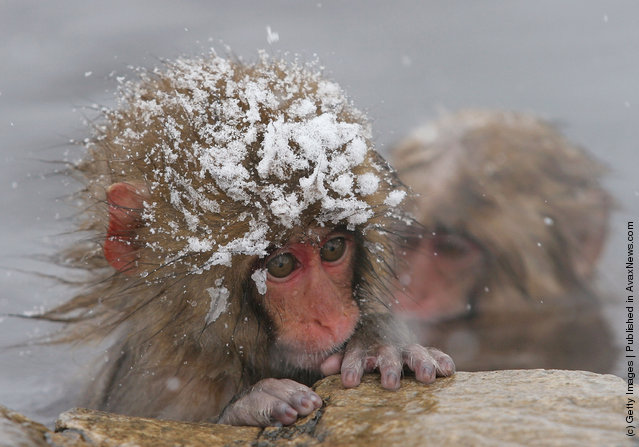
Japanese macaque monkeys enjoy sitting in the hot springs at Jigokudani-Onsen (Hell Valley) on January 23, 2005 in Jigokudani, Nagano-Prefecture, Japan. Japanese Macaques, also known as snow monkeys are the most northerly nonhuman primate in the world. In 1963 a female Macaque ventured into the hot springs to retrieve some soybeans. This behaviour was adopted by other monkeys, and eventually by the entire troop. This Macaque troop regularly visits the Jigokudani-Onsen springs to escape the cold. The hot springs are said to help relieve nerve pain and fatigue. (Photo by Koichi Kamoshida/Getty Images)

Details
20 May 2011 08:04:00
An abandoned protection masks in the deserted building near bypass channel for cooling at the Chernobyl nuclear power plant in the Exclusion Zone, Ukraine, April 5, 2017. (Photo by Vitaliy Holovin/Corbis via Getty images)

An abandoned protection masks in the deserted building near bypass channel for cooling at the Chernobyl nuclear power plant in the Exclusion Zone, Ukraine, April 5, 20177. The Chernobyl nuclear accident occurred on 26 April 1986 in the No.4 light water graphite moderated reactor at the Chernobyl Nuclear Power Plant near Pripyat. An estimated 47,000 people of the city of Pripyat were evacuated after the explosion in 1986. (Photo by Vitaliy Holovin/Corbis via Getty images)
Details
24 May 2019 00:03:00
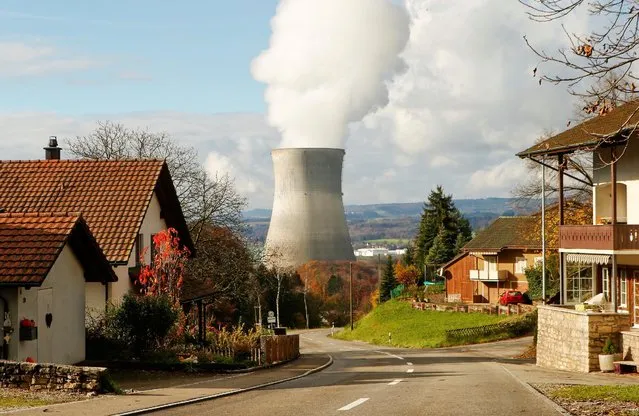
Steam emerges from a cooling tower of the nuclear power plant Leibstadt near Leibstadt, Switzerland, November 18, 2014. (Photo by Arnd Wiegmann/Reuters)

Steam emerges from a cooling tower of the nuclear power plant Leibstadt near Leibstadt, Switzerland, November 18, 2014. (Photo by Arnd Wiegmann/Reuters)
Details
24 Jan 2017 11:25:00
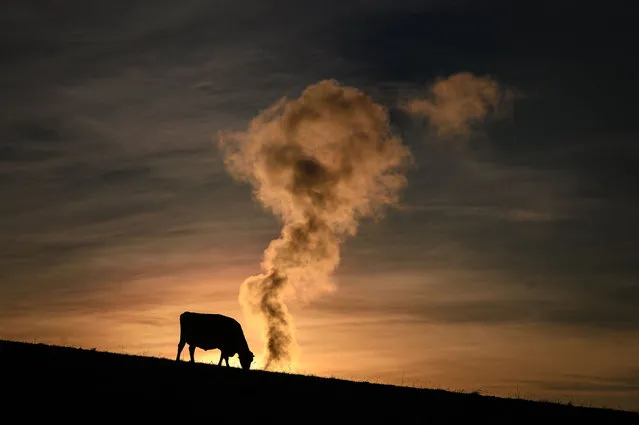
A cow is silhouetted grazing next the smoke of a chimney of an incineration plant in Lausanne at sunrise on November 19, 2021. (Photo by Fabrice Coffrini/AFP Photo)

A cow is silhouetted grazing next the smoke of a chimney of an incineration plant in Lausanne at sunrise on November 19, 2021. (Photo by Fabrice Coffrini/AFP Photo)
Details
18 Dec 2021 05:57:00
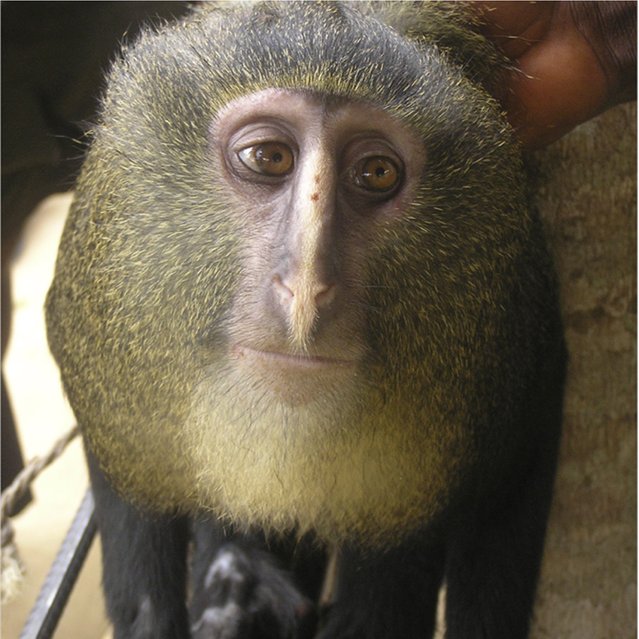
A new species of monkey found in the Democratic Republic of the Congo and identified as Lesula (Cercopithecus lomamiensis) is seen in this undated photograph from an article published September 12, 2012 in the science journal PLOS One. (Photo by Hart J. A., Detwiler K. M., Gilbert C. C./Reuters)

A new species of monkey found in the Democratic Republic of the Congo and identified as Lesula (Cercopithecus lomamiensis) is seen in this undated photograph from an article published September 12, 2012 in the science journal PLOS One. The monkey was first seen in 2007 by researchers John and Terese Hart of the Peabody Museum of Natural History at Yale Research Project. The finding of C. lomamiensis represents only the second new species of African monkey to be discovered in the past 28 years, according to the research article. (Photo by Hart J. A., Detwiler K. M., Gilbert C. C./Reuters)
Details
27 Sep 2012 08:17:00