Loading...
Done
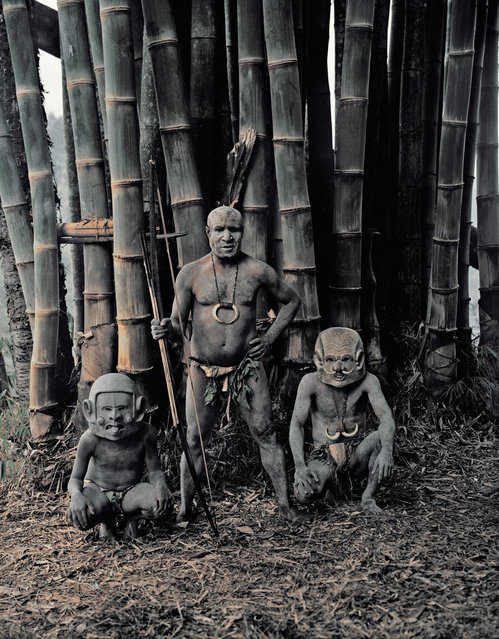
“Asaro from the Eastern Highlands”. The mudmen could not cover their faces with mud because the people of Papua New Guinea thought that the mud from the Asaro river was poisonous. So instead of covering their faces with this alleged poison, they made masks from pebbles that they heated and water from the waterfall, with unusual designs such as long or very short ears either going down to the chin or sticking up at the top, long joined eyebrows attached to the top of the ears, horns and sideways mouths. (Jimmy Nelson)

“Asaro from the Eastern Highlands”. The mudmen could not cover their faces with mud because the people of Papua New Guinea thought that the mud from the Asaro river was poisonous. So instead of covering their faces with this alleged poison, they made masks from pebbles that they heated and water from the waterfall, with unusual designs such as long or very short ears either going down to the chin or sticking up at the top, long joined eyebrows attached to the top of the ears, horns and sideways mouths. (Photo and caption by Jimmy Nelson)
Details
20 Oct 2013 08:54:00
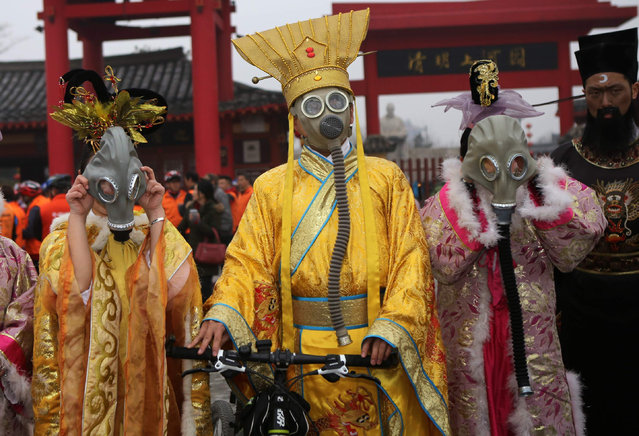
Anti-pollution protesters wearing traditional costumes and contemporary gas masks ride bicycles in the Qingming Grand river park in Kaifeng, Henan Province, China on January 1, 2017. The Beijing Municipal Environmental Protection Bureau extended an “orange alert” for heavy air pollution for three more days. (Photo by SIPA Asia/Rex Features/Shutterstock)

Anti-pollution protesters wearing traditional costumes and contemporary gas masks ride bicycles in the Qingming Grand river park in Kaifeng, Henan Province, China on January 1, 2017. The Beijing Municipal Environmental Protection Bureau extended an “orange alert” for heavy air pollution for three more days. (Photo by SIPA Asia/Rex Features/Shutterstock)
Details
04 Jan 2017 08:20:00
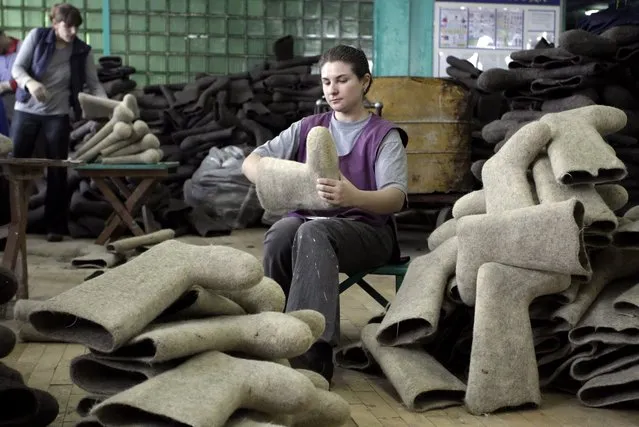
Belarusian workers works at a felt boot factory in Smilovichi, some 35km from Minsk, Belarus, 16 January 2012. (Photo by Tatyana Zenkovich/EPA)

The Smilovichi Felting Factory in Belarus was founded in 1928, when Smilovichi was a small Jewish settlement of craftsmen. Five of those craftsmen organized a small artel (a cooperative association of craftsmen who all live and work together), which produced warm boots called “valenki” for cold weather. Photo: Belarusian workers works at a felt boot factory in Smilovichi, some 35km from Minsk, Belarus, 16 January 2012. (Photo by Tatyana Zenkovich/EPA)
Details
18 Oct 2013 10:02:00
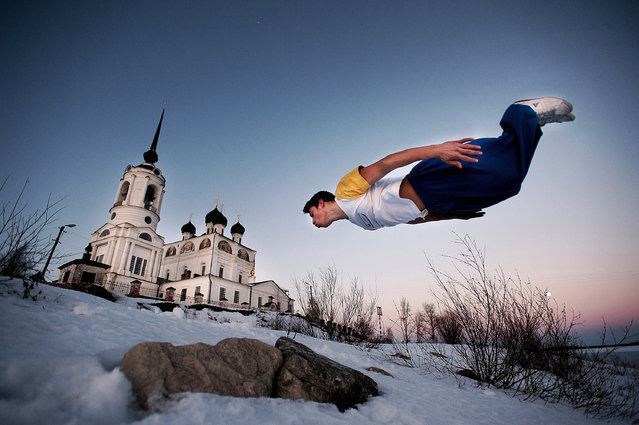
Anton Unitsyn, Russia. Shortlist, Professional , Daily Life. Parkour jumpers on their daily training. On the background – one of the main Solvychegodsk sights – Blagoveshchensky Cathedral. This church is among 3 churches, that survived soviet times. At the begining of 20th century there were 13 churches in Solvichegodsk. After breakdown of the communism, Solvichegodsk as many small towns in russia is stuck in it's past. Despite everything, people in Solvichegodsk still belive in their positive future, and wait for wind of change. (Photo by Anton Unitsyn/Sony World Photography Awards)

Anton Unitsyn, Russia. Shortlist, Professional , Daily Life. Parkour jumpers on their daily training. On the background – one of the main Solvychegodsk sights – Blagoveshchensky Cathedral. This church is among 3 churches, that survived soviet times. At the begining of 20th century there were 13 churches in Solvichegodsk. After breakdown of the communism, Solvichegodsk as many small towns in russia is stuck in it's past. Despite everything, people in Solvichegodsk still belive in their positive future, and wait for wind of change. (Photo by Anton Unitsyn/Sony World Photography Awards)
Details
25 Feb 2016 12:16:00
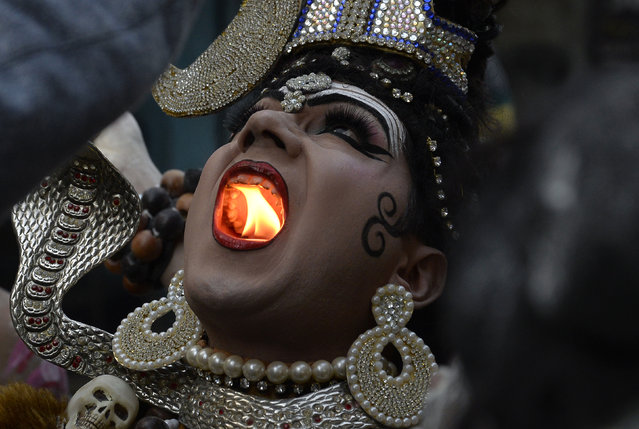
An Indian Hindu man dressed as Lord Shiva holds a lit candle in his mouth as he takes part in a religious procession ahead of the Maha Shivratri Festival in Jalandhar on February 22, 2017. Hindus mark the Maha Shivratri festival by offering special prayers and fasting to worship Lord Shiva, the lord of destruction. (Photo by Shammi Mehra/AFP Photo)

An Indian Hindu man dressed as Lord Shiva holds a lit candle in his mouth as he takes part in a religious procession ahead of the Maha Shivratri Festival in Jalandhar on February 22, 2017. Hindus mark the Maha Shivratri festival by offering special prayers and fasting to worship Lord Shiva, the lord of destruction. (Photo by Shammi Mehra/AFP Photo)
Details
27 Feb 2017 00:06:00
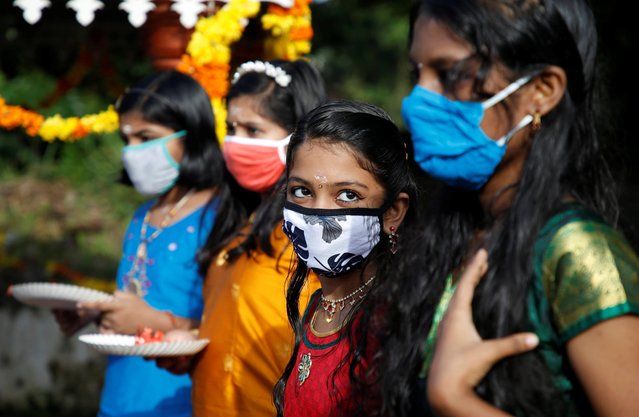
Girls wearing protective face masks wait to pray inside temple premises on the occasion of the annual harvest festival of Onam on the outskirts of Kochi, India, August 31, 2020. (Photo by Sivaram V/Reuters)

Girls wearing protective face masks wait to pray inside temple premises on the occasion of the annual harvest festival of Onam on the outskirts of Kochi, India, August 31, 2020. (Photo by Sivaram V/Reuters)
Details
10 Sep 2020 00:05:00
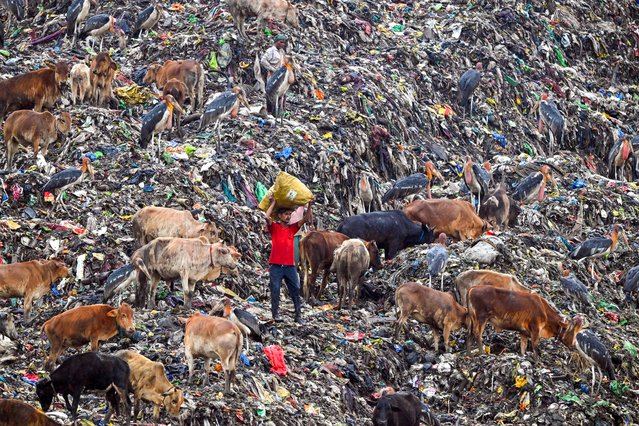
A rag picker carries recyclable materials amid cows and greater adjutant storks at a disposal site in Boragaon on the outskirts of Guwahati on June 5, 2024. (Photo by Biju Boro/AFP Photo)

A rag picker carries recyclable materials amid cows and greater adjutant storks at a disposal site in Boragaon on the outskirts of Guwahati on June 5, 2024. (Photo by Biju Boro/AFP Photo)
Details
12 Jun 2024 03:39:00
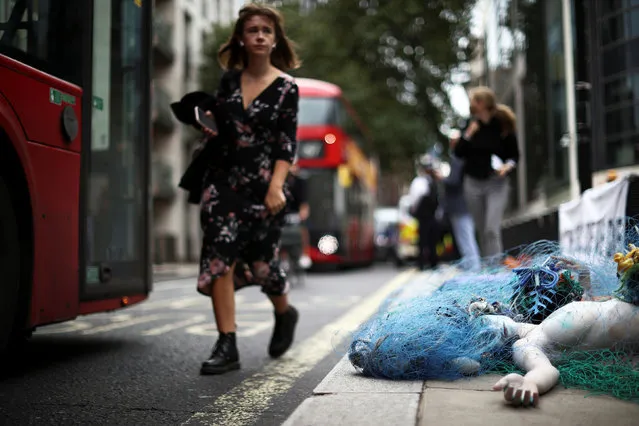
A person walks by an Ocean Rebellion activist taking part in a demonstration outside Department for Environment, Food and Rural Affairs (DEFRA) in London, Britain on September 15, 2021. (Photo by Hannah McKay/Reuters)

A person walks by an Ocean Rebellion activist taking part in a demonstration outside Department for Environment, Food and Rural Affairs (DEFRA) in London, Britain on September 15, 2021. (Photo by Hannah McKay/Reuters)
Details
21 Nov 2021 04:01:00