Loading...
Done
Civilians present their rations cards in order to receive humanitarian food aid being distributed by the Iraqi Red Crescent, in the eastern side of Mosul, Iraq, Tuesday, January 31, 2017. Iraqi forces declared Mosul's eastern half fully liberated, just over three months after the operation to retake the city from IS was formally launched in October. (Photo by Khalid Mohammed/AP Photo)

Civilians present their rations cards in order to receive humanitarian food aid being distributed by the Iraqi Red Crescent, in the eastern side of Mosul, Iraq, Tuesday, January 31, 2017. Iraqi forces declared Mosul's eastern half fully liberated, just over three months after the operation to retake the city from IS was formally launched in October. (Photo by Khalid Mohammed/AP Photo)
Details
06 Feb 2017 01:00:00
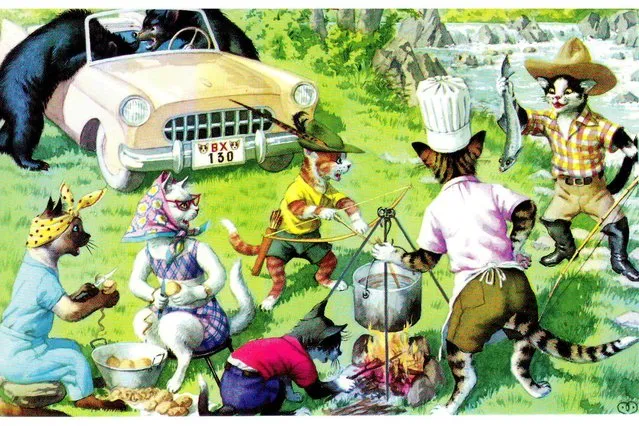
Dressed Cats By  Alfred Mainzer

From the 1940s through the 1960s, the Alfred Mainzer Company of Long Island City, NY published a series of linen and photochrome humorous cat postcards illustrated by Eugen Hartung (or Hurtong) (1897–1973), sometimes referred to as “Mainzer Cats”. These postcards normally illustrate settings that are filled with action, often with a minor disaster just about to occur. While the dressed cats were by far the most popular and most plentiful cards, Hartung also painted other dressed animals – primarily mice, dogs, and hedgehogs.
Details
31 Jan 2014 13:57:00
Customers are seen in front of a shop that reopened in central Copenhagen, Denmark, 01 March 2021. Shops reopened after several months of closure due to the coronavirus COVID-19  pandemic. (Photo by Philip Davali/EPA/EFE)

Customers are seen in front of a shop that reopened in central Copenhagen, Denmark, 01 March 2021. Shops reopened after several months of closure due to the coronavirus COVID-19 pandemic. (Photo by Philip Davali/EPA/EFE)
Details
02 Mar 2021 09:20:00
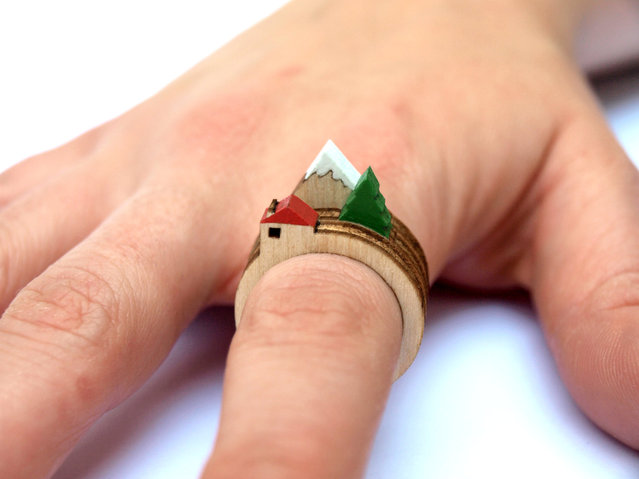
Awesome Ring By Clive Roddy

If you ever wanted to wear houses on your finger, now’s your chance (though it’s hard to imagine that any sane person would have such a desire)! Clive Roddy offers you an opportunity to fulfill your dream of having a ring that features houses, waves, mountains, or trees. In order to create these rings, first the metal is cut using a laser, and then the whole thing is hand painted using colored enamel. Though these rings are very pretty, it is hard to imagine someone wearing such a ring on everyday basis. These types of rings should probably be reserved for special occasions or festivals, rather than for everyday use. (Photo by Clive Roddy)
Details
09 Dec 2014 09:36:00
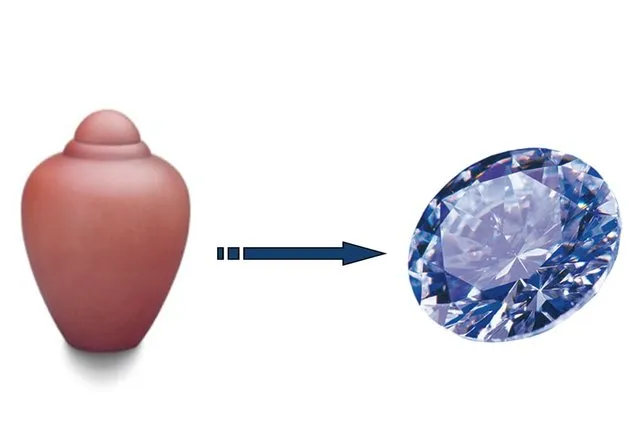
Swiss Company Turns People’s Ashes Into Diamonds

In the past people used to bury their loved ones or turn them into ashes. However, now there is a completely new possibility. Since having an urn with ashes in your house may be a bit weird, you may want to choose the option of turning your deceased relative into a diamond. Yes, diamond! You’ve heard us correctly. By using immense heat and pressure, the ashes you get after cremating a person can be turned into a real diamond. After this, the diamond can be left as it is, and stored in a jewelry box, or it can be used as a piece of jewelry, such as a ring or a pendant, allowing you to always keep your loved one close to your heart. (Photo by djd/Algordanza memorial diamonds)
Details
20 Oct 2014 08:52:00
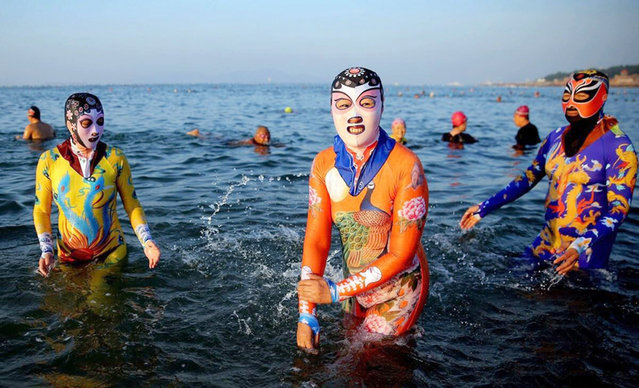
Zhang Shifan's sixth-generation facekinis in Shandong Province, Qingdao, East China. (Photo by CEN)

Zhang Shifan's sixth-generation facekinis in Shandong Province, Qingdao, East China. A woman credited with inventing the bizarre swimwear known as the “facekini” has now proudly presented the sixth generation of the iconic beach clothing. The new facekini models are not only more comfortable, they also come in a wider variety of colours and patterns, bringing both style and practicality to beach-goers in Qingdao City, in East China's Shandong Province, who fear tan lines. (Photo by CEN)
Details
02 Sep 2016 13:29:00
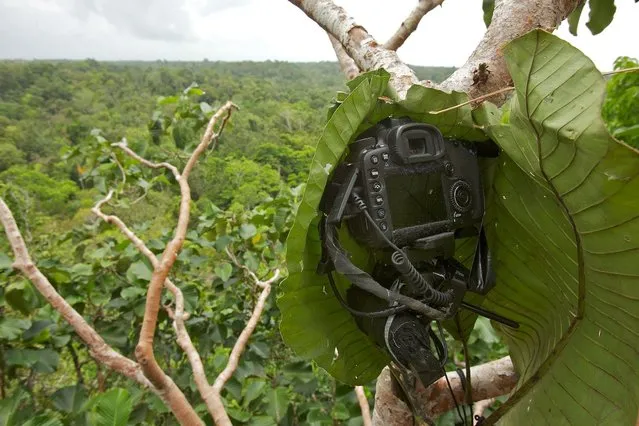
Tim Laman - Wildlife Photojournalist

Tim Laman is a field biologist and wildlife photojournalist. His pioneering research in the rain forest canopy in Borneo led to a PhD from Harvard and his first National Geographic article in 1997. Since then, he has pursued his passion for exploring wild places and documenting little-known and endangered wildlife by becoming a regular contributor to National Geographic. He has eighteen articles to his credit to date, all of which have had a conservation message. Some have focused on endangered species such as Orangutans or Hornbills, while others, such as a series of articles on Conservation International’s Biodiversity Hotspots, have highlighted regions under intense pressure.
Details
14 Sep 2013 10:13:00
The Veteran Art Project By Devin Mitchell

Each day as we look in the mirror, we think that we know ourselves. We are used to the image that we see before us, but the mirror can show us much more than we ever hoped to see. Sometimes it only shows basic emotions, while at other times it can highlight the deepest crevices of our soul. If you wish, in the reflection of the mirror you can see your deepest thoughts, masks that you wear every day, your desires, and of course the people that you think about. But are you brave enough to look deep within your soul? Will you dive headlong or shy away from your true image? Those that will muster up the courage necessary will realize it was well worth the effort. (Photo by Devin Mitchell)
Details
30 Nov 2014 12:42:00