Loading...
Done
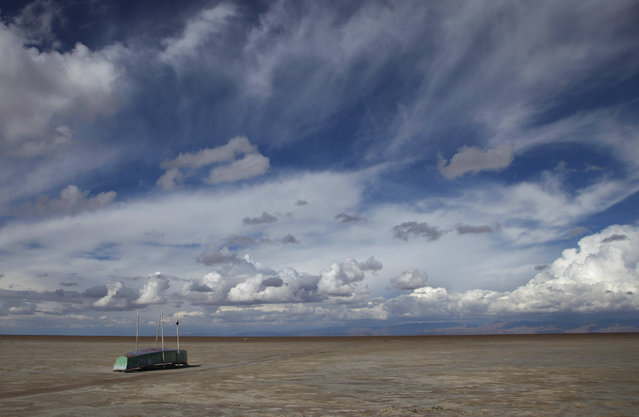
In this January 12, 2016 photo, an abandoned boat lies on the dried up lake bed of Lake Poopo, on the outskirts of Untavi, Bolivia. Drought caused by the recurrent El Nino meteorological phenomenon is considered the main driver of the lake's demise. Along with glacial melting, authorities say another factor is the diversion of water from Poopo's tributaries, mostly for mining but also for agriculture. (Photo by Juan Karita/AP Photo)

In this January 12, 2016 photo, an abandoned boat lies on the dried up lake bed of Lake Poopo, on the outskirts of Untavi, Bolivia. Drought caused by the recurrent El Nino meteorological phenomenon is considered the main driver of the lake's demise. Along with glacial melting, authorities say another factor is the diversion of water from Poopo's tributaries, mostly for mining but also for agriculture. (Photo by Juan Karita/AP Photo)
Details
21 Jan 2016 12:33:00
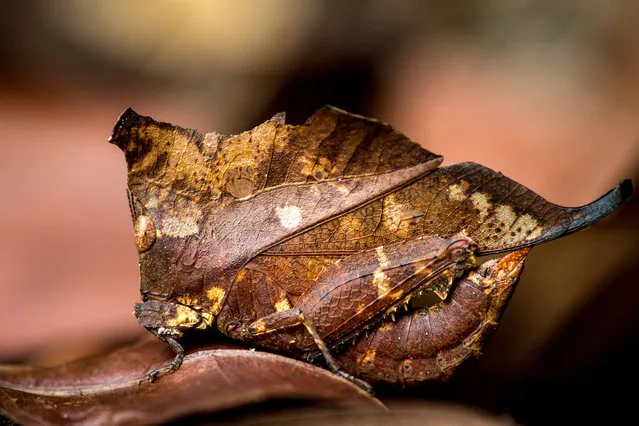
Dead leaf or almost by Guilhem Duvot. Taken in Nován Stráž, Slovakia. Describe what is pictured? A dead leaf grasshopper. How does this image fit with the theme of the competition? The perfect camouflage – nature is amazing. I saw the grasshopper only because it jumped. (Photo by Guilhem Duvot/Royal Society of Biology)

Dead leaf or almost by Guilhem Duvot. Taken in Nován Stráž, Slovakia. Describe what is pictured? A dead leaf grasshopper. How does this image fit with the theme of the competition? The perfect camouflage – nature is amazing. I saw the grasshopper only because it jumped. (Photo by Guilhem Duvot/Royal Society of Biology)
Details
10 Oct 2018 00:05:00
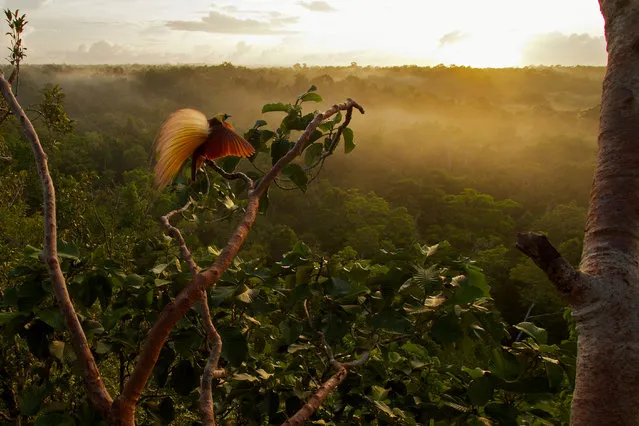
A greater bird of paradise (Paradisaea apoda) displaying in Badigaki Forest, Wokam Island (Aru Islands, Indonesia). Found here in Aru and on adjacent New Guinea, the greater bird of paradise represents about 40 different species of birds of paradise that depend on intact rainforest across the New Guinea region spanning eastern Indonesia and Papua New Guinea. With more than 80% of forest cover still intact, this region represents the largest remaining block of rainforest in the entire Asia-Pacific. (Photo by Tim Laman/naturepl.com/LDY Agency)

A greater bird of paradise (Paradisaea apoda) displaying in Badigaki Forest, Wokam Island (Aru Islands, Indonesia). Found here in Aru and on adjacent New Guinea, the greater bird of paradise represents about 40 different species of birds of paradise that depend on intact rainforest across the New Guinea region spanning eastern Indonesia and Papua New Guinea. With more than 80% of forest cover still intact, this region represents the largest remaining block of rainforest in the entire Asia-Pacific. (Photo by Tim Laman/naturepl.com/LDY Agency)
Details
14 Nov 2021 05:57:00
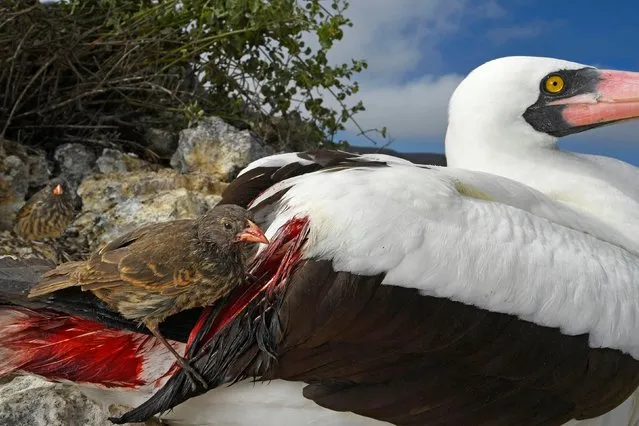
Bloodthirsty by Thomas P Peschak, Germany/South Africa — winner, Behaviour: birds. When rations run short on Wolf Island, in the remote northern Galápagos, the sharp-beaked ground finches become vampires. Their sitting targets are Nazca boobies and other large birds. The finches rely on a scant diet of seeds and insects, which regularly dries up, so they drink blood to survive. ‘I’ve seen more than half a dozen finches drinking from a single Nazca booby,’ says Tom. Rather than leave their nests the boobies tolerate the vampires, and the blood loss doesn’t seem to cause permanent harm. (Photo by Thomas P Peschak/2018 Wildlife Photographer of the Year)

Bloodthirsty by Thomas P. Peschak, Germany/South Africa — winner, Behaviour: birds. When rations run short on Wolf Island, in the remote northern Galápagos, the sharp-beaked ground finches become vampires. Their sitting targets are Nazca boobies and other large birds. The finches rely on a scant diet of seeds and insects, which regularly dries up, so they drink blood to survive. ‘I’ve seen more than half a dozen finches drinking from a single Nazca booby,’ says Tom. Rather than leave their nests the boobies tolerate the vampires, and the blood loss doesn’t seem to cause permanent harm. (Photo by Thomas P. Peschak/2018 Wildlife Photographer of the Year)
Details
19 Oct 2018 00:05:00
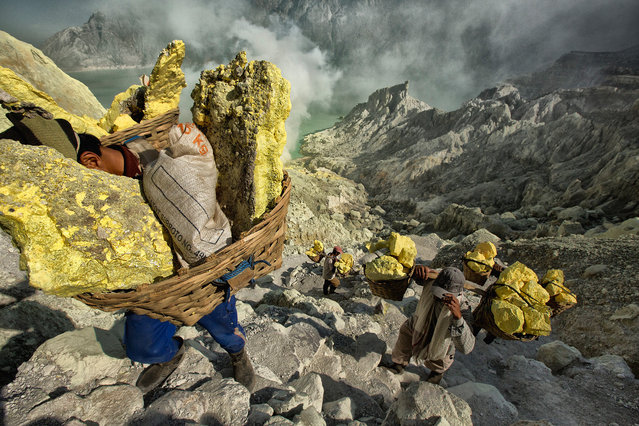
Sulphur miners haul sulphur up an arduous path out of Indonesia’s Ijen volcano. The average carry out of the volcano is 70 kilograms per load per miner.  The all-time record carry was 120 kilograms in one load.  Extraordinary numbers given most of the miners only weigh around 55 kilograms.  Ijen volcano, Indonesia, 2012. (Photo by Hugh Brown/South West News Service)

Sulphur miners haul sulphur up an arduous path out of Indonesia’s Ijen volcano. The average carry out of the volcano is 70 kilograms per load per miner. The all-time record carry was 120 kilograms in one load. Extraordinary numbers given most of the miners only weigh around 55 kilograms. Ijen volcano, Indonesia, 2012. (Photo by Hugh Brown/South West News Service)
Details
30 Jul 2018 00:05:00
Vanishing Act By Art Wolfe

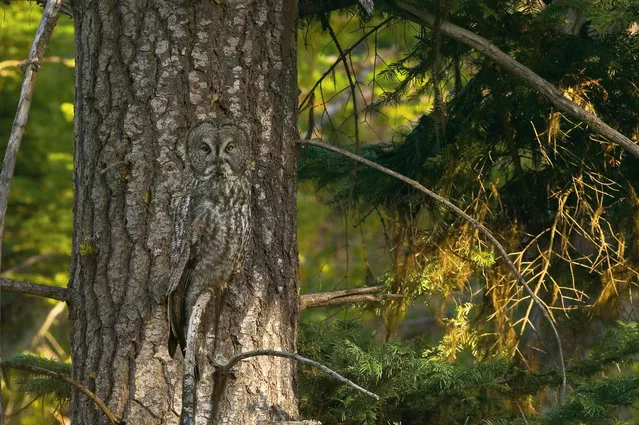
An amazing series by Art Wolfe that were taken as part of his “Vanishing Act” in which the Seattle-based photographer shows the talent of animals in disguising themselves from predators. “This collection has been a long time in the making. Finding and filming animals on location is an exhilarating and painstaking process. I’m still adding to the project even now”. Have fun spotting the hidden animals.
Details
22 Oct 2013 09:44:00
Is it a leaf? Is it tree bark? No, it’s the Satanic leaf-tailed gecko. Cleverly disguised as a rotting leaf, Madagascar’s camouflage king has red eyes, pointy horns and a taste for night hunting: it’s nature’s most devilish deceiver. (Photo by Thomas Marent/ARDEA)

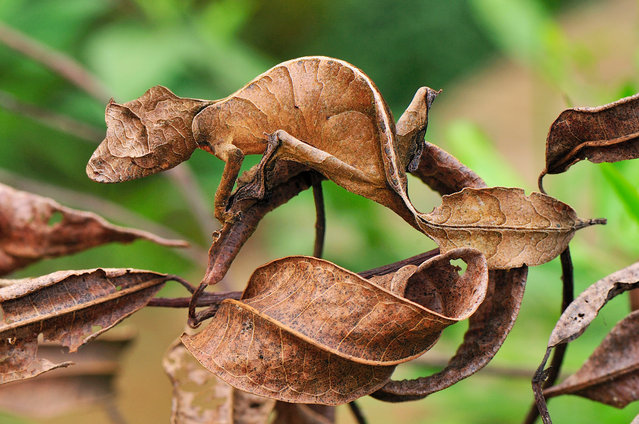
Is it a leaf? Is it tree bark? No, it’s the Satanic leaf-tailed gecko. Cleverly disguised as a rotting leaf, Madagascar’s camouflage king has red eyes, pointy horns and a taste for night hunting: it’s nature’s most devilish deceiver. The twisted body and veiny skin echo the detail of a dry leaf, which ensures the gecko blends in with its forest home. The mottled tail appears to have sections missing, as though it has withered over time. This mini-monster epitomises survival of the fittest, having adapted gradually to become today’s extraordinary leaf impersonator. (Photo by Thomas Marent/ARDEA)
Details
20 Nov 2015 08:03:00
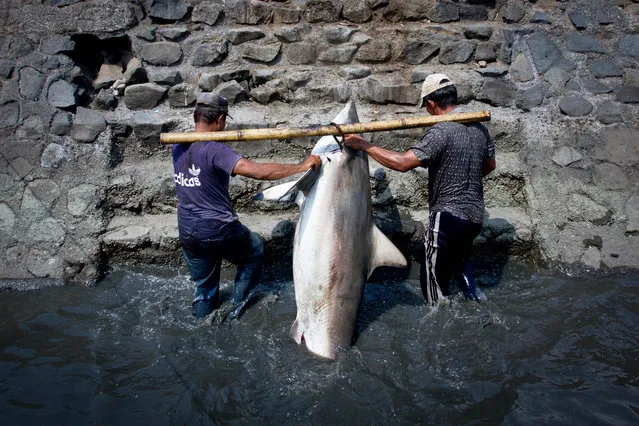
The Predator’s Fins: Atho Ullah, Indonesia. 3rd place, Portfolio category. A freshly caught shark is taken ashore. Efforts to regulate shark fishing in Indonesia are not effective enough. Lack of awareness of the role sharks play in the ocean’s ecosystem poses a major threat to marine life. (Photo by Atho Ullah/2020 Hamdan International Photography Award)

The Predator’s Fins: Atho Ullah, Indonesia. 3rd place, Portfolio category. A freshly caught shark is taken ashore. Efforts to regulate shark fishing in Indonesia are not effective enough. Lack of awareness of the role sharks play in the ocean’s ecosystem poses a major threat to marine life. (Photo by Atho Ullah/2020 Hamdan International Photography Award)
Details
25 Jun 2020 00:03:00