Loading...
Done


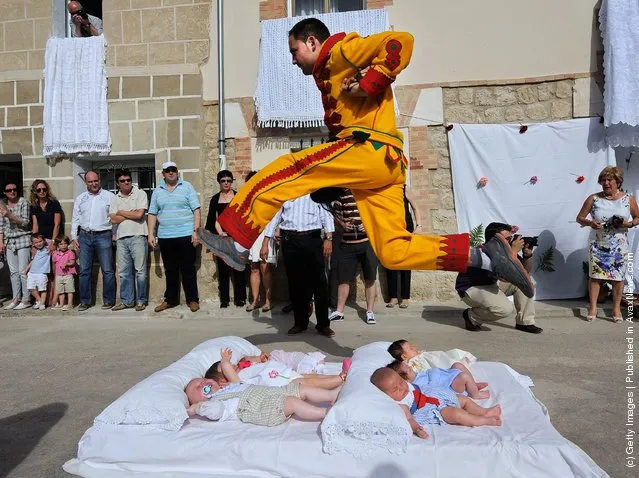
“Baby jumping (El Colacho) is a traditional Spanish practice dating back to 1620 that takes place annually to celebrate the Catholic feast of Corpus Christi in the village of Castrillo de Murcia near Burgos. During the act – known as El Salto del Colacho (the devil's jump) or simply El Colacho – men dressed as the Devil (known as the Colacho) jump over babies born during the previous twelve months of the year who lie on mattresses in the street. ... The festival has been rated as one of the most dangerous in the world”. – Wikipedia

Photo: A man representing the devil leaps over babies during the festival of El Colacho on June 26, 2011 in Castrillo de Murcia near Burgos, Spain. The festival, held on the first Sunday after Corpus Cristi, represents the devil taking away original sin from the newly born babies by leaping over them. (Photo by Denis Doyle/Getty Images)
Details
27 Jun 2011 09:20:00


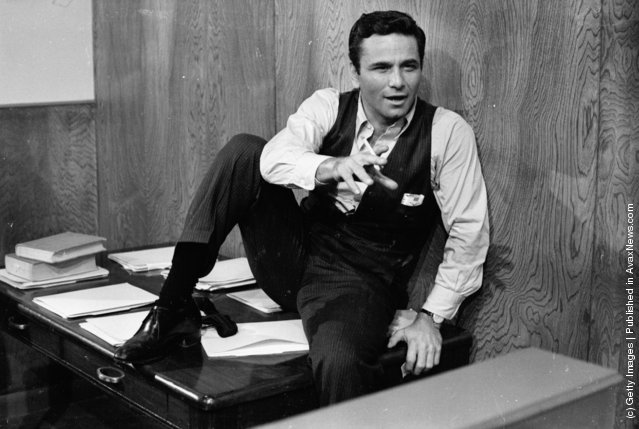
“Peter Michael Falk (September 16, 1927 – June 23, 2011) was an American actor, best known for his role as Lieutenant Columbo in the television series Columbo. He appeared in numerous films and television guest roles and was nominated for an Academy Award twice (for 1960's Murder, Inc. and 1961's Pocketful of Miracles), and won the Emmy Award on five occasions (four for Columbo) and the Golden Globe award once. Director William Friedkin, when discussing Falk's role in his 1978 film The Brink's Job said that «Peter has a great range from comedy to drama. He could break your heart or he could make you laugh»”. – Wikipedia

Photo: American actor Peter Falk, best known for his role as TV detective Columbo. (Photo by Harry Benson/Express/Getty Images). 4th October 1965
Details
29 Jun 2011 11:13:00
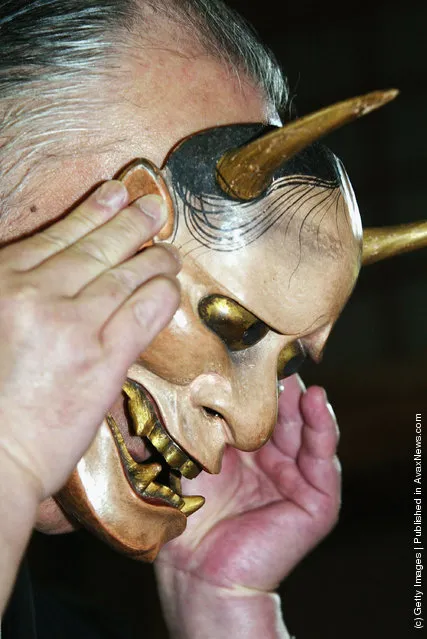
A renowned Noh actor, Otoshige Sakai, demostrates how to put on a Noh mask

“Noh, or Nogaku – derived from the Japanese word for “skill” or “talent” – is a major form of classical Japanese musical drama that has been performed since the 14th century. Many characters are masked, with men playing male and female roles. Traditionally, a Noh “performance day” lasts all day and consists of five Noh plays interspersed with shorter, humorous kyōgen pieces. However, present-day Noh performances often consist of two Noh plays with one Kyōgen play in between”. – Wikipedia

Photo: A renowned Noh actor, Otoshige Sakai, demostrates how to put on a Noh mask, on May 17, 2004 in Tokyo, Japan. (Photo by Koichi Kamoshida/Getty Images)
Details
02 Aug 2011 14:09:00
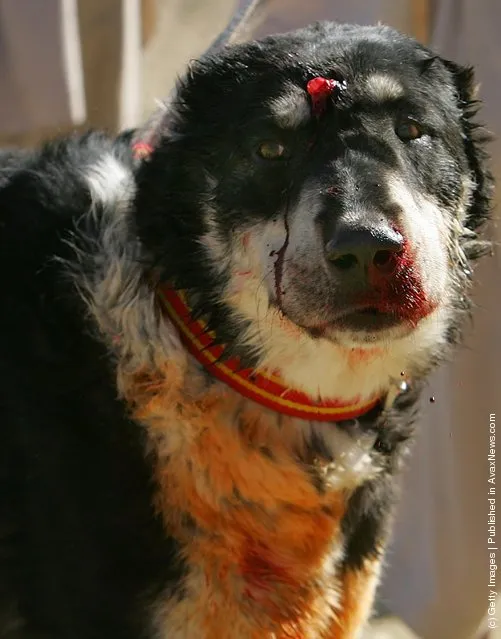
Afghan Dog Fighting

“Dog fighting is a form of blood sport in which game dogs are made to fight, sometimes to the death. It is illegal in most developed countries. Dog fighting is used for entertainment and may also generate revenue from stud fees, admission fees and gambling”. – Wikipedia

Photo: A bloody Afghan dog is bleeding with many wounds after he lost a dog fight November 24, 2006 in Kabul, Afghanistan. While the Afghan government is trying to ban the violent use of dogs for fighting, the unofficial sport remains a regular weekly event. Afghan dog fighting is popular among Afghan men who gamble on the dogs making upwards of 15,000 Afghanie (300 USD). (Photo by Paula Bronstein/Getty Images)
Details
07 Aug 2011 11:47:00
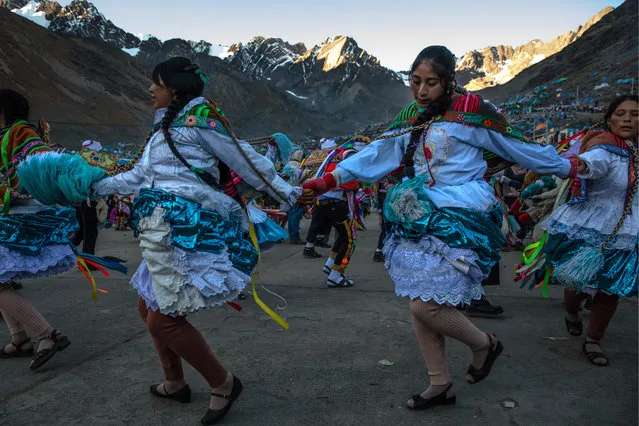
Costumed dancers parade on the first day of the annual Qoyllur Rit'i festival on May 27, 2018 in Ocongate, Peru. (Photo by Dan Kitwood/Getty Images)

Costumed dancers parade on the first day of the annual Qoyllur Rit'i festival on May 27, 2018 in Ocongate, Peru. Every year, since 1783 in the Sinakara Valley at the foot of Mt Ausagante, the Qoyllur Rit'i, or “Snow and Star” festival draws tens of thousands of pilgrims from across the Peruvian Andes and beyond to what is the biggest religious gathering of its kind. Since 1780 the event merged into a mosaic of indigenous, pagan and Catholic worship when an image of Jesus appeared on a boulder after the death of a young shepherd. (Photo by Dan Kitwood/Getty Images)
Details
05 Jun 2018 00:01:00
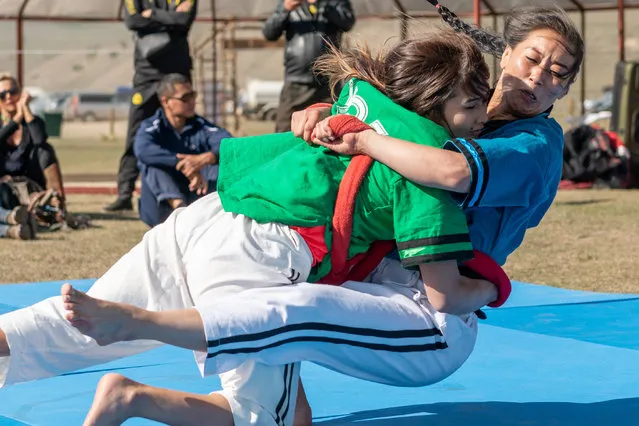
Meerim Momunova wrestles with her fellow Kyrgyz teammate Anara Ryskulova during a performance of a traditional style of wrestling called “Alysh”. Momunova is a champion in Asia and has been competing since 2015, after a background in judo. According to Momunova, one of the advantages of “Alysh” is the ease of the uniform for women – even Muslim women who cover their faces can compete. Momunova holds a degree in sports coaching and hopes to see more women come into this sport. (Photo by Eleanor Moseman/The Guardian)

This year’s World Nomad Games, a celebration of nomadic heritage, took place in the Issyk-Kul province of Kyrgyzstan. Eleanor Moseman photographed female competitors who had travelled from all over central Asia and eastern Europe, and explored the difficulties and challenges they face as competitors. (Photo by Eleanor Moseman/The Guardian)
Details
20 Sep 2018 00:05:00
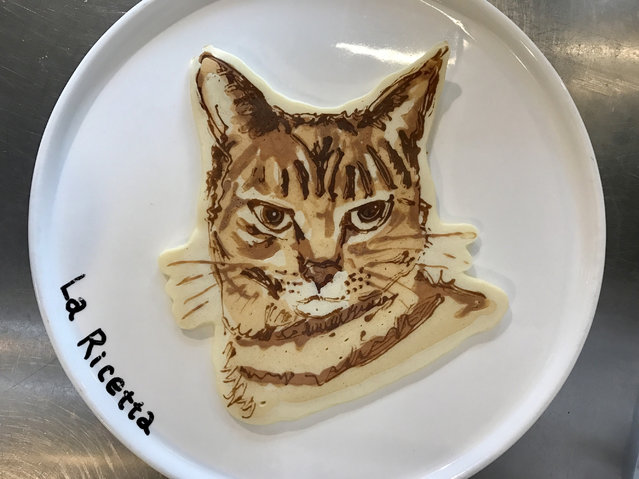
A pancake that looks like a cat, in Zama City, Japan. (Photo by Keisuke Inagaki/Barcroft Images)

As pancake day has creped up on us once again, a Japanese chef has combined our favourite things; cute animals and sugar. Keisuke Inagaki has been a chef at his restaurant La Ricetta in Zama City, Japan, for the last 18 years. He rose to Instagram fame from his Pokemon and anime pancake art, and the time around heis created a lifelike animal series. The 46-year-old chef began making pancakes in 2011 to raise spirits after the devastating nuclear disaster in Fukushima, Japan. Here: A pancake that looks like a cat, in Zama City, Japan. (Photo by Keisuke Inagaki/Barcroft Images)
Details
02 Mar 2017 00:03:00
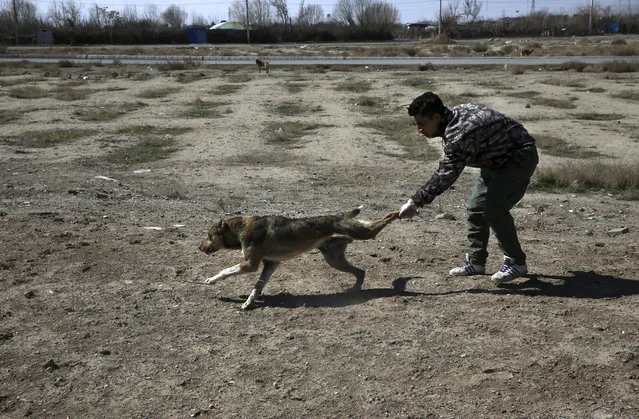
In this picture taken on Sunday, March 5, 2017, a Tehran's urban animal control worker catches a stray dog after being shot with his anesthetic dart on the outskirts of the capital Tehran, Iran. (Photo by Vahid Salemi/AP Photo)

In this picture taken on Sunday, March 5, 2017, a Tehran's urban animal control worker catches a stray dog after being shot with his anesthetic dart on the outskirts of the capital Tehran, Iran. The shelter has been hired by the Tehran city government to take a new, more humane approach to deal with the burgeoning problem of stray dogs in the capital. It’s a sign of changing attitudes among officials in a country where Islamic authorities long saw dogs as “un-Islamic” and would at times confiscate them from people who kept them as pets. (Photo by Vahid Salemi/AP Photo)
Details
17 Mar 2017 00:03:00