Loading...
Done


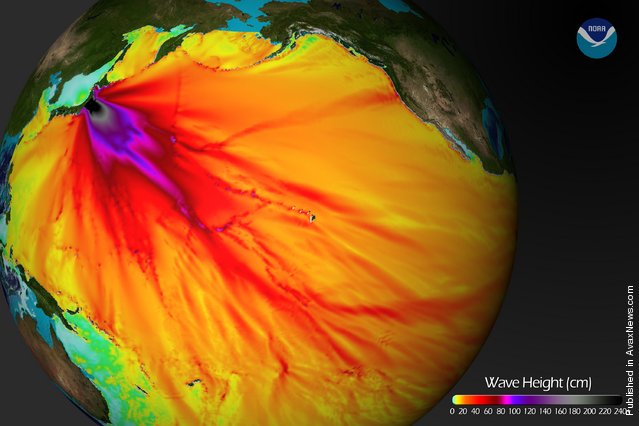
In this handout image provided by the National Oceanic and Atmospheric Administration (NOAA), model runs from the Center for Tsunami Research at the NOAA Pacific Marine Environmental Laboratory show the expected wave heights of the tsunami as it travels across the Pacific basin March 11, 2011. The largest wave heights are expected near the earthquake epicenter, off Japan. The wave will decrease in height as it travels across the deep Pacific but grow taller as it nears coastal areas. In general, as the energy of the wave decreases with distance, the near shore heights will also decrease (e.g., coastal Hawaii will not expect heights of that encountered in coastal Japan). (Photo by NOAA via Getty Images)
Details
13 Mar 2011 14:29:00
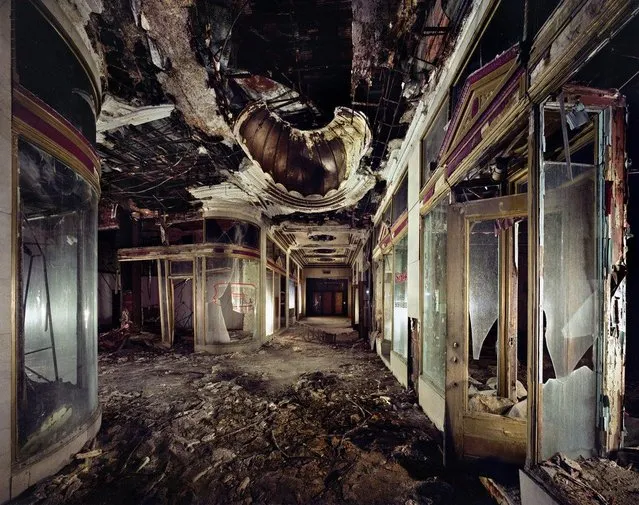
Lafayette Building. (Photo by Yves Marchand/Romain Meffre)

Lafayette Building. (Photo by Yves Marchand/Romain Meffre)
Details
21 Jul 2013 10:51:00
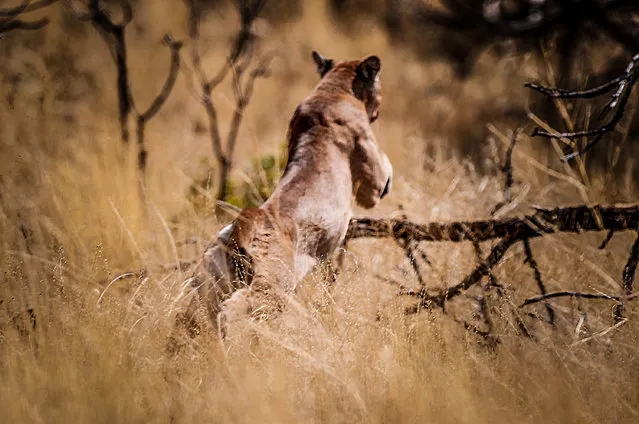
In this Monday, September 22, 2014 photo provided by the Utah Division of Wildlife Resources, a young  cougar is released back into Utah's mountains by the Utah Division of Wildlife Resources in an undisclosed site in central Utah. (Photo by Steve Gray/AP Photo/Utah Division of Wildlife Resources)

In this Monday, September 22, 2014 photo provided by the Utah Division of Wildlife Resources, a young cougar is released back into Utah's mountains by the Utah Division of Wildlife Resources in an undisclosed site in central Utah. State wildlife officials received reports of the cougar roaming Sunday afternoon in a residential area of the city's eastern flank, a few miles from the base of the Wasatch Mountains. Authorities say cougars generally avoid humans but sometimes enter neighborhoods close to their mountain habitats. (Photo by Steve Gray/AP Photo/Utah Division of Wildlife Resources)
Details
27 Sep 2014 12:32:00
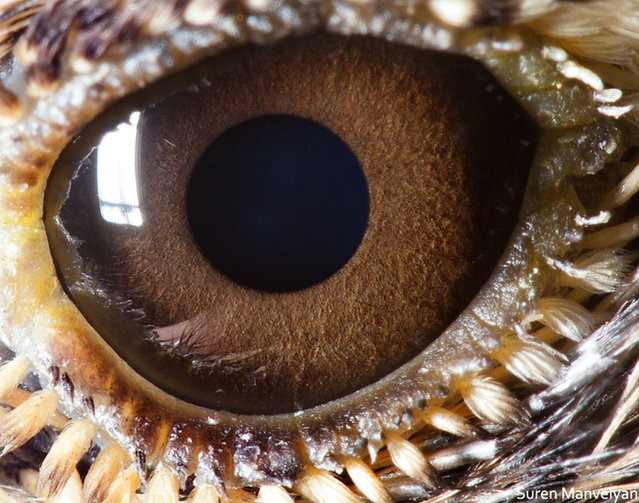
Animal Eyes by Suren Manvelyan

Born in 1976, Suren started to photograph when he was sixteen and became a professional photographer in 2006. His photographic interests span from Macro to Portraits, Creative photo projects, Landscape, and much more.
Details
14 Sep 2012 12:22:00
A man lies on the floor during a ritual at the Sorte Mountain on the outskirts of Chivacoa, in the state of Yaracuy, Venezuela October 10, 2015. (Photo by Marco Bello/Reuters)

A man lies on the floor during a ritual at the Sorte Mountain on the outskirts of Chivacoa, in the state of Yaracuy, Venezuela October 10, 2015. One long night every year in a mountainous rainforest in Venezuela, hundreds gather to dance on red-hot embers, enter trance-like states, and worship an ancient goddess known as Maria Lionza. Those who travel to the mountain known as Sorte in central Venezuela are practitioners of a cult that is built on local indigenous traditions. (Photo by Marco Bello/Reuters)
Details
08 Jul 2016 12:19:00
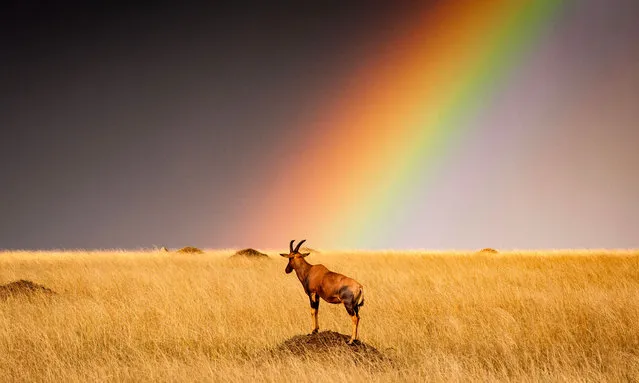
Early morning storms over the Masai Mara National Reserve, Kenya on August 26, 2016. (Photo by Action Press/Rex Features/Shutterstock)

Early morning storms over the Masai Mara National Reserve, Kenya on August 26, 2016. (Photo by Action Press/Rex Features/Shutterstock)
Details
03 Sep 2016 09:34:00
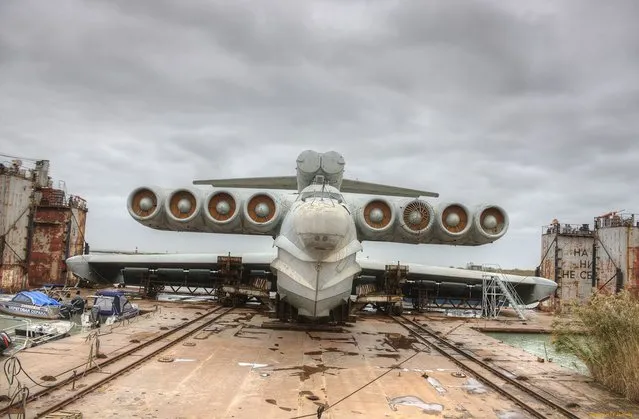
The Lun-class Ekranoplane was used by the Soviet Navy starting in 1987, and wasn't retired until the late 1990s, after the Soviet Union's fall. (Igor113)

“The Lun-class ekranoplan (NATO reporting name Duck) was a ground effect vehicle (GEV) designed by Rostislav Evgenievich Alexeev and used by the Soviet and Russian navies from 1987 until sometime in the late 1990s. It “flew” using the lift generated by the ground effect of its large wings when close to the surface of the water – about four metres or less. Although they might look similar and/or have related technical characteristics, ekranoplans like the Lun are not aircraft, seaplanes, hovercraft, or hydrofoils – ground effect is a separate technology altogether. The International Maritime Organization classifies these vehicles as maritime ships. The name Lun comes from the Russian for harrier”. – Wikipedia (Photo by Igor113)
Details
08 Aug 2014 10:51:00
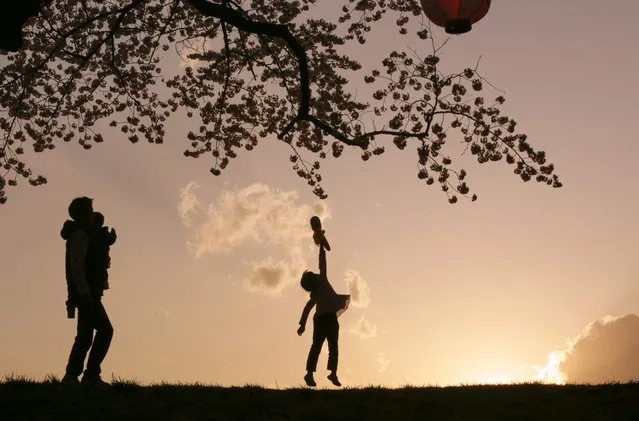
A girl jumps to touch cherry blossoms in full bloom in Fussa, outskirts Tokyo, Japan, 05 April 2014. Temperatures being very constant made blossoms to keep full bloom for holiday makers. (Photo by Kimimasa Mayama/EPA)

A girl jumps to touch cherry blossoms in full bloom in Fussa, outskirts Tokyo, Japan, 05 April 2014. Temperatures being very constant made blossoms to keep full bloom for holiday makers. (Photo by Kimimasa Mayama/EPA)
Details
20 Apr 2014 08:15:00