Loading...
Done
Sculptures By Hu Shaoming

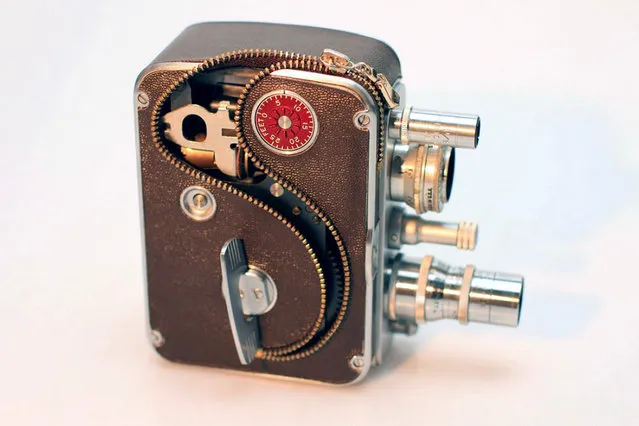
The works of Hu Shaoming immediately catch the eye of the onlookers with their level on intricacy and uniqueness. To provide a glimpse into the intricate workings of vintage cameras he uses a very unique method. He made it seem as if the fine leather covering of the camera was opened by zipper, showing its innards. A similar technique was used on an ancient telephone, though there it looks more like an embellishment. The idea was so marvelously put into life that it seems as if those items can actually be zipped up, though of course that is not possible.
Details
05 Mar 2015 11:31:00
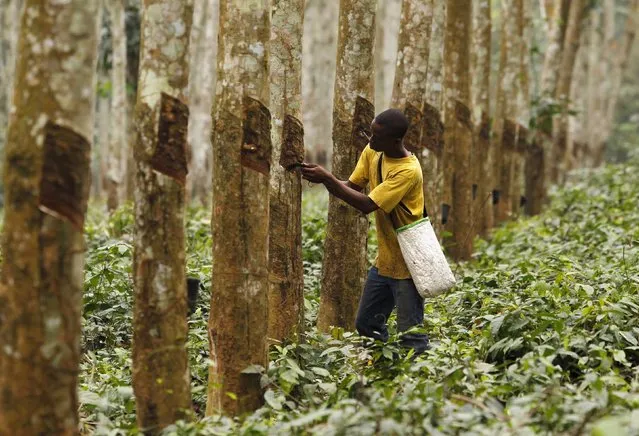
A worker collects rubber sap at a farm in Songon village, north of Abidjan, February 3, 2016. (Photo by Luc Gnago/Reuters)

A worker collects rubber sap at a farm in Songon village, north of Abidjan, February 3, 2016. (Photo by Luc Gnago/Reuters)
Details
12 Feb 2016 12:59:00
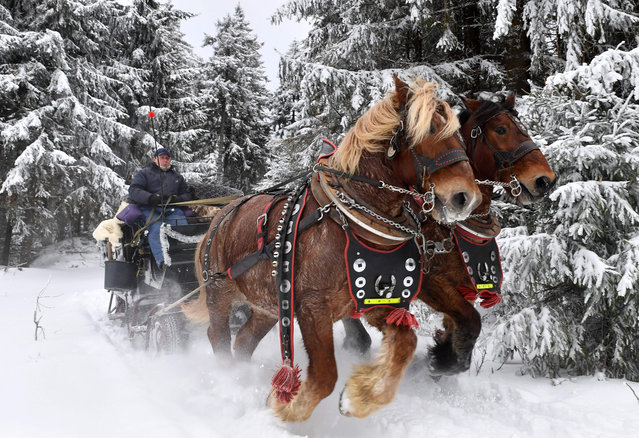
A horse- drawn carriage rides along the race course through the Thuringian Forest in Oberhof, Germany, 05 January 2017. Winter found its way to Saxony, Saxony- Anhalt, and Thuringia. In some regions it can get as low as negative 20 degrees overnight. (Photo by Martin Schutt/Zentralbild/DPA)

A horse- drawn carriage rides along the race course through the Thuringian Forest in Oberhof, Germany, 05 January 2017. Winter found its way to Saxony, Saxony- Anhalt, and Thuringia. In some regions it can get as low as negative 20 degrees overnight. (Photo by Martin Schutt/Zentralbild/DPA)
Details
06 Jan 2017 14:17:00
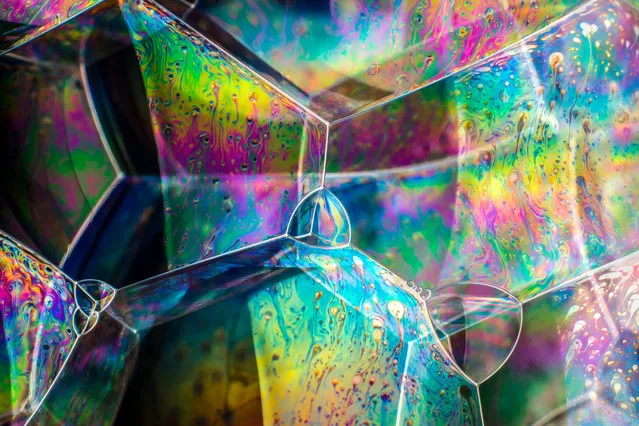
Soap Bubble Structures by Kym Cox. Bubbles optimise space and minimise their surface area for a given volume of air. This phenomenon makes them a useful tool in many areas of research, in particular, materials science and ‘packing’ – how things fit together. Bubble walls drain under gravity, thin at the top, thick at the bottom, which interferes with travelling lightwaves to create bands of colour. Black spots show the wall is too thin for interference colours, indicating the bubble is about to burst. (Photo by Kym Cox/2019 Science Photographer of the Year/RPS)

Soap Bubble Structures by Kym Cox. Bubbles optimise space and minimise their surface area for a given volume of air. This phenomenon makes them a useful tool in many areas of research, in particular, materials science and “packing” – how things fit together. Bubble walls drain under gravity, thin at the top, thick at the bottom, which interferes with travelling lightwaves to create bands of colour. Black spots show the wall is too thin for interference colours, indicating the bubble is about to burst. (Photo by Kym Cox/2019 Science Photographer of the Year/RPS)
Details
15 Aug 2019 00:03:00
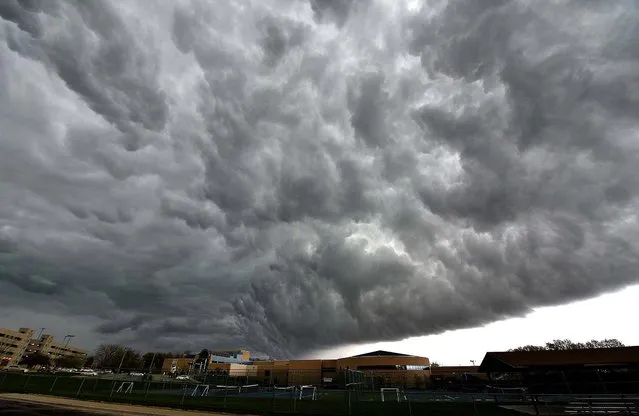
Storm clouds gather over the scene outside the Jewish Community Center in Leawood, Kansas following a shooting, on April 13, 2014. (Photo by John Sleezer/Kansas City Star/MCT)

Storm clouds gather over the scene outside the Jewish Community Center in Leawood, Kansas following a shooting, on April 13, 2014. (Photo by John Sleezer/Kansas City Star/MCT)
Details
01 May 2014 10:02:00
Youths parade wearing World War Two uniforms during the Independence Day celebrations in Gdansk November 11, 2014. (Photo by Lukasz Glowala/Reuters/Agencja Gazeta)

Youths parade wearing World War Two uniforms during the Independence Day celebrations in Gdansk November 11, 2014. (Photo by Lukasz Glowala/Reuters/Agencja Gazeta)
Details
13 Nov 2014 14:00:00
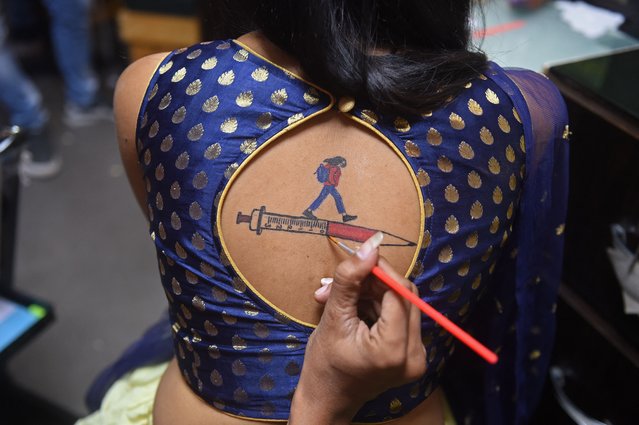
A Garba (folk dance) participant gets her back painted with an awareness message on vaccination against the Covid-19 coronavirus during the ongoing Navratri festival in Ahmedabad on October 8, 2021. (Photo by Sam Panthaky/AFP Photo)

A Garba (folk dance) participant gets her back painted with an awareness message on vaccination against the Covid-19 coronavirus during the ongoing Navratri festival in Ahmedabad in western India on October 8, 2021. (Photo by Sam Panthaky/AFP Photo)
Details
09 Oct 2021 08:10:00
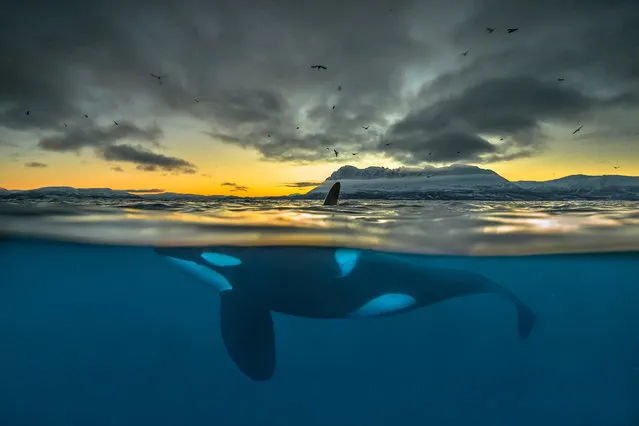
Split-view of a killer whale at sunrise off the coast of Northern Norway. At least half of the world’s killer whale populations are doomed to extinction due to pollution of the oceans, a new study says. (Photo by Audun Rikardsen/Science)

Split-view of a killer whale at sunrise off the coast of Northern Norway. At least half of the world’s killer whale populations are doomed to extinction due to pollution of the oceans, a new study says. (Photo by Audun Rikardsen/Science)
Details
16 Dec 2018 00:03:00